
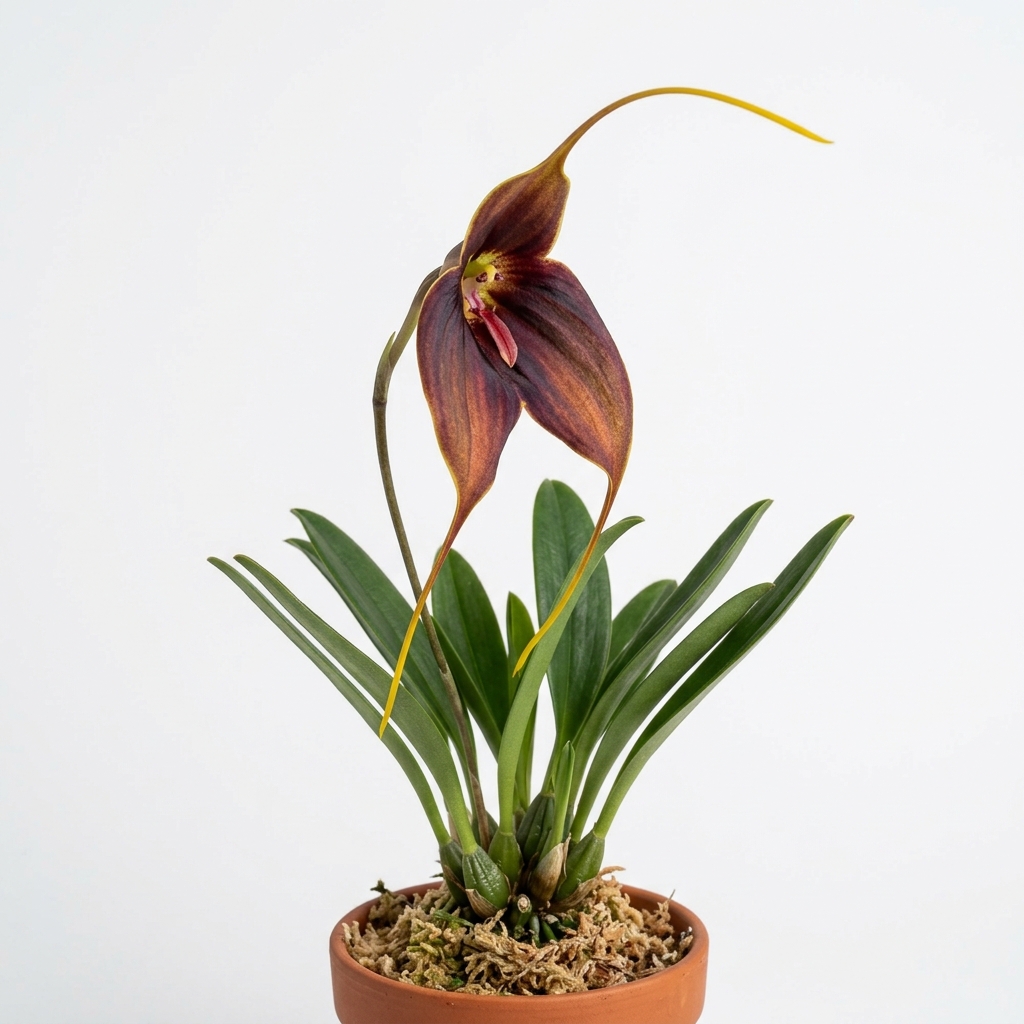
Masdevallia Ayabacana is a striking and highly sought-after orchid species within the Pleurothallidinae subtribe. Renowned for its dramatic, long-tailed flowers and rich, dark coloration, this Peruvian native brings an exotic, architectural presence to specialized orchid collections. Growers value it for its relatively large flower size compared to other members of the genus and its fascinating, alien-like morphology.
Cultivating this orchid successfully requires an understanding of its cloud forest origins. Unlike many common tropical orchids, it thrives in cool, humid, and shaded environments where moisture is constant. While it presents a rewarding challenge for intermediate to advanced hobbyists, providing the precise balance of high humidity and consistent airflow is key to unlocking its spectacular blooming potential.
💡 Did You Know?
The species name Ayabacana refers to the Ayabaca province in northern Peru, where this orchid was originally discovered growing in high-altitude cloud forests. These unique montane ecosystems are characterized by near-constant mist and cool temperatures, which explains why this orchid requires such high and consistent moisture in cultivation.
🌿 Botanical Overview
Masdevallia Ayabacana is native to the montane cloud forests of Peru, specifically around the Ayabaca province, where it grows as an epiphyte or occasional terrestrial at elevations of 2,000 meters or higher. This high-altitude habitat dictates its preference for cool temperatures and constant, moisture-laden air. The plant itself is relatively compact, lacking pseudobulbs, which is characteristic of the genus Masdevallia.
Instead of pseudobulbs, the orchid produces erect, tufted leaves that emerge from short ramicauls. These leathery, dark green leaves are narrow and elongated, serving as the primary storage organs for water and nutrients. Because the plant lacks significant storage capacity, it is highly sensitive to dry spells and requires a stable, humid microclimate to prevent dehydration and leaf drop.
🌸 Flower Characteristics
The flowers of Masdevallia Ayabacana are the primary draw for collectors, showcasing a dramatic and complex structure. The sepals are fused at the base to form a short tube, then flare outward into broad, textured lobes that terminate in long, slender, tail-like appendages known as caudae. These tails can extend several inches, giving the bloom a striking, pendulous silhouette.
The coloration is typically a deep, velvety reddish-brown, copper, or dark purple, often contrasted by bright yellow or orange tips on the caudae. The surface of the sepals is noticeably textured or verrucose, adding to the exotic appearance. The actual petals and lip (labellum) are tiny and hidden deep within the sepaline tube, a classic adaptation designed to guide specific insect pollinators.
Fragrance & Bloom Profile
Unlike many orchids celebrated for sweet, floral perfumes, Masdevallia Ayabacana possesses a fragrance profile that is subtle and unconventional. Many growers report a faint, musky, or slightly musty scent, which is an evolutionary adaptation to attract its natural pollinators, primarily small flies. In some indoor growing environments, the fragrance may go entirely unnoticed unless one is in very close proximity to the bloom.
The flowers are borne singly on erect to sub-erect inflorescences that emerge from the base of the leaves. A single mature plant can produce multiple spikes simultaneously, creating a spectacular display. The individual blooms are remarkably long-lasting, often remaining pristine for several weeks if cool temperatures and high humidity are maintained.
Parentage & Hybrid Lineage
Masdevallia Ayabacana is a naturally occurring species rather than a man-made hybrid. In the orchid trade, select clones and line-bred cultivars have been developed to enhance flower size, color intensity, and ease of cultivation. Because of its dramatic form and robust flower substance, it has also been used as a parent in hybridizing programs to introduce long caudae and dark, rich tones to new Masdevallia crosses.
When purchasing this orchid, growers should note whether they are acquiring a division of a specific awarded cultivar or a seed-grown specimen. While seed-grown plants offer exciting genetic variation, established divisions of proven cultivars provide predictable growth habits and flower quality.
🌱 Growing Conditions
Replicating the cool, misty environment of the Peruvian Andes is essential for the health of Masdevallia Ayabacana. The ideal temperature range is cool to intermediate, with daytime temperatures hovering between 65°F and 75°F (18°C to 24°C) and a distinct drop at night to 50°F to 58°F (10°C to 14°C). This nocturnal temperature drop is crucial for the plant’s metabolic processes and triggers successful blooming.
💡 Care Tip
To maintain the high this orchid craves without risking fungal rot, place a small, low-speed fan near your growing area. Continuous, gentle air movement is the single most effective way to keep the leaves dry and healthy while keeping the ambient levels above seventy percent.
Light levels should be kept low to moderate, mimicking the dappled shade of the forest understory. Bright, direct sunlight will quickly scorch the thin leaves. High humidity is non-negotiable, ideally maintained between 70% and 90%. To prevent fungal and bacterial issues in such a damp environment, continuous, gentle air movement must be provided using small fans.
Watering, Feeding & Potting Media
Watering is perhaps the most critical aspect of caring for Masdevallia Ayabacana. Because the plant lacks pseudobulbs, the potting medium should remain consistently damp but never waterlogged. Water the orchid just as the medium begins to approach dryness, using pure water such as rainwater, distilled water, or reverse osmosis water, as this species is highly sensitive to dissolved salts and minerals.
The preferred potting medium is high-quality New Zealand sphagnum moss, which retains moisture evenly, or a fine-grade fir bark mix blended with perlite and tree fern fiber. Plastic pots with ample drainage holes are ideal for maintaining moisture. Fertilization should be light and infrequent; use a balanced orchid fertilizer diluted to one-quarter strength every two to three weeks, flushing the pot with pure water between feedings to prevent salt buildup.
Blooming Season & Care Notes
The primary blooming season for Masdevallia Ayabacana typically spans from spring through summer, though healthy plants can bloom opportunistically at other times of the year. Once a flower spike begins to emerge from the base of a leaf, avoid changing the plant’s orientation or environmental conditions, as sudden shifts can cause the developing buds to blast.
After blooming is complete, the flower spikes can be cut back to the base of the plant. Repotting is best done in late winter or early spring, just as new root growth begins and before the heat of summer arrives. Minimize root disturbance during this process, as Masdevallia species can take several months to recover from severe root damage.
⚠️ Common Issues
⚠️ Common Mistake
A frequent error is allowing the potting medium to dry out completely between waterings. Unlike orchids with thick pseudobulbs, this species has no water-storage organs and will quickly suffer leaf drop and root death if the roots are allowed to dry out even for a single day.
- Root Rot:
Caused by overwatering, poor drainage, or decomposing potting media that suffocates the delicate root system. - Leaf Spotting: Fungal or bacterial pathogens can cause black or brown spots on the leaves, often due to high humidity combined with stagnant air.
- Bud Blast:
Developing flower buds may yellow and drop prematurely if the plant experiences sudden temperature spikes, low humidity, or drafty conditions. - Dehydration:
Shriveled leaves and dry, brittle roots indicate insufficient watering or low ambient humidity. - Pests:
Spider mites, aphids, and mealybugs can occasionally target the tender new growth; treat promptly with gentle insecticidal soap or neem oil.
❓ Frequently Asked Questions
Can Masdevallia Ayabacana be grown under artificial LED lights?
Yes, this orchid adapts well to artificial LED setups. Because it prefers low to moderate light, place it near the outer edges of the light footprint or adjust the intensity to avoid leaf scorch. Ensure the lights do not generate excess heat, which can dry out the surrounding air.
Why are the leaf tips of my orchid turning black?
Black leaf tips are commonly caused by mineral buildup from tap water or over-fertilization. Because this species is highly sensitive to salts, always use pure water (distilled, rainwater, or reverse osmosis) and flush the potting medium regularly to prevent accumulation.
How often should I repot this orchid?
It is generally best to repot every one to two years, or when the potting medium begins to break down and lose its drainage properties. Always repot during the cool season, preferably in early spring, to allow the root system to recover before summer heat.
Is this orchid suitable for a beginner grower?
This species is best suited for intermediate to advanced growers. Its strict requirements for high humidity, cool temperatures, and pure water can make it challenging to maintain in standard household environments without specialized growing equipment.
⭐ Final Growing Notes
While Masdevallia Ayabacana demands careful attention to environmental conditions, the reward of its dramatic, architectural blooms is unmatched. By providing consistent moisture, cool temperatures, and excellent air circulation, you can enjoy the prehistoric beauty of this Peruvian treasure in your own collection for years to come.
⚕️ Health, Safety & Edibility
Understanding how a plant interacts with people, pets, and the surrounding environment is part of responsible cultivation. This section uses conservative, general guidance and does not replace professional medical or veterinary advice.
Human Safety: No published evidence currently identifies species-specific toxicity concerns for Masdevallia Ayabacana during normal handling. As with most ornamental plants, it should not be intentionally consumed.
Pet Safety: Published information does not indicate that this orchid commonly poses a toxicity concern for cats or dogs. However, chewing leaves, flowers, roots, or potting media may still cause mild digestive upset.
Edibility: This orchid is cultivated for ornamental display rather than food. Ornamental plants may carry fertilizers, pesticides, or other horticultural treatments that make them unsuitable for consumption.
Skin Contact: Routine handling is not generally associated with skin irritation. Gardeners with sensitive skin may prefer wearing gloves when repotting, pruning, or handling potting media.
🌱 Propagation Tip
This orchid is best propagated by division during the spring repotting process. Ensure that each division has at least five to eight healthy leaves and a robust root system. Avoid dividing the plant too small, as larger clumps recover much faster and resume blooming far more quickly.
⭐ Expert Advice
If you struggle to maintain cool enough temperatures during hot summer months, try using clay pots instead of plastic. The natural evaporation of moisture through the porous clay walls cools the root zone by several degrees, helping the plant survive temporary heat waves.

Leave A Comment