
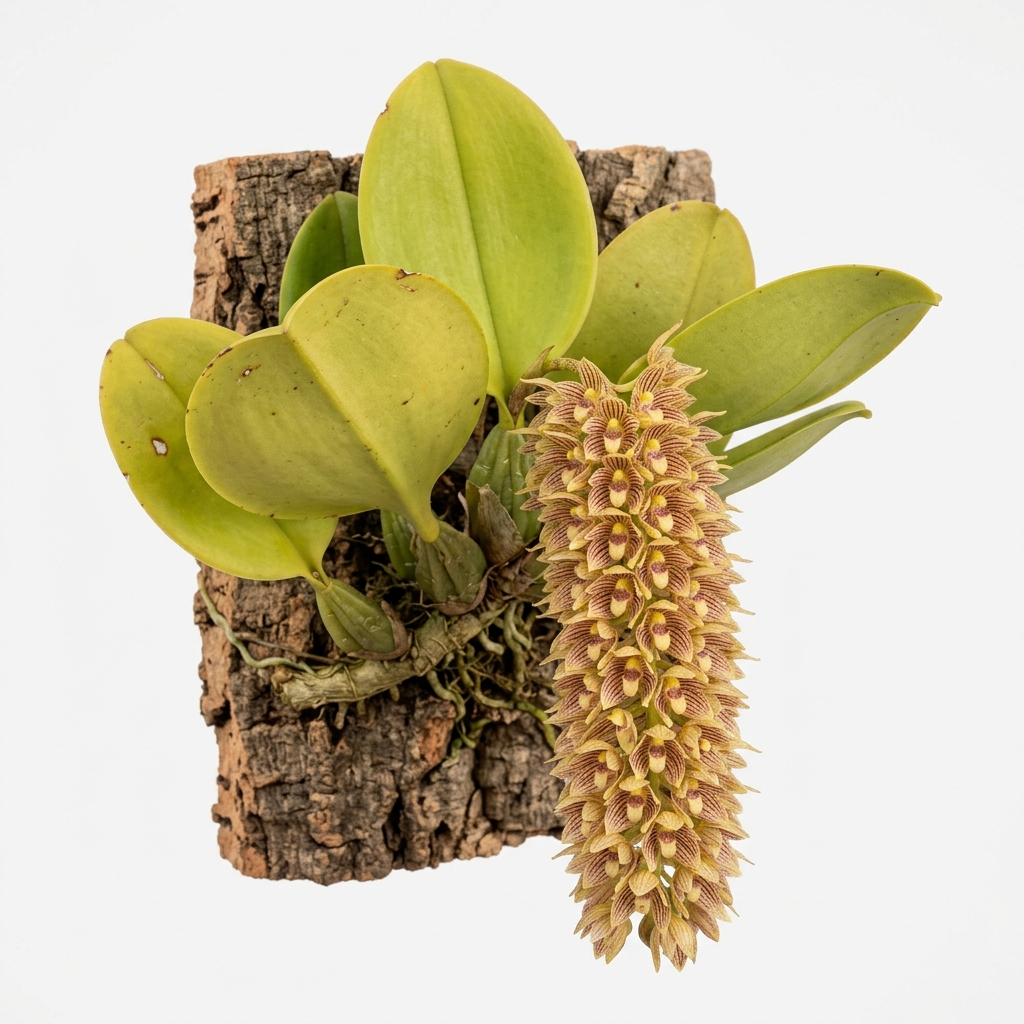
Bulbophyllum Beccarii stands as one of the most remarkable and formidable species within the vast orchid family. Native to the tropical rainforests of Borneo, this massive epiphytic orchid is celebrated by advanced collectors for its extraordinary growth habit and dramatic, albeit infamous, floral display. Unlike typical cultivated orchids, this species produces immense, bowl-shaped leaves designed to trap falling organic debris, creating its own localized nutrient source in the wild canopy.
While its sheer size and prehistoric appearance make it a prized centerpiece for botanical gardens and dedicated greenhouse growers, Bulbophyllum Beccarii is not for the faint of heart. It is widely recognized for producing a highly potent, unpleasant fragrance during its blooming cycle, which serves to attract its natural pollinators. Cultivating this botanical giant requires specialized care, ample space, and a commitment to replicating its warm, humid equatorial habitat.
💡 Did You Know?
In the wild, Bulbophyllum Beccarii acts as a trash-basket plant. Its huge, cup-like leaves are structurally designed to catch falling leaves, twigs, and animal droppings from the forest canopy. As this debris decomposes inside the leaf cups, it provides a steady stream of organic nutrients directly to the orchid's root system, allowing it to thrive high above the nutrient-poor forest floor.
🌿 Botanical Overview
Bulbophyllum Beccarii is a true giant among epiphytes, characterized by its thick, creeping rhizome that can wrap tightly around large tree trunks. The pseudobulbs are relatively small compared to the overall scale of the plant, but they support massive, leathery, yellowish-green leaves. These leaves are uniquely shaped like deep cups or bowls, a morphological adaptation that allows the plant to catch falling leaves and forest debris, which gradually decompose to provide essential nutrients.
In its native Bornean habitat, this species climbs vertically, often reaching several meters in length over many decades. Because of this climbing habit, traditional potting methods are entirely unsuitable. The root system is extensive but shallow, clinging tightly to the mounting surface to absorb moisture and nutrients rapidly from the humid air and passing rain showers.
🌸 Flower Characteristics
The blooming event of Bulbophyllum Beccarii is a spectacular visual display. It produces a thick, pendulous, cylindrical inflorescence that can measure up to 12 inches or more in length. This dense spike is packed with hundreds of small, closely set flowers, creating a textured, pinecone-like appearance from a distance.
Individual flowers are typically cream or pale yellow, heavily patterned with intricate reddish-brown or purple veins and spots. The lip, or labellum, is highly mobile and engineered to assist pollinators. The sheer density of the blooms on the hanging spike makes it one of the most structurally impressive inflorescences in the entire orchid kingdom.
Fragrance & Bloom Profile
The fragrance of Bulbophyllum Beccarii is legendary among orchid enthusiasts, though not for its sweetness. It emits a powerful, pervasive odor reminiscent of rotting meat or decaying fish. This scent is an evolutionary adaptation designed to attract carrion flies, which act as the primary pollinators in the dense jungle understory.
The scent is strongest during the first few days of the bloom cycle and can easily fill an entire greenhouse. While the fragrance is a deterrent for casual indoor growers, it remains a point of fascination for botanical collectors. The blooms typically last for one to two weeks, during which the intense aroma gradually subsides as the flowers fade.
Parentage & Hybrid Lineage
Bulbophyllum Beccarii is a naturally occurring species rather than a man-made hybrid or cultivar. First described by Italian botanist Odoardo Beccari in the late 19th century, it remains a distinct evolutionary lineage within the genus Bulbophyllum.
Because of its extreme size, slow growth rate, and challenging cultivation requirements, it has rarely been used in hybridization programs. Most specimens found in private collections or botanical gardens are propagated from division or grown from seed by specialist nurseries committed to preserving this rare jungle species.
🌱 Growing Conditions
Replicating the equatorial rainforest environment is critical for the survival of Bulbophyllum Beccarii. It thrives in warm to hot temperatures, ideally ranging from 75°F to 90°F during the day, with only a slight drop at night. It does not tolerate cold drafts or temperatures below 60°F.
💡 Care Tip
To keep the massive leaves of this orchid hydrated, mount it on a thick piece of tree fern or cork wrapped in a thin layer of high-quality sphagnum moss. This setup helps retain moisture around the roots without suffocating them, mimicking the damp tree trunks of its native Bornean rainforest.
Light levels should be moderate to bright but strictly filtered. Direct sunlight will quickly scorch the massive leaves, while too much shade will inhibit growth and prevent blooming. High humidity is non-negotiable; a consistent level between 70% and 90% is required, coupled with strong, continuous air movement to prevent fungal pathogens from settling on the damp foliage.
Watering, Feeding & Potting Media
This orchid requires a constant supply of moisture and should never be allowed to dry out completely. Because it is almost exclusively grown on large mounts—such as cork bark, tree fern slabs, or synthetic mounts—daily watering or heavy misting is usually necessary, sometimes multiple times a day during hot summer months.
Feeding should be frequent but highly diluted. A balanced, water-soluble orchid fertilizer applied at quarter-strength every week during the active growing season supports the development of its massive leaves. Many growers also place organic matter, such as dried oak leaves or sphagnum moss, near the base of the leaves to mimic the natural debris-catching habit of the wild plant.
Blooming Season & Care Notes
Blooming typically occurs in the warmer months of summer or early autumn, though it can be highly irregular in cultivation. The development of the flower spike is a slow process, often taking several weeks to reach its full length before the buds open simultaneously.
Once the blooming cycle is complete, the old flower spike should be carefully cut back to the base of the rhizome. Repotting or remounting should be avoided unless absolutely necessary, as Bulbophyllum Beccarii resents root disturbance. If the plant outgrows its mount, it is often best to secure the existing mount directly onto a larger slab rather than attempting to detach the roots.
⚠️ Common Issues
⚠️ Common Mistake
The most common mistake is attempting to grow this climbing epiphyte in a standard plastic pot with traditional orchid bark. This restricts its natural vertical growth habit and frequently leads to root rot. Always mount this species or grow it in an open, shallow basket where the roots can breathe.
- Low Humidity: Leaf edges will dry out, and new growth may become stunted or fail to emerge properly.
- Root Rot:
Occurs if the plant is kept in stagnant, poorly aerated media; mounting is the best prevention. - Fungal Spotting: High humidity without adequate air circulation can lead to black spots on the large leaves.
- Pests:
Spider mites and mealybugs can hide in the crevices of the pseudobulbs and the undersides of the massive leaves. - Bud Blast:
Sudden changes in temperature or humidity during spike development can cause the buds to yellow and drop before opening.
❓ Frequently Asked Questions
Can Bulbophyllum Beccarii be grown indoors as a houseplant?
No, this species is not suited for typical indoor home environments. Its requirement for extremely high humidity, constant moisture, large climbing mounts, and its highly pungent fragrance make it suitable only for dedicated greenhouses or specialized indoor grow tents.
How do I manage the strong odor when it blooms?
If grown in a home greenhouse, it is advisable to increase ventilation or temporarily move the plant to an outdoor shaded area during the peak of its blooming cycle to prevent the intense scent from entering living spaces.
What is the best mounting material for this orchid?
Large, durable cork bark slabs or thick tree fern totems are ideal. The mount must be sturdy enough to support a heavy, climbing plant that can eventually weigh several pounds and extend several feet.
Why are the leaves on my plant turning yellow?
Yellowing leaves can indicate excessive direct sunlight, a lack of essential nutrients, or root damage caused by underwatering. Ensure the plant is receiving filtered light and that the root system remains consistently moist.
⭐ Final Growing Notes
Bulbophyllum Beccarii remains one of the ultimate achievements for the advanced orchid grower. While its cultural demands are rigorous and its fragrance is notoriously challenging, the reward of cultivating this prehistoric-looking giant is unmatched. By providing stable warmth, soaring humidity, and a sturdy mount to climb, you can preserve a magnificent piece of Bornean botanical history in your own collection.
⚕️ Health, Safety & Edibility
Understanding how a plant interacts with people, pets, and the surrounding environment is part of responsible cultivation. This section uses conservative, general guidance and does not replace professional medical or veterinary advice.
Human Safety: No published evidence currently identifies species-specific toxicity concerns for Bulbophyllum Beccarii during normal handling. As with most ornamental plants, it should not be intentionally consumed.
Pet Safety: Published information does not indicate that this orchid commonly poses a toxicity concern for cats or dogs. However, chewing leaves, flowers, roots, or potting media may still cause mild digestive upset.
Edibility: This orchid is cultivated for ornamental display rather than food. Ornamental plants may carry fertilizers, pesticides, or other horticultural treatments that make them unsuitable for consumption.
Skin Contact: Routine handling is not generally associated with skin irritation. Gardeners with sensitive skin may prefer wearing gloves when repotting, pruning, or handling potting media.
🌱 Propagation Tip
Propagation of this slow-growing species should only be attempted on mature, robust specimens. Carefully divide the rhizome, ensuring that each new division contains at least four healthy pseudobulbs and an active growth point. Secure the division tightly to its new mount immediately to minimize root shock.
⭐ Expert Advice
If your growing space lacks the natural required for this giant, install a dedicated misting system or ultrasonic humidifier directly beneath the plant. Pair this with a small oscillating fan to maintain constant, gentle air movement, which is vital for preventing fungal leaf spot on the large foliage.

Leave A Comment