
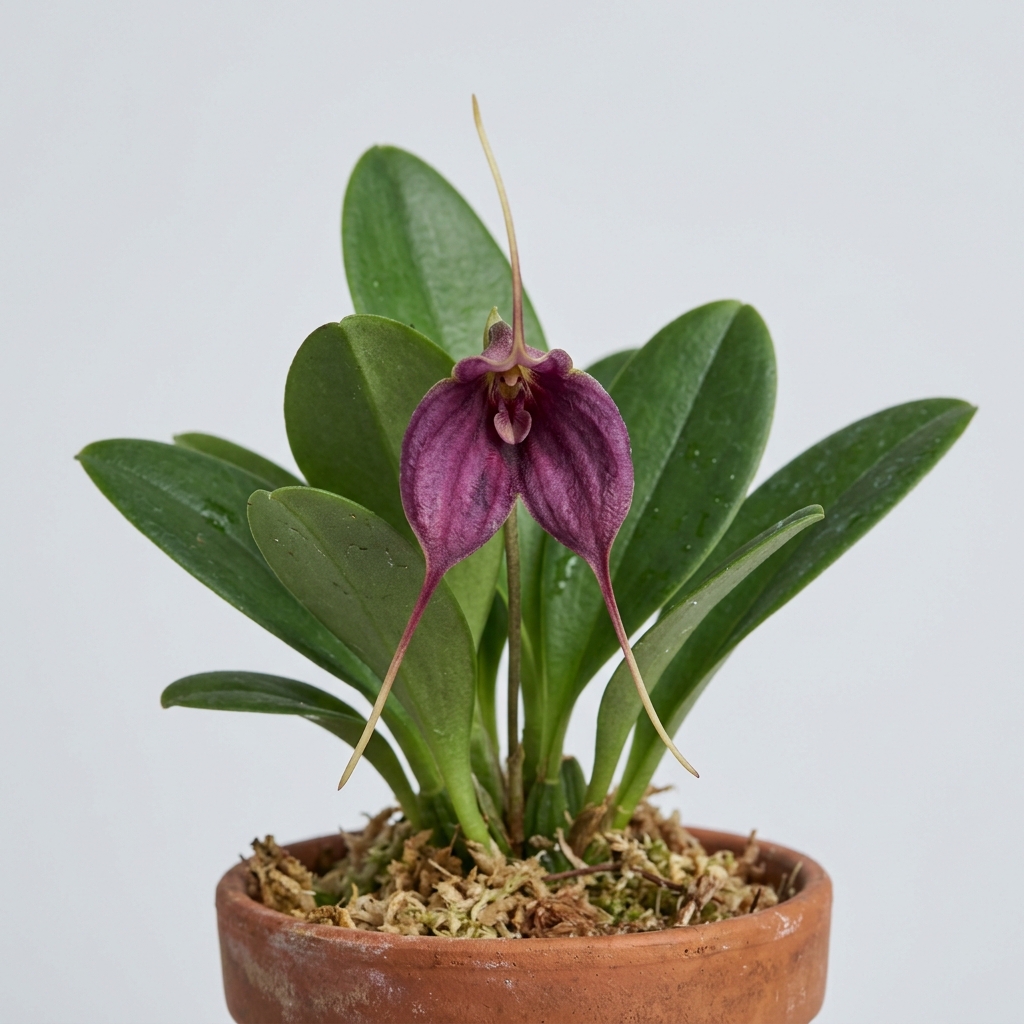
Masdevallia Discoidea is a captivating miniature orchid species highly prized by cool-growing orchid enthusiasts. Highlighted by its distinctive, dark-hued flowers and compact, tufted growth habit, this species makes an excellent choice for terrariums, Wardian cases, or specialized greenhouse culture where its unique environmental needs can be met.
Like many members of the Masdevallia genus, this orchid lacks pseudobulbs, meaning it relies on consistent moisture and high humidity to survive. Its unique floral morphology, featuring fused sepals that form a striking, somewhat flattened shape, provides a dramatic visual contrast to more common tropical orchids, making it a true conversation piece for dedicated collectors.
💡 Did You Know?
The species name discoidea refers to the distinctive, somewhat flattened, disc-like appearance of its dark flowers. In the wild, these unusual blooms hang low to the ground or mossy branches, perfectly positioned to attract small gnats and flies that serve as their primary pollinators in the misty Andean cloud forests.
🌿 Botanical Overview
Masdevallia Discoidea is a small, epiphytic orchid native to the cool, damp cloud forests of South America, primarily Colombia. It grows in dense tufts, displaying a caespitose habit with short ramicauls enveloped by basal sheaths. Each stem bears a single, leathery, obovate leaf that is dark green and structurally adapted to capture light in the shaded forest understory.
Because it lacks pseudobulbs, this species stores very little water, making it highly sensitive to dry spells. In its natural habitat, it clings to moss-covered tree branches where it is constantly bathed in mist and cool breezes. This environment dictates its cultivation needs in home or greenhouse settings, where replicating high humidity and cool, moving air is essential for long-term survival.
🌸 Flower Characteristics
The flowers of Masdevallia Discoidea are structurally fascinating, dominated by fused sepals that form a tubular base before flaring outward. The color is typically a rich, dark maroon or deep purple, sometimes appearing almost black under certain lighting. The sepals terminate in slender, tail-like appendages, known as caudae, which are a signature characteristic of the genus.
The petals and lip are highly reduced and hidden within the sepaline tube, a common evolutionary trait in Masdevallia designed to attract specific insect pollinators. The flowers are produced singly on relatively short, erect to suberect inflorescences that emerge from the base of the leaves, presenting the blooms just around or slightly above the foliage level.
Fragrance & Bloom Profile
Fragrance in Masdevallia Discoidea is not consistently documented in common grower references, and many hobbyists report that the flowers are virtually scentless. The primary appeal of this orchid lies in its dramatic, geometric floral form and deep coloration rather than olfactory allure.
Individual blooms can last for several weeks if environmental conditions remain cool and humid. High temperatures or dry air will significantly shorten the lifespan of the flowers and may cause emerging buds to blast before opening.
Parentage & Hybrid Lineage
Masdevallia Discoidea is a naturally occurring species rather than a man-made hybrid. Its taxonomic status is well-established, though its exact distribution and wild population variations remain a subject of study among orchidologists.
While it is primarily grown as a species by collectors, it has occasionally been used in hybridizing programs to introduce dark coloration, compact growth habits, and unique sepal shapes to new Masdevallia grexes. However, documented hybrid offspring are relatively rare compared to those of more common species like Masdevallia coccinea or Masdevallia veitchiana.
🌱 Growing Conditions
To grow Masdevallia Discoidea successfully, cool temperatures are paramount. Ideal daytime temperatures range from 65°F to 72°F (18°C to 22°C), with a mandatory nighttime drop to 50°F to 58°F (10°C to 14°C). Temperatures consistently exceeding 80°F (27°C) can cause rapid decline, leaf drop, and eventual death.
💡 Care Tip
Always use pure water sources like rainwater, distilled water, or reverse osmosis water. Masdevallia roots are incredibly sensitive to mineral salts, and tap water can quickly lead to root burn and leaf tip dieback.
Light levels should be kept low to moderate, similar to those preferred by Phalaenopsis or Jewel Orchids. Direct sunlight will quickly scorch the thin leaves. High humidity of 70% to 90% must be maintained, coupled with constant, gentle air movement to prevent fungal pathogens from settling on the damp foliage.
Watering, Feeding & Potting Media
Watering is the most critical aspect of Masdevallia care. The potting medium must remain consistently moist but never waterlogged. Pure water, such as rainwater, distilled water, or reverse osmosis water, is highly recommended, as this species is extremely sensitive to dissolved salts and minerals.
A potting medium of high-quality New Zealand sphagnum moss or a fine-grade bark mix works best to retain moisture while allowing air to reach the roots. Fertilize very sparingly with a highly diluted, balanced orchid fertilizer at one-quarter or one-eighth strength every two to three weeks, flushing the pot with pure water between feedings to prevent salt buildup.
Blooming Season & Care Notes
While Masdevallia Discoidea typically blooms in the spring and summer, healthy plants can produce flowers at various times throughout the year. The initiation of flower spikes is often triggered by the natural seasonal drop in nighttime temperatures during autumn and winter.
Repotting should be done every one to two years, preferably in the autumn when temperatures are cool and the plant is entering a period of active root growth. Avoid repotting during the heat of summer, as the added stress can be fatal to the delicate root system.
⚠️ Common Issues
⚠️ Common Mistake
The most common mistake is letting the potting medium dry out completely. Unlike many orchids, Masdevallia species lack water-storing pseudobulbs and will quickly drop leaves and die if the roots dry out even for a single day.
- Root Rot: Caused by compacted, decaying media or poor drainage. Ensure the potting mix remains fresh and airy.
- Leaf Spotting: Black or brown spots on the leaves often indicate fungal or bacterial infections brought on by high humidity combined with stagnant air. Increase ventilation immediately.
- Bud Blast: Emerging buds may wither and turn yellow before opening due to sudden drops in humidity, high temperatures, or drafty conditions.
- Heat Stress: Rapid yellowing and dropping of lower leaves is a classic sign that the growing environment is too warm.
- Pests: Spider mites and aphids can occasionally target the tender new growth; treat with gentle insecticidal soap or neem oil.
❓ Frequently Asked Questions
Can Masdevallia Discoidea be grown under artificial LED lights?
Yes, this orchid adapts well to LED grow lights. Position the plant under low-to-medium intensity settings, ensuring the lights do not emit excess heat that could raise the ambient temperature around the foliage.
Why are the leaf tips of my Masdevallia turning black?
Black leaf tips are commonly caused by salt buildup from tap water or over-fertilization. Switch to pure rainwater or distilled water, and flush the potting medium thoroughly to leach out accumulated minerals.
How often should I water Masdevallia Discoidea?
Watering frequency depends on your environment, but the medium should never dry out completely. Typically, watering every two to three days is necessary when grown in sphagnum moss under high-humidity conditions.
Is this orchid suitable for a closed terrarium?
It can thrive in a terrarium or vivarium provided there is adequate ventilation. Closed systems must include small internal fans to circulate air, preventing stagnant moisture from causing rot or fungal leaf spots.
⭐ Final Growing Notes
Masdevallia Discoidea is a rewarding challenge for the dedicated orchid hobbyist who can provide the cool, humid, and pristine conditions it demands. While it is less forgiving of neglect than more common tropical genera, its striking, dark, alien-like blooms offer an unmatched reward for those willing to master its specific cultural requirements.
⚕️ Health, Safety & Edibility
Understanding how a plant interacts with people, pets, and the surrounding environment is part of responsible cultivation. This section uses conservative, general guidance and does not replace professional medical or veterinary advice.
Human Safety: No published evidence currently identifies species-specific toxicity concerns for Masdevallia Discoidea during normal handling. As with most ornamental plants, it should not be intentionally consumed.
Pet Safety: Published information does not indicate that this orchid commonly poses a toxicity concern for cats or dogs. However, chewing leaves, flowers, roots, or potting media may still cause mild digestive upset.
Edibility: This orchid is cultivated for ornamental display rather than food. Ornamental plants may carry fertilizers, pesticides, or other horticultural treatments that make them unsuitable for consumption.
Skin Contact: Routine handling is not generally associated with skin irritation. Gardeners with sensitive skin may prefer wearing gloves when repotting, pruning, or handling potting media.
🌱 Propagation Tip
Propagate this orchid by division during the cool autumn months. Ensure each division has at least five to eight healthy leaves and a robust root system, as smaller divisions struggle to recover without pseudobulbs to store energy.
⭐ Expert Advice
To keep temperatures down during hot summer months, place the orchid on a tray filled with wet pebbles, or use a small evaporative cooler nearby. Nighttime cooling is essential for the plant's metabolic recovery.

Leave A Comment