
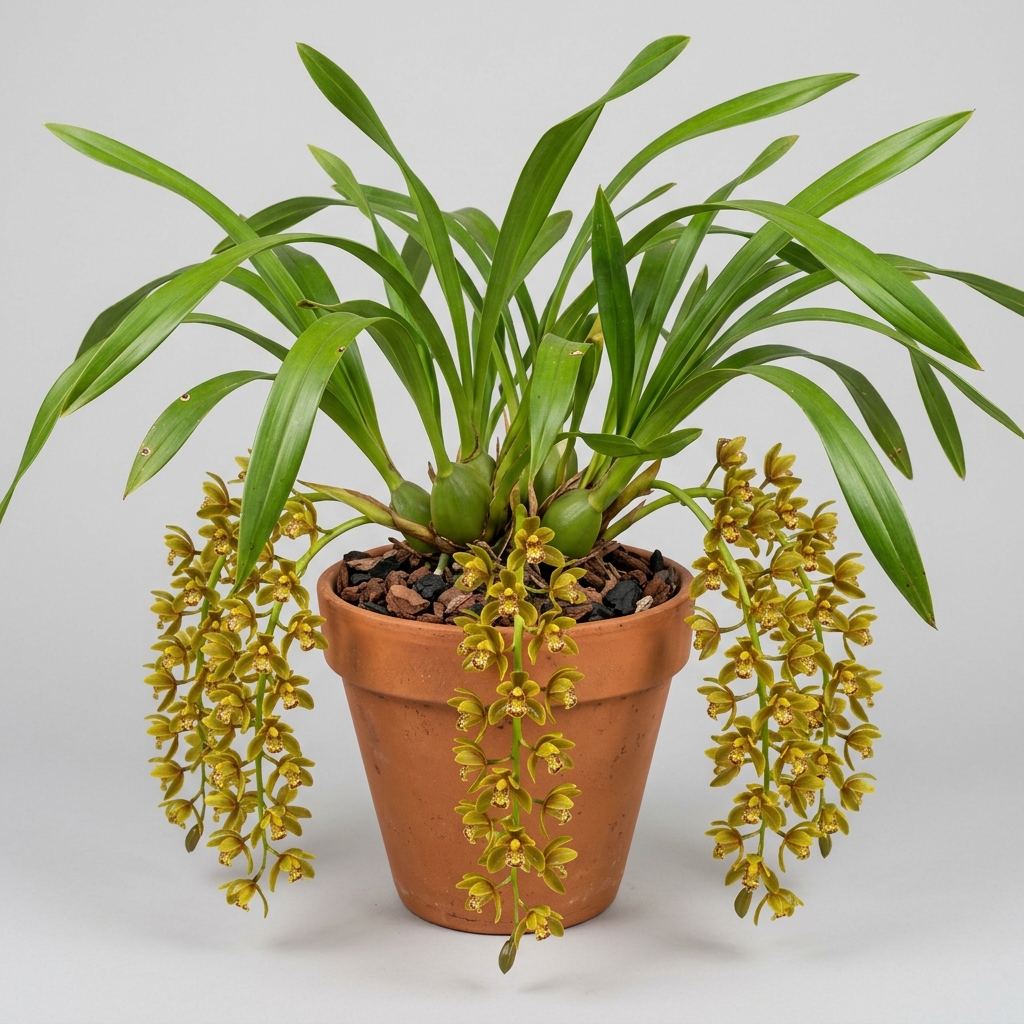
Cymbidium Madidum, commonly known as the buttercup orchid or grassy boat-lip orchid, is a robust species native to the moist forests of eastern Australia. Highly valued by orchid enthusiasts for its pendulous spikes laden with small, glossy flowers, this species offers a distinct departure from the large-flowered standard hybrids. Its arching growth habit and strap-like, grass-green foliage make it an attractive specimen even when not in bloom, serving as an excellent representative of Australian epiphytic flora.
Unlike many cool-growing montane Cymbidium species, Cymbidium Madidum is remarkably adaptable, thriving in warmer and more humid conditions. Growers appreciate this species for its ease of culture, floriferous nature, and the sweet, honey-like fragrance that emanates from its long-lasting blossoms. Whether grown in a hanging basket to accommodate its cascading flower spikes or kept in a traditional pot, it brings a touch of wild, tropical elegance to any orchid collection.
💡 Did You Know?
The specific epithet madidum comes from the Latin word for wet or moist, which refers to the glistening, shiny appearance of the flower's labellum. This unique glossy texture makes the blossoms look as though they are perpetually covered in fresh morning dew, a striking visual feature that distinguishes it from many other Cymbidium species.
🌿 Botanical Overview
Cymbidium Madidum is a large epiphytic or lithophytic orchid species native to Queensland and New South Wales, Australia. In its natural habitat, it is frequently found growing in the forks of large trees, in decaying wood, or occasionally on damp rocks where organic debris accumulates. The plant features large, fleshy, ovoid pseudobulbs that can reach the size of a fist, which store water and nutrients to sustain the plant during drier periods.
Surrounding these pseudobulbs are numerous arching, strap-like leaves that are soft, leathery, and bright green. The root system is extensive, thick, and fleshy, adapted for anchoring the plant securely to rough bark or rocky crevices while absorbing moisture and nutrients rapidly from passing rain. This robust growth habit allows the plant to form massive clumps over time in optimal conditions.
🌸 Flower Characteristics
The inflorescence of Cymbidium Madidum is pendulous or strongly arching, emerging from the base of the pseudobulb and reaching lengths of up to 60 centimeters or more. A single mature spike can carry anywhere from 10 to over 70 small, densely packed flowers. Each individual bloom typically measures between 2 and 3 centimeters in diameter, presenting a cup-like shape with thick, waxy sepals and petals.
The color palette of the flowers ranges from a glossy olive-green to a rich, buttercup yellow or brownish-green. The labellum, or lip, is a defining feature, often displaying a glistening or moist appearance—a characteristic reflected in the specific epithet madidum, which means wet or moist. The lip typically features a central yellow band or callus, sometimes marked with subtle red or brown spots, attracting native pollinators in its natural habitat.
Fragrance & Bloom Profile
The blooms of Cymbidium Madidum are highly regarded for their delightful fragrance, which is commonly described as sweet, spicy, or reminiscent of honey. This scent is most pronounced during warm, bright days when the ambient temperature rises, filling the growing space with a pleasant aroma. The individual flowers are long-lasting, often remaining fresh on the spike for four to six weeks.
Because the flower spikes are naturally pendulous, the blooms are best viewed from below. This makes the species particularly suited for cultivation in hanging baskets or elevated pots where the cascading spikes can hang freely without touching the ground or staging benches.
Parentage & Hybrid Lineage
As a naturally occurring species rather than a man-made hybrid, Cymbidium Madidum possesses a pure genetic lineage shaped by its native Australian environment. However, its warmth tolerance, pendulous blooming habit, and high flower count have made it a valuable parent in orchid hybridization programs.
Horticulturists have used Cymbidium Madidum to introduce heat tolerance and cascading flower spikes into standard Cymbidium lines, which are traditionally cool-growing. Hybrids derived from this species often inherit the characteristic glossy texture of the flowers and the robust, clump-forming growth habit, making them highly desirable for growers in subtropical and temperate climates alike.
🌱 Growing Conditions
To cultivate Cymbidium Madidum successfully, growers should aim to replicate its native forest environment. It thrives in bright, filtered light, similar to the dappled sunlight found under a forest canopy. While it can tolerate some direct morning sun, harsh afternoon sunlight should be avoided to prevent leaf scorch.
💡 Care Tip
To showcase the natural beauty of Cymbidium Madidum, grow the plant in a slatted wooden basket or a decorative hanging pot. This elevated placement allows the long, pendulous flower spikes to cascade naturally over the sides without obstruction, preventing damage to the delicate waxy blooms.
Unlike cool-growing Himalayan Cymbidium species, Cymbidium Madidum prefers intermediate to warm temperatures. Ideal daytime temperatures range from 21°C to 30°C (70°F to 86°F), with a slight drop at night to stimulate healthy growth and eventual flowering. It requires moderate to high humidity, ideally between 50% and 70%, coupled with excellent air movement to prevent stagnant air and fungal pathogens.
Watering, Feeding & Potting Media
During the active growing season in spring and summer, Cymbidium Madidum requires frequent and abundant watering. The potting medium should be kept consistently damp but never waterlogged. As temperatures cool in autumn and winter, watering should be reduced, allowing the medium to dry out slightly between waterings, though the pseudobulbs should never be allowed to shrivel.
A balanced, water-soluble orchid fertilizer applied at quarter or half strength every two weeks during the growing season supports robust pseudobulb development. The ideal potting medium is a coarse, well-draining mix composed of medium-grade fir bark, charcoal, and perlite. This structure ensures that the thick roots receive adequate oxygen while retaining just enough moisture to sustain the plant.
Blooming Season & Care Notes
Cymbidium Madidum typically blooms from late spring through summer, though regional climate variations can influence the exact timing. The development of flower spikes begins in late winter or early spring. During this period, it is crucial to avoid moving the plant excessively or changing its orientation to the light source, as this can cause the developing spike to twist or abort.
Repotting should be performed only when necessary, typically every two to three years after the blooming cycle has finished and new growth begins to emerge. Because this species resents root disturbance, growers should choose a pot or basket that allows for at least two years of future growth, taking care to preserve the healthy root mass during the transition.
⚠️ Common Issues
⚠️ Common Mistake
A frequent mistake is treating Cymbidium Madidum like cool-growing Asiatic Cymbidiums by exposing it to near-freezing winter temperatures. This Australian native prefers intermediate to warm conditions and can suffer foliage damage or stunted growth if subjected to prolonged cold spells below ten degrees Celsius.
- Root Rot:
Caused by overwatering or compacted, poorly draining potting media that suffocates the fleshy roots. - Leaf Scorch: Appears as bleached or blackened patches on the foliage due to excessive exposure to direct, intense sunlight.
- Spider Mites:
Common pests that thrive in dry, low-humidity environments, causing silvery webbing and stippling on the undersides of leaves. - Scale and Mealybugs: Often hide in the crevices of pseudobulbs and leaf bases, sucking sap and weakening the plant.
- Bud Blast:
The premature dropping or drying of flower buds, usually triggered by sudden temperature fluctuations, drafty conditions, or low humidity.
❓ Frequently Asked Questions
How often should I water Cymbidium Madidum?
Watering frequency depends on the season and environment. During the active spring and summer growing period, water thoroughly whenever the top inch of the potting medium begins to dry, typically two to three times a week. In winter, reduce watering to once every week or two, allowing the medium to dry out more substantially between applications.
Can Cymbidium Madidum be grown indoors?
Yes, it can be grown indoors if provided with sufficient light and humidity. Place the orchid near a bright east- or south-facing window with filtered light. Utilizing a humidity tray, room humidifier, or placing the plant in a well-ventilated room will help maintain the necessary 50% to 70% humidity levels.
Why is my Cymbidium Madidum not blooming?
The most common reason for a lack of blooms is insufficient light. If the leaves are dark green and floppy, the plant likely needs brighter, filtered light. Additionally, a slight drop in night temperatures during the autumn and winter months is often required to trigger the initiation of flower spikes.
What is the best potting medium for this orchid?
A coarse, highly aerated mix is ideal. A combination of medium-grade orchid bark, horticultural charcoal, and perlite or pumice works exceptionally well. This mixture mimics the natural epiphytic environment, allowing water to drain rapidly while retaining adequate moisture and providing excellent airflow to the roots.
⭐ Final Growing Notes
Cymbidium Madidum is a rewarding and resilient orchid species that brings a unique tropical aesthetic to any collection. By providing bright, filtered light, consistent moisture during the growing season, and intermediate to warm temperatures, growers can enjoy its spectacular, honey-scented cascading blooms year after year. Its adaptability and robust nature make it an excellent choice for both intermediate growers looking to expand their collection and experienced hobbyists seeking a classic Australian species.
⚕️ Health, Safety & Edibility
Understanding how a plant interacts with people, pets, and the surrounding environment is part of responsible cultivation. This section uses conservative, general guidance and does not replace professional medical or veterinary advice.
Human Safety: No published evidence currently identifies species-specific toxicity concerns for Cymbidium Madidum during normal handling. As with most ornamental plants, it should not be intentionally consumed.
Pet Safety: Published information does not indicate that this orchid commonly poses a toxicity concern for cats or dogs. However, chewing leaves, flowers, roots, or potting media may still cause mild digestive upset.
Edibility: This orchid is cultivated for ornamental display rather than food. Ornamental plants may carry fertilizers, pesticides, or other horticultural treatments that make them unsuitable for consumption.
Skin Contact: Routine handling is not generally associated with skin irritation. Gardeners with sensitive skin may prefer wearing gloves when repotting, pruning, or handling potting media.
🌱 Propagation Tip
Propagate this species by division during repotting, ensuring each new division has at least three to four healthy, mature pseudobulbs with active roots. Avoid dividing the plant into single pseudobulbs, as smaller divisions can take several years to recover and resume blooming.
⭐ Expert Advice
To maximize flower production, ensure the orchid receives high levels just short of burning during the late summer and autumn. This extra energy helps the newly matured pseudobulbs store the necessary sugars required to initiate multiple robust flower spikes in the coming winter season.

Leave A Comment