
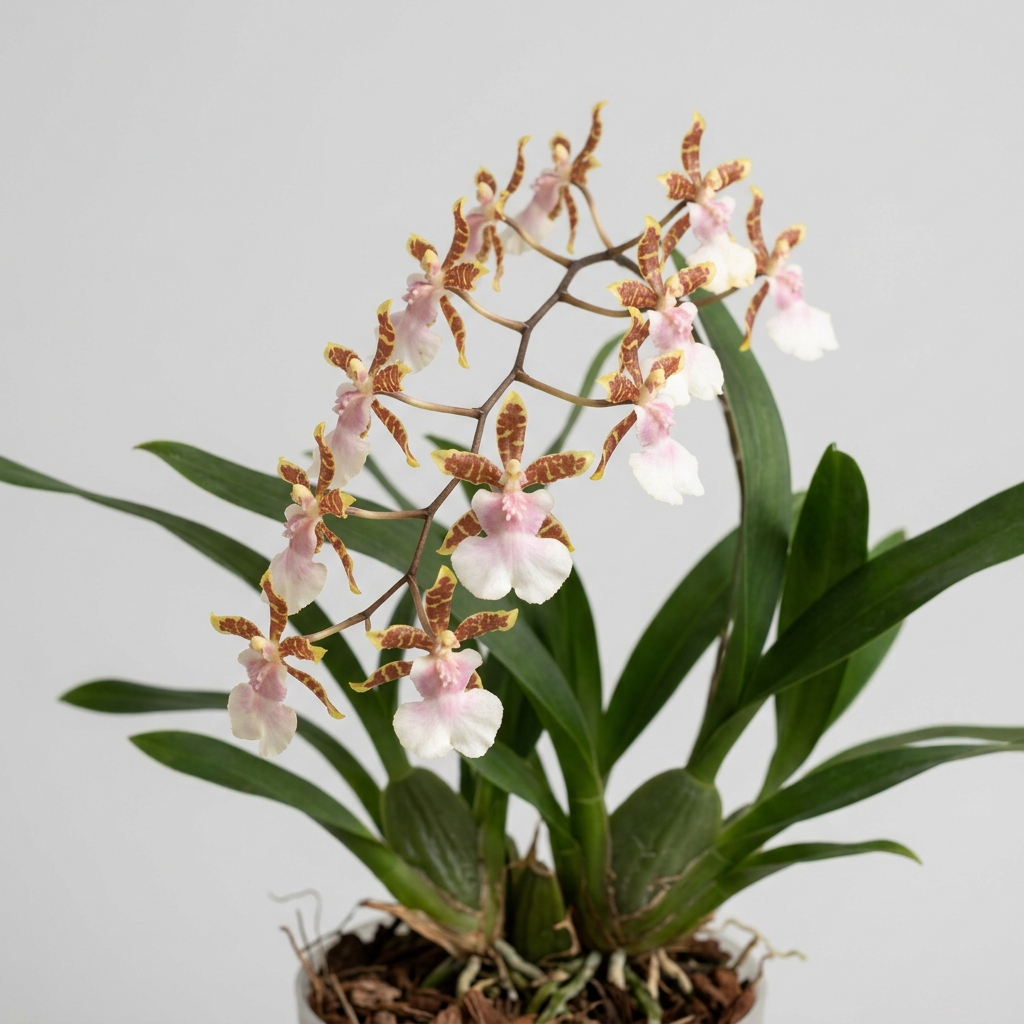
The Oncidium Heaven Scent is a highly celebrated hybrid orchid within the Oncidium alliance, widely cherished by indoor gardeners and orchid enthusiasts for its remarkable ease of care and delightful sensory appeal. Characterized by its robust growth habit and arching sprays of numerous small, intricately patterned flowers, this cultivar has earned a permanent place in many home collections. Its pseudobulbs store moisture and nutrients efficiently, allowing the plant to adapt well to typical household environments while producing spectacular, long-lasting floral displays.
Growers particularly value this orchid for its reliable blooming performance and its ability to thrive under standard indoor conditions. Unlike some of its more temperamental relatives, Oncidium Heaven Scent is relatively forgiving of minor care oversights, making it an excellent choice for beginners looking to transition from basic grocery-store orchids to more diverse genera. Its combination of visual charm, vigorous growth, and accessible care requirements makes it a standout representative of the dancing lady orchid group.
💡 Did You Know?
The delightful chocolate-like of Oncidium Heaven Scent is primarily triggered by and warmth. If you place the orchid in a dim room, the scent may diminish significantly, but moving it to a bright, warm window in the morning will quickly reactivate its sweet, vanilla-cocoa aroma.
🌿 Botanical Overview
Oncidium Heaven Scent is a sympodial epiphytic orchid characterized by its prominent, flattened pseudobulbs that grow sequentially along a horizontal rhizome. These pseudobulbs serve as vital water-storage organs, enabling the plant to withstand brief periods of drought in its native-style environments. Emerging from the top of each mature pseudobulb are typically two to three strap-like, bright green leaves that can reach up to twelve inches in length.
The root system of this cultivar is relatively fine and fibrous compared to the thick, fleshy roots of Phalaenopsis orchids. These roots are adapted to cling to bark and absorb moisture rapidly from rain or humidity. As the plant matures, it forms dense clumps of pseudobulbs, with new growth initiating from the base of the most recent mature pseudobulb, eventually leading to multiple potential bloom spikes.
🌸 Flower Characteristics
The flowers of Oncidium Heaven Scent are relatively small but are produced in great abundance on long, arching, branched inflorescences that can carry dozens of blooms simultaneously. Each individual flower shows the classic “dancing lady” shape, featuring a highly modified, broad lip or labellum that resembles a flared skirt. The petals and sepals are typically narrower, displaying rich reddish-brown or mahogany tones, often contrasted beautifully by a lip that transitions from soft pink to creamy white.
The overall presentation of the flower spike is airy and dynamic, with the numerous blossoms swaying gently in response to slight air currents. A single well-grown specimen can produce multiple spikes, creating a dense cloud of color that remains attractive for several weeks. The waxy texture of the petals contributes to the longevity of the individual flowers.
Fragrance & Bloom Profile
One of the most defining characteristics of Oncidium Heaven Scent is its intense, sweet fragrance, which is widely reported by growers to resemble chocolate, vanilla, or cocoa. This scent is typically most pronounced during the morning hours when the plant is exposed to bright, indirect light and warmer temperatures. The fragrance can easily fill a medium-sized room, making it a highly desirable choice for indoor spaces where its olfactory qualities can be fully appreciated.
The blooming cycle of this cultivar is highly rewarding, with individual flower spikes remaining in prime condition for four to six weeks, and sometimes longer under cool, stable conditions. While autumn and winter are the most common times for flowering, healthy plants with multiple active leads can bloom at various points throughout the year as new pseudobulbs reach maturity.
Parentage & Hybrid Lineage
The hybrid lineage of Oncidium Heaven Scent is rooted in the complex breeding history of the Oncidium alliance, often involving well-known parents such as Oncidium Sharry Baby and Oncidium Rhycolum. Because registration details and exact parental percentages can sometimes vary across different horticultural registries, growers generally view this cultivar as a refined selection designed to maximize both fragrance intensity and ease of culture.
This breeding approach has successfully combined the floriferous nature of its ancestral species with a more compact and manageable growth habit. By selecting for stronger stems and more reliable blooming triggers, hybridizers have created a stable, vigorous cultivar that consistently shows the desirable traits of its parentage without the demanding environmental requirements of some wild species.
🌱 Growing Conditions
To achieve optimal growth and abundant flowering, Oncidium Heaven Scent requires bright, indirect light. A east- or shaded south-facing window is typically ideal, providing the necessary energy for photosynthesis without risking leaf scorch. The leaves should maintain a light, grassy green color; dark green leaves often indicate insufficient light, while yellow or reddish-tinged leaves suggest the light is too intense.
💡 Care Tip
Ensure your orchid receives gentle, continuous air movement from a small fan. Good ventilation prevents water from pooling in the leaf axils, which significantly reduces the risk of fungal leaf spot and crown rot.
This cultivar thrives in intermediate to warm temperature ranges, ideally between 15°C and 27°C (60°F to 80°F) during the day, with a slight drop of a few degrees at night to help stimulate flower spike development. Good air circulation is essential to prevent stagnant air pockets around the foliage and roots, which can encourage fungal pathogens. Maintaining a moderate relative humidity level of 40% to 60% will support healthy leaf development and prevent the emerging flower spikes from sticking.
Watering, Feeding & Potting Media
Watering practices should be tailored to the active growth cycle of the orchid. When new pseudobulbs and roots are actively developing, the plant should be watered thoroughly as soon as the potting medium approaches dryness. During the cooler winter months or after flowering, watering frequency can be reduced, allowing the medium to dry out slightly more between applications, though the pseudobulbs should never be allowed to shrivel severely.
A balanced, water-soluble orchid fertilizer applied at a diluted strength (such as “weakly, weekly”) during the active growing season will provide the necessary nutrients for robust growth. The ideal potting medium is a well-draining, moisture-retentive mix, typically consisting of fine to medium fir bark blended with perlite, charcoal, and a small amount of sphagnum moss. This combination ensures that the fine roots receive adequate moisture while maintaining the essential air pockets required to prevent root rot.
Blooming Season & Care Notes
The primary blooming season for Oncidium Heaven Scent typically spans from late autumn through early spring, aligning with the maturation of the current season’s pseudobulbs. Once a flower spike begins to emerge from the base of a mature pseudobulb, it is important to keep environmental conditions stable. Avoid moving the plant to a location with significantly different light or temperature levels, as sudden changes can cause the developing buds to drop prematurely.
After the flowers have faded, the spent spike should be cut back close to the base of the pseudobulb using sterilized cutting tools. Repotting is best performed in the spring, just as new root growth begins to emerge from the base of the newest pseudobulb. This timing allows the orchid to establish itself quickly in the fresh medium with minimal transplant shock.
⚠️ Common Issues
⚠️ Common Mistake
Avoid using a potting medium that is too coarse or drains too quickly, such as large-grade bark. The fine roots of this cultivar require a medium-grade mix that retains moderate moisture without remaining soggy.
- Root Rot:
Caused by overwatering or a compacted, degraded potting medium that prevents proper drainage and airflow around the root system. - Leaf Spotting: Small black or brown spots on the leaves can occur due to fungal or bacterial infections, often exacerbated by water droplets remaining on the foliage in stagnant air.
- Bud Blast:
The premature drying and dropping of flower buds, usually triggered by sudden drafts, low humidity, or extreme temperature fluctuations. - Dehydration:
Indicated by severely wrinkled or shriveled pseudobulbs and accordion-like pleating of new leaves, resulting from underwatering or a compromised root system. - Pests:
Common orchid pests such as spider mites, mealybugs, and scale can occasionally infest the tight crevices between the leaves and pseudobulbs.
❓ Frequently Asked Questions
How often should I water my Oncidium Heaven Scent?
Watering frequency depends on your home’s temperature, humidity, and the potting medium used. Generally, you should water thoroughly when the top inch of the potting mix feels dry to the touch, which is typically once or twice a week during the active growing season, and less frequently during the winter rest period.
Why are the new leaves on my orchid growing with accordion-like pleats?
Accordion-like pleating of new leaves is a classic sign of inconsistent moisture or low humidity during the active growth phase. When the plant does not receive steady water, the developing leaves get stuck as they emerge, causing them to fold. Increasing humidity and maintaining a more consistent watering schedule will help prevent this on future growth.
Can I grow Oncidium Heaven Scent under artificial LED lights?
Yes, this cultivar adapts very well to artificial lighting. Broad-spectrum LED grow lights positioned approximately 12 to 18 inches above the foliage can provide the necessary light intensity for healthy growth and reliable blooming, provided the lights are kept on for 12 to 14 hours a day to mimic natural daylight cycles.
What should I do if the pseudobulbs on my orchid look wrinkled?
Slight wrinkling of older pseudobulbs is normal as they transfer energy to new growth, but severe shriveling indicates dehydration. Check the root system first; if the roots are healthy and dry, increase your watering frequency. If the roots are mushy and brown, the plant has suffered from root rot, and you should repot it immediately into fresh medium.
⭐ Final Growing Notes
Oncidium Heaven Scent remains one of the most rewarding and approachable orchids available to contemporary growers. By providing bright, indirect light, consistent moisture, and moderate humidity, enthusiasts can enjoy a spectacular display of dancing blossoms accompanied by a rich, confectionery fragrance year after year. Its resilient nature and vigorous growth habit ensure that even novice growers can achieve success and experience the unique joy of cultivating this exceptional hybrid.
⚕️ Health, Safety & Edibility
Understanding how a plant interacts with people, pets, and the surrounding environment is part of responsible cultivation. This section uses conservative, general guidance and does not replace professional medical or veterinary advice.
Human Safety: No published evidence currently identifies species-specific toxicity concerns for Oncidium Heaven Scent during normal handling. As with most ornamental plants, it should not be intentionally consumed.
Pet Safety: Published information does not indicate that this orchid commonly poses a toxicity concern for cats or dogs. However, chewing leaves, flowers, roots, or potting media may still cause mild digestive upset.
Edibility: This orchid is cultivated for ornamental display rather than food. Ornamental plants may carry fertilizers, pesticides, or other horticultural treatments that make them unsuitable for consumption.
Skin Contact: Routine handling is not generally associated with skin irritation. Gardeners with sensitive skin may prefer wearing gloves when repotting, pruning, or handling potting media.
🌱 Propagation Tip
This orchid is best propagated by division during spring repotting. Ensure each division has at least three to four healthy, mature pseudobulbs with active root systems to guarantee the new plants have enough stored energy to survive and bloom.
⭐ Expert Advice
To encourage a heavy flush of blooms, try dropping the nighttime by about 5 to 8 degrees Fahrenheit for a few weeks in the early autumn. This natural dip mimics seasonal shifts and triggers robust flower spike initiation.

Leave A Comment