
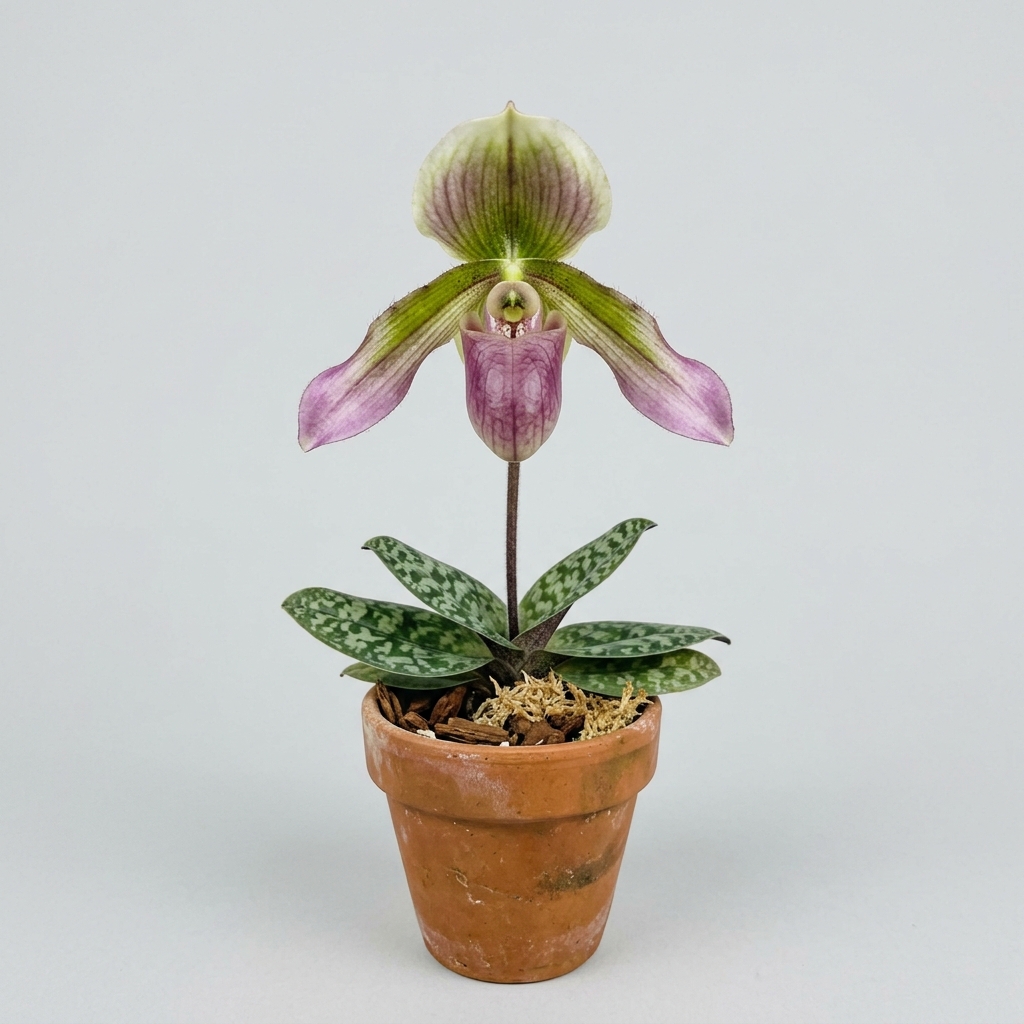
The Paphiopedilum Canhii is a highly sought-after miniature slipper orchid native to the mountainous regions of Southeast Asia, particularly Vietnam. Prized by collectors for its incredibly compact growth habit and beautifully patterned foliage, this diminutive species is ideal for growers with limited space. Despite its small stature, it stands out with its unique floral presentation and elegant, exotic appearance.
In the wild, this orchid grows in specialized microclimates, making its cultivation a rewarding challenge for dedicated hobbyists. Its striking flowers, which appear remarkably large compared to the tiny fan of leaves beneath them, showcase a delicate balance of colors that blend seamlessly into any advanced orchid collection. Understanding its specific environmental needs is the key to successfully maintaining this miniature marvel.
💡 Did You Know?
Paphiopedilum Canhii is one of the smallest slipper orchids ever discovered, with mature growths often measuring less than three inches across. First described scientifically in 2010, this Vietnamese native adapted to survive in narrow, mossy limestone crevices, allowing it to thrive in microclimates where larger plants would struggle to find a foothold.
🌿 Botanical Overview
First described scientifically in the early 21st century, Paphiopedilum Canhii represents one of the smallest species within the slipper orchid genus. Its natural habitat consists of steep limestone cliffs and moss-covered rock faces in primary evergreen forests. This lithophytic lifestyle means the plant has adapted to growing in thin layers of organic debris, requiring excellent drainage combined with constant moisture.
The vegetative growth of this orchid is exceptionally compact. A mature fan of leaves rarely exceeds a few inches in diameter. The foliage is highly ornamental, featuring a striking tessellated or mottled pattern of dark green and silvery-gray on the upper surface, often contrasted by a deep purple coloration on the leaf undersides. This attractive foliage ensures the plant remains visually appealing even when not in bloom.
🌸 Flower Characteristics
The flowers of Paphiopedilum Canhii are remarkably large relative to the overall size of the plant. Each growth produces a single, upright flower spike that rises just above the foliage. The blossom features a classic slipper orchid shape, characterized by a prominent, pouch-like labellum designed to temporarily trap pollinators. The color palette is a sophisticated blend of soft greens, purplish-pinks, and clean whites, with delicate veining running through the sepals and petals.
The dorsal sepal is typically broad and pointed, often displaying a white border that frames the darker green or purple center. The petals are slightly reflexed or spreading, giving the flower a graceful, winged appearance. Because the flower spike is relatively short, the bloom sits close to the mottled leaves, creating a perfectly proportioned and highly photogenic display.
Fragrance & Bloom Profile
Fragrance is not a primary characteristic of Paphiopedilum Canhii, and it is generally considered unscented by most growers. While some slipper orchids occasionally emit extremely faint, earthy aromas under specific temperature and humidity conditions, this species is cultivated almost exclusively for its visual beauty rather than its scent profile.
What it lacks in fragrance, it makes up for in bloom longevity. A single flower can remain pristine for four to six weeks, provided the plant is kept in a stable environment free from sudden drafts or extreme temperature fluctuations. The blooming cycle typically begins in the spring, aligning with the natural increase in light and temperature in its native habitat.
Parentage & Hybrid Lineage
Unlike many commercially available slipper orchids, Paphiopedilum Canhii is a true, naturally occurring species rather than an artificial hybrid. Its discovery has provided orchid hybridizers with an exciting new resource for breeding programs. Hybridizers value the species for its ability to pass down its ultra-miniature growth habit and beautifully mottled foliage to its offspring.
While primary hybrids involving Paphiopedilum Canhii are still relatively rare and highly sought after, early breeding efforts aim to combine its compact size with the larger, more colorful blooms of other subgenera. Because its genetic influence is still being studied, growers should treat any labeled hybrids with a degree of curiosity, as their long-term growth habits and ease of care are still being documented by the global orchid community.
🌱 Growing Conditions
Replicating the natural environment of Paphiopedilum Canhii is essential for its long-term survival. It thrives in low to medium indirect light, similar to the dappled shade found under forest canopies. Direct sunlight must be avoided at all costs, as it will quickly scorch the delicate, thin leaves and cause irreversible damage to the plant.
💡 Care Tip
To mimic its natural limestone habitat, consider adding a small amount of crushed oyster shells or dolomite lime to the potting mix. This helps maintain a stable, slightly alkaline to neutral pH and provides essential calcium that supports strong leaf and root development over time.
Temperature: wise, this orchid prefers intermediate to warm conditions. Ideal daytime temperatures range from 70°F to 80°F (21°C to 27°C), with a slight drop of 5°F to 10°F at night to encourage healthy metabolic processes. High humidity is crucial, ideally maintained between 60% and 80%. To prevent fungal issues in such humid conditions, gentle and continuous air circulation must be provided around the growing area.
Watering, Feeding & Potting Media
Because Paphiopedilum Canhii lacks pseudobulbs for water storage, it cannot tolerate prolonged periods of drought. The potting medium should be kept evenly moist but never waterlogged. Water the plant thoroughly using pure water sources, such as rainwater, distilled water, or reverse osmosis water, as slipper orchids are highly sensitive to dissolved mineral salts in tap water.
A lightweight, fast-draining potting mix is essential to prevent root suffocation. A blend of fine-grade fir bark, perlite, charcoal, and a small amount of chopped sphagnum moss works exceptionally well. Feeding should be light and consistent; apply a highly diluted, balanced orchid fertilizer once every two to three waterings during the active spring and summer growing seasons, flushing the pot with pure water occasionally to prevent salt buildup.
Blooming Season & Care Notes
The primary blooming season for Paphiopedilum Canhii occurs in the spring. As the flower bud emerges from the center of the leaf fan, it is important to maintain stable environmental conditions. Avoid moving the plant or changing its orientation to the light source, as sudden changes can cause the developing bud to blast and drop prematurely.
Once the bloom fades, the flower spike can be cut back close to the base of the leaf fan using sterilized cutting tools. Repotting is best performed every one to two years in the spring, immediately after the flowering cycle has concluded. This refreshes the organic media before it decomposes and compacts, which would otherwise restrict oxygen flow to the roots.
⚠️ Common Issues
⚠️ Common Mistake
The most common error is allowing the potting medium to dry out completely between waterings. Unlike orchids with water-storing pseudobulbs, slipper orchids rely on constant, moderate moisture. Allowing the roots to desiccate can quickly lead to leaf loss, bud blast, and severe plant decline.
- Root Rot:
Caused by overwatering or compacted potting media that retains too much moisture, leading to mushy, brown roots and limp leaves. - Bud Blast:
The premature drying and dropping of flower buds, usually triggered by sudden drops in humidity, drafts, or moving the plant during bud development. - Fungal Leaf Spot: Dark spots appearing on the foliage, often resulting from water sitting on the leaves overnight or inadequate air circulation in high-humidity environments.
- Pests:
Mealybugs and scale insects can occasionally hide in the tight crevices of the leaf fans; treat promptly with a gentle insecticidal soap or manual removal.
❓ Frequently Asked Questions
How often should I water my Paphiopedilum Canhii?
Watering frequency depends on your home environment, but the potting medium should remain consistently damp. Typically, this means watering every five to seven days. Always check the moisture level of the mix just below the surface before watering, and never let the pot sit in standing water.
Does this orchid require a cold winter rest to bloom?
No, Paphiopedilum Canhii does not require a severe cold period to initiate blooming. However, a subtle drop in nighttime temperatures during the late autumn and winter months, combined with a slight reduction in watering, can help stimulate the development of flower spikes in the spring.
Can Paphiopedilum Canhii be grown successfully under LED lights?
Yes, this miniature orchid adapts very well to indoor growing under artificial LED lights. Position the plant at a distance where it receives bright, diffused light without experiencing excessive heat from the fixture. Monitor the leaf color; if the foliage begins to turn pale or yellowish, move the light further away.
Why are the leaf tips of my orchid turning brown?
Brown leaf tips are often a sign of low humidity or mineral buildup in the potting medium from tap water or over-fertilization. Ensure you are using pure water, flush the pot thoroughly to wash away accumulated salts, and maintain humidity levels above sixty percent.
⭐ Final Growing Notes
Cultivating the miniature Paphiopedilum Canhii is a deeply rewarding endeavor for any orchid enthusiast who appreciates the finer details of botanical species. By providing stable intermediate temperatures, high humidity, consistent moisture, and gentle air movement, you can enjoy both its exquisite mottled foliage and its uniquely beautiful spring blooms for many years to come.
⚕️ Health, Safety & Edibility
Understanding how a plant interacts with people, pets, and the surrounding environment is part of responsible cultivation. This section uses conservative, general guidance and does not replace professional medical or veterinary advice.
Human Safety: No published evidence currently identifies species-specific toxicity concerns for Paphiopedilum Canhii during normal handling. As with most ornamental plants, it should not be intentionally consumed.
Pet Safety: Published information does not indicate that this orchid commonly poses a toxicity concern for cats or dogs. However, chewing leaves, flowers, roots, or potting media may still cause mild digestive upset.
Edibility: This orchid is cultivated for ornamental display rather than food. Ornamental plants may carry fertilizers, pesticides, or other horticultural treatments that make them unsuitable for consumption.
Skin Contact: Routine handling is not generally associated with skin irritation. Gardeners with sensitive skin may prefer wearing gloves when repotting, pruning, or handling potting media.
🌱 Propagation Tip
As a sympodial orchid, Paphiopedilum Canhii is propagated by division rather than stem cuttings. Only attempt division when the plant has at least six healthy, mature growths, ensuring each new division retains at least three active fans with an established root system to support recovery.
⭐ Expert Advice
When growing this miniature species, prioritize gentle air movement. Because it requires high of sixty to eighty percent, stagnant air can rapidly invite crown rot or fungal leaf spot. A small, low-powered fan running nearby is the best defense against these pathogens.




Leave A Comment