
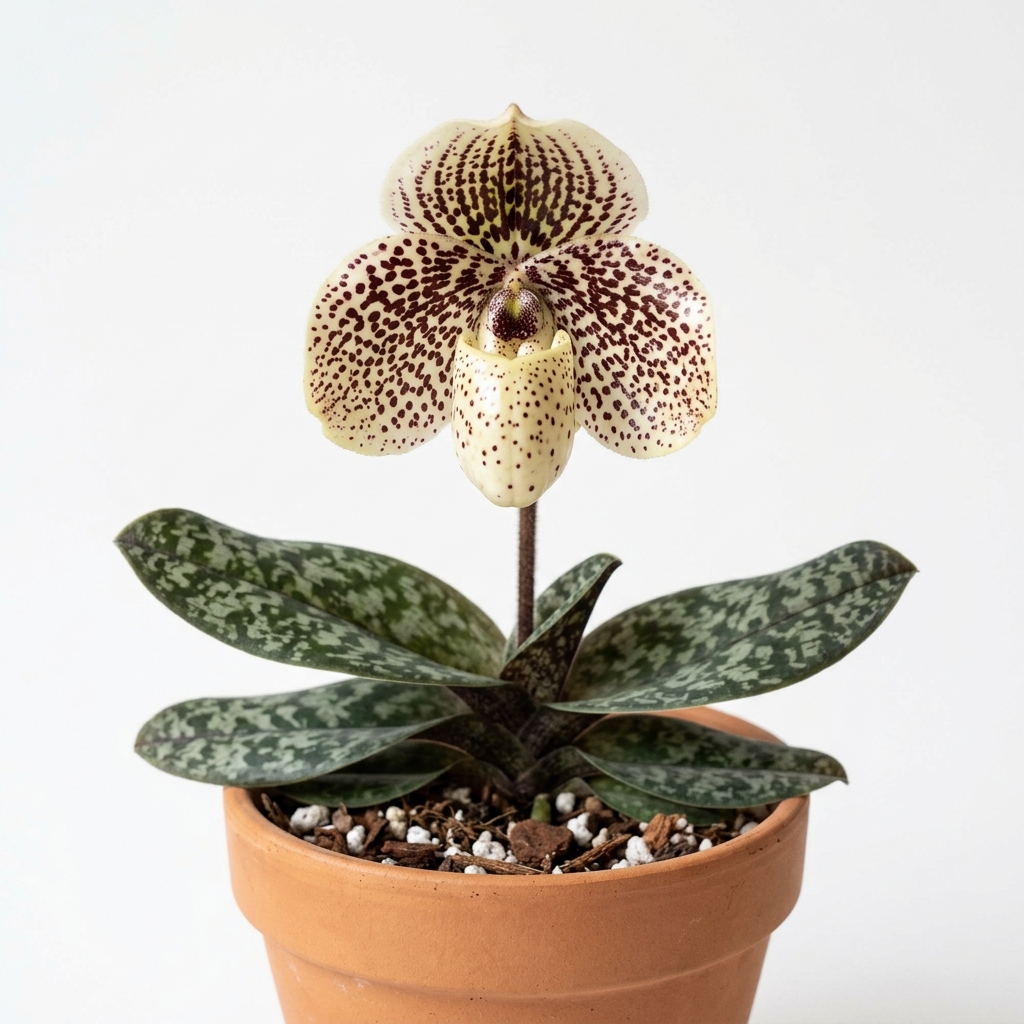
Paphiopedilum Godefroyae is a highly prized slipper orchid native to the tropical regions of Southeast Asia, particularly southern Thailand. This compact species is celebrated among collectors for its striking, tessellated foliage and its distinctive, rounded flowers that feature a creamy-white to soft yellow base heavily patterned with dark burgundy or chocolate-brown spots. Its dwarf growth habit makes it an exceptional choice for indoor growers with limited space who appreciate exotic, intricate floral displays.
In the wild, this orchid is primarily lithophytic, growing on limestone cliffs where it receives excellent drainage and constant moisture. Replicating these unique conditions in a home or greenhouse environment is the key to successfully cultivating this species. While it requires a bit more attention to potting media and watering than more common mass-market orchids, its stunning mottled leaves provide year-round visual interest even when the plant is not in bloom.
💡 Did You Know?
In its native Thailand, Paphiopedilum Godefroyae grows as a lithophyte directly on vertical limestone cliffs. Its roots cling to the rock faces, absorbing calcium and minerals from the dissolving stone. This unique adaptation is why experienced growers add crushed oyster shells to their potting mix to keep the plant healthy.
🌿 Botanical Overview
Paphiopedilum Godefroyae belongs to the Brachypetalum section of the genus Paphiopedilum, a group characterized by their short flower spikes, rounded flower shapes, and beautifully mottled leaves. In their native habitats along the coasts of Thailand, these plants grow in pockets of organic debris and moss nestled directly on limestone rock faces, often under the shade of light forest canopies. This natural setting exposes them to high humidity, warm temperatures, and a constant supply of calcium from the dissolving limestone.
The vegetative growth of this orchid is highly attractive. The leaves are thick, fleshy, and arranged in a tight, fan-shaped rosette. The upper surface of the foliage displays a striking marbled pattern of dark green and silvery-gray, while the undersides are often heavily speckled with purple. Because of this compact growth habit, mature specimens rarely exceed a few inches in height, making them ideal for windowsill cultivation or terrarium setups.
🌸 Flower Characteristics
The flowers of Paphiopedilum Godefroyae are the primary reason for its popularity. Unlike many other slipper orchids that feature elongated, drooping petals, this species produces remarkably rounded, flat blooms. The dorsal sepal and the lateral petals are broad and overlapping, creating a full, circular silhouette that frames the smooth, egg-shaped pouch (labellum).
The base color of the blossom is typically a soft cream, ivory, or pale yellow. This background is heavily decorated with intricate, dark maroon or reddish-brown spots that can merge into larger blotches, particularly toward the center of the flower. Each flower is borne individually on a short, upright, purple-toned peduncle, presenting the bloom just above the mottled foliage for a striking visual contrast.
Fragrance & Bloom Profile
While some slipper orchids are grown for their scent, Paphiopedilum Godefroyae is generally considered to be unscented. Some growers report a very faint, earthy, or slightly sweet aroma when the plant is kept in warm, humid conditions, but this is highly variable and not a guaranteed trait of the species.
What the flowers lack in fragrance, they make up for in longevity. A single bloom can remain in pristine condition for four to six weeks, and sometimes even longer if kept in a cool, draft-free location. The blooming cycle typically occurs during the spring and summer months, though healthy, mature plants can occasionally produce flowers at other times of the year.
Parentage & Hybrid Lineage
Paphiopedilum Godefroyae is a naturally occurring species rather than a man-made hybrid. However, it has played a significant role in orchid hybridization. Breeders frequently use this species to introduce its compact growth habit, rounded flower form, and intense spotting patterns to new Paphiopedilum hybrids.
Within the botanical community, there has been historical debate regarding the classification of certain regional variants, such as Paphiopedilum Godefroyae var. leucochilum, which features a pure white pouch without spots. While some taxonomists treat these variants as distinct species, most growers and horticultural societies group them together under the broader godefroyae umbrella, appreciating the natural diversity within the species.
🌱 Growing Conditions
To keep Paphiopedilum Godefroyae thriving, it is essential to provide intermediate to warm temperatures. Ideal daytime temperatures should range between 75°F and 85°F, with a slight drop at night to around 65°F. This temperature fluctuation helps stimulate healthy growth and eventual flower spike development.
💡 Care Tip
Always water this orchid early in the day and apply water directly to the potting medium. Avoid splashing water into the center of the leaf fan, as trapped moisture in the crown can quickly lead to fatal crown rot.
Light requirements are moderate. This orchid prefers bright, filtered, indirect light, similar to the conditions favored by Phalaenopsis. Direct sunlight must be avoided, as it can easily scorch the fleshy, mottled leaves. High humidity is also crucial; aiming for a relative humidity level between 60% and 80% with gentle, continuous air movement will prevent stagnant air and reduce the risk of fungal infections.
Watering, Feeding & Potting Media
Unlike many other orchid genera, Paphiopedilum species do not possess pseudobulbs to store water. Consequently, they should never be allowed to dry out completely. The potting medium should be kept evenly moist but never soggy. Water the plant thoroughly when the top layer of the media begins to feel slightly dry to the touch.
Feeding should be done with a highly diluted, balanced orchid fertilizer. A quarter-strength solution applied every two to three waterings during the active growing season is sufficient. Because this species is lithophytic on limestone, incorporating a calcium source—such as crushed oyster shells or dolomite lime—into the potting mix is highly beneficial. A well-draining medium consisting of fine fir bark, perlite, charcoal, and a small amount of chopped sphagnum moss will provide the perfect balance of moisture retention and aeration.
Blooming Season & Care Notes
The primary blooming season for Paphiopedilum Godefroyae is spring through mid-summer. As the flower spike emerges from the center of the leaf fan, avoid getting water on the developing bud, as this can cause bud blast. Once the flower has completely faded, cut the spike back close to the base of the fan using a sterile cutting tool.
Repotting should be performed every one to two years, ideally in the spring after the blooming cycle has finished. This refreshes the organic media before it begins to break down and compact, which can suffocate the roots. When repotting, gently remove the old media, inspect the roots, and place the plant in a slightly larger pot, ensuring the base of the leaf fan sits just at the surface of the new medium.
⚠️ Common Issues
⚠️ Common Mistake
The most common mistake is letting the potting medium dry out completely. Unlike many common orchids, Paphiopedilums do not have pseudobulbs to store water, and dry roots will quickly shrivel and die.
- Crown Rot:
Caused by water sitting in the center of the leaf fan. Always water the potting medium directly and ensure good air circulation. - Root Rot:
Occurs when the potting medium degrades and holds too much water. Repot regularly and avoid overwatering. - Bud Blast:
The premature drying and dropping of flower buds, often triggered by sudden changes in temperature, low humidity, or water contact on the bud. - Mealybugs and Scale: These pests can hide in the tight crevices at the base of the leaves. Treat promptly with insecticidal soap or horticultural oil.
- Leaf Scorch: Bleached or dry brown patches on the foliage, indicating the plant is receiving too much direct sunlight.
❓ Frequently Asked Questions
How often should I water my Paphiopedilum Godefroyae?
Typically, this orchid should be watered once or twice a week, but this depends on your home’s humidity and temperature. The goal is to keep the potting medium consistently damp but never waterlogged. Never let the pot sit in standing water.
Does this orchid require a winter rest period?
No, Paphiopedilum Godefroyae does not require a strict winter rest. However, because growth naturally slows down during the shorter, cooler days of winter, you should slightly reduce watering frequency and suspend fertilizing until active growth resumes in spring.
Why are the leaf tips of my slipper orchid turning brown?
Brown leaf tips are often a sign of low humidity, mineral buildup from hard tap water, or over-fertilization. Using distilled water or rainwater and maintaining a humidity level above 60% can help prevent this issue.
Can I grow Paphiopedilum Godefroyae under artificial lights?
Yes, this species adapts exceptionally well to artificial lighting. Grow lights, such as LEDs or fluorescent tubes placed a moderate distance above the plant, can provide the consistent, high-quality light needed for robust growth and regular blooming.
⭐ Final Growing Notes
Paphiopedilum Godefroyae is a rewarding and captivating orchid that brings a touch of exotic elegance to any collection. By respecting its natural affinity for calcium-rich environments, maintaining consistent moisture, and providing bright, filtered light, growers can enjoy both its stunning mottled foliage and its beautifully patterned, long-lasting blooms for many years to come.
⚕️ Health, Safety & Edibility
Understanding how a plant interacts with people, pets, and the surrounding environment is part of responsible cultivation. This section uses conservative, general guidance and does not replace professional medical or veterinary advice.
Human Safety: No published evidence currently identifies species-specific toxicity concerns for Paphiopedilum Godefroyae during normal handling. As with most ornamental plants, it should not be intentionally consumed.
Pet Safety: Published information does not indicate that this orchid commonly poses a toxicity concern for cats or dogs. However, chewing leaves, flowers, roots, or potting media may still cause mild digestive upset.
Edibility: This orchid is cultivated for ornamental display rather than food. Ornamental plants may carry fertilizers, pesticides, or other horticultural treatments that make them unsuitable for consumption.
Skin Contact: Routine handling is not generally associated with skin irritation. Gardeners with sensitive skin may prefer wearing gloves when repotting, pruning, or handling potting media.
🌱 Propagation Tip
This orchid is propagated by division. When repotting a mature specimen, gently separate the fans, ensuring that each new division has at least two or three healthy fans and a well-developed root system of its own.
⭐ Expert Advice
To encourage regular blooming, ensure your orchid experiences a slight drop of about 10 degrees Fahrenheit at night. This natural fluctuation mimics its native habitat and triggers the development of flower spikes.

Leave A Comment