
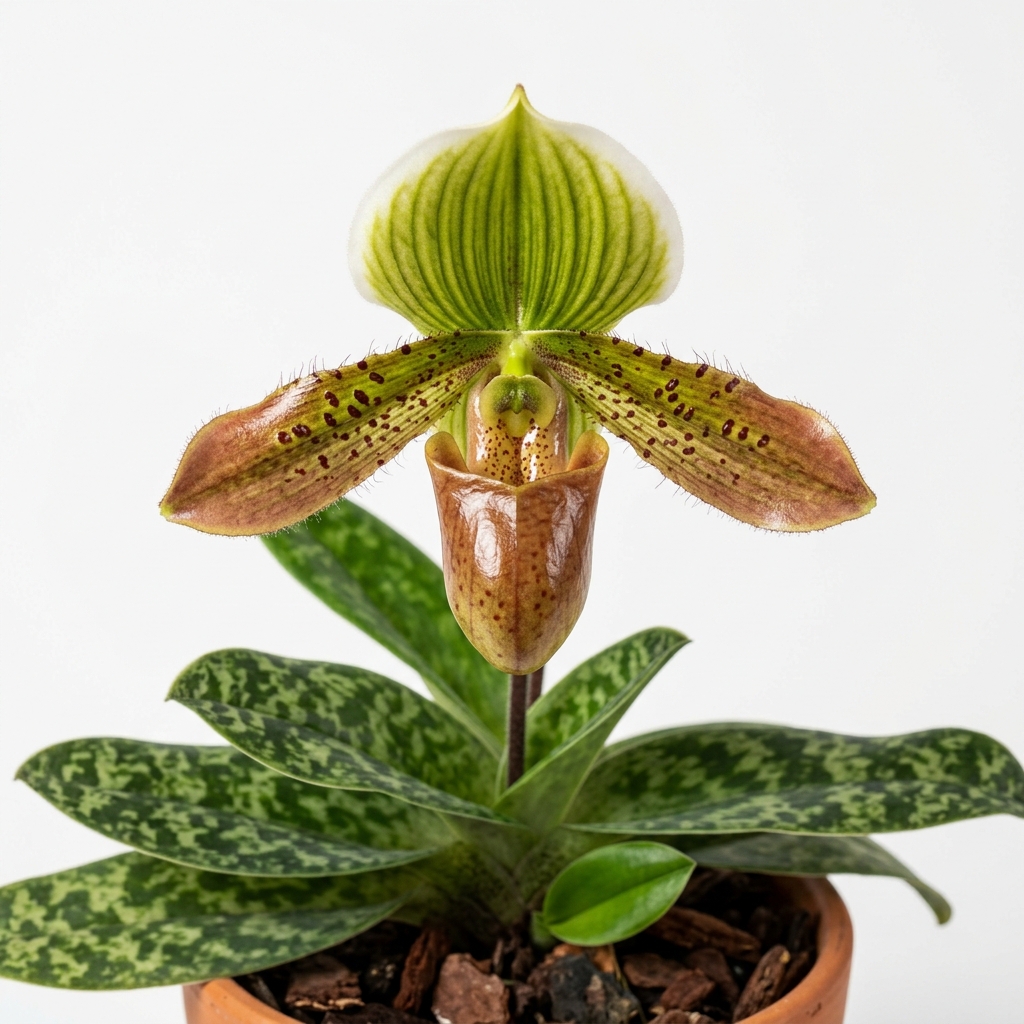
Paphiopedilum Mastersianum is a highly prized slipper orchid species native to the Moluccas of Indonesia, celebrated by collectors for its striking, glossy flowers and beautifully patterned foliage. This terrestrial orchid features tessellated leaves with a distinct mottled pattern of dark and light green, making it an attractive specimen even when not in bloom. Growers particularly value this species for its unique, varnished-like floral texture and its elegant, upright growth habit.
In the horticultural world, Paphiopedilum Mastersianum is regarded as a classic representative of the tropical slipper orchids, offering a sophisticated display of copper, green, and mahogany tones. While it requires consistent environmental conditions to thrive, its slow-growing yet resilient nature rewards patient enthusiasts with long-lasting blooms. It serves as an excellent focal point in intermediate-to-warm orchid collections, bridging the gap between ease of care and exotic botanical appeal.
💡 Did You Know?
Paphiopedilum Mastersianum is native to the volcanic islands of Ambon and Buru in Indonesia. In these wild habitats, it grows on steep, shaded slopes and limestone cliffs, often rooted in a thin layer of moss and decaying organic matter. This unique natural environment explains why the species thrives in humid, well-drained conditions with constant air movement.
🌿 Botanical Overview
Paphiopedilum Mastersianum is a distinct species within the subgenus Sigmatopetalum, native to the shaded forest floors of Ambon and Buru islands in Indonesia. It typically grows as a terrestrial or lithophytic plant, anchoring its roots in leaf litter and mossy crevices where moisture is abundant and consistent. The plant produces compact growths of strap-like, leathery leaves that display a prominent mottled or tessellated pattern, a characteristic feature of many warm-growing slipper orchids.
The root system of this orchid is typical of the genus, consisting of thick, hairy, brownish roots that lack pseudobulbs. Because it lacks water-storing pseudobulbs, the plant relies on its fleshy leaves and a constant supply of moisture in its growing medium to survive. This growth habit dictates much of its cultivation requirements, demanding a careful balance of moisture and aeration.
🌸 Flower Characteristics
The blossoms of Paphiopedilum Mastersianum are renowned for their high-gloss, almost varnished appearance. Each single-flowered inflorescence rises on a tall, dark, pubescent spike, presenting the bloom well above the foliage. The dorsal sepal is typically broad and green, often bordered by a clean white or pale yellow margin. The petals extend horizontally or slightly downward, showcasing a copper-green base color adorned with dark, raised warts along the upper margins.
The defining feature of the flower is its deep, pouch-like lip (labellum), which resembles a slipper. This pouch is usually a rich mahogany or copper-brown color, with a smooth, shiny texture that catches the light. A single bloom can measure up to four inches (ten centimeters) across and can remain in pristine condition on the plant for six to eight weeks, providing an exceptionally long-lasting floral display.
Fragrance & Bloom Profile
Unlike some orchid genera that emit strong, sweet perfumes to attract pollinators, Paphiopedilum Mastersianum is generally considered unscented. There are no consistent grower reports of a noticeable fragrance associated with this species. Its evolutionary strategy relies primarily on visual cues—specifically its glossy texture, contrasting colors, and pouch structure—to attract specific insect pollinators in its native habitat.
The bloom profile is characterized by its singular presentation. While it rarely produces multi-floral spikes, the sheer longevity and structural integrity of the single flower more than compensate for the lack of quantity. The flowers open slowly, taking several days to fully expand, and maintain their rigid, wax-like form throughout the entire blooming cycle.
Parentage & Hybrid Lineage
As a naturally occurring species rather than a man-made hybrid, Paphiopedilum Mastersianum does not have a hybrid parentage. It was formally described in the late 19th century and named in honor of Dr. Maxwell T. Masters, a prominent British botanist. In orchid breeding, however, this species has been highly valued as a parent plant.
Hybridizers have utilized Paphiopedilum Mastersianum to introduce its glossy texture, warm copper tones, and strong, upright flower spikes into modern complex hybrids. When crossed with other slipper orchids, it often passes down its distinctive mottled foliage and the characteristic dark warts on the petal margins. Because wild populations are protected, modern cultivated specimens are typically produced through nursery-raised seed strains or flasking programs.
🌱 Growing Conditions
To cultivate Paphiopedilum Mastersianum successfully, growers must replicate its native tropical forest floor environment. It thrives in low to moderate indirect light, similar to the conditions preferred by Phalaenopsis orchids. Direct sunlight must be avoided, as it can easily scorch the beautiful mottled leaves and cause the plant to dehydrate. East- or shaded south-facing windows, or under-bench placement in a greenhouse, are ideal.
💡 Care Tip
To maintain the vibrant, mottled pattern of the foliage, place your orchid in a location with bright, filtered . If the leaves start to turn a pale, washed-out yellow, the is too strong; if they turn a deep, solid green with no visible patterning, the may be too low.
Temperature: wise, this species prefers intermediate to warm conditions. Daytime temperatures should ideally range between 75°F and 85°F (24°C to 29°C), with a slight drop at night to around 60°F to 65°F (15°C to 18°C). High humidity is crucial, ideally maintained between 60% and 80%. To prevent fungal and bacterial issues in such humid conditions, gentle and continuous air movement must be provided around the foliage.
Watering, Feeding & Potting Media
Because Paphiopedilum Mastersianum lacks pseudobulbs, it has no capacity to store water for prolonged periods. The potting medium should remain evenly moist but never waterlogged. Water the plant thoroughly when the top half-inch of the medium begins to feel dry to the touch. Using rainwater, distilled water, or reverse osmosis water is highly recommended, as slipper orchids are sensitive to mineral buildup and salts in tap water.
A well-draining, moisture-retentive potting mix is essential. A standard mix of fine-grade fir bark, perlite, charcoal, and a small amount of chopped sphagnum moss works exceptionally well. Feeding should be light and consistent; use a balanced, water-soluble orchid fertilizer diluted to one-quarter strength every two to three weeks. Flush the pot with pure water once a month to wash away any accumulated fertilizer salts.
Blooming Season & Care Notes
The primary blooming season for Paphiopedilum Mastersianum typically spans from late spring through the summer months, though well-grown plants can occasionally bloom at other times of the year. Once the flower spike begins to emerge from the center of the leaf span, avoid changing the plant’s orientation relative to the light source, as this can cause the developing bud to twist or stall.
After the flower eventually fades, cut the spike down close to the base of the leaves using a sterile cutting tool. Repotting is best performed every one to two years, immediately after the blooming cycle concludes. Slipper orchids prefer tight quarters, so only increase the pot size if the root system has completely outgrown the current container.
⚠️ Common Issues
⚠️ Common Mistake
A frequent error is letting water pool in the center of the leaf fan, especially during evening waterings. Without adequate airflow, trapped water quickly leads to crown rot, which can destroy the entire plant within days. Always water early in the day so the foliage dries before nightfall.
- Root Rot:
Caused by overwatering or compacted, decaying potting media that deprives roots of oxygen. - Mealybugs and Scale: These pests frequently hide in the tight crevices at the base of the leaves and under the flower bracts.
- Leaf Scorch: Bleached or brown patches on the foliage indicate that the plant is receiving too much direct sunlight.
- Bud Blast:
Sudden drops in humidity, extreme temperature fluctuations, or drafty locations can cause developing buds to yellow and die before opening. - Bacterial Soft Rot: Appears as wet, sunken spots on the leaves, often due to water sitting in the crown of the plant overnight.
❓ Frequently Asked Questions
How often should I water my Paphiopedilum Mastersianum?
Watering frequency depends on your home’s humidity and temperature, but generally, this orchid should be watered every 5 to 7 days. The goal is to keep the potting medium consistently damp, like a wrung-out sponge, without letting it sit in standing water.
Does this orchid require a winter rest period?
No, Paphiopedilum Mastersianum does not require a dry winter rest. Because it is a warm-growing tropical species, it should receive consistent watering, warmth, and humidity throughout the entire year, though growth may slow slightly during the darker winter months.
Why are the tips of my orchid’s leaves turning brown?
Brown leaf tips are usually a sign of low humidity, underwatering, or a buildup of mineral salts from tap water or fertilizer. Ensure you are using pure water, maintain humidity above 60%, and flush the pot regularly to prevent salt accumulation.
Can I grow Paphiopedilum Mastersianum under artificial LED lights?
Yes, this species adapts exceptionally well to artificial LED grow lights. Position the plant about 12 to 18 inches below standard LED tubes, ensuring the light is diffused and not intense enough to cause the mottled leaf pattern to fade or turn yellow.
⭐ Final Growing Notes
Paphiopedilum Mastersianum remains a jewel among slipper orchid species, offering a captivating blend of ornamental foliage and highly polished, exotic blooms. While it demands attentive watering and high humidity, its compact size and adaptability to indoor conditions make it a highly rewarding project for intermediate growers. By respecting its need for consistent moisture and shaded warmth, you can enjoy its spectacular, long-lasting flowers year after year.
⚕️ Health, Safety & Edibility
Understanding how a plant interacts with people, pets, and the surrounding environment is part of responsible cultivation. This section uses conservative, general guidance and does not replace professional medical or veterinary advice.
Human Safety: No published evidence currently identifies species-specific toxicity concerns for Paphiopedilum Mastersianum during normal handling. As with most ornamental plants, it should not be intentionally consumed.
Pet Safety: Published information does not indicate that this orchid commonly poses a toxicity concern for cats or dogs. However, chewing leaves, flowers, roots, or potting media may still cause mild digestive upset.
Edibility: This orchid is cultivated for ornamental display rather than food. Ornamental plants may carry fertilizers, pesticides, or other horticultural treatments that make them unsuitable for consumption.
Skin Contact: Routine handling is not generally associated with skin irritation. Gardeners with sensitive skin may prefer wearing gloves when repotting, pruning, or handling potting media.
🌱 Propagation Tip
Slipper orchids like this species cannot be propagated by leaf cuttings or backbulbs. Instead, propagation is achieved by carefully dividing mature plants during repotting. Ensure that each division has at least two to three healthy, mature growths with active root systems to guarantee survival.
⭐ Expert Advice
When repotting, avoid using oversized pots. Slipper orchids thrive when their roots are slightly snug. A pot that is too large holds excess moisture for too long, significantly increasing the risk of root rot. Choose a container that just accommodates the existing root mass.

Leave A Comment