
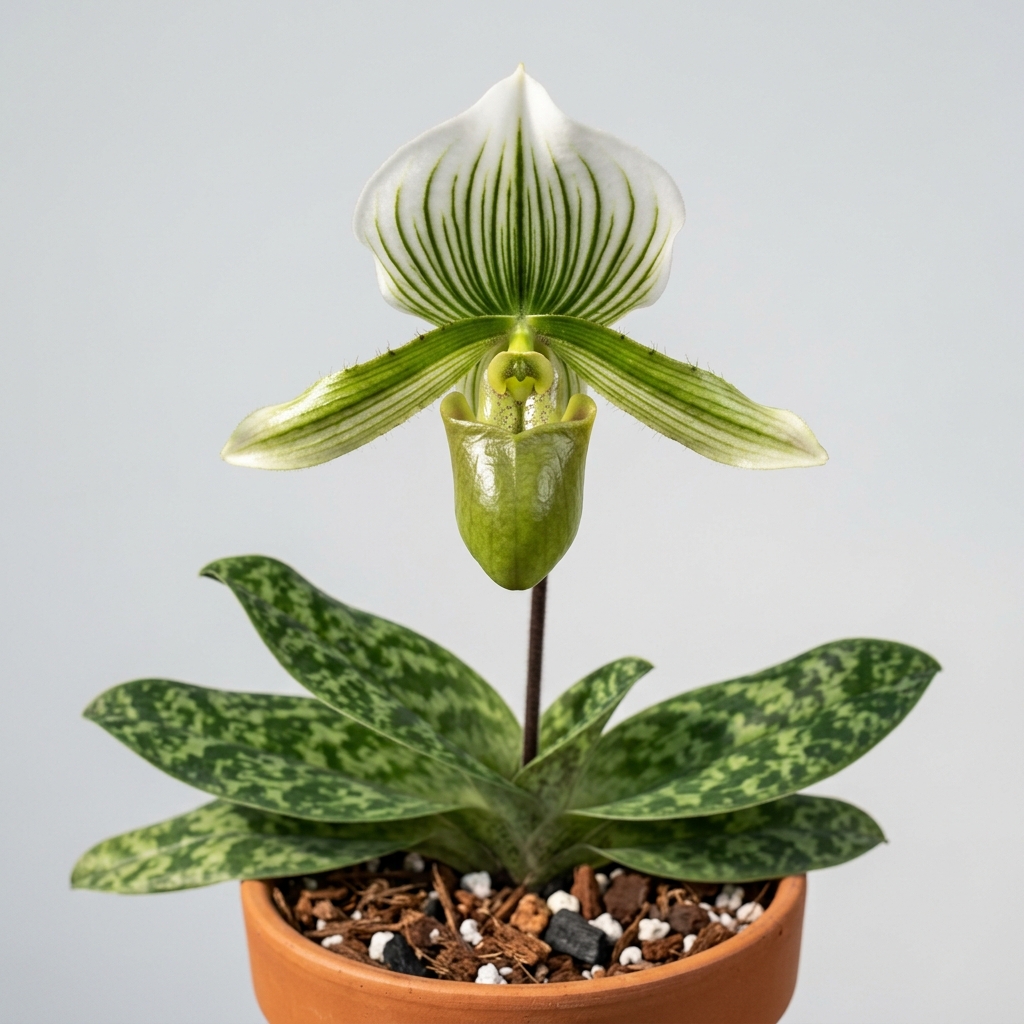
Paphiopedilum Maudiae is one of the most famous and recognizable slipper orchids in the horticultural world, cherished by both novice growers and seasoned collectors. Belonging to the genus Paphiopedilum, this terrestrial or lithophytic orchid is celebrated for its striking, mottled foliage and uniquely structured, pouch-like flowers. Its ease of culture and reliable blooming habit make it an ideal representative of the slipper orchid group, bringing architectural elegance to indoor growing spaces.
Cultivated for over a century, this classic hybrid group is highly valued for its long-lasting blossoms that can remain pristine for several weeks. The plants typically present a compact growth habit, making them highly suitable for windowsill cultivation or under-light setups. With its distinctive foliage and dramatic floral presentation, Paphiopedilum Maudiae remains a cornerstone of orchid collections worldwide.
💡 Did You Know?
Paphiopedilum Maudiae belongs to the Paphiopedilum orchid group, where flower presentation is often just as important as . White-flowered cultivars are especially valued indoors because their pale blooms reflect well and pair easily with many home, greenhouse, and display settings.
🌿 Botanical Overview
Paphiopedilum Maudiae is characterized by its sympodial growth habit, producing fans of attractive, tessellated leaves. The foliage itself is highly ornamental, featuring a marbled pattern of light and dark green that provides visual interest even when the plant is not in bloom. Unlike many epiphytic orchids, Paphiopedilum species lack pseudobulbs, meaning they store less water and rely on their root systems and fleshy leaves to maintain hydration.
The root system of this orchid consists of thick, fleshy, brown roots covered in fine root hairs, which are adapted to growing in leaf litter and loose organic debris. Because they do not possess water-storing pseudobulbs, these plants require a more consistent moisture regime than their epiphytic relatives, such as Phalaenopsis or Cattleya.
🌸 Flower Characteristics
The flowers of Paphiopedilum Maudiae are renowned for their distinctive slipper-shaped lip, known as the pouch or labellum, which evolved to temporarily trap pollinators. The dorsal sepal is typically large, prominent, and fan-shaped, often featuring striking vertical striping in shades of green, white, or deep burgundy. The lateral petals extend horizontally or slightly downward, frequently adorned with fine hairs or dark warts along the margins.
Depending on the specific color form—such as the green-and-white album types or the dark, vinicolor coloratum types—the color palette ranges from clean, icy greens to dramatic, near-black purples. A single flower is produced per upright, pubescent spike, presenting a stately and elegant silhouette that can last up to eight weeks in optimal conditions.
Fragrance & Bloom Profile
While some slipper orchids possess subtle scents, Paphiopedilum Maudiae is generally regarded as fragrance-free. Any noticeable scent is not consistently documented in common grower references, and the primary appeal of this cultivar remains its exceptional visual geometry and long-lasting floral display. The blooms are highly durable, resisting fading and wilting far better than many softer-petaled orchid varieties.
Parentage & Hybrid Lineage
Paphiopedilum Maudiae is a primary hybrid originally registered in the early 20th century, resulting from the cross between Paphiopedilum lawrenceanum and Paphiopedilum callosum. While this classic parentage is widely accepted in historical horticultural literature, modern Maudiae-type hybrids often incorporate additional breeding lines to enhance color intensity, flower size, and vigor. Consequently, contemporary plants sold under this name may exhibit slight variations in form and color depending on their specific genetic background.
🌱 Growing Conditions
This orchid thrives in low to moderate light conditions, making it an excellent candidate for east- or shaded south-facing windows. Direct afternoon sunlight should be avoided, as it can easily scorch the sensitive, mottled foliage. If the leaves turn pale or yellowish, the plant may be receiving too much light; conversely, dark green leaves with no variegation contrast may indicate insufficient light.
💡 Care Tip
For best results, grow Paphiopedilum Maudiae in bright filtered with steady and gentle airflow. Avoid placing the plant in harsh midday sun, but do not keep it in a dark corner; weak is one of the most common reasons cultivated orchids refuse to rebloom.
Temperature: wise, Paphiopedilum Maudiae prefers intermediate to warm conditions, ideally ranging from 65°F to 80°F (18°C to 27°C) during the day, with a slight drop at night. Maintain relative humidity levels between 50% and 70%, supported by adequate airflow to prevent stagnant air, which can encourage fungal pathogens.
Watering, Feeding & Potting Media
Because Paphiopedilum Maudiae lacks pseudobulbs, the potting medium should never be allowed to dry out completely. Water the plant thoroughly just as the medium approaches dryness, typically once or twice a week depending on environmental conditions. Use rainwater, distilled water, or low-mineral tap water, as slipper orchids can be sensitive to salt buildup.
Feed with a balanced, highly diluted orchid fertilizer (such as a quarter-strength weekly application) during the active growing season, flushing the pot with pure water periodically to remove residual salts. The ideal potting medium is a well-draining, moisture-retentive mix, typically composed of fine-grade fir bark, perlite, charcoal, and a small amount of sphagnum moss to maintain consistent humidity around the roots.
Blooming Season & Care Notes
Paphiopedilum Maudiae can bloom at various times of the year, though autumn and spring are the most common seasons. Under optimal care, vigorous plants may produce blooms twice a year from mature, newly completed leaf fans. Once the flower has faded, cut the spike down to the base of the leaf fan to allow the plant to redirect its energy into producing new growths.
Repotting should be performed every one to two years, preferably just after flowering or in the spring when new root growth is initiated. Avoid over-potting; choose a container that snugly accommodates the root mass, as these orchids prefer slightly tight quarters to thrive.
⚠️ Common Issues
⚠️ Common Mistake
The most common mistake is by calendar instead of root and potting-media condition. Paphiopedilum roots need moisture and air at the same time, so constantly wet bark or sphagnum can lead to root loss even when the leaves still look healthy.
- Root Rot:
Caused by overwatering or compacted, poorly draining media that suffocates the roots. - Leaf Spotting: Fungal or bacterial spots can develop if water sits on the leaves overnight or if airflow is inadequate.
- Bud Blast:
Sudden drops in humidity, drafts, or water stress can cause developing buds to turn yellow and drop before opening. - Dehydration:
Indicated by wrinkled, limp leaves, often due to underwatering or a loss of roots from rot. - Pests:
Mealybugs and spider mites can occasionally hide in the tight crevices of the leaf fans or under the flowers.
❓ Frequently Asked Questions
How do I get my Paphiopedilum Maudiae to rebloom?
To encourage reblooming, ensure the plant receives adequate indirect light and a slight drop in night temperatures (about 10°F or 5°C) in the autumn. Healthy growth of new leaf fans is essential, as flowers only emerge from newly matured fans.
Why are the leaves on my slipper orchid turning yellow?
Yellowing leaves can indicate excessive direct sunlight, which scorches the foliage, or natural aging if the oldest leaves at the base of a fan are shedding. If new leaves are yellowing, check the roots for rot caused by overwatering.
Can I grow Paphiopedilum Maudiae under LED lights?
Yes, this orchid adapts exceptionally well to artificial lighting. Place the plant under moderate-intensity LED grow lights, ensuring the light source is positioned far enough away to prevent heat stress or foliage bleaching.
Does this orchid require a winter rest period?
Unlike some orchid genera, Paphiopedilum Maudiae does not require a dry winter dormancy. Maintain consistent watering and humidity year-round, though you may slightly reduce fertilizer applications during the darker winter months when growth slows.
⭐ Final Growing Notes
With its striking mottled foliage and architectural, long-lasting blooms, Paphiopedilum Maudiae remains an exceptional choice for indoor gardeners seeking a rewarding slipper orchid experience. By maintaining consistent moisture, moderate humidity, and filtered light, growers can enjoy the elegant presence of this classic hybrid for many years to come.
🌱 Propagation Tip
Propagation should be approached patiently. Most home growers should wait for natural keikis or divide only mature, healthy plants when the orchid type allows it. Never remove a young growth until it has strong roots and enough leaves to support itself away from the parent plant.
⭐ Expert Advice
Repot after flowering when fresh root tips begin to appear. This timing helps the plant anchor quickly into new bark or sphagnum and reduces stress, especially for orchids grown indoors where airflow, , and drying speed can change from season to season.




Leave A Comment