
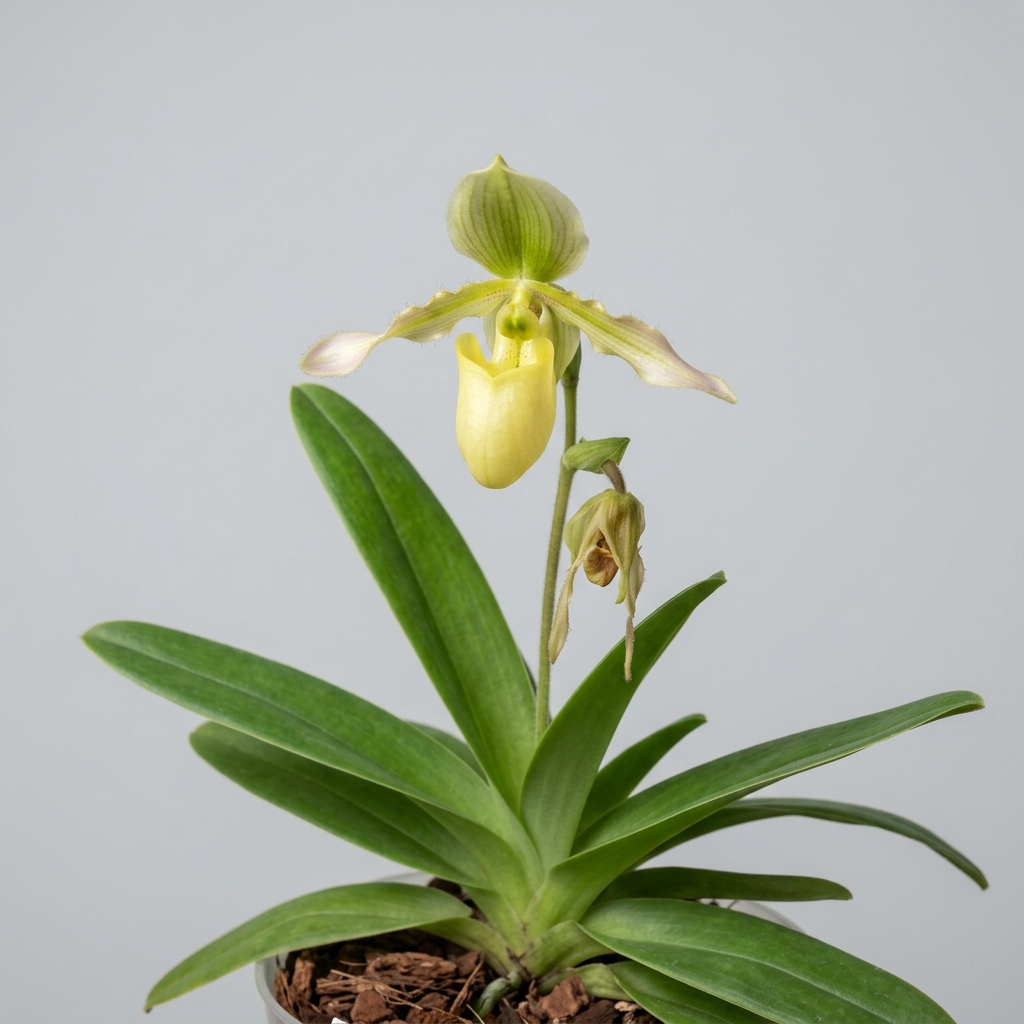
Paphiopedilum Primulinum is a highly prized miniature slipper orchid native to the humid forests of Sumatra, Indonesia. Renowned for its unique sequential blooming habit, this species produces a single flower spike that can continuously yield delicate blossoms over several months, making it an exceptional choice for indoor growers and orchid enthusiasts alike.
Unlike many of its mottled-leaf relatives in the Paphiopedilum genus, this orchid features elegant, solid green foliage that provides a clean, minimalist backdrop for its soft, primrose-yellow to pale green flowers. Its compact growth habit and relatively forgiving nature make it an accessible entry point for those looking to explore the fascinating world of slipper orchids.
💡 Did You Know?
The species name 'primulinum' refers to the primrose-yellow color of its flowers. Unlike many other slipper orchids that produce a single, dramatic bloom before going dormant, a single flower spike of this remarkable species can continuously produce up to twenty or more flowers in succession over the course of a year.
🌿 Botanical Overview
Paphiopedilum Primulinum is native to the northern regions of Sumatra, where it typically grows as a terrestrial or lithophytic plant. In its natural habitat, it is found nestled in limestone crevices, leaf litter, and mossy banks under the dense canopy of tropical forests. This shaded environment dictates its preference for lower light levels compared to many other orchid genera.
As a member of the subgenus Cochlopetalum, this orchid is characterized by its compact, fan-shaped growth habit. It lacks pseudobulbs, meaning it relies on its thick, fleshy roots and succulent leaves to retain moisture. The solid green, strap-like leaves grow in a neat rosette, making the plant highly attractive even when it is not in active bloom.
🌸 Flower Characteristics
The blossoms of Paphiopedilum Primulinum are celebrated for their delicate, pastel coloration and distinctive structure. The most prominent feature is the pouch-shaped labellum, which is typically a soft primrose yellow or pale greenish-yellow. This pouch is framed by narrow, spreading lateral petals that often exhibit a slight twist and are fringed with fine, dark hairs along their margins.
The dorsal sepal is relatively small, neat, and hooded slightly over the center of the flower. What makes this orchid truly remarkable is its sequential flowering habit. Rather than opening all its buds at once, the inflorescence produces one or occasionally two flowers at a time. As one bloom fades and drops, a new bud matures and opens further up the slowly extending stem.
Fragrance & Bloom Profile
This orchid is generally considered non-fragrant, focusing its energy instead on the continuous production of flowers. While some growers occasionally report a very faint, clean scent under warm and highly humid conditions, fragrance is not a reliable characteristic of this species.
The bloom profile is defined by its extraordinary longevity. A single flower spike can remain active for six to nine months, or even longer under optimal conditions, producing a succession of up to twenty individual flowers. Each individual bloom can last for three to four weeks before naturally dropping to make way for the next bud.
Parentage & Hybrid Lineage
Paphiopedilum Primulinum is a naturally occurring species rather than a man-made hybrid. However, its compact size, yellow coloration, and exceptional sequential blooming traits have made it a highly valuable parent in orchid hybridization. It has been used extensively to introduce these desirable characteristics into modern slipper orchid grexes.
One of its most famous primary hybrids is Paphiopedilum Pinocchio, a cross between Paphiopedilum Primulinum and Paphiopedilum glaucophyllum. Because wild populations can exhibit slight variations in color intensity, particularly with some forms showing reddish or purplish flushes on the petals, hybridizers select specific clones to achieve precise color outcomes in their breeding programs.
🌱 Growing Conditions
To cultivate this orchid successfully, growers should attempt to mimic its shaded, tropical forest floor origin. It thrives in low to moderate indirect light, similar to the light levels preferred by African violets or Phalaenopsis orchids. Direct sunlight must be avoided, as it will quickly scorch the delicate foliage.
💡 Care Tip
Place your orchid in a location with gentle, filtered , such as an east-facing window. If the solid green leaves begin to turn pale or yellowish, the plant may be receiving too much ; if they turn dark green and grow elongated, it may need a slight increase in illumination.
Temperature: wise, this species is quite adaptable but performs best in intermediate to warm conditions. Daytime temperatures between 70°F and 85°F, with a slight drop at night to around 60°F to 65°F, are ideal. High humidity is crucial, ideally maintained between 50% and 70%, accompanied by gentle air movement to prevent stagnant air from encouraging fungal pathogens.
Watering, Feeding & Potting Media
Because Paphiopedilum Primulinum lacks water-storing pseudobulbs, its potting medium should never be allowed to dry out completely. The roots should remain evenly moist but never soggy. Water the plant thoroughly when the top layer of the medium begins to feel dry to the touch, using pure water such as rainwater, distilled water, or reverse osmosis water whenever possible.
A well-draining, moisture-retentive potting mix is essential. A combination of fine-grade fir bark, perlite, charcoal, and a small amount of chopped sphagnum moss works exceptionally well. Feed the orchid with a highly diluted, balanced orchid fertilizer every week or two during active growth, ensuring you flush the pot with pure water periodically to prevent salt buildup.
Blooming Season & Care Notes
Due to its sequential blooming nature, this orchid does not adhere to a strict seasonal schedule. It can initiate flower spikes at almost any time of the year, and a healthy plant may remain in bloom for the majority of the year. The primary care note for this period is patience: never cut the green flower spike, even if it appears bare after a flower drops, as new buds will continue to emerge from the tip.
Repotting is best performed every one to two years, ideally just after a long blooming cycle has concluded or when new root growth is observed at the base of the leaf fans. Fresh media ensures the roots have access to adequate oxygen and prevents the acidic breakdown of organic materials that can lead to root decline.
⚠️ Common Issues
⚠️ Common Mistake
A frequent error is cutting down the green flower spike once the first blossom drops. Because this orchid is a sequential bloomer, the same stem will continue to develop new buds at the tip. Only remove the spike when it has turned completely brown, dry, and woody.
- Root Rot:
Caused by overwatering, poor drainage, or compacted potting media that suffocates the roots. - Crown Rot:
Occurs when water is allowed to sit in the center of the leaf fan, especially in cool or stagnant conditions. - Bud Blast:
The premature drying and dropping of unopened buds, often triggered by sudden drops in humidity or temperature drafts. - Pests:
Mealybugs and scale insects can occasionally hide in the tight crevices at the base of the leaves.
❓ Frequently Asked Questions
Why are the flower buds on my Paphiopedilum Primulinum turning yellow and falling off?
This issue, known as bud blast, is typically caused by environmental stress. Sudden changes in temperature, low humidity, drafty locations, or allowing the potting medium to dry out completely while a bud is developing can cause the plant to abort the bloom.
Should I cut the flower stem after the first blossom falls off?
No, do not cut the stem. This orchid is a sequential bloomer, meaning it will continue to produce new buds from the tip of the same stem over many months. Only cut the spike when it has turned completely brown and dry.
How often should I repot my slipper orchid?
It is best to repot every twelve to eighteen months. Because these orchids require constant moisture, the potting media breaks down more quickly than it would for orchids that dry out between waterings. Fresh media prevents root rot.
Can I grow Paphiopedilum Primulinum under artificial LED lights?
Yes, this orchid is an excellent candidate for indoor grow light setups. Because it prefers low to moderate light levels, it thrives under standard LED grow lights placed at a moderate distance, making it perfect for indoor shelving units.
⭐ Final Growing Notes
Paphiopedilum Primulinum stands out as one of the most rewarding slipper orchids for indoor cultivation. Its compact size fits easily on windowsills or under lights, while its extraordinary ability to produce a continuous stream of delicate, primrose-yellow flowers ensures a near-constant display of botanical beauty. By providing consistent moisture, moderate humidity, and shaded conditions, growers of all experience levels can enjoy the elegant charm of this Sumatran treasure.
⚕️ Health, Safety & Edibility
Understanding how a plant interacts with people, pets, and the surrounding environment is part of responsible cultivation. This section uses conservative, general guidance and does not replace professional medical or veterinary advice.
Human Safety: No published evidence currently identifies species-specific toxicity concerns for Paphiopedilum Primulinum during normal handling. As with most ornamental plants, it should not be intentionally consumed.
Pet Safety: Published information does not indicate that this orchid commonly poses a toxicity concern for cats or dogs. However, chewing leaves, flowers, roots, or potting media may still cause mild digestive upset.
Edibility: This orchid is cultivated for ornamental display rather than food. Ornamental plants may carry fertilizers, pesticides, or other horticultural treatments that make them unsuitable for consumption.
Skin Contact: Routine handling is not generally associated with skin irritation. Gardeners with sensitive skin may prefer wearing gloves when repotting, pruning, or handling potting media.
🌱 Propagation Tip
Slipper orchids cannot be propagated by leaf cuttings or backbulbs. Propagation is achieved by carefully dividing mature plants during repotting. Ensure each division has at least two or three healthy leaf fans with an established root system to guarantee successful establishment.
⭐ Expert Advice
To maintain optimal root health, repot your orchid annually in a fresh, fine-grade bark mix. Slipper orchids lack pseudobulbs to store water, meaning their roots are highly sensitive to both complete dehydration and the stale, acidic conditions of decomposing .

Leave A Comment