
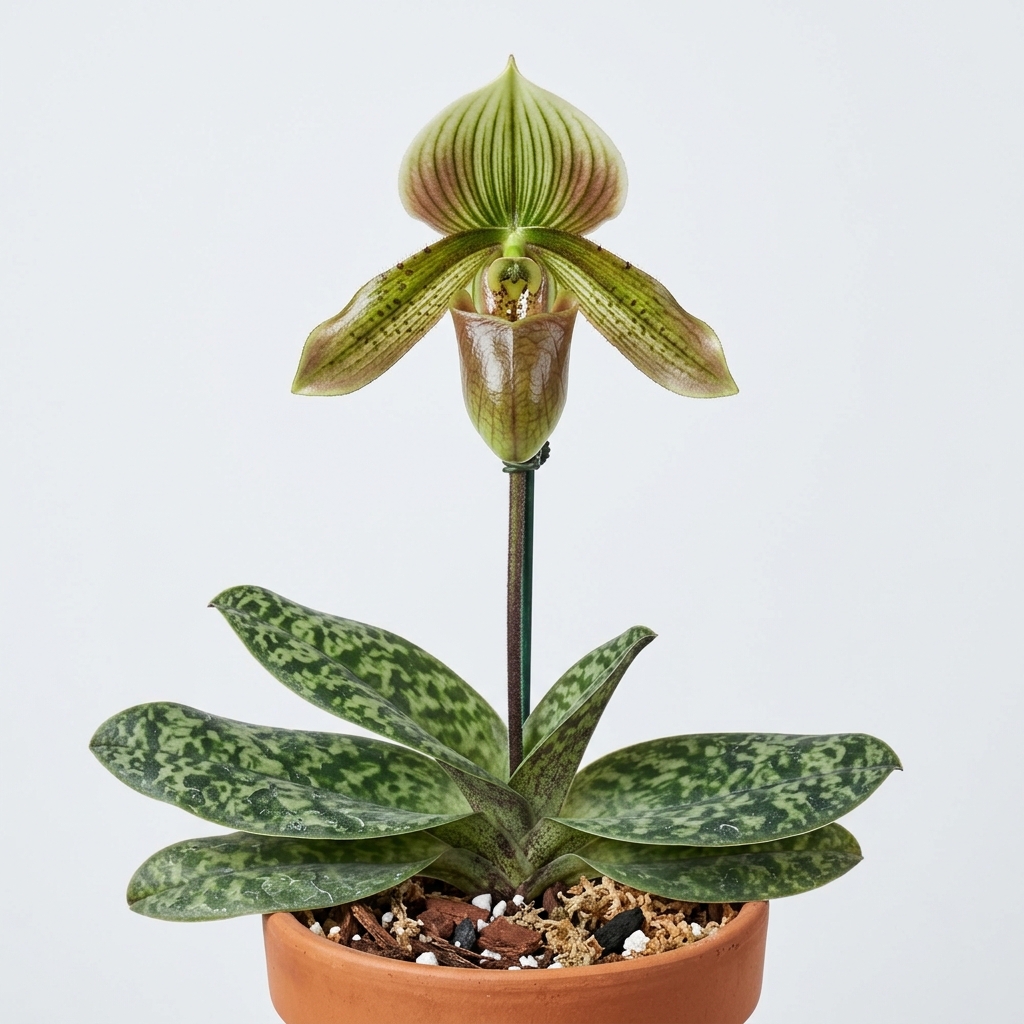
Paphiopedilum Tonsum, commonly known as the bald slipper orchid, is a highly esteemed species within the terrestrial orchid community. Native to the tropical forests of Sumatra, Indonesia, this orchid is celebrated for its elegant, architectural growth habit and distinctively patterned foliage. Unlike many of its counterparts, it offers exceptional aesthetic value even when not in flower, making it a prized addition to any indoor plant collection.
In cultivation, this species is appreciated for its relatively straightforward care requirements compared to more temperamental slipper orchids. It produces striking, long-lasting flowers that showcase an understated palette of green, bronze, and cream. For growers seeking an orchid with both exceptional foliage and unique floral morphology, this species represents an ideal balance of beauty and resilience.
💡 Did You Know?
The specific epithet tonsum translates to shorn or bald in Latin. This refers to the orchid's distinctive petals, which lack the prominent, hair-like cilia along the margins that are characteristic of almost all other closely related slipper orchid species in its group.
🌿 Botanical Overview
Paphiopedilum Tonsum is native to the island of Sumatra, where it typically grows as a terrestrial or lithophytic plant. In its natural habitat, it is found nestled in deep leaf litter on forest floors or clinging to moss-covered limestone cliffs. These environments provide a constant source of moisture, high humidity, and dappled shade, which are critical factors to replicate in a home or greenhouse setting.
The vegetative presentation of this species is highly attractive. It features compact, fan-shaped growths with thick, leathery leaves. The upper surface of the foliage is beautifully tessellated, displaying a striking mosaic of dark forest green and pale silvery-green. This mottled patterning allows the plant to maximize light absorption in the dim understory of its native canopy.
🌸 Flower Characteristics
The blossoms of Paphiopedilum Tonsum are held singly on upright, dark purple-brown scapes that rise well above the foliage. The flowers are medium to large for the genus, often reaching up to four inches in diameter. The most defining feature of this species is its petals, which are remarkably smooth and almost entirely devoid of the long, hair-like cilia that typically fringe the margins of other species in the Barbata section.
The dorsal sepal is broad and pointed, featuring a white or pale green background decorated with bold, vertical green veins. The petals project outward and slightly downward, showing a warm bronze-green hue with darker longitudinal stripes. The lip, or pouch, is shaped like a rounded slipper, colored in shades of brownish-yellow to copper, completing a sophisticated and earthy floral display.
Fragrance & Bloom Profile
This orchid is generally considered to be unscented. While some growers occasionally report a very faint, earthy aroma under warm, humid conditions, fragrance is not a primary characteristic of this species. Instead, its appeal lies entirely in its visual elegance and the longevity of its flowers.
A single bloom can remain pristine on the plant for six to eight weeks, and sometimes longer if kept in cool, stable conditions. The blooming cycle typically occurs once a year, with individual growths producing a single flower spike from the center of the leaf fan before eventually giving rise to new vegetative offsets.
Parentage & Hybrid Lineage
As a naturally occurring species rather than a man-made hybrid, Paphiopedilum Tonsum possesses a pure genetic heritage. It was first described in the late 19th century and has since been used extensively by orchid breeders. Its primary contribution to hybrid lineages is its ability to pass down clean, hairless petal margins and highly defined, mottled foliage to its offspring.
While wild-collected specimens are protected, line-bred cultivars are widely available in the horticultural trade. These line-bred plants are often selected for superior flower size, flatter presentation, and more intense coloration, offering modern growers plants that are frequently more robust than their wild ancestors.
🌱 Growing Conditions
To cultivate Paphiopedilum Tonsum successfully, one must mimic the warm, shaded environment of the Sumatran rainforest. It thrives in low to moderate indirect light, similar to the light levels preferred by Phalaenopsis orchids. Direct sunlight must be avoided, as it will quickly bleach the beautiful leaf patterns and cause irreversible leaf scorch.
💡 Care Tip
To maintain the vibrant variegation of the mottled leaves, keep the plant in bright, filtered shade. Direct sunlight will quickly bleach the beautiful dark green patterns and can cause permanent leaf scorch.
Temperature: wise, this species prefers intermediate to warm conditions. Ideal daytime temperatures range between 75°F and 85°F, with a night-time drop to around 60°F to 65°F. Maintaining a consistent temperature differential between day and night is often the key trigger for initiating the annual blooming cycle.
Watering, Feeding & Potting Media
Unlike many epiphytic orchids, Paphiopedilums do not possess pseudobulbs for water storage. Consequently, they should never be allowed to dry out completely. The potting medium should be kept evenly moist but never soggy. Water thoroughly when the top half-inch of the medium begins to feel dry to the touch, using rainwater, distilled water, or reverse osmosis water whenever possible.
A well-draining, moisture-retentive potting mix is essential. A combination of fine-grade fir bark, perlite, charcoal, and a small amount of chopped sphagnum moss works exceptionally well. Because this species often grows near limestone in the wild, many experienced growers incorporate a small amount of dolomite lime or crushed oyster shells into the mix to maintain a slightly alkaline to neutral pH and provide essential calcium.
Fertilize sparingly using a balanced, water-soluble orchid fertilizer diluted to one-quarter strength. Apply this weak solution every second or third watering during the active growing season, and flush the pot with pure water periodically to prevent harmful salt buildup.
Blooming Season & Care Notes
The primary blooming season for Paphiopedilum Tonsum spans from late autumn through the spring months, though variations can occur depending on local growing conditions. Once the flower eventually fades, the spike should be cut back close to the base of the growth. The old growth will not bloom again; instead, it will focus its energy on producing new vegetative fans from the base, which will host future flowers.
Repotting should be performed every one to two years, ideally in the spring after the flowering cycle has concluded. Fresh potting media prevents root suffocation and ensures the root system has access to adequate oxygen. When repotting, handle the delicate, hairy roots with extreme care to avoid damage.
⚠️ Common Issues
⚠️ Common Mistake
Allowing the potting medium to dry out completely is a common mistake. Because Paphiopedilum orchids lack water-storing pseudobulbs, even brief periods of severe drought can permanently damage the root system and cause immediate bud drop.
- Root Rot:
Caused by compacted, poorly draining media or overwatering. Ensure the pot has excellent drainage and the mix remains airy. - Bud Blast:
Sudden changes in temperature, low humidity, or drafty conditions can cause developing buds to shrivel and die before opening. - Mealybugs and Scale: These pests frequently hide in the tight crevices of the leaf fans. Inspect the plant regularly and treat infestations promptly with insecticidal soap or neem oil.
- Leaf Bleaching: Pale, washed-out foliage is a clear indicator that the plant is receiving too much light. Move it to a more shaded location immediately.
❓ Frequently Asked Questions
How often should I water my Paphiopedilum Tonsum?
Watering frequency depends on your home’s temperature and humidity, but generally, this orchid requires watering once or twice a week. The goal is to keep the potting medium consistently damp but never waterlogged. Never let the pot sit in standing water.
Why are the tips of my orchid’s leaves turning brown?
Brown leaf tips are usually a sign of low humidity or a buildup of fertilizer salts in the potting medium. Increase local humidity around the plant and flush the pot thoroughly with pure, mineral-free water to wash away excess salts.
Does this orchid require a cold period to trigger blooming?
No, Paphiopedilum Tonsum is a warm-to-intermediate grower and does not require a cold period. Instead, a modest day-to-night temperature drop of about 10 to 15 degrees Fahrenheit during the autumn months is usually sufficient to initiate flower spikes.
Can I grow Paphiopedilum Tonsum under artificial lights?
Yes, this species adapts exceptionally well to artificial grow lights, such as LEDs or T5 fluorescent tubes. Position the plant under moderate light intensity, ensuring the leaves do not become warm to the touch, and maintain a standard 12-hour photoperiod.
⭐ Final Growing Notes
Paphiopedilum Tonsum is an exceptional orchid that rewards growers with its striking, mottled foliage and uniquely elegant, hairless blossoms. By providing consistent moisture, moderate warmth, and shaded conditions, even intermediate hobbyists can successfully cultivate and bloom this beautiful Sumatran species for many years to come.
⚕️ Health, Safety & Edibility
Understanding how a plant interacts with people, pets, and the surrounding environment is part of responsible cultivation. This section uses conservative, general guidance and does not replace professional medical or veterinary advice.
Human Safety: No published evidence currently identifies species-specific toxicity concerns for Paphiopedilum Tonsum during normal handling. As with most ornamental plants, it should not be intentionally consumed.
Pet Safety: Published information does not indicate that this orchid commonly poses a toxicity concern for cats or dogs. However, chewing leaves, flowers, roots, or potting media may still cause mild digestive upset.
Edibility: This orchid is cultivated for ornamental display rather than food. Ornamental plants may carry fertilizers, pesticides, or other horticultural treatments that make them unsuitable for consumption.
Skin Contact: Routine handling is not generally associated with skin irritation. Gardeners with sensitive skin may prefer wearing gloves when repotting, pruning, or handling potting media.
🌱 Propagation Tip
Slipper orchids do not produce pseudobulbs and cannot be propagated by backbulbs. Instead, propagate by carefully dividing mature plants during repotting, ensuring each new division has at least two or three healthy, leafy growths with active roots.
⭐ Expert Advice
Incorporate a small amount of crushed oyster shells or dolomite lime into the potting mix. This slowly releases calcium and magnesium, mimicking the natural limestone-adjacent habitats of Sumatra and promoting stronger root development.

Leave A Comment