
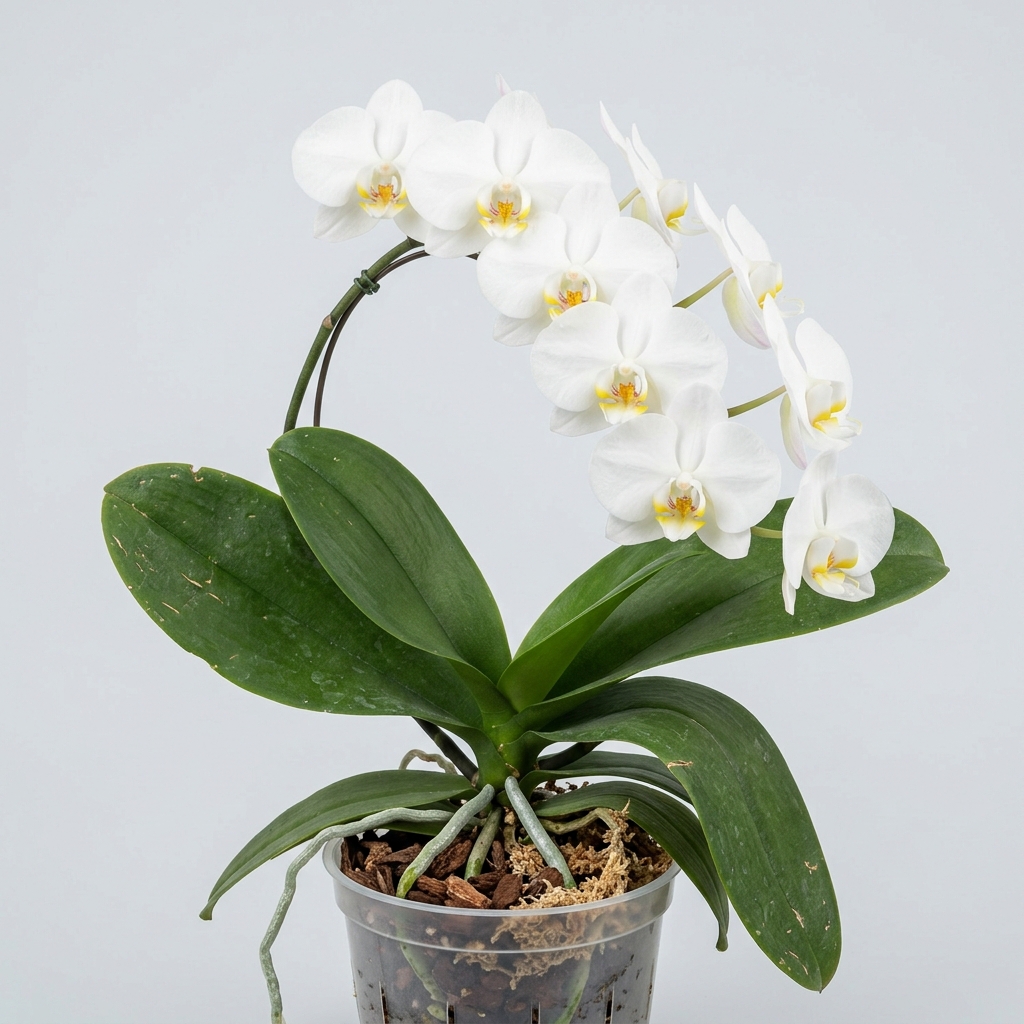
Phalaenopsis amabilis, commonly known as the moon orchid or moth orchid, is one of the most iconic and influential species in the entire Orchidaceae family. Highly prized by indoor growers and commercial hybridizers alike, this elegant epiphyte is celebrated for its graceful, arching spikes of pristine white blossoms. Its native range spans across tropical Asia and Australia, where it clings to tree trunks in warm, humid forest canopies, absorbing moisture and nutrients from the air.
For home horticulturists, this species offers an exceptional balance of visual drama and cultural resilience. Its broad, leathery, deep green leaves provide a handsome year-round display, while its long-lasting flowers can remain pristine for several months. As a foundational parent in modern Phalaenopsis breeding, understanding its specific growth habits and care requirements is essential for any enthusiast looking to master orchid cultivation.
💡 Did You Know?
Phalaenopsis amabilis is one of the national flowers of Indonesia, where it is known as puspa pesona or the flower of charm. It was originally discovered by botanists in the mid-eighteenth century and has since become the primary genetic foundation for almost all modern white moth orchid hybrids found in the global floral trade today.
🌿 Botanical Overview
Phalaenopsis amabilis is a monopodial epiphyte, meaning it grows upward from a single stem, producing alternating leaves along its growth axis. The leaves are thick, fleshy, and obovate to oblong, designed to store water and nutrients in the absence of pseudobulbs. Healthy specimens typically maintain four to eight active leaves, which exhibit a rich, semi-glossy green coloration.
In its natural habitat, the root system of this orchid is highly adapted for survival. The thick, silvery-green roots are covered in velamen, a spongy layer of dead cells that rapidly absorbs atmospheric moisture and anchors the plant securely to its host tree. These roots contain chlorophyll and actively perform photosynthesis when exposed to light, which is why clear plastic pots are highly favored by modern growers.
🌸 Flower Characteristics
The inflorescence of Phalaenopsis amabilis is a spectacular, arching raceme or panicle that can reach up to three feet in length, often bearing anywhere from ten to over thirty flowers on mature plants. The individual blossoms are remarkably flat and can measure up to three to four inches in diameter. They feature broad, overlapping sepals and petals of a pure, luminous white that catches the light beautifully.
At the center of the flower lies the intricate three-lobed lip, or labellum. The lip is relatively small compared to the petals, featuring a yellow throat adorned with delicate red or purple striations and two slender, antenna-like appendages at the apex. This contrasting coloration serves as a visual guide for natural pollinators in the wild, creating a striking focal point against the snowy white petals.
Fragrance & Bloom Profile
While most commercially available Phalaenopsis hybrids are entirely scentless, wild-type Phalaenopsis amabilis and certain select cultivars are known to produce a very subtle, delicate fragrance. This scent is typically described as lightly sweet or citrusy, becoming most noticeable during the warm mid-morning hours when light levels rise.
However, fragrance intensity is highly variable and not consistently documented across all cultivated specimens. The primary appeal of this species remains its extraordinary bloom longevity. Individual flowers can remain open and pristine for eight to twelve weeks, and a single flower spike can provide a continuous display for several months as buds open sequentially from the base to the tip.
Parentage & Hybrid Lineage
As a true species rather than a complex artificial hybrid, Phalaenopsis amabilis does not have a hybrid parentage. Instead, it serves as the cornerstone ancestor for the vast majority of modern white moth orchid hybrids found in the horticultural trade today. Its genetic contribution is responsible for the large flower size, flat presentation, and round shape of contemporary commercial cultivars.
While its wild origins are rooted in the tropical rainforests of Southeast Asia, northern Australia, and the Philippines, numerous line-bred cultivars exist within the hobby. These cultivated varieties have been selectively bred over generations to enhance flower count, petal substance, and overall vigor, making them far more adaptable to typical home environments than their wild ancestors.
🌱 Growing Conditions
Replicating the warm, shaded canopy of its native habitat is key to successfully growing Phalaenopsis amabilis. It thrives in low to medium indirect light, ideally between 1,000 and 1,500 foot-candles. Direct sunlight must be strictly avoided, as it will quickly scorch the sensitive foliage, leaving permanent yellow or brown burn patches. An east-facing window or a shaded south-facing window is usually ideal.
💡 Care Tip
Maintain moderate indoor between fifty and seventy percent by placing your orchid on a shallow tray filled with pebbles and water. Ensure the bottom of the pot rests above the water line to prevent the roots from absorbing excess moisture, which can quickly lead to decay.
Temperature: wise, this orchid prefers warm to intermediate conditions. Daytime temperatures should ideally range between 75°F and 85°F (24°C to 29°C), with a slight drop at night to around 65°F (18°C). Consistent air movement is also critical; a gentle, continuous breeze from a nearby fan helps prevent stagnant air pockets, which can lead to fungal and bacterial infections on the leaves and roots.
Watering, Feeding & Potting Media
Watering should be approached with a soak and dry methodology. Rather than keeping the medium constantly wet, allow the potting mix to dry out until it is barely damp before watering thoroughly again. When watering, flush the pot with lukewarm water until it runs freely from the drainage holes, ensuring the roots are fully hydrated.
A high-quality, free-draining potting medium is essential to prevent root rot. A mixture of medium-grade fir bark, charcoal, and perlite works exceptionally well, though some growers prefer adding a small amount of long-fiber sphagnum moss to retain moisture in drier climates. During the active growing season, feed the orchid weekly with a balanced, water-soluble orchid fertilizer diluted to one-quarter strength, occasionally flushing the pot with pure water to remove accumulated salts.
Blooming Season & Care Notes
Phalaenopsis amabilis typically initiates its bloom cycle in the late autumn or early winter, with flowers opening throughout the winter and spring months. This blooming process is triggered by a natural drop in night temperatures. To encourage a reluctant plant to spike, expose it to night temperatures of approximately 55°F to 60°F (13°C to 15°C) for three to four consecutive weeks in autumn.
Once the flower spike emerges, keep the plant in a stable position; rotating the pot during spike development can cause the buds to twist and open in a chaotic, unappealing orientation. After the blooms have finally faded, the spike can be cut back to the base if it has turned brown and dry. If the spike remains green, cutting it just above a healthy node may encourage secondary branching and a second flush of smaller blooms.
⚠️ Common Issues
⚠️ Common Mistake
The most common mistake is allowing water to sit in the crown of the plant where the leaves meet. This stagnant water creates a breeding ground for bacterial crown rot, which can destroy the main growing point of the orchid within days. Always water the potting medium directly.
- Root Rot:
Caused by overwatering or compacted potting media that suffocates the roots. Affected roots turn mushy, brown, and lifeless. - Bud Blast:
The sudden yellowing and dropping of unopened flower buds, often triggered by rapid temperature fluctuations, drafts, low humidity, or ethylene gas. - Mealybugs and Scale: Common sap-sucking pests that hide in leaf joints and under flower bracts. Treat promptly with insecticidal soap or isopropyl alcohol.
- Sunburn:
Bleached or blackened patches on the leaves caused by exposure to direct sunlight. Move the plant to a more shaded location immediately. - Bacterial Soft Rot: Wet, foul-smelling spots on the leaves that spread rapidly in warm, humid, and stagnant conditions. Cut away affected tissue with sterile tools.
❓ Frequently Asked Questions
How do I trigger my Phalaenopsis amabilis to rebloom?
To trigger reblooming, expose the orchid to a drop in night temperatures down to 55°F to 60°F (13°C to 15°C) for three to four weeks in the autumn. This temperature differential mimics the seasonal shifts of its native habitat and signals the plant to initiate a new flower spike.
Why are the leaves on my orchid turning yellow and soft?
Yellow, limp leaves are most commonly a sign of overwatering or root rot. When the roots rot from excess moisture, they can no longer absorb water, causing the leaves to dehydrate and turn yellow. Check the root system immediately and repot into fresh, dry media if necessary.
Can I grow Phalaenopsis amabilis under artificial LED lights?
Yes, this species adapts exceptionally well to artificial LED grow lights. Position the plant about 12 to 18 inches below a full-spectrum LED light source, adjusting the intensity or duration to provide approximately 10 to 12 hours of light daily without overheating the foliage.
What should I do with the aerial roots growing outside the pot?
Aerial roots are completely natural and healthy for Phalaenopsis amabilis. Do not cut them off, as they help the plant absorb moisture and oxygen from the air. Simply mist them occasionally during watering to keep them hydrated and healthy.
⭐ Final Growing Notes
Cultivating Phalaenopsis amabilis is a deeply rewarding endeavor that connects modern growers to the very roots of orchid history. By providing consistent warmth, filtered light, and careful watering, this elegant species will reward your efforts with months of breathtaking, snowy white blooms that epitomize botanical grace.
🌱 Propagation Tip
While orchids are difficult to propagate from seed at home, Phalaenopsis amabilis will occasionally produce a small baby plant, known as a keiki, along its flower spike. Once the keiki has developed several healthy roots at least two inches long, you can carefully sever it and pot it up individually.
⭐ Expert Advice
When repotting your orchid every one to two years, choose a clear plastic pot with ample drainage holes. Clear pots allow you to monitor root health easily and permit the photosynthetic roots of Phalaenopsis amabilis to absorb ambient , mimicking their natural growth habit on tree trunks.




Leave A Comment