
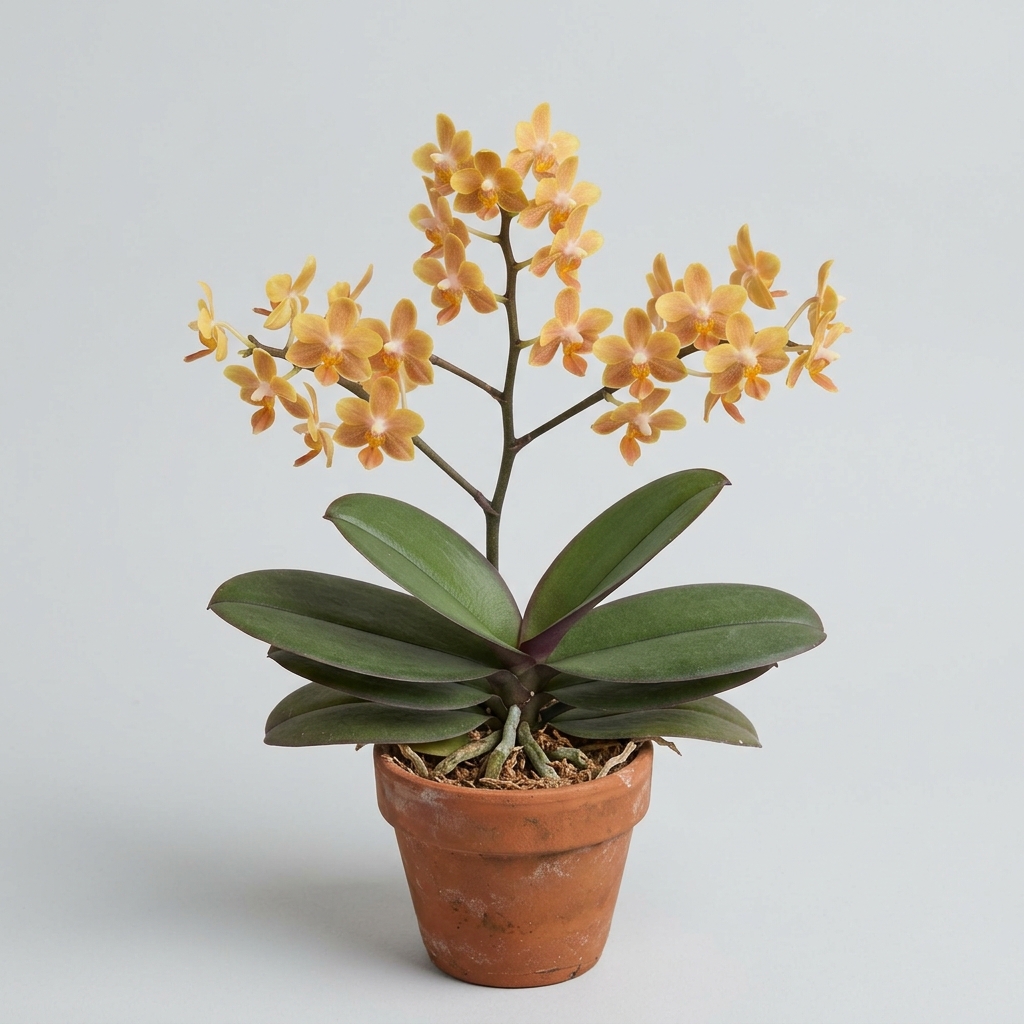
Phalaenopsis Chibae is a highly prized miniature orchid celebrated for its compact growth habit and uniquely colored blossoms. Unlike the large, white or pink hybrid moth orchids commonly found in mass markets, this distinct species produces delicate, multi-branched spikes adorned with small, warm-toned flowers ranging from soft yellow to terra-cotta orange. Its petite stature makes it an exceptional choice for indoor growers with limited space, fitting easily on windowsills or within small terrarium setups.
Collectors and orchid enthusiasts value Phalaenopsis Chibae for its floriferous nature and its contribution to modern miniature hybridizing. While it requires slightly more attention to humidity and consistent moisture than robust commercial hybrids, its rewarding display of long-lasting blooms offers a delightful contrast to standard collection pieces. Understanding its specific environmental preferences is key to successfully cultivating this charming miniature epiphyte.
💡 Did You Know?
Phalaenopsis Chibae was only formally described by botanists in 1997, making it a relatively recent addition to the recognized species of the . Its discovery in Taiwan delighted the orchid world, as its unique yellow-orange coloration and highly branched flowering habit provided hybridizers with a valuable genetic resource for breeding compact, warm-toned miniature moth orchids.
🌿 Botanical Overview
Phalaenopsis Chibae is a miniature epiphytic orchid native to the forested regions of Taiwan. Discovered relatively recently in the late 20th century, it stands out within the genus Phalaenopsis due to its small vegetative footprint. The plant typically features short stems clothed in fleshy, elliptic-obovate leaves that rarely exceed a few inches in length. These leaves are deep green, sometimes displaying a subtle purplish tint on their undersides when grown under optimal light conditions.
In its natural habitat, this species grows on the trunks and branches of trees, where its roots cling to mossy bark, absorbing moisture from frequent rainfall and high atmospheric humidity. This epiphytic lifestyle dictates its care requirements in cultivation, necessitating a highly porous growing medium that allows for rapid drainage and excellent root aeration.
🌸 Flower Characteristics
The flowers of Phalaenopsis Chibae are notably small, usually measuring around one to one and a half centimeters in diameter. Despite their diminutive size, they make a significant visual impact due to their unique coloration, which blends shades of dull yellow, orange, and brownish-red. The sepals and petals are relatively equal in size, spreading open to reveal a distinct, three-lobed labellum that often features darker reddish-brown markings or stripes.
A single, slender inflorescence can produce numerous flowers, especially as the plant matures and the spike begins to branch. The arching spikes present the blossoms in a loose, elegant cluster, creating a delicate cloud of warm color that contrasts beautifully against the dark green foliage.
Fragrance & Bloom Profile
Fragrance in Phalaenopsis Chibae is not consistently documented in common horticultural literature, and many growers report that the flowers are virtually scentless. However, some individual specimens may emit a very faint, clean scent under warm, humid conditions during the peak of the day.
The primary appeal of this orchid lies in its visual presentation rather than its aroma. The blooms are remarkably long-lasting, often remaining fresh on the spike for several weeks to a couple of months. Because the inflorescences can branch, the overall blooming period can extend over a significant portion of the spring and summer seasons as secondary buds open sequentially.
Parentage & Hybrid Lineage
Phalaenopsis Chibae is recognized as a distinct species rather than a man-made hybrid. It was formally described in the 1990s, named in honor of Masaaki Chiba. Because of its unique color palette and compact growth habit, hybridizers have increasingly utilized it in breeding programs to introduce yellow, orange, and copper tones into miniature Phalaenopsis hybrids.
When researching its lineage, growers should note that while it is a true species, specimens sold in the trade may sometimes represent selected line-bred cultivars chosen for superior flower count or deeper coloration. Cautious interpretation of parentage is always recommended, as commercial labeling can occasionally confuse species status with hybrid designations.
🌱 Growing Conditions
To thrive, Phalaenopsis Chibae requires intermediate to warm conditions, mimicking its native subtropical forest canopy. Ideal daytime temperatures range between 70°F and 80°F (21°C to 27°C), with a slight drop at night to stimulate healthy growth and eventual spiking. It should be protected from extreme cold and drafty areas, as temperatures below 60°F (15°C) can stall growth or cause leaf drop.
💡 Care Tip
Maintain high around your Phalaenopsis Chibae by placing it on a tray filled with pebbles and water, or by using a small humidifier nearby. This miniature species has smaller roots that dry out faster than standard orchids, making consistent atmospheric moisture crucial for healthy leaf and root development.
Light levels should be moderate to bright but strictly indirect. Direct sunlight will quickly scorch the tender, thin leaves of this miniature orchid. An east-facing window or a shaded south-facing window is often ideal. Under artificial LED grow lights, place the plant at a moderate distance to avoid light stress while ensuring it receives adequate energy for photosynthesis.
Watering, Feeding & Potting Media
Watering Phalaenopsis Chibae requires a careful balance. Because of its small root system and miniature size, it can dry out more rapidly than larger Phalaenopsis species. The potting medium should be kept consistently damp but never waterlogged. Water thoroughly when the top layer of the medium feels dry to the touch, using tepid, low-mineral water whenever possible.
A fine-grade fir bark mix blended with perlite and a small amount of chopped sphagnum moss works exceptionally well, providing both moisture retention and essential air pockets. Alternatively, some growers prefer to mount this species on cork bark or tree fern plaques, provided they can maintain high ambient humidity (60% or higher) and water the plant daily. Feed with a highly diluted, balanced orchid fertilizer every second or third watering during the active growing season.
Blooming Season & Care Notes
The primary blooming season for Phalaenopsis Chibae typically occurs in the spring, though spikes can emerge in late winter or early summer depending on local growing conditions. Once the flowering cycle is complete, do not immediately cut the green flower spikes unless they have completely yellowed and dried. Healthy green spikes can occasionally produce secondary branches or even keikis.
Repotting should be performed every one to two years, ideally just after the blooming cycle has finished and new root growth is visible. Because this is a miniature plant, avoid over-potting; choose a container that just snugly accommodates the root mass to prevent excess moisture retention, which can lead to root rot.
⚠️ Common Issues
⚠️ Common Mistake
A frequent error is potting this miniature orchid in a container that is too large. Excess potting medium holds onto water for too long, creating a stagnant environment that quickly suffocates and rots the delicate root system. Always choose a small, snug pot that matches the current size of the root mass.
- Root Rot:
Caused by overwatering or compacted, decomposing potting media that suffocates the roots. - Bud Blast:
Sudden dropping of unopened flower buds, often triggered by rapid temperature fluctuations, low humidity, or drafts. - Dehydration:
Shriveled leaves and silver-gray roots indicate the plant is not receiving enough water or ambient humidity. - Pests:
Mealybugs and spider mites can occasionally target the tender crevices of the leaves and flower spikes. - Leaf Scorch: Bleached or blackened patches on the leaves resulting from exposure to direct, intense sunlight.
❓ Frequently Asked Questions
How do I encourage my Phalaenopsis Chibae to rebloom?
To stimulate new flower spikes, provide a slight drop in night temperatures (around 10°F to 15°F lower than daytime temperatures) for a few weeks in autumn or early winter, alongside bright, indirect light and consistent humidity.
Can Phalaenopsis Chibae be grown under LED lights?
Yes, this miniature orchid adapts exceptionally well to indoor cultivation under LED grow lights. Position the plant about 12 to 18 inches below the light source, adjusting the distance if the leaves begin to show signs of light stress, such as a reddish tint or yellowing.
What is the best potting medium for this miniature orchid?
A fine-grade orchid bark mix combined with sphagnum moss and perlite is ideal. This combination retains sufficient moisture for the small root system while ensuring excellent drainage and aeration to prevent root rot.
Why are the flower buds on my orchid falling off before opening?
This issue, known as bud blast, is typically caused by environmental stress. Common culprits include sudden drafts, low humidity levels, extreme temperature shifts, or letting the potting medium dry out completely while the spikes are developing.
⭐ Final Growing Notes
Phalaenopsis Chibae is an enchanting addition to any orchid collection, offering a unique departure from standard commercial hybrids with its warm-toned, miniature blossoms and compact growth habit. While it demands a bit more attention to humidity and moisture consistency than its larger relatives, its floriferous nature and space-saving size make it a highly rewarding species for dedicated indoor growers. By mimicking its native subtropical forest environment, you can enjoy its delicate, branching floral displays for many years to come.
⚕️ Health, Safety & Edibility
Understanding how a plant interacts with people, pets, and the surrounding environment is part of responsible cultivation. This section uses conservative, general guidance and does not replace professional medical or veterinary advice.
Human Safety: No published evidence currently identifies species-specific toxicity concerns for Phalaenopsis Chibae during normal handling. As with most ornamental plants, it should not be intentionally consumed.
Pet Safety: Published information does not indicate that this orchid commonly poses a toxicity concern for cats or dogs. However, chewing leaves, flowers, roots, or potting media may still cause mild digestive upset.
Edibility: This orchid is cultivated for ornamental display rather than food. Ornamental plants may carry fertilizers, pesticides, or other horticultural treatments that make them unsuitable for consumption.
Skin Contact: Routine handling is not generally associated with skin irritation. Gardeners with sensitive skin may prefer wearing gloves when repotting, pruning, or handling potting media.
🌱 Propagation Tip
While orchids are primarily propagated through tissue culture in labs, Phalaenopsis Chibae may occasionally produce a keiki—a genetically identical baby plant—along its flower spike. Allow the keiki to develop several healthy roots at least two inches long before carefully detaching it and potting it in a fine, moisture-retaining orchid mix.
⭐ Expert Advice
To maximize the branching potential of the flower spikes, ensure the plant receives consistent, weak fertilization with a balanced orchid food during its active summer growth phase. Healthy, well-nourished pseudobulb-free monopodial orchids like this species will produce stronger, multi-branched inflorescences with a significantly higher flower count.

Leave A Comment