
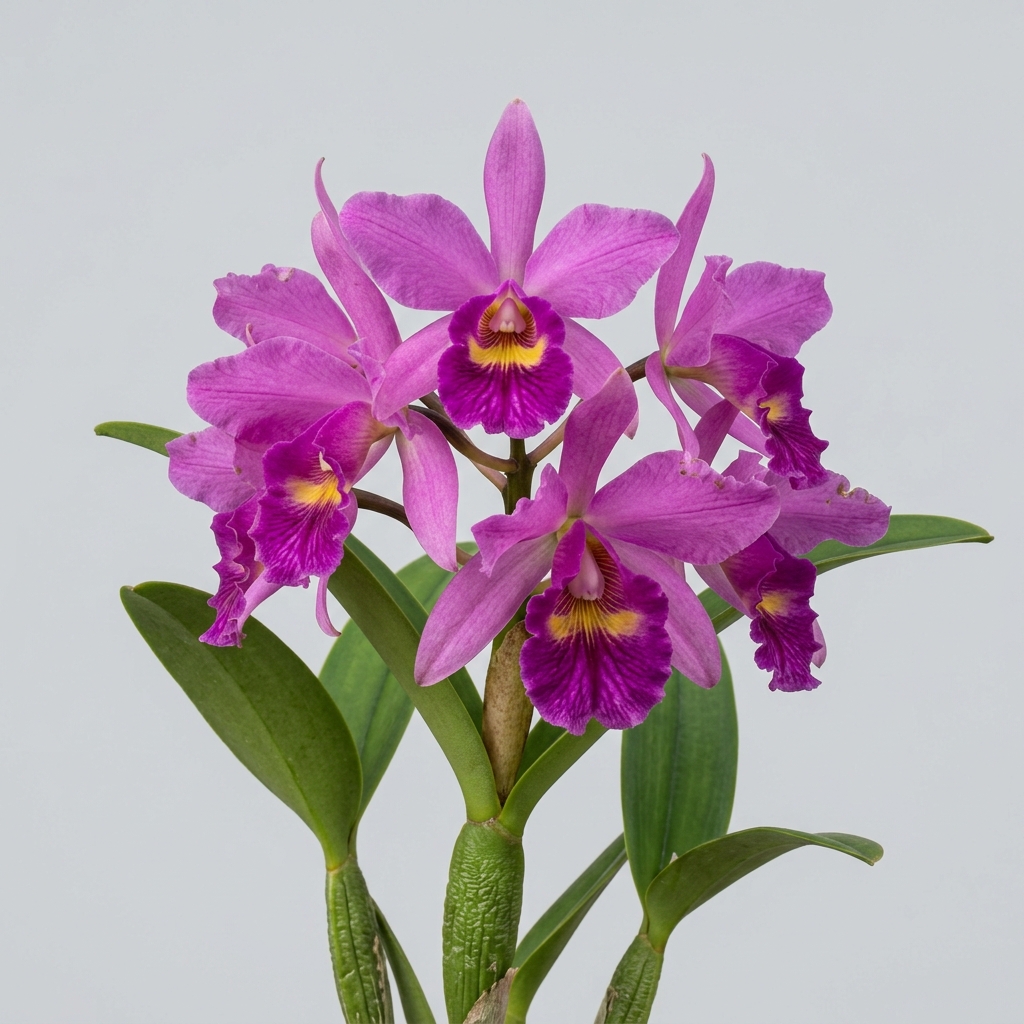
Cattleya Deckeri is a highly esteemed bifoliate orchid valued by collectors for its striking clusters of rose-purple flowers and robust growth habit. Belonging to the renowned Cattleya genus, this orchid represents a classic epiphytic form that brings a touch of tropical elegance to indoor and greenhouse collections. Its ability to produce multiple blooms on a single inflorescence makes it a standout specimen during its flowering cycle.
Growers appreciate this orchid not only for its vibrant floral display but also for its relatively straightforward care requirements compared to more delicate orchid genera. While it demands specific light and moisture balances to thrive, its resilience makes it an excellent choice for intermediate hobbyists looking to expand their collection of classic Central and South American orchid varieties.
💡 Did You Know?
Unlike many unifoliate Cattleya orchids that produce only one leaf per pseudobulb, Cattleya Deckeri is a bifoliate variety, meaning it reliably produces two thick, leathery leaves at the top of each stem. This structural adaptation allows the plant to maximize photosynthesis in its native tropical canopy, supporting larger clusters of vibrant autumn blooms.
🌿 Botanical Overview
Cattleya Deckeri is characterized by its clavate, club-shaped pseudobulbs that typically bear two leathery, oblong leaves at their apex. This bifoliate growth habit is characteristic of many Central American Cattleya species, providing a sturdy architectural frame that supports the upright flowering spikes. The plant grows sympodially, producing new leads from a creeping rhizome each season.
In its natural habitat, this orchid grows as an epiphyte on tree branches, where it is exposed to wet and dry seasonal cycles. The thick, waxy cuticle of the leaves helps the plant conserve moisture during dry spells, while the extensive velamen-covered root system is adapted to rapidly absorb water and nutrients from passing rain showers.
🌸 Flower Characteristics
The flowers of Cattleya Deckeri are typically medium-sized, ranging from two to three inches in diameter, and are produced in clusters of three to eight blooms per inflorescence. The petals and sepals exhibit a rich rose-purple or magenta hue, often with a satin-like texture that catches the light. The lip, or labellum, is a defining feature, presenting a deeper, velvety purple coloration with a lighter, sometimes yellowish throat that guides pollinators.
The blooms are presented on a short, sturdy peduncle that emerges from a protective green sheath at the top of the mature pseudobulb. The flowers are arranged in a well-spaced cluster, allowing each individual bloom to be fully visible and appreciated from multiple angles.
Fragrance & Bloom Profile
The fragrance of Cattleya Deckeri is often described as mild and sweet, though its intensity can vary significantly depending on the specific clone, environmental conditions, and the time of day. Many growers report a subtle floral scent that is most noticeable during the warm morning hours when light levels increase.
The blooms typically last between three to five weeks under optimal conditions. To maximize the longevity of the flowers, it is advisable to keep the plant in a slightly cooler location with stable humidity once the buds have fully opened, avoiding direct drafts or sudden temperature fluctuations.
Parentage & Hybrid Lineage
The taxonomic status and lineage of Cattleya Deckeri have been the subject of botanical discussion, with some authorities historically grouping it closely with Cattleya skinneri or treating it as a synonym of Cattleya patinii. In horticultural circles, however, it is often maintained as a distinct entity due to its specific blooming schedule and subtle morphological differences.
Because of its vibrant color and reliable growth, this orchid has been utilized in various hybridizing programs to introduce compact growth habits and rich lavender-purple tones to modern Cattleya hybrids. When purchasing this plant, growers should consult reputable orchid registries to verify the specific clonal name or hybrid background of their specimen.
🌱 Growing Conditions
To cultivate Cattleya Deckeri successfully, providing bright, indirect light is paramount. A location near an east- or shaded south-facing window is ideal, where the plant can receive strong, filtered sunlight without the risk of leaf scorch. The foliage should maintain a light green color; dark green leaves indicate insufficient light, while yellowing or reddish tints suggest excessive exposure.
💡 Care Tip
Always prioritize air movement around your Cattleya Deckeri. Placing a small, gentle fan near your growing area helps dry out the foliage and quickly after , significantly reducing the risk of fungal infections and root rot.
Temperature ranges should mimic its native tropical environment, with daytime temperatures between 75°F and 85°F (24°C to 29°C) and a nighttime drop to around 60°F to 65°F (15°C to 18°C). This diurnal temperature fluctuation is crucial for initiating the blooming cycle. High humidity levels of 50% to 70% must be accompanied by continuous, gentle air circulation to prevent stagnant air pockets that encourage fungal pathogens.
Watering, Feeding & Potting Media
Watering should be approached with a “drench and dry” strategy. Thoroughly saturate the potting medium, allowing water to run freely through the drainage holes, and then permit the medium to dry out almost completely before watering again. During the active growing season in spring and summer, the plant will require more frequent watering, which should be scaled back significantly during the winter rest period.
A coarse, free-draining potting mix is essential to prevent root rot. A blend of medium to coarse fir bark, horticultural charcoal, and perlite works exceptionally well in clay or plastic pots with ample drainage holes. Feed the plant weekly with a balanced orchid fertilizer diluted to one-quarter strength during active growth, and flush the pot with pure water once a month to prevent salt buildup.
Blooming Season & Care Notes
Cattleya Deckeri typically initiates its blooming cycle in the autumn, with flowers lasting into the early winter months. As the new pseudobulbs mature in late summer, a green sheath will form at the apex. During this period, maintain stable humidity and avoid moving the plant to prevent bud blast.
Once the flowering cycle is complete, the orchid enters a semi-dormant rest phase. Reduce watering and suspend fertilizing until new root tips and green shoots begin to emerge in the spring. Repotting should only be performed every two to three years, ideally just as new root growth starts from the base of the newest pseudobulb, ensuring minimal disturbance to the active root system.
⚠️ Common Issues
⚠️ Common Mistake
A frequent error is keeping the potting medium constantly wet. Cattleya Deckeri roots require a distinct wet-to-dry cycle; keeping them continuously damp suffocates the roots, leading to rapid decay and the eventual decline of the entire plant.
- Root Rot: Caused by overwatering or a decomposing potting medium that retains too much moisture.
- Bud Blast: Premature dropping or drying of flower buds due to sudden changes in temperature, low humidity, or drafts.
- Scale and Mealybugs: Pests that hide in the crevices of pseudobulbs and under dry sheaths; treat promptly with insecticidal soap or horticultural oil.
- Leaf Scorch: Bleached or black patches on leaves resulting from direct, unfiltered midday sunlight.
- Fungal Leaf Spotting: Dark spots on foliage caused by high humidity coupled with poor air circulation.
❓ Frequently Asked Questions
How often should I water Cattleya Deckeri?
Watering frequency depends on your environmental conditions, but generally, you should water once the potting medium is nearly dry. This typically translates to once or twice a week during the warm summer growing season, and once every ten to fourteen days during the cooler winter rest period.
Why are the leaves on my Cattleya Deckeri turning dark green?
Dark green leaves are a classic sign that the orchid is not receiving enough light. To encourage optimal growth and future blooming, gradually move the plant to a brighter location with strong, indirect sunlight, ensuring the leaves transition to a healthy, light olive-green color.
Can I grow Cattleya Deckeri under LED grow lights?
Yes, Cattleya Deckeri adapts well to artificial lighting. Position the plant under high-output LED grow lights designed for orchids, maintaining a distance of 12 to 18 inches from the light source to provide the necessary intensity without overheating the foliage.
What should I do with the flower spike after the blooms fade?
Once the flowers have completely faded and fallen, use sterilized shears to cut the flower spike back to the base of the sheath. Be careful not to damage the underlying pseudobulb, as this structure will continue to store energy and support the plant’s future growth.
⭐ Final Growing Notes
Cattleya Deckeri remains a rewarding orchid for those who can provide the bright light and distinct seasonal watering cycles it requires. By mimicking its natural epiphytic habitat with a coarse potting medium, excellent air movement, and a dedicated winter rest period, growers will be rewarded with spectacular autumnal displays of vibrant, rose-purple blooms that exemplify the classic beauty of the Cattleya genus.
⚕️ Health, Safety & Edibility
Understanding how a plant interacts with people, pets, and the surrounding environment is part of responsible cultivation. This section uses conservative, general guidance and does not replace professional medical or veterinary advice.
Human Safety: No published evidence currently identifies species-specific toxicity concerns for Cattleya Deckeri during normal handling. As with most ornamental plants, it should not be intentionally consumed.
Pet Safety: Published information does not indicate that this orchid commonly poses a toxicity concern for cats or dogs. However, chewing leaves, flowers, roots, or potting media may still cause mild digestive upset.
Edibility: This orchid is cultivated for ornamental display rather than food. Ornamental plants may carry fertilizers, pesticides, or other horticultural treatments that make them unsuitable for consumption.
Skin Contact: Routine handling is not generally associated with skin irritation. Gardeners with sensitive skin may prefer wearing gloves when repotting, pruning, or handling potting media.
🌱 Propagation Tip
Propagate this orchid by division only when the plant has outgrown its pot and has at least six to eight healthy pseudobulbs. Ensure each new division contains at least three active pseudobulbs with viable eye buds to guarantee successful establishment.
⭐ Expert Advice
To trigger a robust bloom cycle in the autumn, ensure your orchid experiences a noticeable drop of 10 to 15 degrees Fahrenheit between day and night during the late summer months when the new pseudobulbs are maturing.

Leave A Comment