
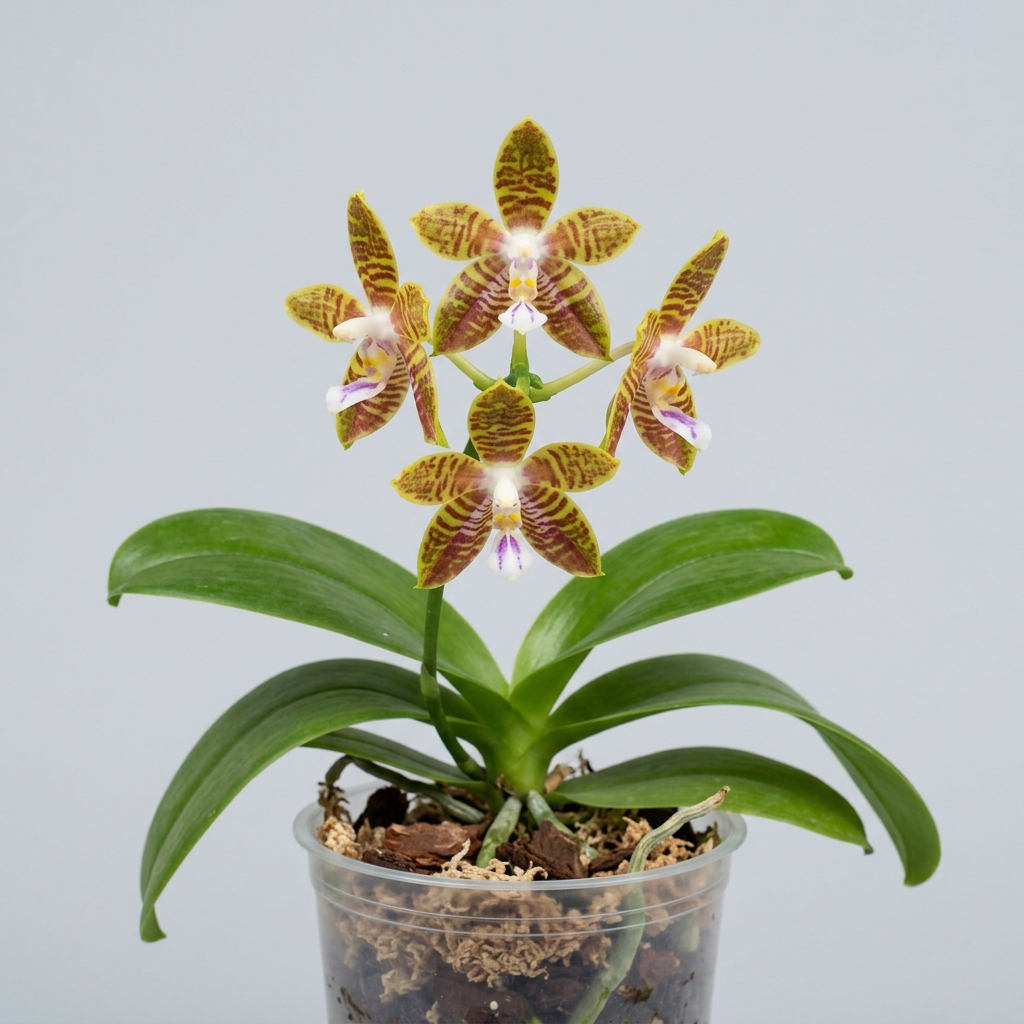
Phalaenopsis Kunstleri is a highly prized epiphytic orchid species within the genus Phalaenopsis, appreciated by collectors for its distinctive star-shaped flowers and warm-growing nature. Native to the humid, shaded forests of Southeast Asia, particularly Malaysia and Myanmar, this species offers a fascinating departure from common mass-market hybrids. Its unique floral patterning and compact growth habit make it a sought-after gem for indoor growers looking to expand their botanical collections.
This orchid features a classic monopodial growth habit, producing thick, glossy green leaves that arch gracefully from a short central stem. In its natural habitat, it thrives nestled in the mossy bark of forest trees, receiving dappled light and high humidity. While it requires slightly more attention to environmental stability than standard commercial cultivars, its rewarding blossoms and elegant form make it an exceptional subject for dedicated orchid enthusiasts.
💡 Did You Know?
Phalaenopsis Kunstleri belongs to the Polychilos section of the , which is characterized by star-shaped, often fleshy flowers that bloom sequentially or simultaneously on relatively short inflorescences. Unlike standard grocery store hybrids, this species retains a wild, exotic charm that reflects its native rainforest canopy origins.
🌿 Botanical Overview
Phalaenopsis Kunstleri is characterized by its compact, epiphytic growth habit. It produces a short stem hidden by several overlapping, fleshy leaves. These leaves are typically obovate to elliptic-oblong, presenting a rich green color with a smooth, semi-glossy texture. The root system is robust, consisting of thick, silvery-grey roots covered in velamen, which helps the plant absorb moisture and nutrients from the air and surrounding organic debris.
In the wild, this species grows in lower-elevation forest canopies where it is shielded from direct sunlight by the dense overhead foliage. This natural setting dictates its preference for warm, humid, and shaded environments. Understanding its native habitat is key to successfully cultivating this orchid indoors, as it relies on consistent moisture and excellent air movement to thrive.
🌸 Flower Characteristics
The flowers of Phalaenopsis Kunstleri are highly distinctive, showcasing a star-like shape rather than the rounded form common to commercial hybrids. The sepals and petals are relatively narrow, spreading outward to create a sharp, geometric silhouette. They typically feature a base color of pale yellow or greenish-yellow, heavily marked with concentric, horizontal bars or patches of rich reddish-brown.
The lip, or labellum, is a complex structure that serves as a visual focal point. It often displays a combination of white, yellow, and soft purple or magenta markings, complete with delicate callosities and hairs characteristic of the genus. The flowers are borne on short, arching or pendulous inflorescences, presenting a charming, naturalistic display that highlights the intricate details of each individual bloom.
Fragrance & Bloom Profile
While some Phalaenopsis species are celebrated for their intense perfumes, the fragrance of Phalaenopsis Kunstleri is not consistently documented or widely reported by all growers. Some hobbyists note a very faint, subtle scent under warm, humid conditions, while others find the blooms to be virtually unscented. Consequently, this orchid is primarily grown for its striking visual appeal rather than its aromatic qualities.
The blooms typically open sequentially or simultaneously during the spring and summer months. Under optimal growing conditions, individual flowers can remain fresh and vibrant for several weeks. Maintaining stable temperatures and avoiding sudden environmental shifts will help maximize the longevity of the floral display.
Parentage & Hybrid Lineage
Phalaenopsis Kunstleri is a naturally occurring species rather than a man-made hybrid. It belongs to the section Polychilos within the genus Phalaenopsis, a group known for producing star-shaped, fleshy flowers. Because it is a true species, its genetic lineage is pure, representing the natural evolutionary adaptations of its native habitat.
In orchid breeding, this species is occasionally utilized by hybridizers seeking to introduce its unique horizontal banding patterns, star-like form, and compact growth habit into new crosses. However, such hybrid lineage is highly specialized, and the plant is most commonly kept and appreciated in its pure, species form by collectors.
🌱 Growing Conditions
To cultivate Phalaenopsis Kunstleri successfully, growers should strive to replicate its warm, tropical origin. It thrives in warm temperatures, ideally ranging from 70°F to 85°F during the day, with a slight drop at night, though temperatures should ideally not fall below 60°F. Exposure to cold drafts or prolonged chilly conditions can severely stress the plant and lead to leaf loss.
💡 Care Tip
To mimic its natural habitat, maintain constant air circulation around the foliage and roots. Stagnant air combined with high can quickly lead to fungal issues on the leaves or root rot, so a small oscillating fan nearby is highly beneficial.
Light should be bright but strictly filtered. Direct sunlight will quickly scorch the tender leaves, while too little light may prevent the orchid from blooming. A location near an east-facing window or under shaded grow lights is usually ideal. High relative humidity, ideally between 60% and 80%, is crucial, and must be paired with gentle, continuous air movement to prevent fungal pathogens from settling on the foliage.
Watering, Feeding & Potting Media
Watering should be approached with care, keeping the potting medium evenly moist but never waterlogged. Allow the medium to dry out slightly, but not completely, between waterings. When watering, flush the pot thoroughly with tepid water, ensuring that excess water drains away completely. Avoid letting water pool in the crown of the plant, as this can cause crown rot.
A high-quality, free-draining potting medium is essential. A mix of fine fir bark, perlite, and chopped sphagnum moss works well to retain moisture while providing excellent aeration for the roots. Alternatively, experienced growers in high-humidity environments may choose to mount the orchid on cork bark. Feed the plant with a balanced, highly diluted orchid fertilizer every two to three weeks during the active growing season, flushing with pure water occasionally to prevent salt buildup.
Blooming Season & Care Notes
The primary blooming season for Phalaenopsis Kunstleri occurs during the spring and summer. As the flower spike emerges, avoid changing the plant’s orientation relative to the light source, as this can cause the developing buds to twist or fail to open properly. Once flowering is complete, do not rush to cut the green spike unless it turns brown and dry, as some species in this group can produce additional blooms or keikis from old nodes.
Repotting is best performed every one to two years, ideally just after the blooming cycle has finished and new root growth is visible. Choose a pot that is only slightly larger than the current root mass, as overpotting can lead to excess moisture retention and later root decay.
⚠️ Common Issues
⚠️ Common Mistake
Avoid overwatering or allowing the orchid to sit in standing water. Because Phalaenopsis Kunstleri is an epiphyte, its roots require oxygen; keeping the potting medium constantly saturated will suffocate the root system and cause rapid decline.
- Root Rot: Caused by overwatering or compacted media that prevents oxygen from reaching the roots. Affected roots turn brown and mushy.
- Bud Blast: The premature drying and dropping of flower buds, usually triggered by sudden temperature drops, low humidity, or drafts.
- Leaf Spotting: Fungal or bacterial spots can develop if water remains on the leaves overnight or if air circulation is inadequate.
- Pests: Mealybugs and spider mites can occasionally target the tender crevices of the leaves; treat promptly with insecticidal soap or neem oil.
❓ Frequently Asked Questions
How often should I water Phalaenopsis Kunstleri?
Watering frequency depends on your indoor environment, but generally, this orchid should be watered once or twice a week. Ensure the potting medium is dry to the touch just below the surface before watering again, and never let the pot sit in standing water.
Can Phalaenopsis Kunstleri be grown on a mount?
Yes, this species is well-suited to being mounted on cork bark or tree fern plaques. However, mounted orchids dry out much faster than potted ones, so this method is only recommended if you can maintain high humidity and water the plant daily.
Why are the leaves on my orchid turning yellow?
Yellowing leaves can indicate several issues, including overwatering, natural aging of the oldest bottom leaves, or sunburn from direct light. Inspect the roots to rule out rot, and ensure the plant is shielded from direct afternoon sun.
Does this orchid require a winter rest period?
Phalaenopsis Kunstleri does not require a strict, dry winter rest. However, because plant growth naturally slows down during the shorter days of winter, you should slightly reduce watering frequency and suspend fertilizing until active growth resumes in spring.
⭐ Final Growing Notes
Phalaenopsis Kunstleri is a captivating species that rewards the attentive grower with its exquisite, star-shaped blossoms and exotic patterning. By providing warm temperatures, filtered light, high humidity, and careful watering, you can enjoy the unique beauty of this Southeast Asian treasure for many years. It remains an excellent choice for intermediate hobbyists looking to venture beyond common hybrids into the rewarding world of species orchids.
⚕️ Health, Safety & Edibility
Understanding how a plant interacts with people, pets, and the surrounding environment is part of responsible cultivation. This section uses conservative, general guidance and does not replace professional medical or veterinary advice.
Human Safety: No published evidence currently identifies species-specific toxicity concerns for Phalaenopsis Kunstleri during normal handling. As with most ornamental plants, it should not be intentionally consumed.
Pet Safety: Published information does not indicate that this orchid commonly poses a toxicity concern for cats or dogs. However, chewing leaves, flowers, roots, or potting media may still cause mild digestive upset.
Edibility: This orchid is cultivated for ornamental display rather than food. Ornamental plants may carry fertilizers, pesticides, or other horticultural treatments that make them unsuitable for consumption.
Skin Contact: Routine handling is not generally associated with skin irritation. Gardeners with sensitive skin may prefer wearing gloves when repotting, pruning, or handling potting media.
🌱 Propagation Tip
While propagation from seed requires sterile laboratory conditions, mature plants may occasionally produce adventitious offsets, known as keikis, along the flower spikes or base. Allow these offsets to develop several healthy roots before carefully detaching them.
⭐ Expert Advice
When repotting, choose a container that just fits the root mass. Orchids in this group prefer to be slightly root-bound, and excess holds too much moisture, increasing the risk of root rot.




Leave A Comment