
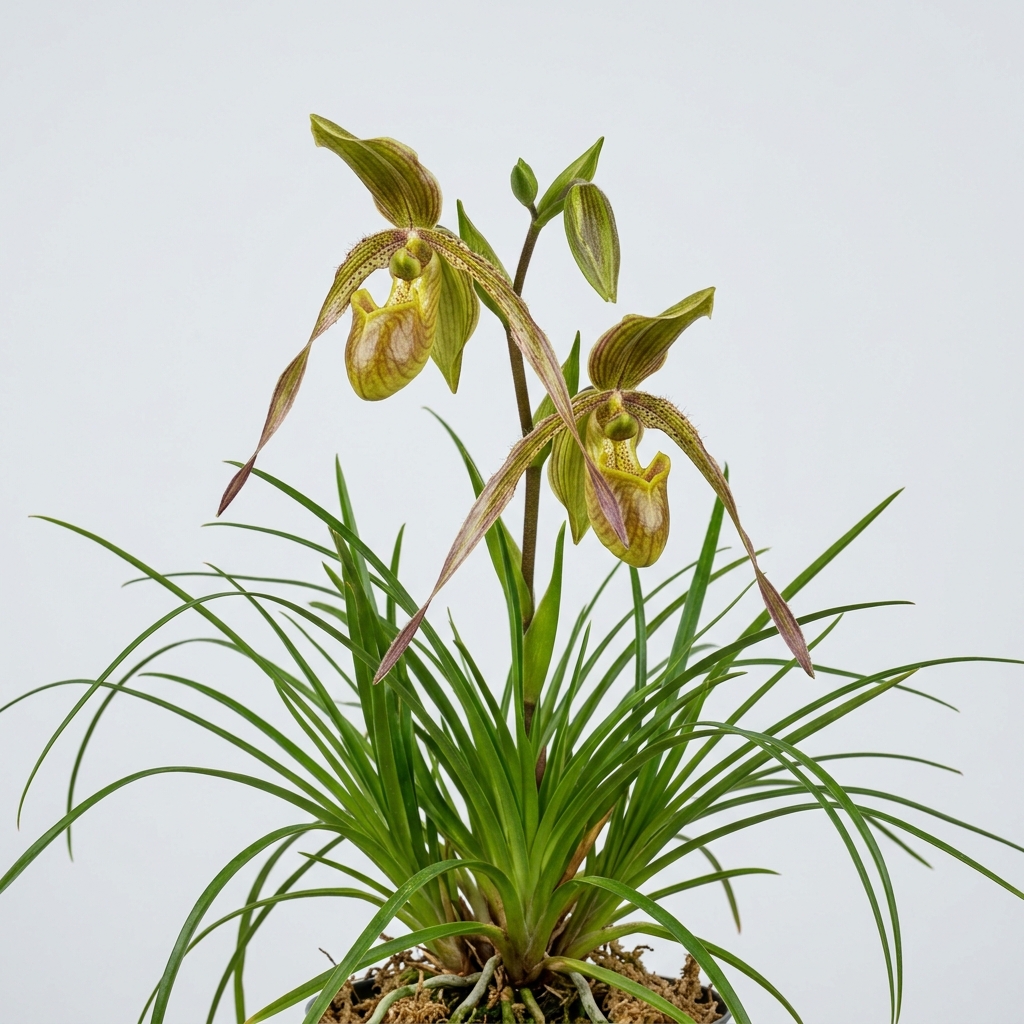
Phragmipedium Caricinum is a highly distinctive slipper orchid species celebrated among collectors for its unique, grass-like growth habit and elegant, long-petaled blossoms. Originating from the riparian environments of South America, this orchid stands out from other members of its genus due to its narrow, sedge-like foliage that closely resembles ornamental grasses. Growers highly value this plant for its graceful presentation and its ability to produce a succession of delicate, green-and-bronze flowers on upright spikes.
Cultivating this fascinating species requires an understanding of its natural streamside habitat, where it thrives with constant moisture and excellent drainage. While it presents a slight challenge to novice growers, mastering its care rewards the enthusiast with a highly architectural plant that adds texture and exotic form to any indoor collection. Its unique vegetative appearance makes it an attractive specimen even when not in bloom.
💡 Did You Know?
Phragmipedium Caricinum is often referred to as the sedge-like Phragmipedium because its foliage looks remarkably like Carex grass rather than a typical orchid. This unique adaptation allows it to blend seamlessly into the grassy riverbanks of its native South American habitats, protecting it from herbivores while its roots anchor firmly into wet rocky crevices.
🌿 Botanical Overview
Phragmipedium Caricinum is native to the moist, rocky banks of rivers and streams in countries such as Bolivia, Brazil, and Peru. In its natural habitat, it grows as a lithophyte or terrestrial plant, often wedged between stones where its roots are constantly bathed in moving, oxygen-rich water. This specific ecological niche dictates much of its cultural requirements in home and greenhouse environments.
The most striking vegetative feature of this orchid is its foliage. Unlike the broad, leathery leaves of many other slipper orchids, this species produces thin, stiff, linear leaves that grow in dense, fan-shaped tufts. This grass-like appearance is highly unusual for the genus and provides an elegant, fine-textured aesthetic that contrasts beautifully with broader-leaved tropical plants.
🌸 Flower Characteristics
The flowers of Phragmipedium Caricinum are a masterclass in intricate botanical design. Each inflorescence typically carries several flowers that open sequentially, extending the overall blooming period over several weeks or months. The flowers feature long, slender, ribbon-like petals that droop gracefully downward, often twisting slightly as they extend. These petals are primarily greenish-yellow, tipped or shaded with rich bronze or reddish-brown tones.
The dorsal sepal is relatively small and pointed, while the pouch-like lip, or labellum, is deeply inflated with a rolled margin. The interior of the pouch is often speckled with fine purple or brown spots, serving as a visual guide for potential pollinators. The overall color palette is earthy and sophisticated, blending shades of olive green, cream, tan, and mahogany.
Fragrance & Bloom Profile
This orchid species is not known for having a noticeable scent. In common grower references, the fragrance of Phragmipedium Caricinum is not consistently documented, and most enthusiasts cultivate it strictly for its visual appeal and unique growth habit. The blooms are long-lasting, with individual flowers remaining in good condition for several weeks before dropping to make way for the next bud on the spike.
Parentage & Hybrid Lineage
Phragmipedium Caricinum is a naturally occurring species rather than a man-made hybrid. However, it has played a significant role in orchid hybridization. Breeders have utilized its unique, narrow foliage and elegant petal length to introduce architectural qualities and sequential blooming habits into various Phragmipedium grexes. Because exact registration details and historical breeding lines can sometimes vary, growers should consult official registration databases for specific hybrid parentage.
🌱 Growing Conditions
To successfully grow Phragmipedium Caricinum, one must replicate its bright, humid, and airy native riverbanks. It prefers bright, filtered indirect light, similar to what is recommended for Cattleya orchids, though it should be protected from harsh, direct midday sun which can scorch its thin leaves. An east- or shaded south-facing window is often ideal.
💡 Care Tip
Always use pure water sources such as rainwater, distilled water, or reverse osmosis water for this orchid. Phragmipedium Caricinum is highly sensitive to dissolved minerals and chlorine found in municipal tap water, which can quickly lead to root decline and unsightly leaf tip burn.
Temperatures should remain in the intermediate to warm range, ideally between 65°F and 80°F during the day, with a slight drop of 10°F at night to encourage healthy growth and spike initiation. High humidity of 60% to 80% is essential, coupled with active air movement to prevent stagnant air pockets that can harbor fungal pathogens.
Watering, Feeding & Potting Media
Unlike many epiphytic orchids that require a distinct wet-and-dry cycle, Phragmipedium Caricinum prefers to remain consistently moist. The potting medium should never be allowed to dry out completely. Watering with pure water, such as rainwater, distilled water, or reverse osmosis water, is highly recommended, as slipper orchids are sensitive to dissolved mineral salts.
A suitable potting mix typically consists of fine fir bark blended with moisture-retentive elements like sphagnum moss, perlite, and charcoal. Some growers also include inorganic materials like pumice or sponge rock to maintain structure and aeration. Feed the plant weekly with a highly diluted, balanced orchid fertilizer, ensuring you flush the pot thoroughly with pure water periodically to prevent salt buildup.
Blooming Season & Care Notes
The primary blooming season for Phragmipedium Caricinum typically spans from spring through mid-summer, though well-established plants under optimal conditions may bloom at other times of the year. Because it is a sequential bloomer, it is crucial not to cut the green flower spike after the first bloom drops, as new buds will continue to develop at the tip. Only remove the spike once it has completely turned brown and dried out. Repotting is best done in the spring, just as new growth begins, to ensure the root system establishes quickly in fresh media.
⚠️ Common Issues
⚠️ Common Mistake
A common mistake is letting the potting medium dry out completely between waterings. Unlike Phalaenopsis or Cattleya orchids, Phragmipedium Caricinum lacks pseudobulbs for water storage and will quickly suffer severe dehydration, leaf loss, and bud blast if left dry.
- Root Rot:
Occurs when the potting medium becomes compacted and loses aeration, suffocating the roots despite the plant’s love for moisture. - Leaf Tip Burn: Often caused by mineral accumulation from tap water or over-fertilization; always use pure water sources.
- Bud Blast:
Sudden drops in humidity or temperature fluctuations can cause developing flower buds to wither and drop prematurely. - Pests:
Mealybugs and spider mites can occasionally hide in the tight fans of the grass-like foliage; inspect the plant regularly.
❓ Frequently Asked Questions
How often should I water my Phragmipedium Caricinum?
Watering frequency depends on your environmental conditions, but the potting medium should remain consistently damp. Typically, this means watering two to three times a week, ensuring the mix never dries out completely between waterings.
Can I grow this orchid under artificial LED lights?
Yes, Phragmipedium Caricinum responds very well to artificial LED grow lights. Position the plant so it receives moderate to bright light levels, ensuring the lights are kept at a safe distance to prevent heat stress or leaf scorch.
Why are the tips of my orchid’s leaves turning brown?
Brown leaf tips are usually a sign of salt buildup in the potting media, often caused by using tap water or over-fertilizing. Switching to distilled, rainwater, or reverse osmosis water and flushing the pot thoroughly will help resolve this issue.
Is Phragmipedium Caricinum suitable for beginners?
This species is best suited for intermediate growers. While its watering needs are straightforward, its sensitivity to water quality, high humidity requirements, and intolerance to drying out make it slightly more demanding than common grocery store orchids.
⭐ Final Growing Notes
Phragmipedium Caricinum is a rewarding and visually captivating orchid that brings a touch of wild South American riverbanks into the home. By providing consistent moisture, high-quality water, and bright, filtered light, growers can enjoy its unique grass-like silhouette and elegant, sequential blooms for years to come.
⚕️ Health, Safety & Edibility
Understanding how a plant interacts with people, pets, and the surrounding environment is part of responsible cultivation. This section uses conservative, general guidance and does not replace professional medical or veterinary advice.
Human Safety: Phragmipedium Caricinum is generally considered non-toxic to humans.
Pet Safety: There are no known reports of toxicity to dogs, cats, or other common household pets.
Edibility: This ornamental orchid is not intended for human or animal consumption.
Skin Contact: Handling the plant is safe, though individuals with sensitive skin should wash their.
Eye Contact: Avoid contact with eyes, particularly when handling or sap.
🌱 Propagation Tip
This orchid is best propagated by division during its spring repotting cycle. Ensure that each division has at least three healthy, mature fans with active root systems. Avoid dividing the plant too small, as larger specimens recover much faster and resume blooming sooner.
⭐ Expert Advice
To maximize sequential blooming, maintain high levels above sixty percent and avoid moving the plant while the flower spike is developing. Sudden environmental shifts can disrupt the delicate hormonal balance required to produce successive buds on the same spike.


Leave A Comment