
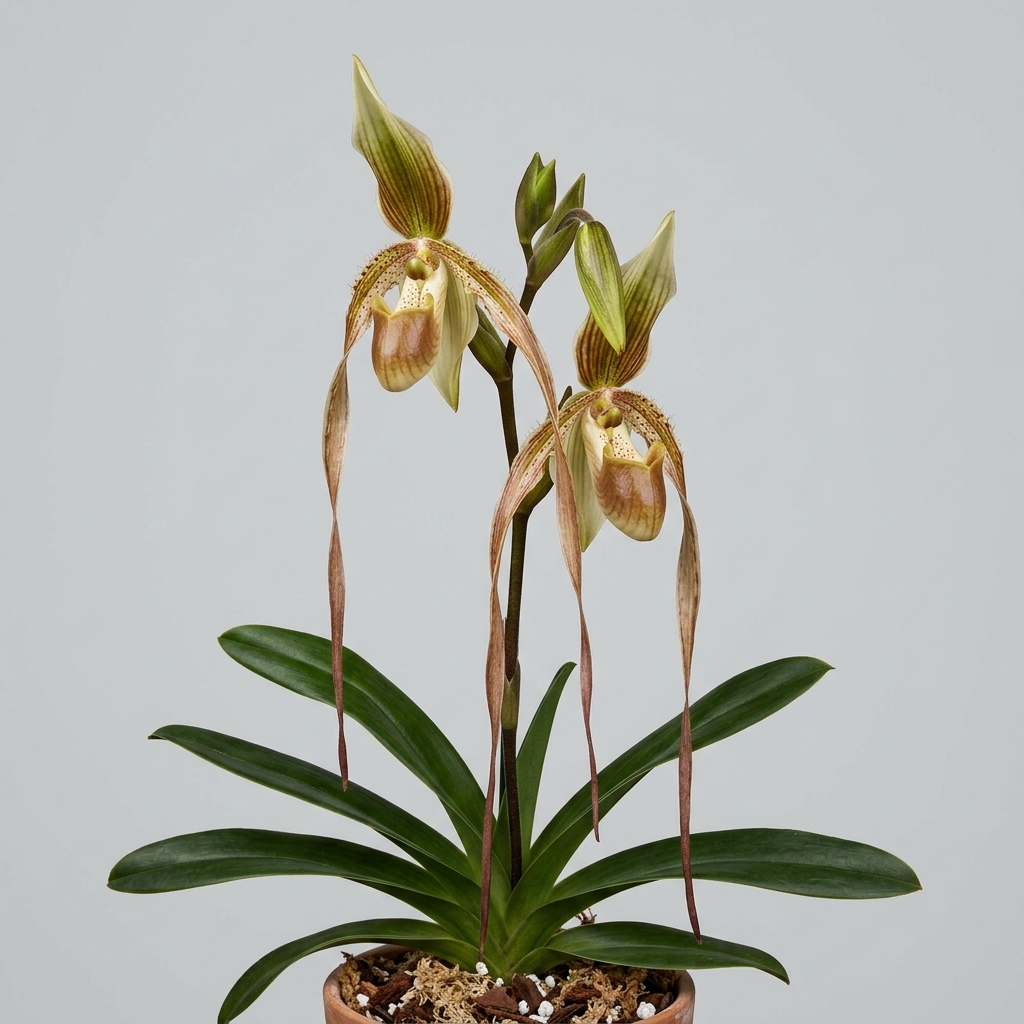
Phragmipedium Caudatum is widely celebrated as one of the most dramatic and visually striking species within the slipper orchid group. Known commonly as the long-petaled lady’s slipper, this Neotropical orchid is famous for its extraordinary, ribbon-like petals that drape downward from the flower, sometimes reaching lengths of over two feet. This remarkable growth habit makes it a highly coveted centerpiece for dedicated orchid collectors and botanical enthusiasts worldwide.
Native to the moist, mountainous regions of Central and South America, this species grows as a terrestrial, lithophytic, or occasionally epiphytic plant. It thrives in cool to intermediate environments where moisture is abundant and constant. Cultivating this orchid successfully requires a careful balance of high humidity, pure water, and consistent moisture, rewarding the grower with an unparalleled architectural display during its blooming season.
💡 Did You Know?
The extraordinary petals of Phragmipedium Caudatum do not start out long; they expand rapidly after the flower opens, sometimes growing up to several inches per day. In their native habitats, these trailing ribbons are believed to serve as climbing guides for crawling insect pollinators, directing them straight toward the pouch-like lip.
🌿 Botanical Overview
Phragmipedium Caudatum is native to a wide geographical range stretching from southern Mexico through Central America and deep into the Andean regions of South America. In these native habitats, it is frequently found growing on wet, mossy cliffs, steep riverbanks, or forest floors where water constantly seeps through the substrate. This constant access to fresh, moving water is a defining characteristic of its natural ecology.
The plant itself displays a robust, clumping growth habit, producing fans of strap-like, leathery green leaves that lack pseudobulbs. Because it does not possess water-storing organs, the orchid relies entirely on its thick, velvety roots and the surrounding atmospheric moisture to remain hydrated. This vegetative structure makes the plant highly sensitive to dry spells, requiring attentive care from the grower.
🌸 Flower Characteristics
The defining feature of Phragmipedium Caudatum is undoubtedly its extraordinary floral morphology. The flowers open sequentially or simultaneously on an erect, sturdy spike that rises from the center of the leaf fan. The dorsal sepal is long, pointed, and arches gracefully forward, while the lateral petals extend into incredibly long, narrow ribbons that continue to grow for several days after the bloom first opens.
These unique petals can easily reach lengths of 18 to 30 inches, often draping far below the pot. The pouch-like lip, or labellum, is inflated and displays a complex color palette of cream, green, and rich bronze-mahogany, often adorned with delicate spotting around the interior rim. This dramatic presentation is designed to attract specific crawling insect pollinators in the wild.
Fragrance & Bloom Profile
Unlike many other popular orchid genera, Phragmipedium Caudatum is not grown for its scent. Fragrance is generally absent or not consistently documented in common grower references. Any aroma produced is typically faint and subtle, meaning the species is selected almost exclusively for its spectacular and unusual visual impact.
The blooming cycle typically lasts for several weeks, with the flowers remaining in good condition if kept in a stable environment. Because the long petals are highly delicate, they are easily damaged by physical contact, strong drafts, or excessive handling. Placing the plant in a protected, elevated position during the bloom cycle is essential to preserve the beauty of the trailing ribbons.
Parentage & Hybrid Lineage
As a naturally occurring species rather than a man-made hybrid, Phragmipedium Caudatum represents a primary building block in slipper orchid breeding. It has been used extensively by hybridizers to introduce the long-petal trait into modern Phragmipedium grexes, contributing its dramatic genetics to famous hybrids such as Phragmipedium Grande.
While its taxonomic history has seen various reclassifications and the designation of distinct varieties, it remains a cornerstone species in botanical collections. When sourcing this plant, growers should purchase from reputable nurseries to ensure they are receiving true species material rather than undocumented or mislabeled hybrids.
🌱 Growing Conditions
To cultivate this orchid successfully, growers must replicate its humid, bright, and airy mountain habitat. It prefers moderate to bright indirect light, similar to the light levels favored by Cattleyas, but must be protected from direct, scorching midday sun. High-quality LED grow lights or a shaded greenhouse bench are ideal setups for maintaining consistent light levels.
💡 Care Tip
Always elevate the pot of your Phragmipedium Caudatum when it is in spike. Because the petals can grow exceptionally long, placing the plant on an inverted pot or a high shelf prevents the delicate ribbons from touching the table surface, which can cause them to curl or stop growing prematurely.
Temperature ranges should ideally be intermediate to warm during the day (70°F to 85°F) with a distinct drop at night (55°F to 65°F). This diurnal temperature fluctuation mimics its native montane environment and is crucial for triggering healthy growth and eventual flowering. High relative humidity of 60% to 80% must be maintained alongside excellent air movement to prevent fungal issues.
Watering, Feeding & Potting Media
Watering is the most critical aspect of Phragmipedium care. Unlike epiphytic orchids that prefer to dry out between waterings, this species requires constant moisture. The potting medium should remain damp but never waterlogged or stagnant. Using pure water, such as rainwater, reverse osmosis, or distilled water, is highly recommended, as they are sensitive to dissolved mineral salts.
A well-draining, moisture-retentive potting mix is essential. A blend of fine-grade fir bark, sphagnum moss, perlite, and charcoal works well to retain moisture while allowing oxygen to reach the roots. Feed the plant weekly with a highly diluted, balanced orchid fertilizer, flushing the pot with pure water periodically to prevent salt buildup.
Blooming Season & Care Notes
The primary blooming season typically occurs in the spring and summer months, though well-grown specimens can occasionally bloom at other times of the year. The flower spike emerges from the center of the mature leaf fan. During this period, avoid moving the plant or changing its orientation, as this can cause the developing petals to twist or stall.
Once the blooming cycle is complete, the old spike can be cut back to the base of the fan. Repotting is best done in the spring, just as new growth begins to emerge from the base of the plant. This species benefits from annual or biennial repotting to ensure the potting medium does not break down and become acidic or compacted.
⚠️ Common Issues
⚠️ Common Mistake
Allowing the potting medium to dry out completely is a frequent mistake that can quickly damage this species. Unlike Cattleyas, Phragmipediums lack water-storing pseudobulbs, meaning even a brief period of severe drought can lead to root loss, leaf drop, and aborted flower spikes.
- Root Rot:
Caused by compacted, poorly draining media or stagnant water. Ensure the mix remains fresh and highly oxygenated. - Leaf Tip Burn: Often a sign of mineral salt buildup from tap water or over-fertilizing. Switch to pure water sources and flush the pot thoroughly.
- Bud Blast:
Sudden changes in humidity, temperature, or water quality can cause developing buds to yellow and drop before opening. - Pests:
Mealybugs and spider mites can occasionally hide in the tight crevices of the leaf fans. Inspect regularly and treat with horticultural soap or neem oil. - Bacterial Soft Rot: Can occur if water pools in the center of the leaf fans, especially in cool, stagnant air. Always water the media directly and ensure good airflow.
❓ Frequently Asked Questions
How long do the petals of Phragmipedium Caudatum actually grow?
Under optimal growing conditions, the lateral petals of this species can grow between 18 to 30 inches (45 to 75 centimeters) in length. They expand rapidly over several days after the flower first opens, continuing to grow until they reach their maximum length or touch a physical surface.
Can I grow Phragmipedium Caudatum in a home environment without a greenhouse?
Yes, it is possible to grow this orchid in a home setting, provided you can maintain high humidity levels and adequate air circulation. Utilizing a room humidifier, a gravel humidity tray, or growing the plant under high-quality LED grow lights in a dedicated indoor setup will greatly increase your chances of success.
What type of water is best for this orchid?
This species is highly sensitive to dissolved minerals and salts in tap water. It is strongly recommended to use pure water sources such as rainwater, distilled water, or reverse osmosis water. Consistent use of hard tap water can lead to root damage and leaf tip burn.
Why are the leaf tips of my Phragmipedium turning black?
Black or brown leaf tips are usually a sign of mineral salt accumulation in the potting medium, often caused by over-fertilizing or using water with high mineral content. To resolve this, flush the potting medium thoroughly with pure water and reduce the concentration of your fertilizer applications.
⭐ Final Growing Notes
Cultivating Phragmipedium Caudatum is a deeply rewarding endeavor for the dedicated orchid enthusiast. While its moisture and humidity requirements demand more attention than standard grocery-store orchids, the reward of witnessing its magnificent, cascading ribbons unfold is unparalleled. By providing pure water, consistent moisture, and bright, indirect light, you can enjoy this dramatic botanical marvel in your own collection for years to come.
⚕️ Health, Safety & Edibility
Understanding how a plant interacts with people, pets, and the surrounding environment is part of responsible cultivation. This section uses conservative, general guidance and does not replace professional medical or veterinary advice.
Human Safety: Phragmipedium Caudatum is generally considered non-toxic to humans.
Pet Safety: This orchid is widely reported as safe for cats and dogs.
Edibility: Ornamental orchids are strictly not for consumption.
Skin Contact: No significant skin irritation is documented.
Eye Contact: Avoid contact with sap to prevent mild irritation.
Allergy Information: Pollen may cause mild sensitivity.
Handling Advice: Always use clean, sterile tools when grooming.
🌱 Propagation Tip
This orchid is best propagated by division during spring repotting. Ensure that each division has at least three healthy, mature leaf fans and a strong root system. Avoid dividing the plant too frequently, as larger specimen-sized clumps produce far more spectacular and reliable blooming displays.
⭐ Expert Advice
To achieve the longest possible petals, maintain high and completely still air immediately around the developing flower spike. While general air circulation is vital for plant health, strong direct drafts can cause the growing tips of the petals to dry out and stop lengthening early.


Leave A Comment