
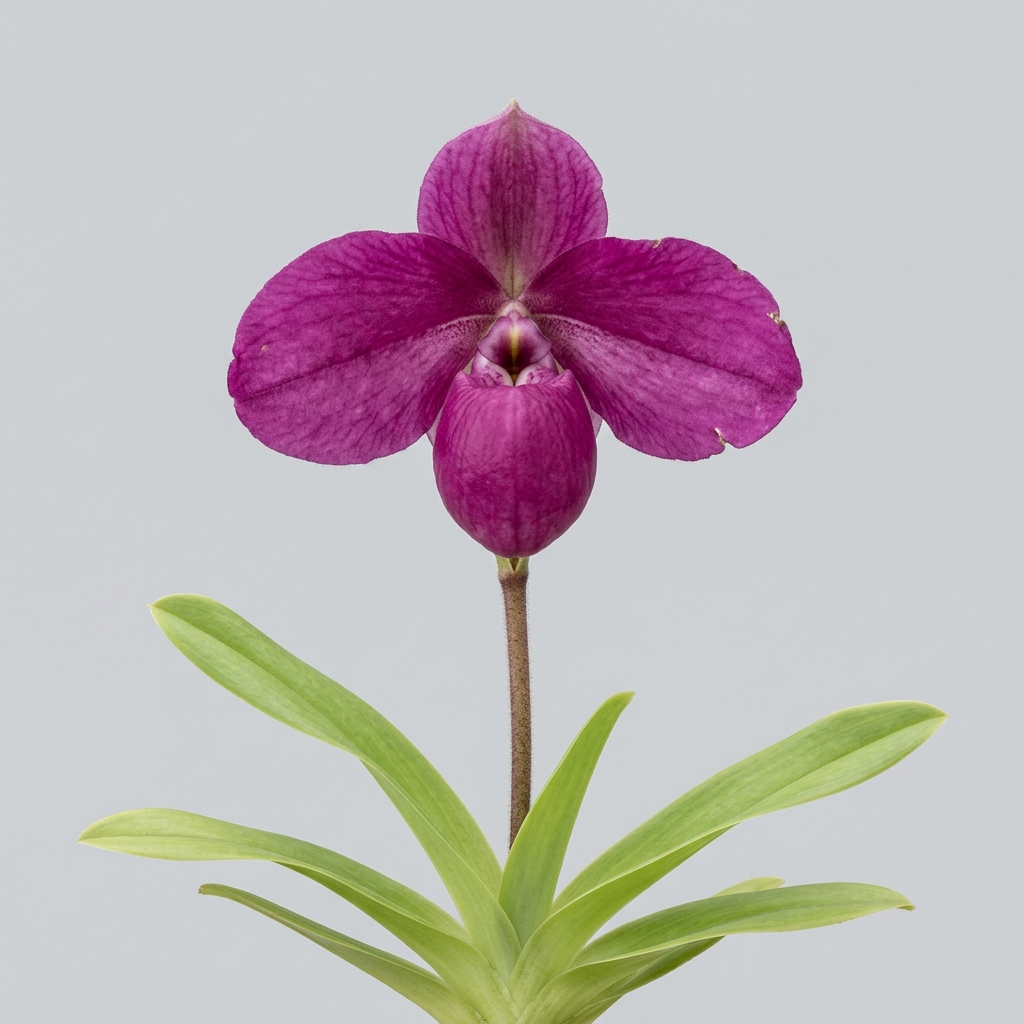
Phragmipedium kovachii is widely regarded as one of the most significant botanical discoveries of the twenty-first century. This extraordinary slipper orchid, native to the high-elevation cloud forests of Peru, captivated the orchid world upon its formal description in 2002 due to its immense size and vivid coloration. Growers highly prize this species for its dramatic, saturated magenta-to-purple blooms, which represent a striking departure from the typically subdued green and brown tones found in many other members of the genus.
Cultivating this remarkable orchid presents a rewarding challenge for dedicated enthusiasts. While its specific environmental demands require careful attention to water quality, temperature, and humidity, the reward of witnessing its massive, velvety flowers unfold is unmatched. Understanding its native habitat is key to successfully maintaining this prized specimen in a home or greenhouse collection.
💡 Did You Know?
Phragmipedium kovachii was discovered in the wild in Peru as recently as 2002. Its discovery caused an absolute sensation in the international orchid community because of its unprecedented flower size and intense purple coloration, making it one of the most significant orchid discoveries of the last century.
🌿 Botanical Overview
Phragmipedium kovachii is a terrestrial to lithophytic orchid species indigenous to the limestone cliffs of the Peruvian Andes. Growing at elevations between 1,600 and 2,000 meters, it is adapted to cool, constantly damp environments where water trickles continuously over its roots. The plant features a robust growth habit, producing fans of thick, strap-like, light green leaves that can reach up to 60 centimeters in length.
The root system of this species is highly specialized. Unlike many epiphytic orchids that possess thick velamen to survive periods of drought, Phragmipedium kovachii has fleshy, hairy roots designed to absorb water and nutrients continuously from the wet, alkaline organic matter accumulating on limestone rock faces. Consequently, the plant has virtually no tolerance for drying out in cultivation.
🌸 Flower Characteristics
The defining feature of Phragmipedium kovachii is its spectacular, oversized flower. Individual blooms can measure anywhere from 11 to 20 centimeters across, making them some of the largest flowers in the entire slipper orchid alliance. The petals are exceptionally broad, rounded, and display a velvety texture saturated with intense shades of magenta, hot pink, and deep royal purple.
The pouch-like lip, or labellum, is deeply inflated and colored in matching rich tones, often with a slightly lighter or yellowish interior. The dorsal sepal is relatively small and tends to hood slightly over the column. These magnificent flowers are presented on upright, sturdy spikes that emerge from the center of the leaf fan, typically carrying one to several flowers that open sequentially over several weeks.
Fragrance & Bloom Profile
While some slipper orchids possess subtle, earthy scents, a distinct fragrance is not consistently documented for Phragmipedium kovachii in common grower references. The primary horticultural appeal of this species lies entirely in its dramatic visual presentation rather than its olfactory profile.
The blooming cycle is highly anticipated, as a single flower can remain in pristine condition for three to four weeks if environmental conditions are kept stable. Cool temperatures and high humidity are critical during the blooming phase to prevent premature fading of the intense purple pigments.
Parentage & Hybrid Lineage
As a naturally occurring species discovered in the wild, Phragmipedium kovachii does not have a hybrid parentage. However, its discovery revolutionized modern orchid breeding. Hybridizers immediately recognized its potential to introduce unprecedented size and vibrant purple coloration into the genus Phragmipedium, which previously lacked such intense cool-toned pigments.
While early hybridizing efforts faced challenges due to the species’ specific cultural requirements, several successful primary hybrids have since been registered. These hybrids often exhibit greater vigor and adaptability than the parent species while retaining much of the desirable flower size and color intensity.
🌱 Growing Conditions
Replicating the montane habitat of Phragmipedium kovachii is essential for its long-term survival. It requires cool to intermediate temperatures, ideally ranging from 65°F to 75°F (18°C to 24°C) during the day, with a mandatory nightly drop to 50°F to 55°F (10°C to 13°C). This temperature differential is crucial for promoting healthy growth and triggering flower spikes.
💡 Care Tip
Always use pure water, such as rainwater, distilled water, or reverse osmosis water, when this species. Phragmipedium kovachii is extremely sensitive to dissolved minerals and salts, which can quickly destroy its delicate root system.
Light should be bright but thoroughly diffused. Direct sunlight will quickly scorch the light green foliage, while too little light will result in weak, floppy leaves and a failure to bloom. High relative humidity of 70% to 85% must be maintained year-round, coupled with continuous, gentle air movement to prevent fungal pathogens from colonizing the damp foliage.
Watering, Feeding & Potting Media
Watering is the most critical aspect of Phragmipedium kovachii care. The potting medium must remain consistently moist and should never be allowed to dry out. However, the water used must be exceptionally pure, with a low total dissolved solids (TDS) count. Rainwater, distilled water, or reverse osmosis water is highly recommended, as municipal tap water containing chlorine and dissolved salts will rapidly damage the roots.
The ideal potting medium should be highly water-retentive yet open enough to allow oxygen to reach the roots. A mixture of fine bark, chopped sphagnum moss, perlite, and charcoal works well. Because this species naturally grows on limestone, many successful growers incorporate a small amount of calcium carbonate, dolomite lime, or crushed oyster shells into the mix to maintain a slightly alkaline to neutral pH.
Blooming Season & Care Notes
The primary blooming season typically spans from late spring through autumn, though cultivated plants can occasionally bloom at other times of the year. When a flower spike begins to emerge, it is vital to avoid shifting the plant’s position or altering its environment, as sudden changes can lead to bud blast.
After the blooming cycle is complete, the old flower spike can be cut back to the base of the growth. Repotting is best performed every one to two years in early spring, just as new growths begin to emerge. This ensures the potting media remains fresh and does not become compacted or acidic, which would suffocate the roots.
⚠️ Common Issues
⚠️ Common Mistake
A frequent error is allowing the potting medium to dry out completely between waterings. Unlike epiphytic orchids, this slipper orchid requires constant moisture and will suffer severe stress or root loss if left dry.
- Root Rot:
Caused by compacted, poorly draining potting media that deprives the roots of oxygen. - Leaf Tip Burn: Often a sign of mineral accumulation from using hard water or over-fertilizing.
- Bud Blast:
The premature dropping or drying of flower buds, usually triggered by sudden drops in humidity or temperature fluctuations. - Bacterial Rot: Can develop in the crown of the plant if water is allowed to pool without sufficient air circulation.
- Pests:
Mealybugs and spider mites can occasionally target the foliage, particularly if the humidity levels drop too low.
❓ Frequently Asked Questions
How often should I water Phragmipedium kovachii?
You should water frequently enough to keep the potting medium constantly moist. Depending on your home or greenhouse environment, this typically translates to watering two to three times per week. Never let the medium dry out completely between waterings.
What type of water is best for this orchid?
This species requires highly pure water with very low mineral content. Always use rainwater, distilled water, or reverse osmosis water. Standard tap water contains dissolved minerals and chlorine that can quickly burn the sensitive root system.
Can Phragmipedium kovachii be grown under LED lights?
Yes, this orchid can be successfully grown under high-quality LED grow lights. Ensure the lights provide a broad spectrum suitable for orchids and are positioned at a safe distance to deliver bright, indirect light without overheating the foliage.
Why are the leaf tips of my orchid turning brown?
Brown leaf tips are usually caused by mineral buildup in the potting medium from tap water or fertilizer, or from insufficient humidity. Ensure you are using pure water, flush the pot thoroughly regularly, and maintain humidity levels above seventy percent.
⭐ Final Growing Notes
Phragmipedium kovachii remains one of the most breathtaking and sought-after species in the orchid world. While its strict requirements for pure water, constant moisture, and cool temperatures make it a challenging subject for beginners, intermediate and advanced growers will find its massive, royal purple blooms to be an incredibly rewarding payoff for their dedicated care.
🌱 Propagation Tip
This species is typically propagated by careful division of mature clumps during repotting. Ensure each division has at least two to three healthy, mature growths with active roots to guarantee successful establishment.
⭐ Expert Advice
Incorporate a small amount of calcium carbonate, dolomite lime, or crushed oyster shells into your potting mix. This mimics the alkaline, limestone-rich cliff faces of its native Peruvian habitat, promoting healthier root development.




Leave A Comment