
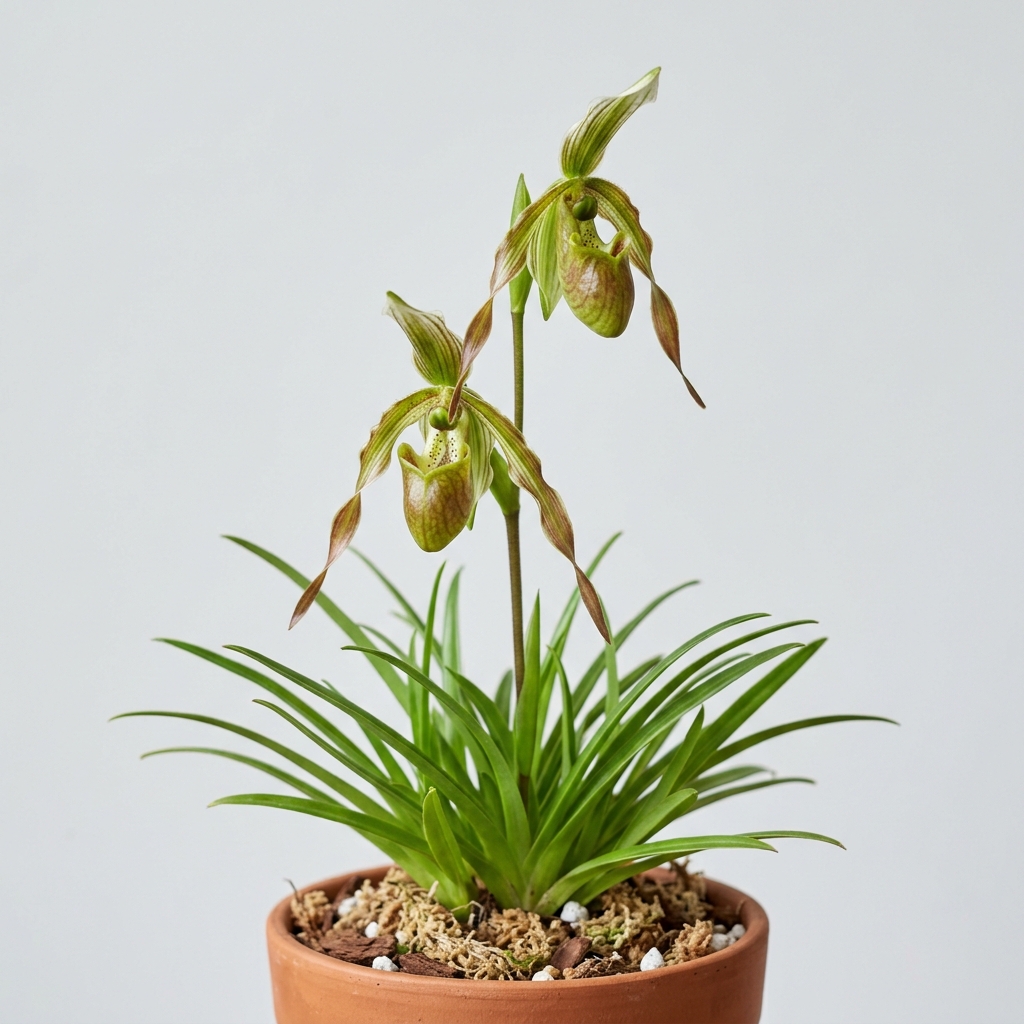
Phragmipedium Pearcei is a highly sought-after South American lady’s slipper orchid, cherished by collectors for its elegant, compact growth habit and distinctive grassy foliage. Unlike some of its larger relatives in the Phragmipedium genus, this species remains relatively modest in size, making it an excellent choice for indoor growers and greenhouse enthusiasts alike. Its narrow, bright green leaves form dense, attractive clumps that provide year-round visual appeal even when the plant is not in flower.
When it does bloom, Phragmipedium Pearcei produces a succession of delicate, pouch-shaped flowers on upright spikes. Native to the wet riverbanks and rocky seeps of Ecuador and Peru, this orchid has evolved to thrive in conditions that differ significantly from typical epiphytic orchids. Understanding its natural habitat is the key to unlocking successful cultivation, particularly regarding its moisture and water quality requirements.
💡 Did You Know?
Phragmipedium Pearcei belongs to the Phragmipedium orchid group, where flower presentation is often just as important as . White-flowered cultivars are especially valued indoors because their pale blooms reflect well and pair easily with many home, greenhouse, and display settings.
🌿 Botanical Overview
Phragmipedium Pearcei is a terrestrial or lithophytic orchid species native to the eastern slopes of the Andes in Peru and Ecuador. In its natural habitat, it is frequently found growing on wet rocks, gravel bars, and riverbanks at elevations ranging from 200 to 1,000 meters. This specific ecological niche exposes the plant to constant moisture, high humidity, and frequent washing by clean, low-mineral rainwater.
The growth habit of this orchid is characterized by its fan-shaped, grass-like leaves that are narrow, linear, and bright green. The plant spreads via short rhizomes, quickly forming dense clumps of multiple growths. Because it lacks pseudobulbs, Phragmipedium Pearcei has no significant water-storage capacity, which explains its intolerance to drought and its reliance on a continuous supply of moisture at the root zone.
🌸 Flower Characteristics
The flowers of Phragmipedium Pearcei are a masterclass in intricate botanical design. Each bloom features a prominent, pouch-shaped labellum (the slipper) that is typically pale green to yellowish-green, often adorned with delicate reddish-brown spots or margins along the interior rim. The dorsal sepal is relatively small, pointed, and pale green with darker green veins.
The most striking feature of the flower is its lateral petals. These are long, narrow, and gracefully twist downward, displaying a blend of green, white, and bronze-brown coloration. The flower spikes are upright and can carry several buds, though they present their flowers sequentially rather than all at once. Each individual flower lasts for several weeks before dropping, immediately followed by the opening of the next bud on the stem.
Fragrance & Bloom Profile
A noticeable scent is not consistently documented for Phragmipedium Pearcei, and most growers consider the species to be fragrance-free. The primary appeal of this orchid lies entirely in its visual presentation and its highly rewarding blooming cycle. Because it is a sequential bloomer, a single flower spike can remain active for several months, providing a continuous display of fresh flowers from spring through autumn.
As one flower begins to fade and drop, the next bud in line rapidly swells and opens. This ensures that the plant rarely looks spent during its active blooming phase. A mature, multi-growth specimen can produce several spikes simultaneously, resulting in an exceptionally long-lasting and dynamic display of slipper flowers.
Parentage & Hybrid Lineage
Phragmipedium Pearcei is a true species rather than a man-made hybrid. However, its compact size, ease of growth, and reliable sequential blooming habit have made it a highly valued parent in orchid hybridization. Breeders frequently use it to introduce manageable growth habits and elegant petal twisting to new Phragmipedium crosses.
It is closely related to other small-flowered Phragmipedium species, such as Phragmipedium caricinum and Phragmipedium richteri. In the hybridizing world, crosses involving Phragmipedium Pearcei are highly prized for their vigor and their ability to bloom at a much younger age and smaller size than many of the larger, standard slipper orchid hybrids.
🌱 Growing Conditions
To cultivate Phragmipedium Pearcei successfully, growers should aim to replicate its bright, humid, and wet riverbank origin. It thrives in bright, indirect light. While it can tolerate some gentle morning sun, direct midday sunlight will quickly scorch its thin, grass-like foliage. An east-facing window or a shaded south-facing window is typically ideal for indoor cultivation.
💡 Care Tip
For best results, grow Phragmipedium Pearcei in bright filtered with steady and gentle airflow. Avoid placing the plant in harsh midday sun, but do not keep it in a dark corner; weak is one of the most common reasons cultivated orchids refuse to rebloom.
Temperature: wise, this orchid prefers intermediate to warm conditions. Daytime temperatures should ideally range between 70°F and 85°F, with a night-time drop to around 60°F to 65°F. High humidity is essential, ideally maintained between 60% and 80%. To prevent fungal and bacterial issues in such a humid environment, constant, gentle air movement must be provided around the foliage.
Watering, Feeding & Potting Media
Watering is the most critical aspect of Phragmipedium Pearcei care. Unlike most other orchids, this species must never be allowed to dry out. The potting medium should remain consistently damp to wet. Many growers successfully use the tray method, keeping the bottom of the pot sitting in a shallow saucer of clean water during the active growing season.
Because it is highly sensitive to dissolved minerals and salts, you must use high-quality water, such as rainwater, reverse osmosis (RO) water, or distilled water. Tap water with high mineral content will quickly lead to root loss and leaf-tip burn. Feed the plant with a highly diluted, balanced orchid fertilizer every two to three weeks, and flush the pot thoroughly with pure water regularly to prevent any salt buildup.
The potting media must retain moisture while still allowing oxygen to reach the roots. A mix of fine fir bark, chopped sphagnum moss, perlite, and a small amount of charcoal works exceptionally well. Some growers also add a small amount of inorganic media, such as diatomite or small grow-stones, to maintain structure and prevent compaction.
Blooming Season & Care Notes
While Phragmipedium Pearcei can bloom at almost any time of the year, its primary flowering season spans from spring through autumn. During this active period, ensure the plant receives consistent warmth, high humidity, and regular watering. Do not cut the flower spike when the first flower falls; the spike is sequential and will continue to produce new buds from the tip.
Only cut the flower spike back to the base of the plant once it has turned completely brown and dry. Repotting is best done annually or every eighteen months, immediately after a major blooming cycle or when new root growth is visible at the base of the fans. Frequent repotting is necessary because the constant moisture required by this orchid causes organic potting media to break down more rapidly than it would under drier conditions.
⚠️ Common Issues
⚠️ Common Mistake
The most common mistake is by calendar instead of root and potting-media condition. Phragmipedium roots need moisture and air at the same time, so constantly wet bark or sphagnum can lead to root loss even when the leaves still look healthy.
- Brown Leaf Tips: Often caused by mineral buildup from tap water or over-fertilization. Always use pure water and flush the pot regularly.
- Crown Rot:
Can occur if water is allowed to sit in the center of the leaf fans, especially in cool temperatures with poor airflow. - Root Rot:
Although they love water, stagnant, oxygen-deprived media will suffocate the roots. Ensure the potting mix remains fresh and free-draining. - Spider Mites:
These pests can target the thin foliage if the growing environment becomes too dry and warm. Maintain high humidity to deter them.
❓ Frequently Asked Questions
Can I grow Phragmipedium Pearcei under artificial LED lights?
Yes, Phragmipedium Pearcei adapts exceptionally well to indoor growing under LED lights. Position the plant so it receives moderate light levels, ensuring the leaves do not become warm to the touch, and maintain a consistent day-night light cycle.
Why are the flowers falling off while they still look fresh?
This is natural behavior for sequential bloomers. Phragmipedium Pearcei drops its older flowers cleanly to direct its energy into opening the next bud on the spike. It is not a sign of poor health unless the entire spike turns brown prematurely.
Is it normal for this orchid to sit in water?
Yes, during the active growing season, Phragmipedium Pearcei can tolerate sitting in a shallow saucer of pure water. However, ensure the potting media is fresh and airy so the roots still receive adequate oxygen, and avoid this method in cold winter temperatures.
How do I know when it is time to repot my plant?
Repot your Phragmipedium Pearcei if the potting medium begins to smell sour, retains water like a sponge without draining, or if the plant has outgrown its container. Annual repotting is highly recommended due to the rapid breakdown of wet media.
⭐ Final Growing Notes
Phragmipedium Pearcei is a delightful and highly rewarding slipper orchid that brings a touch of the Andean riverbanks into the home. By prioritizing high-quality, mineral-free water, maintaining constant moisture, and providing bright, indirect light, growers can enjoy a near-continuous display of its elegant, twisting green and bronze flowers. Its compact size and vigorous clumping habit make it a standout addition to any diverse orchid collection.
⚕️ Health, Safety & Edibility
Understanding how a plant interacts with people, pets, and the surrounding environment is part of responsible cultivation. This section uses conservative, general guidance and does not replace professional medical or veterinary advice.
Human Safety: Species-specific human toxicity data for Phragmipedium Pearcei is limited. Use conservative handling practices and avoid intentional consumption.
Pet Safety: Pet-specific safety information for Phragmipedium Pearcei is limited, so keep it away from animals that commonly chew plants.
Edibility: Phragmipedium Pearcei should not be treated as edible. Ornamental specimens may contain natural irritants or horticultural residues that make them unsuitable for consumption.
Skin Contact: Skin irritation is not well documented for this plant, but gloves are sensible when repotting, pruning, or handling potting media.
🌱 Propagation Tip
Propagation should be approached patiently. Most home growers should wait for natural keikis or divide only mature, healthy plants when the orchid type allows it. Never remove a young growth until it has strong roots and enough leaves to support itself away from the parent plant.
⭐ Expert Advice
Repot after flowering when fresh root tips begin to appear. This timing helps the plant anchor quickly into new bark or sphagnum and reduces stress, especially for orchids grown indoors where airflow, , and drying speed can change from season to season.

Leave A Comment