
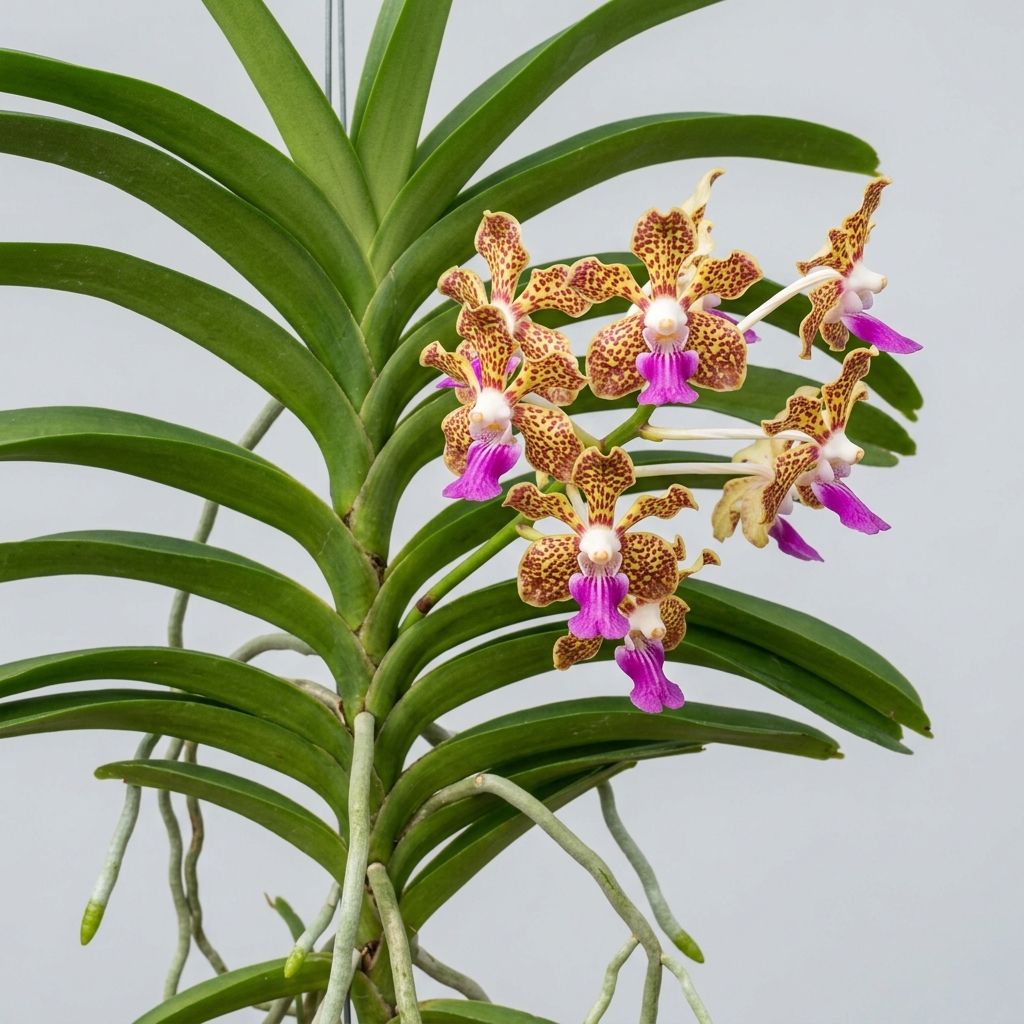
Vanda tricolor is a highly prized monopodial epiphytic orchid species celebrated for its striking, waxy blooms and robust growth habit. Native to the tropical forests of Indonesia, particularly Java and Bali, this species has been a cornerstone of orchid collections and hybridization programs for over a century. Growers value it not only for its architectural presence but also for its ability to produce magnificent, long-lasting floral displays under the right conditions.
Characterized by its tall, upright stem and leathery, strap-like leaves, this orchid stands out even when not in bloom. When it does flower, it produces axillary inflorescences bearing multiple heavily textured blossoms that fill the growing space with a rich, sweet perfume. While it requires dedicated attention to light and humidity, Vanda tricolor rewards patient horticulturists with unparalleled tropical beauty.
💡 Did You Know?
Vanda tricolor is native to the volcanic slopes of Java and Bali, where it often grows on large trees at elevations up to 1,600 meters. This elevation adaptation gives it a slightly better tolerance for cooler night temperatures than many other lowland Vanda species, making it a versatile parent in modern hybrid breeding.
🌿 Botanical Overview
Vanda tricolor is a large-growing monopodial epiphyte, meaning it grows upward from a single stem rather than spreading horizontally via pseudobulbs. In its natural habitat, it clings to the branches of tall trees where it is exposed to abundant air movement and dappled sunlight. The thick, fleshy aerial roots emerge along the stem, anchoring the plant and absorbing moisture and nutrients directly from the humid air and rainfall.
The foliage consists of deeply channeled, strap-shaped leaves arranged in a neat, two-ranked fan. These leaves are durable and leathery, designed to withstand periods of intense tropical light. Over several years, a healthy specimen can reach impressive heights, often producing basal offsets or keikis that contribute to a larger, multi-stemmed specimen.
🌸 Flower Characteristics
The blossoms of Vanda tricolor are a masterclass in natural contrast and texture. Each inflorescence typically carries between seven and fifteen waxy, long-lasting flowers, measuring approximately two to three inches in diameter. The sepals and petals are obovate, slightly undulating along the margins, and feature a base color ranging from creamy white to pale yellow, heavily patterned with rich reddish-brown spots or blotches.
The defining feature of the flower is its prominent, three-lobed lip or labellum. The lateral lobes are small and white, while the mid-lobe is a striking, vibrant magenta or purple, often marked with longitudinal ridges. This vivid lip serves as a visual guide for pollinators in the wild and provides a stunning focal point against the spotted petals.
Fragrance & Bloom Profile
One of the primary reasons growers cultivate Vanda tricolor is its intense, captivating fragrance. The flowers emit a powerful, sweet, and slightly spicy scent that is most pronounced during the morning and midday hours when temperatures rise. This perfume is often compared to a blend of vanilla, jasmine, and warm spices, capable of filling an entire greenhouse or growing room.
The blooms are exceptionally long-lasting, frequently remaining pristine for six to eight weeks. Because the flowers have a thick, waxy substance, they resist wilting and maintain their color saturation throughout the entire bloom cycle. The spikes emerge from the leaf axils, arching gracefully outward to present the flowers clear of the foliage.
Parentage & Hybrid Lineage
As a naturally occurring species rather than a man-made hybrid, Vanda tricolor does not have a hybrid parentage. However, it has played a foundational role in the development of modern Vanda hybrids. Its genetic contributions are highly valued for introducing cold tolerance, robust growth habits, and, most importantly, intense fragrance to its progeny.
Within the species, there are recognized varieties, most notably Vanda tricolor var. suavis, which features lighter spotting and a highly distinct, sweet fragrance profile. In horticultural literature, these variations are sometimes treated as distinct forms, but they all share the fundamental characteristics that make this species a classic among orchid enthusiasts.
🌱 Growing Conditions
To cultivate Vanda tricolor successfully, one must replicate its native tropical canopy environment. This orchid demands high light levels, thriving in bright, filtered sunlight. While it can tolerate some direct morning sun, midday sun should be shaded to prevent leaf scorch. A light green leaf color indicates optimal light, while dark green suggests insufficient light.
💡 Care Tip
Hang your Vanda tricolor in a location with vigorous air movement, such as near an open window or an oscillating fan. Excellent airflow is critical for preventing fungal leaf spot and ensuring that the bare aerial roots dry out rapidly after daily .
Temperature control is equally critical. Vanda tricolor prefers warm to intermediate conditions, with daytime temperatures between 75°F and 85°F and a night drop to around 60°F to 65°F. High humidity, ideally between 70% and 80%, must be maintained alongside vigorous air circulation to prevent stagnant moisture from causing bacterial or fungal infections.
Watering, Feeding & Potting Media
Because Vanda tricolor is typically grown bare-root in wooden slat baskets or hung suspended in the air, its watering requirements are unique. The thick aerial roots must be watered heavily—often daily during the hot summer months—allowing them to turn fully green, which indicates complete hydration. However, these roots must dry rapidly; leaving them in soggy, compacted media will quickly lead to root rot.
Feeding should be frequent but light, a practice often described as weakly weekly. A balanced, water-soluble orchid fertilizer applied at a quarter or half strength during active growth supports the plant’s high energy demands. During the cooler winter months, watering and feeding should be scaled back slightly to match the plant’s slower metabolic rate.
Blooming Season & Care Notes
While Vanda tricolor can bloom sporadically throughout the year, its primary flowering season typically spans from autumn through early spring. The initiation of flower spikes is often triggered by the natural drop in night temperatures during the autumn months. Once a spike is detected, avoid changing the plant’s orientation to the light source, as this can cause the developing buds to twist or fail to open properly.
Repotting or basket maintenance is best performed in the spring, immediately after the blooming cycle concludes and when new root tips are actively growing. Because Vandas resent root disturbance, it is often best to simply place the old, degraded wooden basket directly inside a larger new basket, filling the gaps with large chunks of charcoal or tree fern fiber to minimize stress.
⚠️ Common Issues
⚠️ Common Mistake
The most common mistake is potting Vanda tricolor in standard, dense orchid potting soil or fine bark. This suffocates the thick aerial roots, leading to rapid root rot and plant decline. Always prioritize maximum aeration by using open wooden baskets or extremely coarse media.
- Root Rot:
Caused by poor drainage, compacted potting media, or lack of airflow around the root zone. - Leaf Spotting: Fungal or bacterial pathogens can cause black or brown spots on the foliage, often due to water sitting on the leaves overnight.
- Bud Blast:
Developing buds may yellow and drop prematurely due to sudden changes in temperature, low humidity, or drafts. - Dehydration:
Shriveled, leathery leaves and dry, brittle roots indicate insufficient watering or low ambient humidity. - Pests:
Mealybugs, scale, and spider mites can occasionally hide in the leaf axils or on the undersides of leaves.
❓ Frequently Asked Questions
How do I encourage my Vanda tricolor to bloom?
Blooming is primarily driven by light and temperature. Ensure your orchid receives bright, filtered light and a distinct 10-to-15-degree Fahrenheit drop in night temperatures during the autumn. Consistent feeding during the active growing season also provides the energy required for spike production.
Can I grow Vanda tricolor indoors without a greenhouse?
Yes, but it requires effort to maintain high humidity and light. Growing near a bright south- or east-facing window with a humidifier nearby is essential. Daily misting or soaking of the roots in a bucket of water for 15 minutes can help meet its moisture needs.
Why are the lower leaves of my Vanda tricolor turning yellow and falling off?
While occasional loss of the oldest bottom leaves is normal as the plant grows, rapid leaf drop is usually a sign of stress. This is commonly caused by severe dehydration, root loss from rot, or a sudden drop in temperature below its tolerance limit.
What is the best way to mount or pot Vanda tricolor?
The most successful method is growing it bare-root in a teak or plastic slat basket. This allows the extensive aerial root system to hang freely and dry quickly. If you must use a pot, choose a highly aerated clay pot filled with very large chunks of charcoal and coarse fir bark.
⭐ Final Growing Notes
Vanda tricolor remains an iconic species that embodies the wild, exotic allure of tropical orchids. While its large size and specific humidity requirements make it a commitment for indoor growers, its ease of care in warm climates and greenhouse environments is highly rewarding. By providing abundant light, daily hydration, and excellent air movement, you can enjoy the magnificent spotted blooms and intoxicating fragrance of this Indonesian treasure for decades.
🌱 Propagation Tip
While Vanda tricolor is typically grown from seed in laboratory settings, mature plants will occasionally produce basal offsets known as keikis. Allow the keiki to develop several robust roots of its own, at least three to four inches long, before carefully detaching it with a sterile blade to pot independently.
⭐ Expert Advice
To maximize bloom potential, feed your Vanda tricolor with a high-phosphorus bloom booster fertilizer for a few weeks in late summer. This nutritional shift, combined with natural autumn night drops, helps trigger the development of robust flower spikes from the leaf axils.




Leave A Comment