
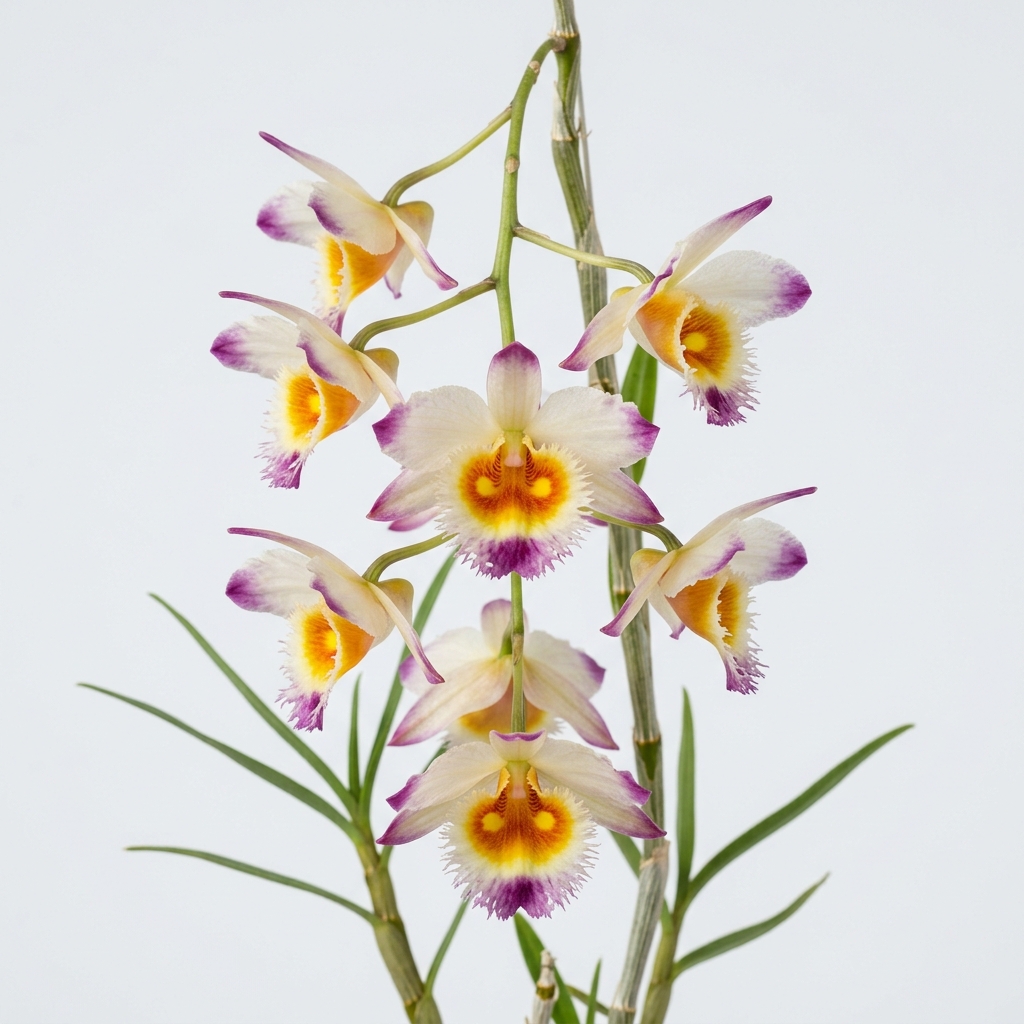
Dendrobium Devonianum is a highly prized epiphytic orchid species celebrated for its remarkably delicate, fringed blossoms and elegant, pendulous growth habit. Native to the mountainous regions of Southeast Asia and the eastern Himalayas, this orchid has captured the attention of collectors who appreciate its dramatic seasonal transformation from leafy canes to cascading ribbons of color.
Cultivating this orchid successfully requires an understanding of its distinct seasonal growth cycle, which transitions from a wet, warm summer growing period to a cool, dry winter rest. When these conditions are met, growers are rewarded with a spectacular spring display of intricately patterned flowers that emerge along the length of its slender, mature pseudobulbs.
💡 Did You Know?
The remarkably intricate, fringed lip of Dendrobium Devonianum is an evolutionary adaptation designed to attract specific pollinators in its native montane forest habitats. This delicate lace-like structure, combined with the bright yellow spots, acts as a highly effective visual guide for insects navigating the shaded forest understory.
🌿 Botanical Overview
Dendrobium Devonianum is characterized by its exceptionally long, slender, and pendulous pseudobulbs, often referred to as canes. These canes can reach lengths of up to three feet or more under optimal conditions, naturally draping downward in an elegant cascade. The leaves are lanceolate, thin, and deciduous, typically shedding before or during the winter rest period to prepare the plant for its spring flowering cycle.
In its native habitat, this species grows epiphytically on moss-covered tree trunks and branches in humid montane forests. This natural environment dictates its preference for excellent air circulation around the root system and a substrate that drains rapidly, preventing waterlogged conditions that can quickly lead to root rot.
🌸 Flower Characteristics
The blossoms of Dendrobium Devonianum are widely regarded as some of the most beautiful in the genus. Each flower typically measures between one and two inches in diameter, featuring translucent white or pale cream sepals and petals that are delicately tipped with magenta or purple.
The defining feature of the flower is its prominent, heart-shaped lip. The lip is heavily fringed or fimbriate along the margins, creating a lace-like appearance. It is adorned with two striking, vivid yellow or orange spots near the base, contrasting sharply with a rich purple tip. The flowers emerge in small clusters from the nodes of the leafless canes, creating a dense, colorful display along the length of the pendulous stems.
Fragrance & Bloom Profile
This orchid produces a delicate, sweet fragrance that is often described as subtly floral or honey-like. The scent is most pronounced during the morning hours when temperatures begin to rise and light levels increase, filling the growing space with a pleasant, non-overbearing aroma.
The blooms are relatively long-lasting for a deciduous Dendrobium, typically remaining fresh for three to four weeks if kept in cool, stable conditions. Because the flowers open nearly simultaneously along the mature canes, the overall visual impact is highly concentrated, making it a standout specimen during its spring blooming peak.
Parentage & Hybrid Lineage
Dendrobium Devonianum is a distinct species rather than a complex artificial hybrid. While it has been used occasionally in hybridizing programs to introduce its unique fringed lip and pendulous habit to new grexes, it is most commonly grown and appreciated in its true species form.
Because wild populations are protected under international conservation agreements, plants available in the horticultural trade are typically propagated through seed or tissue culture. Growers should ensure they purchase specimens from reputable nurseries that specialize in ethically propagated species to support conservation efforts.
🌱 Growing Conditions
To thrive, this orchid requires a dynamic environment that mimics its native seasonal shifts. During the active growing season from late spring through autumn, it prefers warm to intermediate temperatures, ranging from 75 degrees to 85 degrees Fahrenheit during the day, with a slight drop at night. Bright, filtered light is essential; a sheer curtain or shade cloth can protect the delicate foliage from scorching.
💡 Care Tip
Mounting this orchid on a cork slab or tree fern mount is highly recommended. This setup naturally accommodates its long, pendulous canes and ensures the roots dry rapidly after , closely mimicking its wild epiphytic habitat in the humid mountain forests.
In contrast, the winter months require a significant drop in temperature to initiate bud development. Nighttime temperatures during the winter rest should ideally drop to 50 degrees to 55 degrees Fahrenheit. High humidity of 70 percent or more is beneficial during the summer, paired with constant, gentle air movement to prevent fungal pathogens from establishing on the thin leaves.
Watering, Feeding & Potting Media
Watering practices must be strictly adjusted according to the season. During the active growth phase, the plant should be watered thoroughly as soon as the potting medium approaches dryness. Weekly applications of a balanced, diluted orchid fertilizer will support the rapid development of new canes.
Because of its pendulous growth habit, Dendrobium Devonianum is exceptionally well-suited to being mounted on cork bark or tree fern slabs, or grown in hanging baskets. If potted, a highly porous medium consisting of medium-grade fir bark, charcoal, and perlite is recommended. When the winter rest begins, watering must be reduced to occasional mistings just to keep the canes from shriveling excessively, and fertilizing must be stopped completely.
Blooming Season & Care Notes
The primary blooming season occurs in mid-to-late spring, triggered by the warming temperatures and increasing day length following the winter rest. As the buds begin to swell at the nodes of the leafless canes, growers should gradually resume light watering, taking care not to overwater before the roots become active.
Once flowering is complete, new growth will emerge from the base of the old canes. This is the ideal time to repot or remount the plant if the medium has begun to decompose. Avoid removing old, leafless canes unless they are completely dry, yellow, and hollow, as they continue to store water and nutrients that support the new growth.
⚠️ Common Issues
⚠️ Common Mistake
The most common mistake is failing to provide a strict winter rest. Continuing to water and fertilize normally during the winter months will result in lush green vegetative growth instead of the highly anticipated spring flower buds.
- Bud Blast:
Sudden temperature fluctuations, cold drafts, or premature heavy watering during the early stages of bud development can cause the buds to yellow and drop before opening. - Root Rot:
Overwatering during the winter rest period or using a compacted, poorly draining medium will quickly suffocate the fine roots of this orchid. - Spider Mites:
The thin, deciduous leaves are susceptible to spider mites, particularly in dry, warm environments; regular misting and adequate humidity help deter these pests. - Shriveling Canes: While slight shriveling is normal during the winter dry rest, extreme dehydration can weaken the plant; light misting of the canes can alleviate severe desiccation without breaking the rest period.
❓ Frequently Asked Questions
How do I initiate blooms on my Dendrobium Devonianum?
Blooming is initiated by providing a cool, dry rest period starting in late autumn. Reduce watering significantly, stop fertilizing, and expose the plant to cooler nighttime temperatures around 50 to 55 degrees Fahrenheit for several weeks until flower buds begin to form along the canes.
Can I grow this orchid in a standard plastic pot?
While possible, standard pots are not ideal due to the naturally pendulous, cascading growth habit of the canes. Growing the plant in a hanging basket or mounted on a cork slab allows the canes to drape naturally and ensures the rapid drainage and air circulation the roots require.
Why is my orchid losing all of its leaves in autumn?
This is a completely natural, deciduous process for Dendrobium Devonianum. The shedding of leaves in autumn signals the transition into its winter rest phase and is necessary for the plant to redirect its energy toward producing spring flowers.
What type of fertilizer is best for this species?
Use a balanced, water-soluble orchid fertilizer diluted to one-quarter strength during the active spring and summer growing season. Avoid fertilizing entirely during the autumn and winter rest period, as excess salts can damage dormant roots.
⭐ Final Growing Notes
Dendrobium Devonianum remains a rewarding challenge for intermediate and advanced orchid enthusiasts who can accommodate its seasonal requirements. By respecting its need for a distinct wet summer growth phase and a cool, dry winter rest, growers can enjoy one of the most spectacular and delicate floral displays the orchid family has to offer.
⚕️ Health, Safety & Edibility
Understanding how a plant interacts with people, pets, and the surrounding environment is part of responsible cultivation. This section uses conservative, general guidance and does not replace professional medical or veterinary advice.
Human Safety: No published evidence currently identifies species-specific toxicity concerns for Dendrobium Devonianum during normal handling. As with most ornamental plants, it should not be intentionally consumed.
Pet Safety: Published information does not indicate that this orchid commonly poses a toxicity concern for cats or dogs. However, chewing leaves, flowers, roots, or potting media may still cause mild digestive upset.
Edibility: This orchid is cultivated for ornamental display rather than food. Ornamental plants may carry fertilizers, pesticides, or other horticultural treatments that make them unsuitable for consumption.
Skin Contact: Routine handling is not generally associated with skin irritation. Gardeners with sensitive skin may prefer wearing gloves when repotting, pruning, or handling potting media.
🌱 Propagation Tip
This species can occasionally produce keikis, or baby plants, along the nodes of older canes. Allow the keiki to develop a robust root system of at least two inches in length before carefully detaching and mounting it independently.
⭐ Expert Advice
When managing the winter rest, monitor the pseudobulbs closely. A slight wrinkling of the canes is normal and expected, but if they begin to shrivel severely, provide a morning misting to hydrate the plant without soaking the medium.

Leave A Comment