

The Cymbidium Iridioides orchid is a striking and historically significant species highly prized by collectors for its dramatic, large blooms and robust growth habit. Belonging to the cool-growing Cymbidium group, this orchid is celebrated for its elegant, arching flower spikes that carry numerous richly patterned blossoms, making it a standout addition to any temperate greenhouse or indoor collection.
Cultivators value this orchid not only for its visual appeal but also for its resilience and rewarding growth cycle. While it requires specific temperature drops to initiate its spectacular autumn and winter blooms, its lush, strap-like evergreen foliage provides year-round structural beauty, embodying the classic elegance of wild Himalayan orchids.
💡 Did You Know?
Cymbidium Iridioides was historically known as Cymbidium giganteum due to its impressive size and robust growth habit. In its native Himalayan habitat, this resilient orchid can survive frost and clings to mossy trees at elevations up to 2,800 meters, making it one of the hardiest large-flowered orchid species in cultivation.
🌿 Botanical Overview
Cymbidium Iridioides, historically known by some growers as Cymbidium giganteum, is a robust epiphytic or lithophytic orchid native to the moist, montane forests of the Himalayas and Southeast Asia. It typically grows at elevations between 1,000 and 2,800 meters, where it clings to mossy tree trunks or rocky ledges in humid, shaded environments.
The plant features large, ovoid, laterally compressed pseudobulbs enveloped by the bases of long, linear, arching leaves. These strap-like leaves can reach up to 60 to 90 centimeters in length, creating a dense, graceful clump that supports the heavy flower spikes emerging from the base of the pseudobulbs.
🌸 Flower Characteristics
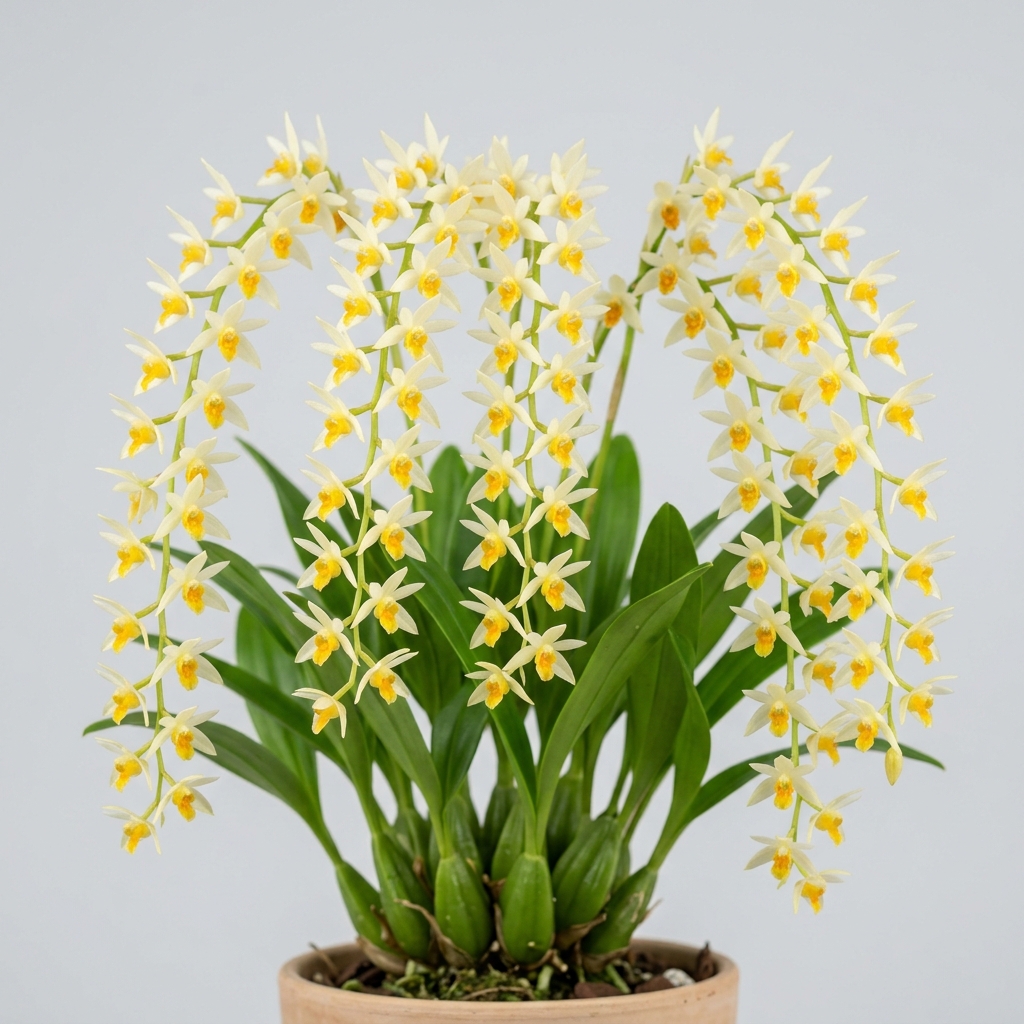
The blooms of Cymbidium Iridioides are notably large, often measuring 7 to 10 centimeters in diameter. The sepals and petals are typically a pale greenish-yellow or olive-green, adorned with striking, longitudinal reddish-brown stripes that run the length of the segments. This striped patterning gives the flowers a highly dramatic and exotic appearance.
The prominent lip, or labellum, is a key diagnostic feature, displaying a yellowish background heavily marked with bold red-brown spots and stripes. The margin of the lip is often finely fringed or pubescent, adding a velvety texture to the intricate floral display. The flowers are arranged on a stout, arching inflorescence that can bear up to 10 to 20 blossoms, presenting a cascading waterfall of color.
Fragrance & Bloom Profile
One of the most alluring traits of this orchid is its intense, sweet, and slightly spicy fragrance, which can easily fill a growing space on warm mornings. The scent is often described as a blend of citrus and warm spices, attracting natural pollinators in its native habitat.
The blooming cycle typically begins in mid-autumn and can extend well into the winter months. Individual flowers are remarkably long-lasting, often remaining fresh on the spike for six to eight weeks if kept in cool, stable conditions. This longevity makes it a highly rewarding species for indoor display during the darker months of the year.
Parentage & Hybrid Lineage
As a naturally occurring species rather than a man-made hybrid, Cymbidium Iridioides possesses a pure genetic lineage that has been highly influential in orchid breeding. It has been utilized extensively by hybridizers to introduce large flower size, robust growth habits, and cold tolerance into modern Cymbidium hybrids.
While some older literature may refer to various horticultural selections or color variants, the species itself remains relatively stable. Growers should note that historical registration records sometimes confuse this species with its close relatives, but modern botanical consensus maintains its distinct identity as a cornerstone of cool-growing orchid collections.
🌱 Growing Conditions
To cultivate Cymbidium Iridioides successfully, growers must replicate its montane forest habitat. It thrives in bright, indirect light; a location with morning sun and afternoon shade is ideal. Insufficient light will result in lush green leaves but a complete lack of flowers, while excessive direct sun can scorch the foliage.
💡 Care Tip
To ensure successful blooming, place your orchid outdoors in a sheltered, shaded spot during late summer and early autumn. The natural drop in night temperatures to around 10 to 13 degrees Celsius is the primary trigger for flower spike initiation.
Temperature management is critical for this species. It prefers cool to intermediate conditions, with summer days around 21 to 26 degrees Celsius and cool nights. A distinct drop in night temperatures during late summer and early autumn—down to 10 to 13 degrees Celsius—is absolutely essential to trigger the development of flower spikes.
Watering, Feeding & Potting Media
During the active spring and summer growing season, this orchid requires abundant watering. The potting medium should be kept consistently damp but never waterlogged. As winter approaches and growth slows, watering should be reduced, allowing the medium to dry out slightly between waterings while preventing the pseudobulbs from shriveling.
A balanced orchid fertilizer applied at half-strength every two weeks during the growing season supports robust pseudobulb development. The ideal potting medium is a well-draining, moisture-retentive mix, such as medium-grade fir bark blended with perlite, charcoal, and a small amount of chopped sphagnum moss to maintain humidity around the root zone.
Blooming Season & Care Notes
The primary blooming season spans from October to January. Once the flower spikes begin to emerge from the base of the pseudobulbs, they should be supported with stakes to prevent them from bending or breaking under the weight of the developing buds. Avoid moving the plant to a warm room while the buds are developing, as this can trigger bud drop.
Repotting should only be performed every two to three years, immediately after the blooming cycle has finished in late winter or early spring. This species resents root disturbance, so growers should only repot when the pseudobulbs have completely filled the container or the potting medium has begun to break down and lose its drainage properties.
⚠️ Common Issues
⚠️ Common Mistake
The most common mistake is keeping the orchid in a consistently warm room year-round. Without a distinct cool period in the autumn, the plant will continue to produce foliage but will fail to develop any flower spikes.
- Root Rot:
Caused by overwatering or compacted potting media that prevents adequate airflow to the root system. - Bud Blast:
Sudden drops in humidity or drastic temperature fluctuations can cause developing flower buds to yellow and drop prematurely. - Spider Mites:
These pests often target the undersides of the long, strap-like leaves in dry, warm indoor environments. - Leaf Tip Burn: Often a sign of mineral buildup from hard water or excessive fertilizer application; flush the pot thoroughly with pure water.
- Failure to Bloom: Usually caused by keeping the plant too warm during the late summer nights, preventing the necessary temperature drop trigger.
❓ Frequently Asked Questions
How do I trigger my Cymbidium Iridioides to bloom?
To trigger blooming, ensure the plant experiences a distinct drop in night temperatures down to 10 to 13 degrees Celsius during late summer and early autumn. This temperature differential, combined with bright light, is essential for flower spike initiation.
What type of pot is best for this orchid?
A deep, heavy clay pot is ideal. This species produces a massive, top-heavy canopy of foliage and a vigorous root system that can easily tip over lightweight plastic pots as the plant matures.
Why are the leaf tips of my orchid turning brown?
Brown leaf tips are often caused by mineral buildup from hard water or over-fertilizing. Flush the potting medium thoroughly with distilled or rainwater once a month to wash away accumulated salts.
Can I grow Cymbidium Iridioides outdoors?
Yes, in temperate climates with mild winters, it can be grown outdoors in a shaded, sheltered location. However, it must be brought indoors or protected if temperatures threaten to drop below freezing.
⭐ Final Growing Notes
Cultivating Cymbidium Iridioides is a deeply rewarding endeavor for any orchid enthusiast willing to accommodate its cool-temperature requirements. By providing bright light, consistent moisture during the summer, and crucial cool autumn nights, growers are rewarded with a spectacular, fragrant winter display that brings the wild beauty of the Himalayas into the home.
⚕️ Health, Safety & Edibility
Understanding how a plant interacts with people, pets, and the surrounding environment is part of responsible cultivation. This section uses conservative, general guidance and does not replace professional medical or veterinary advice.
Human Safety: No published evidence currently identifies species-specific toxicity concerns for Cymbidium Iridioides during normal handling. As with most ornamental plants, it should not be intentionally consumed.
Pet Safety: Published information does not indicate that this orchid commonly poses a toxicity concern for cats or dogs. However, chewing leaves, flowers, roots, or potting media may still cause mild digestive upset.
Edibility: This orchid is cultivated for ornamental display rather than food. Ornamental plants may carry fertilizers, pesticides, or other horticultural treatments that make them unsuitable for consumption.
Skin Contact: Routine handling is not generally associated with skin irritation. Gardeners with sensitive skin may prefer wearing gloves when repotting, pruning, or handling potting media.
🌱 Propagation Tip
Propagate this orchid by division during spring repotting. Ensure each division has at least three healthy, leafy pseudobulbs and a strong root system. Avoid dividing the plant too frequently, as larger specimens produce far more spectacular flower displays.
⭐ Expert Advice
When repotting, choose a deep, heavy clay pot. Cymbidium Iridioides produces a massive, top-heavy canopy of foliage and a vigorous root system that can easily tip over lightweight plastic pots as the plant matures.

Leave A Comment