
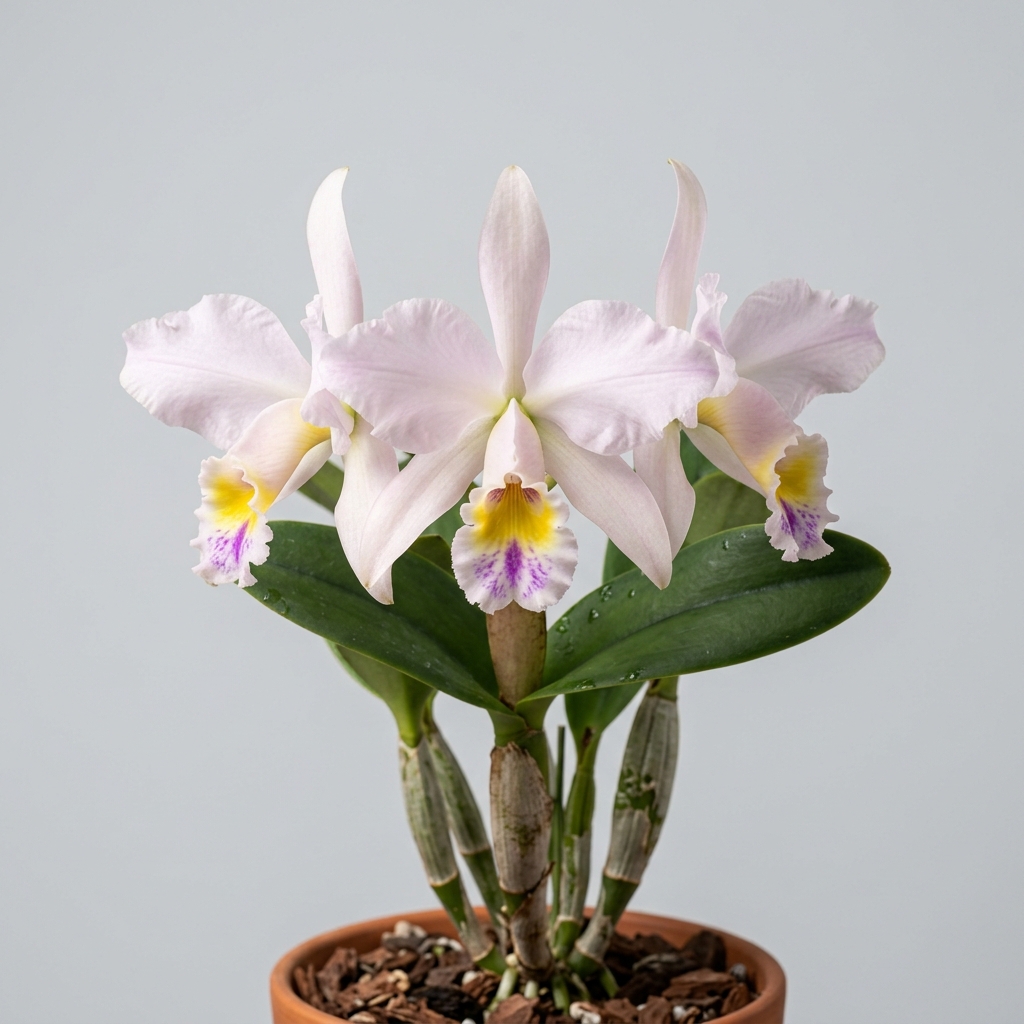
Cattleya Wallisii, often recognized by its historical synonym Cattleya eldorado, is a highly prized unifoliate orchid species native to the warm, humid river basins of northern Brazil. Renowned for its elegant, pastel-toned flowers and sweet, pervasive fragrance, this orchid occupies a special niche among collectors who appreciate wild species forms. Its growth habit features slender, upright pseudobulbs topped by a single, leathery leaf, presenting a classic Cattleya silhouette even when not in bloom.
Growers value this species not only for its delicate aesthetic but also for its fascinating botanical history and distinct seasonal growth cycle. While it requires a bit more attention to temperature and moisture cycles than some of the more resilient modern hybrids, Cattleya Wallisii rewards attentive care with striking, long-lasting blossoms that showcase a beautifully detailed, tubular lip. Understanding its natural equatorial habitat is the key to successfully cultivating this exquisite orchid in a domestic environment.
💡 Did You Know?
Cattleya Wallisii is native to the Rio Negro region of the Amazon, where it grows in a unique ecosystem known as igapó or blackwater flooded forests. In this habitat, the orchid experiences extreme seasonal shifts in water levels and high ambient , which explains its evolutionary need for a distinct winter rest period in home cultivation.
🌿 Botanical Overview
Cattleya Wallisii is an epiphytic orchid species indigenous to the Amazonian regions of Brazil, particularly along the Rio Negro basin. In its native habitat, it grows high in the canopy of tropical forests where it receives bright, filtered sunlight and experiences high ambient humidity year-round. This species is unifoliate, meaning each club-shaped pseudobulb produces only a single, rigid, oblong leaf that helps the plant store moisture and nutrients.
The species was historically described in the 19th century and has occasionally been classified under the name Cattleya eldorado. In botanical circles, there remains some discussion regarding its exact classification, but it is widely accepted by hobbyists as a distinct and desirable species. Its adaptation to warm, humid environments with a pronounced dry season dictates much of its cultural requirements in cultivation.
🌸 Flower Characteristics
The blossoms of Cattleya Wallisii are celebrated for their delicate, almost translucent texture and soft coloration. The flowers typically range from pale rose-pink to pristine white, measuring approximately 4 to 6 inches in diameter. The sepals and petals are relatively narrow and elegant, framing a highly distinctive, tubular lip (labellum).
The lip is the defining feature of this species, showcasing a brilliant golden-yellow throat or disc surrounded by a white border, often finished with a rich purple or magenta blotch at the apex. Flowers are produced on short inflorescences arising from the top of mature pseudobulbs, usually carrying two to four blossoms per spike. The presentation is upright and airy, allowing each flower to be viewed clearly.
Fragrance & Bloom Profile
One of the most compelling reasons to cultivate Cattleya Wallisii is its exceptional fragrance. The flowers emit a strong, sweet, and complex perfume that can easily fill a growing room, particularly during the morning hours when temperatures begin to rise. The scent is often described as a blend of sweet floral notes with a hint of honey.
Individual blooms typically last between two to three weeks, depending on environmental conditions such as temperature and humidity. Cooler temperatures and lower light during the blooming phase can help prolong the life of the flowers. Once the blooming cycle is complete, the plant transitions into a brief period of vegetative rest before initiating new root and shoot growth.
Parentage & Hybrid Lineage
Unlike many of the complex Cattleya hybrids found in garden centers, Cattleya Wallisii is a naturally occurring species rather than a man-made cultivar. Consequently, it does not have a hybrid parentage. In orchid breeding, however, it has been utilized to introduce its sweet fragrance, compact unifoliate growth habit, and beautifully colored lip to new generations of intergeneric and intrageneric hybrids.
Because it is a species, plants purchased today are typically the result of sibling crosses (sib-crosses) or selfings of high-quality wild-collected clones. This selective breeding by orchid nurseries aims to improve flower form, color intensity, and overall plant vigor while preserving the unique characteristics of the wild species.
🌱 Growing Conditions
To successfully grow Cattleya Wallisii, one must replicate its warm, tropical native environment. It thrives in bright, indirect light, ideally receiving around 2,500 to 3,500 foot-candles. In a home setting, an east- or shaded south-facing window is usually ideal. The leaves should be a light, healthy green; dark green leaves indicate insufficient light, while yellowing or red-tinged leaves suggest too much exposure.
💡 Care Tip
Ensure your growing area has constant, gentle air circulation. Using a small oscillating fan near your Cattleya Wallisii helps dry out excess moisture on the leaves and , significantly reducing the risk of fungal infections and root rot.
Temperature control is crucial for this warm-growing species. Daytime temperatures should ideally range between 75°F and 85°F (24°C to 29°C), with a nighttime drop to around 65°F (18°C). High humidity of 60% to 80% is highly beneficial, accompanied by constant, gentle air movement to prevent stagnant air pockets, which can invite fungal and bacterial pathogens.
Watering, Feeding & Potting Media
During the active growing season in spring and summer, Cattleya Wallisii requires frequent watering. The potting medium should be allowed to dry out almost completely between waterings, but never remain dry for extended periods while new pseudobulbs are developing. A balanced, water-soluble orchid fertilizer applied at a weak concentration (such as quarter- or half-strength) every two weeks is recommended during active growth.
The ideal potting medium is a highly porous, free-draining mix. Coarse fir bark blended with medium charcoal and perlite works exceptionally well to ensure rapid drainage and excellent aeration around the roots. Some growers successfully cultivate this species on cork slabs or tree fern mounts, provided they can maintain the necessary high humidity and water the plant daily during hot weather.
Blooming Season & Care Notes
Cattleya Wallisii typically blooms in the mid-to-late summer months. The flower buds develop within a green sheath at the apex of the newly matured pseudobulb. During this critical period, avoid getting water inside the sheath, as trapped moisture can cause the developing buds to rot.
Once the flowers fade, cut the spent spike back to the base of the sheath using sterilized cutting tools to prevent the spread of viruses. After blooming, the orchid enters a semi-dormant phase during the cooler winter months. During this rest period, significantly reduce watering and suspend fertilizing, providing just enough moisture to prevent the pseudobulbs from shriveling excessively.
⚠️ Common Issues
⚠️ Common Mistake
A frequent error is failing to provide a dry winter rest. Continuing to water and fertilize Cattleya Wallisii heavily during the short days of winter can lead to root loss, rot, and a failure to produce flower sheaths in the subsequent growing season.
- Root Rot:
Caused by overwatering or a degraded, compacted potting medium that retains too much moisture around the roots. - Bud Blast:
The premature dropping or yellowing of flower buds, often triggered by sudden changes in temperature, drafty conditions, or low humidity. - Scale and Mealybugs: Common pests that hide under the dry sheaths of the pseudobulbs or on the undersides of leaves; treat promptly with insecticidal soap or horticultural oil.
- Pseudobulb Shriveling: Indicates severe dehydration, either due to underwatering or a loss of the root system from rot.
❓ Frequently Asked Questions
How often should I water Cattleya Wallisii during the winter?
During the winter rest period, watering should be significantly reduced. Water only when the pseudobulbs show slight signs of shriveling, typically once every 10 to 14 days, depending on your home’s humidity levels. Avoid fertilizing entirely during this dormant phase.
Can I grow Cattleya Wallisii under LED grow lights?
Yes, this species adapts well to high-output LED grow lights. Position the plant so it receives bright, full-spectrum light for 12 to 14 hours a day during the growing season, ensuring the lights do not emit excessive heat that could burn the foliage.
Why are the leaves on my orchid turning dark green?
Dark green leaves are a classic sign that the orchid is not receiving enough light. To encourage optimal growth and future blooming, gradually move the plant to a brighter location with filtered sunlight or increase the intensity of your artificial lights.
When is the best time to repot this orchid?
The best time to repot is in the spring, just as new root tips begin to emerge from the base of the newest pseudobulb. Repotting at this stage allows the orchid to establish itself quickly in the fresh medium with minimal transplant shock.
⭐ Final Growing Notes
While Cattleya Wallisii demands a thoughtful approach to seasonal watering and temperature management, it remains one of the most rewarding wild species for intermediate orchid enthusiasts. Its combination of delicate pastel petals, a highly detailed golden throat, and an intoxicating sweet fragrance makes it a standout addition to any collection. By respecting its natural Amazonian rhythms of summer growth and winter rest, you can enjoy its spectacular blooms year after year.
⚕️ Health, Safety & Edibility
Understanding how a plant interacts with people, pets, and the surrounding environment is part of responsible cultivation. This section uses conservative, general guidance and does not replace professional medical or veterinary advice.
Human Safety: No published evidence currently identifies species-specific toxicity concerns for Cattleya Wallisii during normal handling. As with most ornamental plants, it should not be intentionally consumed.
Pet Safety: Published information does not indicate that this orchid commonly poses a toxicity concern for cats or dogs. However, chewing leaves, flowers, roots, or potting media may still cause mild digestive upset.
Edibility: This orchid is cultivated for ornamental display rather than food. Ornamental plants may carry fertilizers, pesticides, or other horticultural treatments that make them unsuitable for consumption.
Skin Contact: Routine handling is not generally associated with skin irritation. Gardeners with sensitive skin may prefer wearing gloves when repotting, pruning, or handling potting media.
🌱 Propagation Tip
This species is best propagated by division during spring repotting. Ensure each division has at least three to four healthy, mature pseudobulbs with active eye buds at the base. Avoid dividing the plant too frequently, as larger specimens tend to produce more robust and abundant blooms.
⭐ Expert Advice
To maximize the lifespan of your blooms, move the orchid to a slightly cooler, shaded location once the flowers fully open. Reducing the ambient by a few degrees and keeping the blossoms dry will preserve their delicate texture and extend the fragrant display.

Leave A Comment