
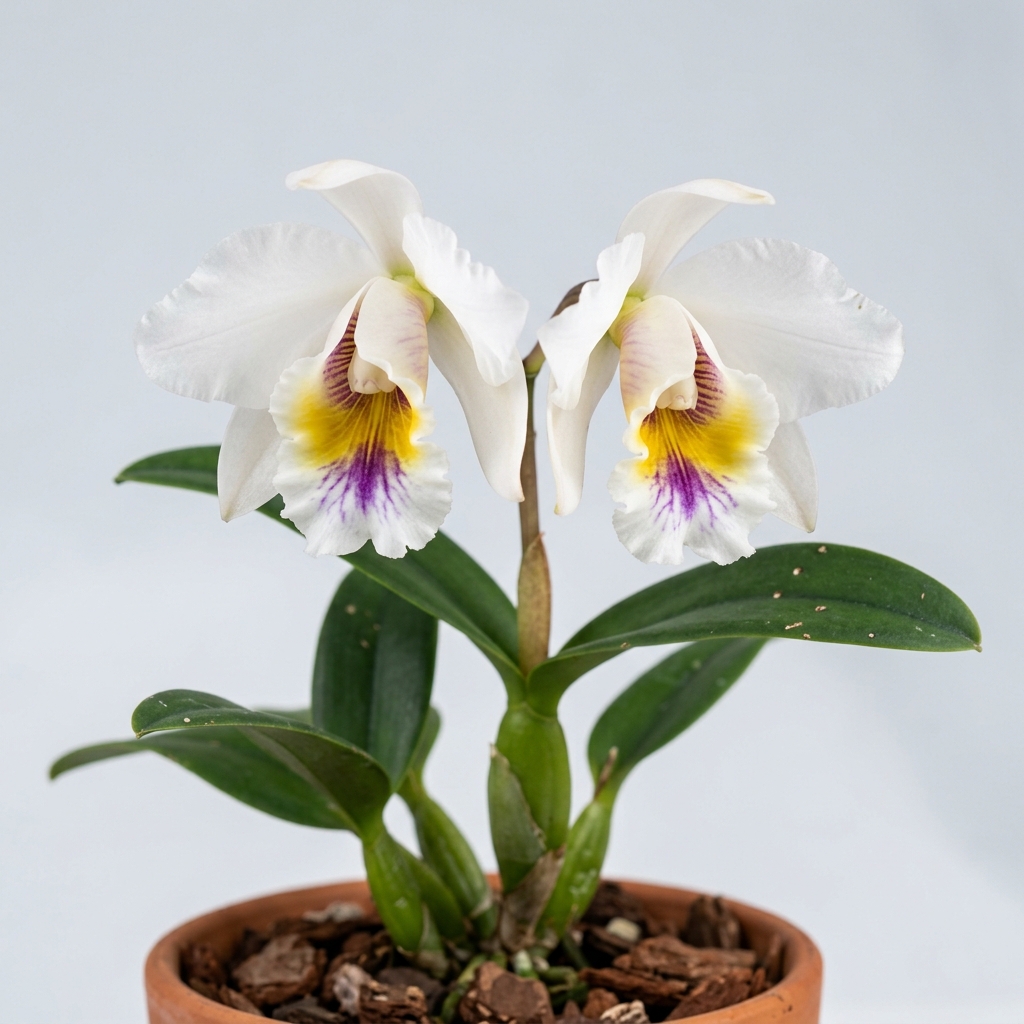
Cattleya Chocoensis, also widely known in horticultural circles as Cattleya quadricolor, is a distinctive epiphytic orchid species native to the wet, tropical forests of Colombia. Highly valued by orchid enthusiasts for its unique growth habit and elegant floral presentation, this species stands out within the genus due to its semi-pendulous or bell-shaped flowers that do not fully open like typical Cattleyas. This characteristic cupped shape gives the blooms a delicate, nodding appearance that adds a graceful, classical aesthetic to any orchid collection.
Growers appreciate this orchid not only for its visual charm but also for its moderate growth habit and sweet, subtle fragrance. While it requires attentive care to mimic its native humid environment, it rewards dedicated caretakers with long-lasting blooms that emerge from protective sheaths. Understanding its specific light, watering, and temperature preferences is key to successfully cultivating this beautiful Colombian species in a home or greenhouse setting.
💡 Did You Know?
Cattleya Chocoensis belongs to the Cattleya orchid group, where flower presentation is often just as important as . White-flowered cultivars are especially valued indoors because their pale blooms reflect well and pair easily with many home, greenhouse, and display settings.
🌿 Botanical Overview
Cattleya Chocoensis is native to the Chocó region and the Cauca River valley in Colombia, where it grows as an epiphyte on trees in warm, humid forests. This species is characterized by its club-shaped pseudobulbs, which typically carry a single, leathery, oblong leaf. The plant structure is compact to medium-sized, making it a manageable addition to indoor growing spaces or greenhouses.
In its native habitat, the orchid experiences distinct seasonal variations in rainfall, which dictates its growth and resting cycles. Taxonomists often refer to this species as Cattleya quadricolor due to the four distinct colors typically found on its flowers: white, yellow, purple, and pale lavender. Understanding its botanical background helps growers replicate the humid, warm, and well-ventilated conditions it needs to thrive.
🌸 Flower Characteristics
The flowers of Cattleya Chocoensis are highly distinctive, characterized by their bell-like, semi-closed shape. Unlike many other Cattleya species that open flat, the petals and sepals of this orchid curve forward, creating a cupped or nodding presentation. The blooms typically measure between 3 to 5 inches across and are carried on short, upright inflorescences arising from the top of mature pseudobulbs.
The color palette is exceptionally elegant. The petals and sepals are usually pristine white or infused with a delicate, pale lavender blush. The lip, or labellum, is the focal point, featuring a rich yellow throat bordered by a vibrant purple or magenta band, contrasting beautifully with the lighter outer segments. This striking combination of colors is what originally inspired the name quadricolor.
Fragrance & Bloom Profile
This orchid is highly regarded for its sweet, pleasant fragrance, which is often described as having notes of mild vanilla or sweet floral honey. The scent is typically most pronounced during the morning hours when temperatures begin to rise and light levels increase. A single well-grown specimen can easily fill a small grow room or greenhouse with its delightful aroma.
The blooms generally last between three to four weeks, provided the plant is kept in cool, stable conditions away from drafts and direct heat sources. Because the flowers have a naturally nodding habit, displaying the plant on an elevated shelf or in a hanging basket allows growers to fully appreciate the intricate details inside the cupped lip.
Parentage & Hybrid Lineage
As a naturally occurring species rather than a man-made hybrid, Cattleya Chocoensis possesses a pure genetic lineage. However, it has been used extensively in hybridization programs to introduce its unique cupped flower form, sweet fragrance, and compact growth habit to new Cattleya grexes.
In historical orchid literature, its classification has occasionally been debated, with some taxonomists grouping it closely with Cattleya trianae. Despite these historical debates, it remains recognized by collectors as a distinct species with its own unique cultural requirements. When purchasing this orchid, growers should look for reputable nurseries that propagate species orchids via tissue culture or seed to ensure conservation of wild populations.
🌱 Growing Conditions
To successfully cultivate Cattleya Chocoensis, growers must provide intermediate to warm temperatures. Ideal daytime temperatures range from 75°F to 85°F, with a nighttime drop to around 60°F to 65°F. This temperature differential is crucial for stimulating healthy growth and eventual flower bud development.
💡 Care Tip
For best results, grow Cattleya Chocoensis in bright filtered with steady and gentle airflow. Avoid placing the plant in harsh midday sun, but do not keep it in a dark corner; weak is one of the most common reasons cultivated orchids refuse to rebloom.
Light levels should be bright but filtered. Direct, midday sunlight will quickly scorch the leathery leaves, while insufficient light will result in weak, floppy pseudobulbs and a failure to bloom. A location near an east-facing window or a shaded south-facing window is ideal. High humidity of 60% to 80% is essential, accompanied by strong air movement to prevent fungal pathogens from settling on the foliage.
Watering, Feeding & Potting Media
During its active growth phase in the spring and summer, Cattleya Chocoensis requires frequent and copious watering. The potting medium should be allowed to dry out slightly between waterings, but never to the point of bone-dry dehydration. In the winter, when growth slows down, watering should be reduced significantly, allowing the plant to experience a drier resting period.
A coarse, free-draining potting mix is vital to prevent root rot. A blend of medium to large fir bark, horticultural charcoal, and perlite works exceptionally well. Alternatively, the orchid can be mounted on cork bark or tree fern plaques if high humidity can be consistently maintained. Feed the plant weekly with a diluted, balanced orchid fertilizer during the active growing season, flushing the pot with pure water once a month to remove accumulated salts.
Blooming Season & Care Notes
The primary blooming season for Cattleya Chocoensis is late autumn through winter. As the new pseudobulbs mature in late summer, they will produce a green sheath at the base of the leaf. The flower buds develop slowly inside this sheath over several weeks. During this critical period, avoid sudden changes in temperature or humidity, which can cause the buds to blast.
Once the blooming cycle is complete, the orchid enters a period of semi-dormancy. This is the ideal time to repot the plant if the potting medium has begun to break down or if the pseudobulbs are growing over the edge of the pot. Repotting should only be done when new root tips begin to emerge from the base of the newest pseudobulb, ensuring rapid establishment in the new container.
⚠️ Common Issues
⚠️ Common Mistake
The most common mistake is by calendar instead of root and potting-media condition. Cattleya roots need moisture and air at the same time, so constantly wet bark or sphagnum can lead to root loss even when the leaves still look healthy.
- Root Rot:
Caused by overwatering or using a degraded, compacted potting medium that retains too much moisture. - Bud Blast:
Occurs when developing flower buds dry out or experience sudden temperature drops, causing them to yellow and drop before opening. - Scale and Mealybugs: Common pests that hide in the papery sheaths surrounding the pseudobulbs; treat promptly with insecticidal soap or neem oil.
- Leaf Scorch: Appears as bleached or black patches on the leaves, indicating the plant is receiving too much direct sunlight.
- Dehydration:
Indicated by shriveled pseudobulbs and wrinkled leaves, usually due to underwatering or a compromised root system.
❓ Frequently Asked Questions
How do I encourage my Cattleya Chocoensis to bloom?
To stimulate blooming, ensure the orchid receives bright, filtered light throughout the growing season and a distinct drop in night temperatures during the autumn. A slight reduction in watering as the days shorten also helps signal the plant to initiate flower buds inside the sheath.
Why are the flowers on my Cattleya Chocoensis not opening fully?
This is a natural genetic characteristic of the species. Unlike many other Cattleya orchids that open completely flat, Cattleya Chocoensis naturally produces cupped, bell-shaped flowers that maintain a nodding, semi-closed appearance throughout their lifespan.
Can I grow Cattleya Chocoensis under LED grow lights?
Yes, this orchid can be successfully grown under high-output LED grow lights. Position the plant close enough to the lights to receive bright, indirect illumination, typically aiming for 2,000 to 3,000 foot-candles, while monitoring the leaves for any signs of heat stress or light burn.
What should I do with the flower spike after the blooms fade?
Once the flowers have completely faded and fallen off, you can carefully cut the dry flower stem back to the base of the sheath using sterilized pruning shears. Do not cut the pseudobulb itself, as it will continue to store water and nutrients for future growth.
⭐ Final Growing Notes
Cattleya Chocoensis is a rewarding species that brings a touch of classic Colombian cloud forest beauty to any collection. While it demands a bit more attention to humidity and watering cycles than common mass-market hybrids, its uniquely elegant, bell-shaped blooms and sweet fragrance make it a highly desirable plant for intermediate growers. By mimicking its natural seasonal rhythms and providing excellent air circulation, you can enjoy its exquisite winter blooms for many years to come.
⚕️ Health, Safety & Edibility
Understanding how a plant interacts with people, pets, and the surrounding environment is part of responsible cultivation. This section uses conservative, general guidance and does not replace professional medical or veterinary advice.
Human Safety: No published evidence currently identifies species-specific toxicity concerns for Cattleya Chocoensis during normal handling. As with most ornamental plants, it should not be intentionally consumed.
Pet Safety: Published information does not indicate that this orchid commonly poses a toxicity concern for cats or dogs. However, chewing leaves, flowers, roots, or potting media may still cause mild digestive upset.
Edibility: This orchid is cultivated for ornamental display rather than food. Ornamental plants may carry fertilizers, pesticides, or other horticultural treatments that make them unsuitable for consumption.
Skin Contact: Routine handling is not generally associated with skin irritation. Gardeners with sensitive skin may prefer wearing gloves when repotting, pruning, or handling potting media.
🌱 Propagation Tip
Propagation should be approached patiently. Most home growers should wait for natural keikis or divide only mature, healthy plants when the orchid type allows it. Never remove a young growth until it has strong roots and enough leaves to support itself away from the parent plant.
⭐ Expert Advice
Repot after flowering when fresh root tips begin to appear. This timing helps the plant anchor quickly into new bark or sphagnum and reduces stress, especially for orchids grown indoors where airflow, , and drying speed can change from season to season.

Leave A Comment