
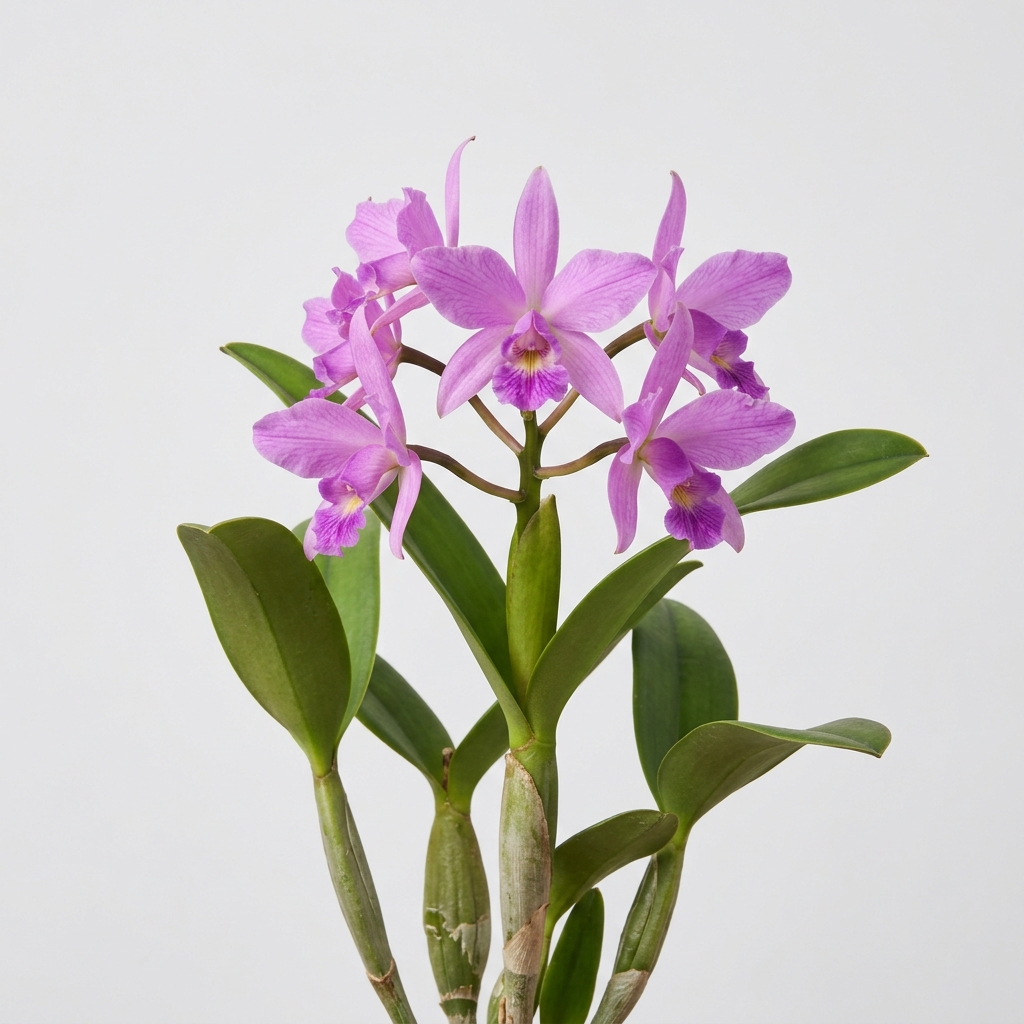
Cattleya Dolosa is a highly regarded orchid among collectors, known for its compact growth habit and striking, fragrant blossoms. Belonging to the renowned Cattleya genus, this orchid is a classic choice for both indoor windowsills and dedicated greenhouse cultivation, offering the grandeur of larger orchids in a much more manageable size.
Growers particularly cherish this orchid for its visual appeal, which typically features soft pink to lavender-purple petals with a beautifully defined, contrasting lip. Its modest stature makes it ideal for space-conscious enthusiasts who want to enjoy the classic, showy look of traditional Cattleya orchids without dedicating excessive space to sprawling foliage.
💡 Did You Know?
Cattleya Dolosa is highly regarded for its compact growth habit, which it largely inherits from its parent species, Cattleya walkeriana. This characteristic allows the plant to produce flowers that appear remarkably large in proportion to its modest foliage, making it a favorite choice for collectors with limited growing space.
🌿 Botanical Overview
Cattleya Dolosa shows a compact growth habit, characterizing it as a dwarf or miniature-to-medium-sized epiphyte. The pseudobulbs are relatively short, stout, and slightly club-shaped, typically carrying thick, leathery leaves that help the plant conserve moisture in its native-like environments. This structural adaptation allows the orchid to withstand brief periods of dryness without significant stress.
Like many members of the Cattleya alliance, this orchid produces a creeping rhizome from which new growth emerges annually. Its compact stature makes it highly adaptable to various growing setups, allowing modern growers to cultivate it successfully on windowsills, under artificial lights, or within specialized orchid cases where space is at a premium.
🌸 Flower Characteristics
The blossoms of Cattleya Dolosa are remarkably showy given the modest size of the plant itself. The flowers typically measure between three and four inches in diameter, presenting a well-proportioned display. Petals and sepals are generally broad, presenting a rounded form with soft lavender, pink, or magenta tones that catch the light beautifully.
The lip, or labellum, is a standout feature of the bloom, often displaying a deeper amethyst or violet hue with subtle yellow or cream-colored markings in the throat. The flowers are borne on short, sturdy spikes that arise from the top of the mature pseudobulbs, presenting the blooms elegantly above the foliage for maximum visual impact.
Fragrance & Bloom Profile
Cattleya Dolosa is frequently celebrated for its delightful fragrance, which is commonly described by growers as sweet, floral, and slightly spicy. This scent is typically most pronounced during the morning hours as temperatures rise and light levels increase, filling the immediate growing area with a pleasant perfume.
It is important to note that fragrance intensity and specific scent notes can be highly cultivar-dependent and are heavily influenced by environmental factors such as humidity and air circulation. Under optimal growing conditions, the individual flowers are relatively long-lasting, often remaining fresh and vibrant for three to four weeks.
Parentage & Hybrid Lineage
In botanical and horticultural circles, Cattleya Dolosa (frequently designated as Cattleya x dolosa) is widely recognized as a natural hybrid between Cattleya walkeriana and Cattleya loddigesii. Because these two parent species share overlapping habitats in parts of Brazil, natural cross-pollination occasionally occurs, resulting in this intermediate form.
Historically, there has been some taxonomic debate regarding its classification, with some older references treating it as a distinct species or a unique variety. However, modern consensus generally supports its status as a natural hybrid, combining the compact, creeping habit of Cattleya walkeriana with the robust growth and multi-flowered tendency of Cattleya loddigesii.
🌱 Growing Conditions
To cultivate Cattleya Dolosa successfully, growers should aim to replicate its bright, airy native environment. This orchid thrives in bright, indirect light. A south or east-facing window protected by a sheer curtain is often ideal, providing the necessary light intensity to promote blooming without risking leaf scorch.
💡 Care Tip
To encourage successful blooming, ensure your orchid experiences a distinct drop in of about ten to fifteen degrees Fahrenheit between day and night. This natural fluctuation mimics its native habitat and is a key trigger for flower bud initiation.
Temperature ranges should be kept in the intermediate to warm category, ideally maintaining daytime temperatures between 70°F and 85°F. A crucial factor for success is a night-time temperature drop of about 10°F to 15°F, which mimics natural conditions and helps stimulate the development of flower buds. Good air movement is also essential to keep the foliage dry and prevent fungal pathogens.
Watering, Feeding & Potting Media
Watering should be approached with a thorough-wetting and thorough-drying cycle. Water the plant copiously, then allow the potting medium to dry out almost completely before watering again. During the active growing season in spring and summer, the plant will require more frequent watering, while the winter rest period demands a much drier regime.
Feeding should be consistent but light. A balanced, water-soluble orchid fertilizer diluted to one-quarter strength can be applied weekly during periods of active growth. It is highly recommended to flush the potting medium with pure water once a month to wash away any accumulated fertilizer salts that could damage the sensitive root tips.
A highly porous, well-draining potting medium is critical for this orchid. Coarse fir bark mixed with charcoal and perlite provides the necessary drainage and aeration. Because of its creeping growth habit, Cattleya Dolosa is also an useful selection for mounting on cork bark or tree fern plaques, provided the grower can maintain adequate humidity.
Blooming Season & Care Notes
The primary blooming season for Cattleya Dolosa typically spans from late autumn through early spring, though variations can occur based on local indoor climates. As the flower buds begin to develop and emerge, it is best to avoid moving or rotating the plant, as changes in light direction can cause the buds to orient awkwardly or fail to open properly.
Once the blooming cycle is complete, the orchid enters a semi-dormant rest phase. During this time, reduce watering frequency and suspend fertilizer applications until new green growth is observed. Repotting should be performed only when necessary, ideally when new root tips are just beginning to emerge from the base of the newest pseudobulb.
⚠️ Common Issues
⚠️ Common Mistake
A frequent error is potting this orchid in heavy, moisture-retentive soil or fine bark. Cattleya Dolosa requires exceptional drainage and airflow around its root system. Using compacted media will rapidly lead to root rot, which can severely decline or kill the plant.
- Root rot: This is almost always caused by overwatering or using a compacted, decaying potting medium that retains too much moisture around the roots.
- Bud blast: The sudden drying or dropping of flower buds before they open, typically triggered by rapid temperature fluctuations, low humidity, or cold drafts.
- Leaf scorch: Bleached, yellow, or black patches on the leaves resulting from exposure to direct, unfiltered midday sunlight.
- Pests: Scale insects, mealybugs, and spider mites can occasionally hide in the crevices of pseudobulbs and on the undersides of leaves.
- Dehydration: Wrinkled leaves and shriveled pseudobulbs indicate the plant is not receiving enough water, which can be due to underwatering or a loss of roots from rot.
❓ Frequently Asked Questions
How often should I water my Cattleya Dolosa?
Water thoroughly when the potting medium is nearly dry. In average home conditions, this typically translates to every 5 to 7 days during the warm summer months and every 10 to 14 days during the cooler winter rest period. Always check the moisture level of the bark before watering.
Can Cattleya Dolosa be grown under LED grow lights?
Yes, this orchid adapts exceptionally well to artificial lighting setups. Position the plant under high-output LED lights designed for plants, ensuring it receives bright light for 12 to 14 hours a day. Monitor the leaf color; a healthy light green indicates optimal light levels.
Why are the pseudobulbs on my orchid shriveling?
Shriveled pseudobulbs are a sign of dehydration. This can occur because the plant is not being watered enough, or because overwatering has rotted the root system, leaving the orchid unable to absorb moisture. Inspect the roots to determine the correct course of action.
When is the best time to repot Cattleya Dolosa?
The ideal time to repot is when new root growth is just beginning to emerge from the base of the newest pseudobulb. This typically happens shortly after the blooming cycle concludes or in early spring, allowing the orchid to establish itself quickly in fresh media.
⭐ Final Growing Notes
Cattleya Dolosa remains a delightful addition to any orchid collection, offering the classic beauty of larger Cattleya blooms on a much more manageable scale. By providing bright light, excellent drainage, and attentive watering, growers of all experience levels can enjoy the rewarding experience of cultivating this elegant and historically fascinating orchid.
⚕️ Health, Safety & Edibility
Understanding how a plant interacts with people, pets, and the surrounding environment is part of responsible cultivation. This section uses conservative, general guidance and does not replace professional medical or veterinary advice.
Human Safety: No published evidence currently identifies species-specific toxicity concerns for Cattleya Dolosa during normal handling. As with most ornamental plants, it should not be intentionally consumed.
Pet Safety: Published information does not indicate that this orchid commonly poses a toxicity concern for cats or dogs. However, chewing leaves, flowers, roots, or potting media may still cause mild digestive upset.
Edibility: This orchid is cultivated for ornamental display rather than food. Ornamental plants may carry fertilizers, pesticides, or other horticultural treatments that make them unsuitable for consumption.
Skin Contact: Routine handling is not generally associated with skin irritation. Gardeners with sensitive skin may prefer wearing gloves when repotting, pruning, or handling potting media.
🌱 Propagation Tip
Propagation is best achieved by division during repotting. Ensure that each division has at least three to four healthy, mature pseudobulbs with active eye buds. Avoid dividing plants that are weak or showing signs of stress, as smaller divisions take much longer to recover and bloom.
⭐ Expert Advice
If you struggle to keep the potting medium dry enough in humid environments, consider mounting this orchid on a cork plaque. Mounted cultivation allows the roots to dry rapidly after , closely mimicking the natural epiphytic growing style of its ancestral species.

Leave A Comment