
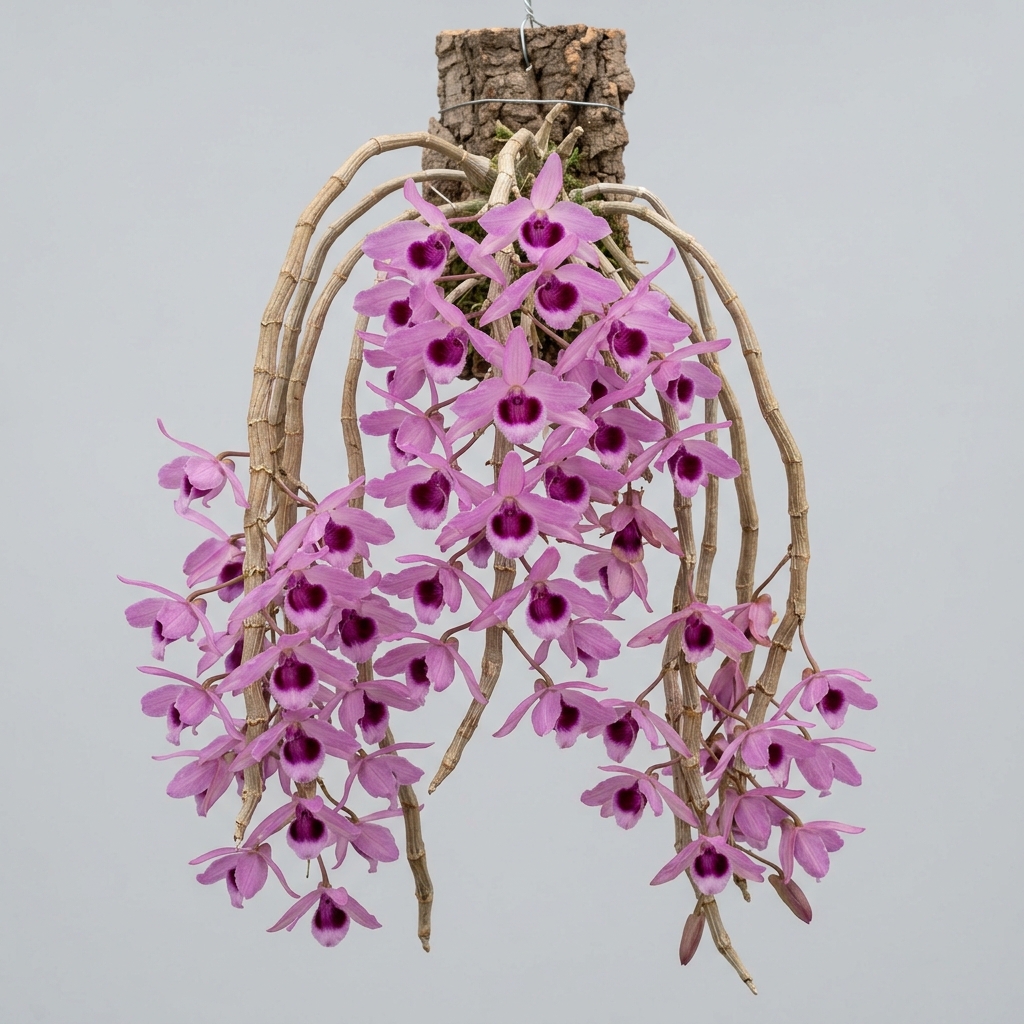
Dendrobium anosmum is a spectacular pendulous epiphytic orchid species native to Southeast Asia, widely celebrated among collectors for its dramatic cascading growth habit and intense floral display. Often referred to by its common names like the honohono orchid, this species produces long, cane-like pseudobulbs that drape elegantly from hanging baskets or mounts, making it a visual centerpiece in any greenhouse or indoor growing space.
Growers highly value this orchid not only for its striking physical form but also for its remarkable seasonal transformation. Before blooming, the plant naturally sheds its leaves, leaving bare canes that soon erupt with numerous vibrant, fragrant blossoms along their entire length. This unique deciduous cycle, combined with its relatively straightforward care requirements, makes it a rewarding choice for enthusiasts looking to master pendulous Dendrobium species.
💡 Did You Know?
Despite its botanical name anosmum, which literally means odorless, this orchid is actually one of the most intensely fragrant species in the . Its sweet, fruity scent is highly prized by collectors and can easily perfume an entire greenhouse during its spring bloom.
🌿 Botanical Overview
Dendrobium anosmum is a robust epiphyte characterized by its elongated, pendulous pseudobulbs, which can reach lengths of three to four feet or more under optimal conditions. These canes are initially upright but naturally arch downward as they mature and become heavier, clothed in alternating, lanceolate green leaves.
The species is native to low-altitude tropical rainforests across Southeast Asia, including the Philippines, Thailand, Vietnam, and Malaysia. In its natural habitat, it clings to tree trunks and branches where it experiences distinct wet and dry seasons, a cycle that dictates its growth, leaf drop, and later flowering phases.
🌸 Flower Characteristics
The flowers of Dendrobium anosmum are typically two to three inches in diameter, emerging in pairs or small clusters from the nodes of the leafless canes. The petals and sepals are generally a soft mauve, pink, or light purple, though pure white forms are also highly sought after by collectors.
The most distinctive feature of the blossom is its broad, trumpet-shaped lip, or labellum, which features a velvety texture and deep purple throat markings. The flowers are presented face-down or outward along the pendulous canes, creating a spectacular curtain of color when the plant is in full bloom.
Fragrance & Bloom Profile
Despite its botanical name anosmum—which paradoxically translates to unscented or odorless—this orchid is famous for its powerful, sweet fragrance. The scent is highly distinctive and commonly compared to raspberries, strawberries, or warm rhubarb pie, filling an entire room or greenhouse during the peak of its bloom cycle.
The blossoms typically last for three to four weeks, depending on ambient temperatures and humidity levels. To maximize the lifespan of the flowers, growers often keep the plant in slightly cooler, shaded conditions once the buds have fully opened.
Parentage & Hybrid Lineage
As a naturally occurring species rather than a man-made hybrid, Dendrobium anosmum possesses a pure genetic lineage that has been used extensively in orchid breeding. It is a primary parent in numerous pendulous Dendrobium hybrids, contributing its robust growth habit, floriferousness, and signature sweet scent to its progeny.
While several color forms and regional variations exist—such as the semi-alba or giant-flowered types—these are considered natural variations or selected cultivars rather than distinct species. Its taxonomic history includes the synonym Dendrobium superbum, a name still frequently used by long-time hobbyists and commercial growers.
🌱 Growing Conditions
To thrive, Dendrobium anosmum requires bright, filtered light, similar to the conditions preferred by Cattleyas. Morning sun is highly beneficial, but direct midday sunlight should be avoided to prevent leaf scorch. Strong air movement is essential, especially when grown in high-humidity environments.
💡 Care Tip
Hang your mounted or basketed Dendrobium anosmum at eye level or higher. This accommodates its long, cascading canes and ensures excellent air circulation around the root zone, which is vital for preventing rot.
During the active growing season in spring and summer, the orchid prefers warm temperatures ranging from 75 to 90 degrees Fahrenheit. In the winter, a cooler period with night temperatures dropping to 55 to 60 degrees Fahrenheit is necessary to trigger the development of flower buds rather than vegetative offsets.
Watering, Feeding & Potting Media
Watering practices must align strictly with the plant’s seasonal growth cycle. During the spring and summer, when new canes are actively growing, the plant should be watered copiously and fertilized weekly with a balanced orchid fertilizer. Coarse fir bark, tree fern fiber, or mounting on cork slabs are ideal, as they allow the roots to dry rapidly between waterings.
As autumn approaches and the leaves begin to yellow and drop, watering must be dramatically reduced. During the winter rest period, the plant should only receive enough moisture to prevent the canes from shriveling excessively. Fertilizer should be withheld completely during this dry rest until new growth and flower buds emerge in spring.
Blooming Season & Care Notes
The primary blooming season occurs in late winter to late spring, triggered by the cool, dry winter rest. Once the leaves have completely fallen, small buds will begin to swell at the nodes along the bare canes.
Growers should resist the temptation to water heavily when buds first appear, as excess moisture at this stage can cause the buds to blast or convert into vegetative keikis. Once the flowers fade and new green shoots appear at the base of the canes, regular watering and feeding can safely resume.
⚠️ Common Issues
⚠️ Common Mistake
The most common mistake is the orchid during its winter dormancy. Continuing a regular schedule when the plant is leafless prevents flowering and frequently leads to fatal root rot.
- Bud Blast:
Caused by sudden changes in temperature, low humidity, or premature watering during the bud development stage. - Keiki Production: Often occurs when the winter dry rest is not strictly observed or if nitrogen fertilizer is applied too late in the season.
- Root Rot:
A consequence of overwatering during the winter rest period or using a potting medium that has degraded and lost its drainage properties. - Pests:
Spider mites and mealybugs are common pests that can hide in the dry sheaths of the canes or attack tender new growth.
❓ Frequently Asked Questions
Why is my Dendrobium anosmum growing baby plants instead of flowers?
This is usually caused by a winter rest that was too wet or warm, or from applying fertilizer too late in the autumn. The plant responds to these conditions by producing vegetative offsets, known as keikis, at the nodes instead of flower buds.
Do I need to cut off the bare canes after they lose their leaves?
No, you should never cut off the bare canes. These leafless canes are where the flower buds will develop. Even after flowering, old canes store water and nutrients that support new growth at the base of the plant.
How often should I water my honohono orchid during the winter?
During the winter rest, watering should be minimal. Only mist the roots or water lightly every two to three weeks to prevent the canes from shriveling severely. A slight shriveling of the canes is normal and acceptable during this period.
Can I grow Dendrobium anosmum mounted on wood?
Yes, mounting this orchid on cork bark or tree fern plaques is highly recommended. Because of its natural pendulous growth habit, mounting allows the canes to drape gracefully and ensures the roots dry out quickly, mimicking its natural wild habitat.
⭐ Final Growing Notes
Mastering the care of Dendrobium anosmum relies on understanding and respecting its seasonal rhythm of active growth and dry dormancy. By providing bright light, ample water in summer, and a strict dry rest in winter, growers are rewarded with an unparalleled spring display of cascading, raspberry-scented blossoms that make this classic orchid species a true crown jewel of any collection.
🌱 Propagation Tip
If your orchid produces keikis along the canes due to a disrupted winter rest, wait until their roots are at least two to three inches long before gently detaching and potting them individually.
⭐ Expert Advice
To achieve a spectacular bloom display, strictly withhold fertilizer starting in late autumn. Only resume feeding in spring when you see active new green growth emerging from the base of the old canes.




Leave A Comment