
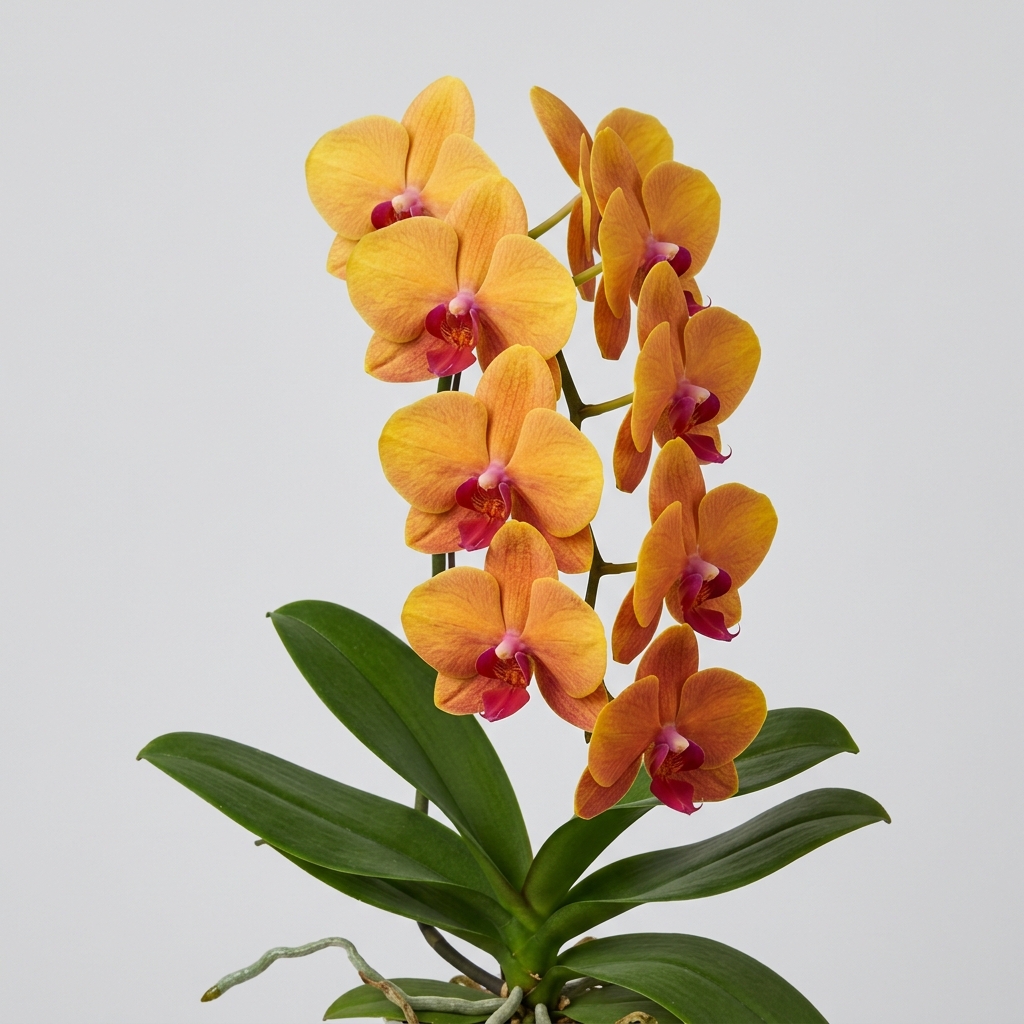
Phalaenopsis Brother Sara Gold is a highly celebrated hybrid orchid prized for its striking, warm-toned blooms that range from rich golden-yellow to deep sunset orange. As a member of the monopodial Phalaenopsis genus, this cultivar is favored by both novice and experienced orchid enthusiasts for its compact growth habit and exceptionally vibrant floral display. Its ability to produce multiple branching spikes makes it a standout addition to indoor plant collections.
Cultivated primarily for its aesthetic appeal, this orchid adapts well to typical household environments when its basic cultural needs are met. The long-lasting flowers provide weeks of brilliant color, contrasting beautifully against its broad, deep green foliage. Growers value Phalaenopsis Brother Sara Gold not only for its reliable blooming cycle but also for its resilient nature compared to more temperamental orchid species.
💡 Did You Know?
The striking golden-orange coloration of Phalaenopsis Brother Sara Gold is relatively uncommon among standard moth orchids, which typically favor whites and pinks. This warm hue is inherited from specific yellow-flowered ancestral species, making it a highly sought-after cultivar for collectors looking to add a splash of sunset-inspired color to their growing spaces.
🌿 Botanical Overview
Phalaenopsis Brother Sara Gold shows the classic monopodial growth habit characteristic of the moth orchid genus. It grows from a single vertical stem, producing thick, fleshy, alternate leaves that store moisture and nutrients. The root system is robust, consisting of thick, velamen-coated roots designed to cling to surfaces and absorb atmospheric moisture in its ancestral tropical habitats.
The foliage is typically dark green, leathery, and obovate, providing a lush base for the towering flower spikes. Healthy specimens maintain several active leaves at a time, shedding older bottom leaves naturally as new ones emerge from the crown. This structural simplicity allows the plant to focus its energy on root development and seasonal floral production.
🌸 Flower Characteristics
The blossoms of Phalaenopsis Brother Sara Gold are the defining feature of this cultivar, showcasing a brilliant palette of golden-yellow, amber, and soft orange hues. The sepals and petals are rounded and overlapping, creating a full, symmetrical flower shape. Many specimens display delicate reddish-pink or copper dusting near the center, which intensifies the warmth of the overall color scheme.
The lip, or labellum, is typically a contrasting shade of vibrant magenta, red, or deep orange, acting as a visual target for pollinators. Flowers are arranged neatly along arching, sometimes branching spikes that can carry numerous buds. The substance of the petals is notably firm and waxy, contributing to the exceptional longevity of individual blooms.
Fragrance & Bloom Profile
While many modern Phalaenopsis hybrids are bred solely for visual appeal, some growers report a subtle, sweet fragrance emanating from Phalaenopsis Brother Sara Gold during the peak of the day. However, this scent profile is not consistently documented across all specimens and may depend heavily on environmental factors such as temperature, humidity, and light intensity.
The blooming cycle is highly rewarding, with flowers remaining fresh for up to two months or more under optimal conditions. The spike emerges from the leaf axils, slowly developing buds that open sequentially from the base to the tip. This staggered opening ensures a prolonged display of warm, sunset-colored blossoms.
Parentage & Hybrid Lineage
As a complex hybrid within the genus Phalaenopsis, Brother Sara Gold inherits traits from several ancestral species known for their robust growth and vivid pigmentation. While the exact, complete pedigree is complex and sometimes debated in historical registration databases, the influence of yellow-flowered and novelty Phalaenopsis species is highly evident in its color saturation and flower texture.
In common grower references, the precise hybridizer and registration details are occasionally subject to minor discrepancies. Consequently, it is best understood as a highly successful commercial cultivar selected for its reliable performance, exceptional color stability, and ease of culture in home environments.
🌱 Growing Conditions
To thrive, Phalaenopsis Brother Sara Gold requires conditions that mimic its tropical canopy origins. It prefers bright, filtered indirect light, such as that provided by an east-facing window or a shaded south-facing window. Direct, unfiltered sunlight must be avoided, as it can quickly scorch the sensitive, fleshy leaves, leading to permanent cosmetic damage or systemic rot.
💡 Care Tip
Always water your Phalaenopsis Brother Sara Gold in the morning. This allows any water that accidentally splashes onto the leaves or into the central crown to evaporate before nightfall, significantly reducing the risk of crown rot and fungal infections.
Temperature ranges should ideally remain between 65°F and 80°F (18°C to 27°C) during the day, with a slight drop of 5°F to 10°F at night to help stimulate flower spike initiation. Adequate air circulation is crucial to prevent stagnant air pockets around the foliage, which can harbor fungal and bacterial pathogens.
Watering, Feeding & Potting Media
Watering should be approached with a soak and dry methodology. Allow the potting medium to dry out almost completely—but not bone-dry—before watering thoroughly. The roots should transition from a vibrant green (when hydrated) to a silvery-gray color, signaling that it is time to water again.
A high-quality, free-draining medium is essential. Coarse fir bark, charcoal, and perlite mixes work exceptionally well for growers who tend to water frequently, while premium New Zealand sphagnum moss is ideal for retaining moisture in drier household environments. Feed the orchid with a balanced, diluted orchid fertilizer during the active growing season, flushing the pot with pure water periodically to prevent salt buildup.
Blooming Season & Care Notes
The primary blooming season typically occurs from late winter through spring, triggered by the cooler night temperatures of autumn. Once the flower spike has finished blooming, growers can choose to cut the spike back to the base to encourage vegetative growth, or trim it just above a viable node to stimulate a secondary branch of blooms.
Repotting is best performed every one to two years, immediately after the blooming cycle has concluded and new root tips begin to emerge. This timing minimizes transplant shock and allows the orchid to quickly establish itself in fresh, non-degraded media.
⚠️ Common Issues
⚠️ Common Mistake
A frequent mistake is letting the orchid sit in standing water inside its decorative outer pot. This deprives the roots of essential oxygen, leading to rapid root rot. Always ensure the inner plastic pot drains completely before returning it to its decorative cover.
- Root Rot:
Caused by overwatering or compacted potting media that deprives roots of oxygen. - Bud Blast:
The premature dropping of unopened buds, often triggered by sudden temperature fluctuations, drafts, or low humidity. - Leaf Spotting: Fungal or bacterial spots resulting from water sitting on the leaves, especially overnight.
- Dehydration:
Indicated by wrinkled, limp leaves and shriveled roots, usually due to underwatering or a dead root system. - Pests:
Mealybugs, scale, and spider mites can occasionally colonize the leaf joints and flower spikes.
❓ Frequently Asked Questions
How do I trigger Phalaenopsis Brother Sara Gold to rebloom?
To encourage reblooming, expose the orchid to slightly cooler night temperatures (around 55°F to 60°F / 13°C to 15°C) for a period of three to four weeks in the autumn. This temperature drop, combined with bright indirect light, signals the plant to initiate a new flower spike.
Why are the leaves on my Brother Sara Gold turning yellow?
Yellowing leaves can indicate several issues. If it is only the lowest, oldest leaf, it is likely a natural shedding process. However, widespread yellowing can point to overwatering, root rot, or excessive direct sunlight scorching the foliage.
What potting medium is best for this orchid cultivar?
This cultivar thrives in either a high-quality bark-based orchid mix or pure sphagnum moss. Bark provides excellent drainage and aeration, while sphagnum moss retains moisture longer. Choose the medium that best matches your watering habits and home humidity levels.
Should I cut the flower spike off after the blooms fade?
If the spike remains green, you can cut it back to about an inch above the highest unbloomed node to encourage secondary branching. If the spike turns brown and dry, cut it off entirely at the base of the plant to allow the orchid to focus its energy on leaf and root growth.
⭐ Final Growing Notes
Phalaenopsis Brother Sara Gold remains an exceptional choice for orchid enthusiasts seeking a reliable, warm-toned focal point for their indoor gardens. By balancing moderate watering, bright indirect light, and consistent temperatures, growers can enjoy the spectacular, sunset-colored blooms of this resilient cultivar year after year.
🌱 Propagation Tip
While Phalaenopsis orchids do not divide like sympodial orchids, they occasionally produce clonal baby plants called keikis along the nodes of spent flower spikes. Wait until the keiki has developed at least three leaves and three roots that are two inches long before carefully detaching and potting it.
⭐ Expert Advice
To maximize the lifespan of your blooms, move the orchid to a slightly cooler spot with lower intensity once the flowers have fully opened. This mimics natural canopy shading and helps preserve the rich golden-orange pigments from fading prematurely.




Leave A Comment