
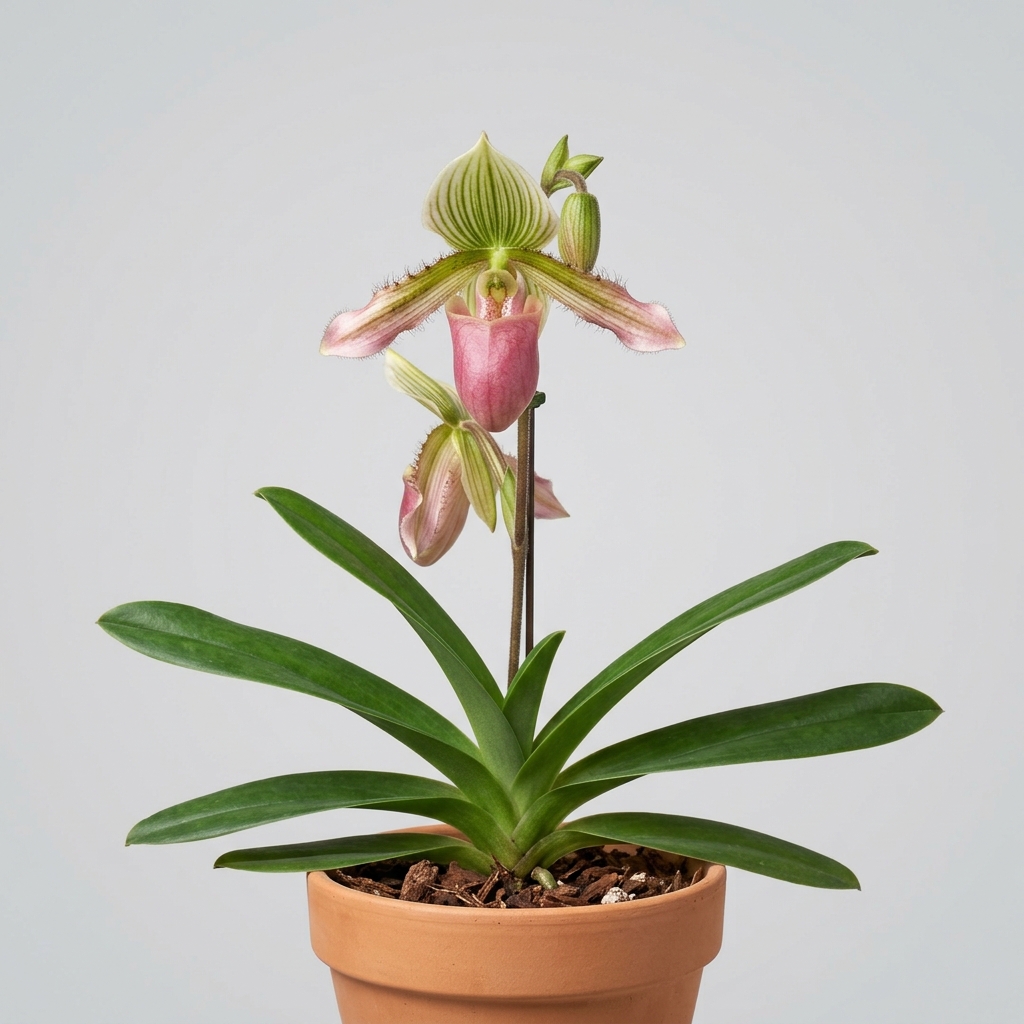
Paphiopedilum Pinocchio is a highly celebrated slipper orchid hybrid, beloved by both novice and experienced orchidists for its charming, pouch-shaped flowers and remarkably long-lasting blooming habit. Belonging to the genus Paphiopedilum, this cultivar is particularly famous for its sequential blooming nature, where a single flower spike can continuously produce new blossoms over several months or even years. This makes it an incredibly rewarding addition to any indoor plant collection.
Growers value this orchid not only for its ease of culture but also for its compact growth habit and attractive, bright green foliage. The flowers typically display a beautiful contrast of soft pinks, pale greens, and creamy yellows, making it an eye-catching specimen. Unlike many temperamental orchid varieties, this hybrid is known for its resilience and adaptability to typical home environments.
💡 Did You Know?
Unlike many orchids that produce all their flowers at once, Paphiopedilum Pinocchio is a sequential bloomer. A single flower spike can continuously produce new buds, keeping the plant in bloom for up to a year or more. As one flower fades, the next one opens just behind it, making it one of the most rewarding orchids for indoor growers.
🌿 Botanical Overview
Paphiopedilum Pinocchio is a classic primary hybrid that showcases the distinctive vegetative and floral traits of the slipper orchid group. Unlike many epiphytic orchids that possess water-storing pseudobulbs, this cultivar features a terrestrial or lithophytic growth habit. It grows as a fan of strap-like, solid green leaves that emerge from a short rhizome. The absence of pseudobulbs means the plant has limited water storage capacity, which directly influences its cultivation needs.
The root system of this hybrid is also unique compared to typical epiphytes. Its roots are thick, fleshy, and covered in fine, brown, hair-like structures designed to anchor the plant in loose organic debris and absorb moisture and nutrients continuously. Because these roots do not tolerate prolonged dryness, maintaining a stable moisture level in the root zone is critical for the plant’s overall health and vigor.
🌸 Flower Characteristics
The flowers of Paphiopedilum Pinocchio are a masterclass in botanical architecture. Each bloom features a prominent, pouch-shaped lip, known as the labellum, which resembles a miniature slipper. This pouch is typically a soft rose-pink color, often adorned with delicate speckling. Above the pouch, the dorsal sepal stands upright, displaying a pale green or yellowish-green hue with subtle vertical striping. The lateral petals extend outward, slightly twisted, and are decorated with fine, dark hairs along their margins.
What truly sets this cultivar apart is its sequential blooming habit. Instead of producing a cluster of flowers all at once, the flower spike produces one or two blooms at a time. As an older flower begins to fade and drop, a new bud matures and opens further up the elongating spike. This continuous cycle allows a single spike to remain active and attractive for an extended period.
Fragrance & Bloom Profile
Fragrance is not consistently documented in common grower references for Paphiopedilum Pinocchio, and the cultivar is generally considered to be unscented. However, what it lacks in aroma, it more than makes up for in its extraordinary bloom profile. The sheer longevity of the flowering cycle is its primary horticultural appeal.
A healthy, mature specimen can produce a flower spike that remains active for twelve to eighteen months, continuously presenting fresh blossoms. The individual flowers themselves are remarkably durable, often lasting four to six weeks before naturally senescing. This persistent display makes it a favorite for indoor growers who appreciate a constant splash of color without the need for multiple plants.
Parentage & Hybrid Lineage
Paphiopedilum Pinocchio is widely recognized as a primary hybrid, resulting from the cross between Paphiopedilum glaucophyllum and Paphiopedilum primulinum. Both parent species are native to Southeast Asia, where they typically grow in shaded, humid environments on limestone cliffs or forest floors. This parentage explains the hybrid’s robust nature and its highly desirable sequential blooming trait, which is inherited from both sides of its lineage.
While the hybrid cross is well-established, individual plants can show slight variations in flower color and size depending on the specific clones used in the breeding process. Some specimens may exhibit a more intense pink pouch, while others may lean toward a lighter, creamier yellow-green coloration. Regardless of these minor variations, the hybrid consistently retains the vigorous growth and easy-blooming characteristics of its parentage.
🌱 Growing Conditions
To cultivate Paphiopedilum Pinocchio successfully, growers should aim to replicate its natural forest-floor habitat. It thrives in low to moderate indirect light. Direct sunlight must be avoided, as it can quickly scorch the tender leaves, leading to unsightly brown patches. An east-facing window or a shaded south-facing window is typically ideal. If grown under artificial lights, moderate LED or fluorescent setups placed at a safe distance will yield excellent results.
💡 Care Tip
Place your Paphiopedilum Pinocchio in an east-facing window where it receives bright, filtered morning . If the leaves turn a pale yellow, the plant is likely receiving too much ; if they turn a deep, dark green and grow leggy, it may need a bit more to encourage blooming.
Temperature: wise, this hybrid is quite adaptable, preferring intermediate to warm conditions. Daytime temperatures between 70°F and 80°F are ideal, with a slight drop to 60°F or 65°F at night. This nocturnal temperature drop is beneficial for stimulating healthy growth and bud development. High humidity, ideally between 50% and 70%, combined with gentle air movement, will prevent leaf stress and keep the plant thriving.
Watering, Feeding & Potting Media
Watering is the most critical aspect of caring for Paphiopedilum Pinocchio. Because it lacks pseudobulbs, the potting medium should never be allowed to dry out completely. Water the plant thoroughly just as the top layer of the medium begins to feel dry to the touch. Use lukewarm, low-mineral water, such as rainwater, distilled water, or reverse osmosis water, to avoid salt buildup on the sensitive roots.
The potting medium must be highly free-draining yet moisture-retentive. A fine-grade fir bark mix blended with perlite, horticultural charcoal, and a small amount of chopped sphagnum moss works exceptionally well. Feed the orchid with a balanced, water-soluble orchid fertilizer diluted to one-quarter strength every two to three weeks during the active growing season. Always flush the pot with pure water between fertilizer applications to wash away residual salts.
Blooming Season & Care Notes
While Paphiopedilum Pinocchio can bloom at almost any time of the year, peak flowering activity often occurs from spring through autumn. Because of its sequential blooming habit, it is vital to leave the flower spike intact even after the first flower drops. Do not cut the spike as long as it remains green and firm, as it will continue to produce new buds from the tip. Only cut the spike back to the base of the plant once it has completely yellowed, dried out, and turned brown.
Repotting should be performed every one to two years to prevent the potting medium from breaking down and suffocating the roots. The best time to repot is in the spring, or immediately after a long blooming cycle has finally concluded. When repotting, gently remove the old media, trim away any dead or mushy roots, and place the plant in a pot that comfortably accommodates the root system with room for one more year of growth.
⚠️ Common Issues
⚠️ Common Mistake
The most common mistake is letting the potting medium dry out completely between waterings. Because Paphiopedilum orchids lack water-storing pseudobulbs, they rely on constant, moderate moisture. Allowing the roots to dry out completely can cause immediate root loss, leading to wrinkled leaves and dropped buds.
- Root Rot:
Caused by overwatering or a degraded potting medium that holds too much water, leading to mushy, black roots and limp leaves. - Bud Blast:
Occurs when developing buds dry up and drop before opening, usually triggered by sudden changes in temperature, low humidity, or drafty conditions. - Leaf Spotting: Fungal or bacterial spots can develop if water is allowed to sit on the leaves or in the crown of the plant, especially overnight.
- Dehydration:
Characterized by wrinkled, leathery leaves and slow growth, indicating that the plant is not receiving enough water or has lost its root system to rot. - Pests:
Mealybugs and scale insects can occasionally hide in the tight crevices of the leaf fans; treat promptly with insecticidal soap or neem oil.
❓ Frequently Asked Questions
How do I get my Paphiopedilum Pinocchio to rebloom?
To encourage your Paphiopedilum Pinocchio to initiate a new flower spike, ensure it receives consistent, bright indirect light and a slight drop in night temperatures of about 10 degrees Fahrenheit. Maintaining a regular watering and light feeding schedule during the active growth phase will also provide the plant with the energy needed to produce a new spike.
Why are the buds falling off before they open?
This issue, known as bud blast, is typically caused by environmental stress. Common culprits include sudden drafts, low humidity levels, or letting the potting medium dry out completely while the buds are forming. Keep the plant in a stable environment with consistent humidity and moisture to prevent this.
Can I grow Paphiopedilum Pinocchio under LED lights?
Yes, Paphiopedilum Pinocchio adapts very well to indoor cultivation under LED grow lights. Position the lights to provide moderate intensity, similar to what is required for African violets, and ensure the lights are kept at a safe distance to prevent heat stress or leaf scorch.
What should I do if the roots look brown and hairy?
Do not panic; healthy Paphiopedilum roots are naturally brown and covered in fine, hair-like structures. This is completely normal for this genus. Only worry if the roots feel mushy, hollow, or papery, which indicates root rot or severe dehydration.
⭐ Final Growing Notes
Paphiopedilum Pinocchio remains one of the most delightful and easy-to-care-for slipper orchids available to hobbyists. Its remarkable sequential blooming habit ensures that a single plant can provide months of continuous beauty, making it an excellent investment for any indoor garden. By providing consistent moisture, moderate indirect light, and stable temperatures, you can enjoy the unique, pouch-shaped blossoms of this exceptional hybrid for years to come.
🌱 Propagation Tip
Slipper orchids like Paphiopedilum Pinocchio cannot be propagated by leaf cuttings or backbulbs. Instead, propagation is achieved by carefully dividing mature plants during repotting. Ensure each division has at least three healthy, mature growths (fans) with an established root system to guarantee survival.
⭐ Expert Advice
To maximize the lifespan of your sequential bloom spike, maintain high around the plant and avoid moving it to a new location once buds form. Sudden changes in , , or intensity can trigger bud blast, causing the developing flowers to yellow and drop prematurely.




Leave A Comment