
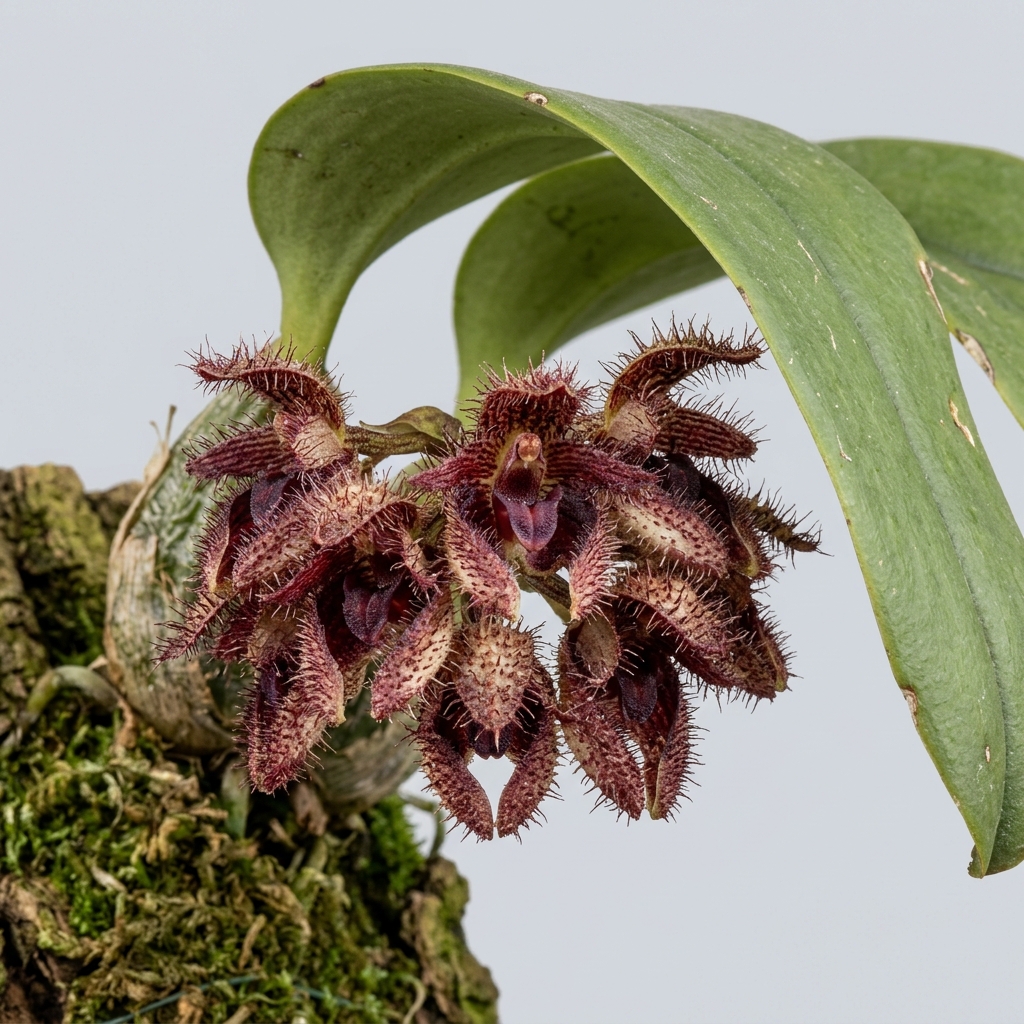
Bulbophyllum phalaenopsis is an extraordinary epiphytic orchid species within the vast Bulbophyllum genus, renowned for its massive, strap-like pendulous leaves and highly unusual floral display. Growers highly prize this species for its dramatic, prehistoric appearance and its status as a true conversation piece in specialized collections. Its vegetative presence alone stands out in any greenhouse or growing space.
While its vegetative growth is undeniably impressive, the species is equally famous for its clustered, textured blossoms that emit a powerful, carrion-like fragrance designed to attract fly pollinators. Cultivating this unique orchid requires specific environmental adjustments, making it a rewarding challenge for intermediate to advanced orchid enthusiasts who can accommodate its size and cultural preferences.
💡 Did You Know?
Despite its name, Bulbophyllum phalaenopsis is not closely related to the common Phalaenopsis
moth orchid. The species name actually refers to the resemblance of its massive, broad, draping leaves to those of a giant Phalaenopsis, rather than any similarity in their flowers.
🌿 Botanical Overview
Bulbophyllum phalaenopsis is native to the lowland rainforests of New Guinea, where it grows as an epiphyte on tree trunks and large branches. In its natural habitat, it is exposed to warm temperatures, high humidity, and frequent rainfall year-round. The vegetative structure of this orchid is characterized by large, clustered, slightly flattened pseudobulbs that produce a single, massive leaf.
The leaves of this species are among the largest in the orchid family, often reaching lengths of three to four feet or more in mature specimens. These strap-like leaves are thick, leathery, and hang downward in a pendulous fashion. This growth habit helps the plant shed excess rainwater in the wild, preventing water from pooling in the crown and causing rot.
🌸 Flower Characteristics
The flowers of Bulbophyllum phalaenopsis are as unusual as they are dramatic. They emerge from the base of the pseudobulbs in dense, head-like clusters known as umbels. Rather than presenting delicate, colorful petals, these blossoms are covered in fleshy, hair-like papillae that give them a distinctly organic, textured appearance resembling animal tissue.
The color palette of the flowers ranges from deep reddish-brown to purplish-pink, often with lighter cream or yellowish undertones visible beneath the textured surface. The individual flowers are relatively small, but the tight clustering creates a large, striking mass of blooms that hangs beneath the foliage. The lip or labellum is highly mobile, a common feature in the Bulbophyllum genus designed to assist in pollination.
Fragrance & Bloom Profile
The fragrance of Bulbophyllum phalaenopsis is one of its most famous attributes. It produces a powerful, highly pungent odor that closely mimics rotting meat or carrion. This scent is an evolutionary adaptation designed to attract carrion flies, which act as the primary pollinators in its native habitat.
Because of the intensity of the fragrance, growers often choose to display the plant in well-ventilated greenhouses or outdoor areas when it is in bloom. The flowers typically last for one to two weeks, during which the scent is strongest during the warmest parts of the day. Despite the odor, the sheer novelty and complexity of the floral display make it a highly anticipated event for collectors.
Parentage & Hybrid Lineage
Bulbophyllum phalaenopsis is a naturally occurring species rather than a man-made hybrid. Its exact wild collection history and early cultivation records are not consistently documented in common grower references, but it has long been recognized as a cornerstone species of the genus. It belongs to the section Macrobulbon, which contains other large-leafed Bulbophyllum species.
While it is primarily grown as a species, hybridizers have occasionally used Bulbophyllum phalaenopsis to create unique primary hybrids. These crosses aim to combine the impressive leaf size and textured floral characteristics of this species with the more manageable growth habits or different color forms of other Bulbophyllum species. However, pure specimens remain the most sought-after by serious collectors.
🌱 Growing Conditions
To grow Bulbophyllum phalaenopsis successfully, you must replicate its warm, humid tropical habitat. It thrives in warm to hot temperatures, ideally ranging from 75°F to 90°F (24°C to 32°C) during the day, with a slight drop at night. It is highly sensitive to cold temperatures and should never be exposed to drafts or temperatures below 60°F (15°C).
💡 Care Tip
Provide constant, active air movement using a small fan near your orchid. High is absolutely vital for this tropical species, but stagnant air combined with wet leaves will quickly lead to devastating bacterial rot on the large foliage.
Light levels should be moderate to bright but strictly indirect. Direct sunlight will quickly scorch the massive leaves, causing permanent damage and inviting disease. High humidity of 70% to 90% is essential for healthy growth. To prevent fungal issues in such a humid environment, constant and active air circulation is absolutely critical.
Watering, Feeding & Potting Media
This orchid requires consistent moisture and should never be allowed to dry out completely. The potting medium should remain damp but never waterlogged. During the active growing season, water the plant frequently, ensuring that water drains away quickly from the roots. Reduce watering slightly during the cooler winter months, but maintain high ambient humidity.
Because of its pendulous growth habit, Bulbophyllum phalaenopsis is best grown on a large mount, such as a tree fern plaque or cork slab, or in an open wooden basket. If using a basket, line it with high-quality sphagnum moss or a highly porous mix of medium fir bark and charcoal. Feed the plant weekly with a weak, balanced orchid fertilizer during the spring and summer to support its massive leaf production.
Blooming Season & Care Notes
Blooming typically occurs in the late summer through autumn, though it can vary depending on local growing conditions. The flower spikes emerge from the base of the mature pseudobulbs and develop relatively quickly. Avoid moving the plant or changing its environmental conditions once the flower buds begin to form, as sudden changes can cause bud blast.
After the blooming cycle is complete, the plant may enter a brief period of slowed growth. During this time, keep the medium slightly drier but do not allow the pseudobulbs to shrivel. Repotting or remounting should only be done when new root growth is visible at the base of the newest pseudobulb, as this species dislikes root disturbance.
⚠️ Common Issues
⚠️ Common Mistake
A frequent error is growing this orchid in a standard plastic pot. Because of its pendulous growth habit and massive leaves, it must be mounted or grown in a hanging basket to allow the foliage to drape naturally.
- Leaf Scorch: Large yellow or brown patches on the leaves caused by exposure to direct sunlight. Move the plant to a more shaded location immediately.
- Bacterial Rot: Soft, watery black spots on the leaves or pseudobulbs, often caused by water sitting on the foliage in stagnant air. Improve air circulation and cut away affected tissue if necessary.
- Root Rot: Caused by compacted, poorly draining media that stays wet for too long. Ensure the mounting material or basket mix allows rapid drainage.
- Bud Blast: The premature drying and dropping of flower buds, usually triggered by sudden drops in humidity or temperature fluctuations.
- Pests: Mealybugs and spider mites can hide under the massive leaves or within the clustered flowers. Inspect the plant regularly and treat infestations promptly.
❓ Frequently Asked Questions
How long do the leaves of Bulbophyllum phalaenopsis grow?
In mature, well-grown specimens, the pendulous leaves of Bulbophyllum phalaenopsis can easily reach three to four feet in length. Because of this massive size, the plant requires significant vertical space to hang freely without the leaves touching the ground or bench.
How can I manage the strong fragrance when it blooms?
The carrion-like scent can be overwhelming indoors. It is best to grow this orchid in a greenhouse, sunroom, or sheltered outdoor area during its blooming season. Excellent ventilation and air movement will also help disperse the fragrance so it does not concentrate in one area.
Should Bulbophyllum phalaenopsis be grown on a mount or in a basket?
A mount or an open wooden basket is highly recommended. Because the leaves are pendulous and grow downward, standard pots do not provide the necessary clearance. Mounting on a large cork slab or tree fern plaque allows the plant to grow in its natural epiphytic habit.
Why are the leaves on my orchid turning yellow or developing spots?
Yellowing or spotting is often a sign of either excessive light (sunburn) or water sitting on the leaves in stagnant air (bacterial rot). Ensure the plant is shaded from direct sun and that you have active fan circulation to dry the leaves quickly after watering.
⭐ Final Growing Notes
Bulbophyllum phalaenopsis is a magnificent testament to the diversity of the orchid family, offering an unmatched combination of giant pendulous foliage and bizarre, textured blooms. While its size, high humidity requirements, and pungent fragrance present unique challenges, successful cultivation rewards the dedicated grower with one of the most remarkable botanical displays in the world.
🌱 Propagation Tip
Propagate this species by division only when the plant has outgrown its mount or basket and possesses at least three to four healthy pseudobulbs per division. Minimize root disturbance during this process, as this orchid can take a long time to recover and resume active growth.
⭐ Expert Advice
To encourage robust blooming, maintain warm temperatures year-round and never allow the medium to dry out completely. A slight drop in night temperatures during early autumn can help trigger the development of flower spikes.




Leave A Comment