
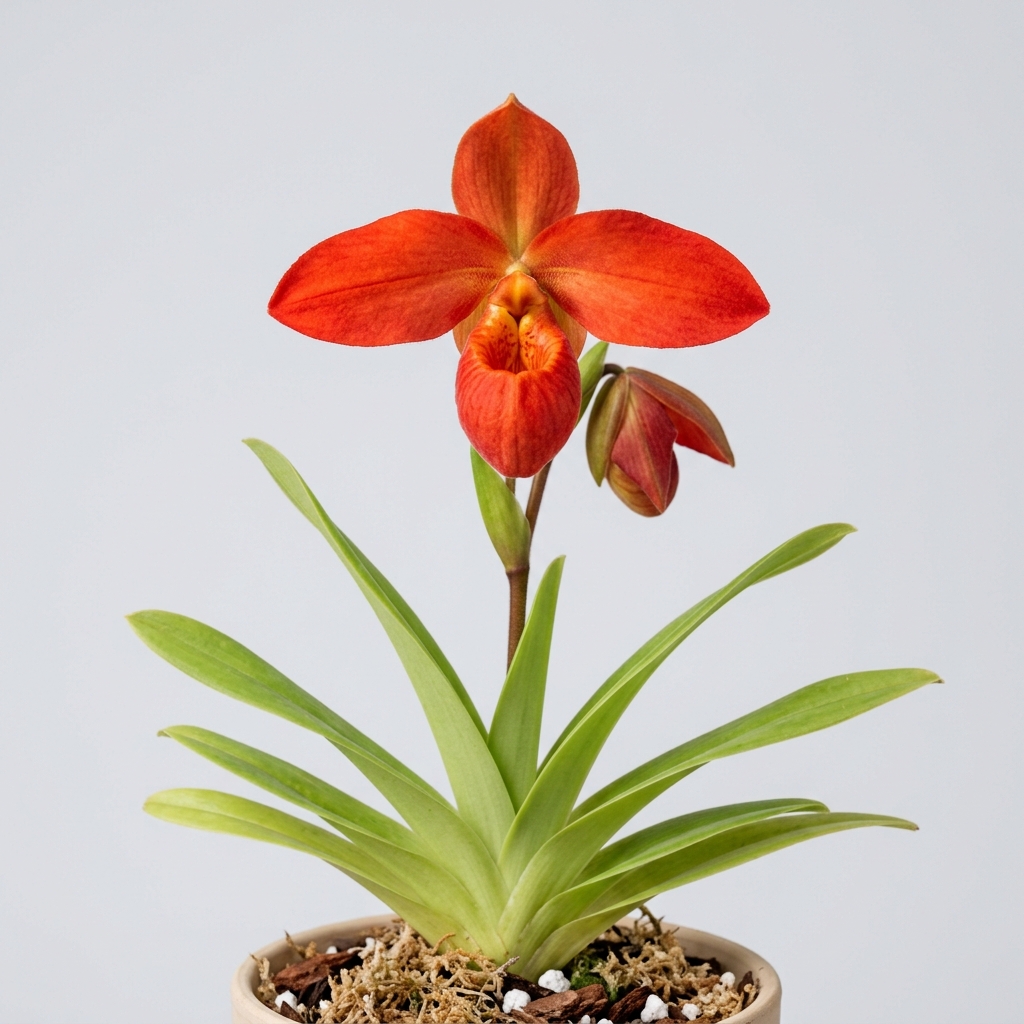
Phragmipedium besseae is a legendary South American slipper orchid celebrated for its intensely vibrant, fiery red to brilliant orange blooms. Since its discovery in the late twentieth century, this remarkable species has captivated orchid enthusiasts and revolutionized slipper orchid hybridization. Its striking, saturated coloration brings an unparalleled warmth to any collection, making it a highly sought-after jewel among growers worldwide.
This terrestrial and lithophytic orchid is native to the wet montane forests of the Andes, where it thrives in high-moisture environments near rivers and waterfalls. Unlike many epiphytic orchids that prefer to dry out between waterings, this species demands constant moisture and high humidity. Its sequential blooming habit ensures that a single flower spike can produce a succession of stunning blossoms over several months, rewarding growers with an extended display of natural beauty.
💡 Did You Know?
Phragmipedium besseae was only discovered in 1981 by botanist Elizabeth Besse in Peru. Its dramatic discovery completely revolutionized slipper orchid breeding, introducing an intense, saturated red coloration that was previously thought impossible to achieve within the , sparking a global sensation among collectors.
🌿 Botanical Overview
Phragmipedium besseae is native to the eastern slopes of the Andes in Peru and Ecuador, where it grows at elevations ranging from 1,100 to 1,500 meters. In its natural habitat, it is typically found growing as a terrestrial or lithophyte on wet, mossy cliffs, often in close proximity to waterfalls or rushing streams. This constant exposure to clean, flowing water and high atmospheric humidity shapes its unique cultural requirements in home and greenhouse cultivation.
The plant shows a sympodial growth habit, producing neat, fan-shaped growths of light green, strap-like leaves. These leaves are relatively soft and lack the heavy pseudobulbs found in other orchid genera, meaning the plant has limited water storage capacity. Consequently, maintaining a stable root environment is critical to preventing dehydration and ensuring steady vegetative growth.
🌸 Flower Characteristics
The defining feature of Phragmipedium besseae is its remarkably intense flower color, which ranges from a glowing orange-red to a deep, saturated scarlet. The flowers typically measure between six and eight centimeters in diameter. The petals are broad and horizontally held, framing a prominent, pouch-shaped lip or labellum that is characteristic of the slipper orchid subfamily.
The blooms are produced sequentially on an erect, sometimes branching inflorescence that can reach up to thirty centimeters in height. As one flower begins to fade, the next bud along the spike matures and opens, allowing for a continuous display that can last for several months. A rare yellow-flowered form, known as Phragmipedium besseae var. flava, also exists and is highly prized by collectors.
Fragrance & Bloom Profile
This species does not produce a noticeable fragrance, directing all of its evolutionary energy into its striking visual display. The lack of scent is common among Phragmipedium species, which rely primarily on their vivid coloration and unique pouch structure to attract natural pollinators in their native habitats.
The bloom profile is defined by its exceptional longevity due to the sequential flowering habit. While an individual flower may remain perfect for two to three weeks, the entire spike can remain active for a quarter of the year or longer. This makes it an incredibly rewarding plant for indoor growers who appreciate long-lasting color.
Parentage & Hybrid Lineage
Phragmipedium besseae is a distinct, naturally occurring species rather than a man-made hybrid. However, its introduction to the horticultural world in the early 1980s completely transformed Phragmipedium breeding. It has been used as a primary parent in hundreds of highly successful hybrids, passing on its brilliant red coloration and flat petal stance to its offspring.
Some of the most famous primary hybrids derived from this species include Phragmipedium Eric Young and Phragmipedium Hanne Popow. Because genetic variations exist among wild populations, select line-bred cultivars of the species itself have been developed by specialists to maximize flower size, color saturation, and plant vigor.
🌱 Growing Conditions
To grow this orchid successfully, one must replicate the cool, damp, and airy conditions of its mountain home. It prefers intermediate temperatures, with daytime highs between 70°F and 80°F (21°C to 27°C) and a night drop to around 60°F to 65°F (15°C to 18°C). A distinct drop in temperature at night is beneficial for promoting healthy growth and initiating flower spikes.
💡 Care Tip
Always use pure water, such as rainwater, distilled water, or reverse osmosis water. This orchid is highly sensitive to dissolved minerals and salts, which can quickly cause root death, leaf tip burn, and overall plant decline.
Light levels should be moderate to bright but strictly indirect. Dappled light, such as that suitable for Phalaenopsis or slightly brighter, is ideal. If the leaves turn a very pale yellow-green, the light may be too intense; if they are a dark, dull green, they may need more light to stimulate blooming. High humidity of 60% to 80% coupled with continuous, gentle air movement is essential to prevent fungal pathogens from taking hold in the moist environment.
Watering, Feeding & Potting Media
Water quality is the single most critical factor in keeping Phragmipedium besseae alive and thriving. This species is extremely sensitive to dissolved minerals, chlorine, and salts. Growers must use pure water, such as rainwater, distilled water, or reverse osmosis water. The potting medium must be kept consistently moist and should never be allowed to dry out completely. Many growers successfully use a semi-hydroponic method or place the pot in a shallow tray of pure water to maintain constant moisture.
The potting medium must be moisture-retentive yet highly aerated to prevent the roots from suffocating. A mix of fine fir bark, sphagnum moss, perlite, and charcoal works exceptionally well. Feeding should be done with a very weak, balanced, urea-free fertilizer at one-quarter or one-eighth strength every second or third watering, followed periodically by a thorough flush with pure water to wash away any residual salts.
Blooming Season & Care Notes
While Phragmipedium besseae can initiate blooms at almost any time of the year, its primary flowering periods typically occur in the spring and autumn. When a flower spike emerges, avoid changing the plant’s orientation or environmental conditions, as sudden shifts can lead to bud drop. Do not cut the green flower spike until it has completely dried and turned brown, as it may continue to produce buds over a long period.
Repotting should be performed annually or at least every two years. Because the medium is kept constantly wet, it degrades much faster than it would under drier cultivation. Repotting is best done in the spring or when new root growth is visible at the base of the active fans, ensuring the plant transitions smoothly into its fresh medium.
⚠️ Common Issues
⚠️ Common Mistake
Allowing the potting medium to dry out completely is a frequent mistake. Unlike many other epiphytic orchids, Phragmipedium besseae thrives in constantly moist conditions and will quickly decline, dropping buds and losing roots, if left dry.
- Leaf Tip Burn: This is almost always a sign of mineral buildup from tap water or over-fertilizing. Flush the pot thoroughly with pure water and adjust your watering practices.
- Crown Rot:
Water standing in the center of the leaf fan can lead to rapid rot. Avoid watering from above, and ensure excellent air circulation around the foliage. - Root Rot:
If the potting medium degrades and becomes compacted, the roots will suffocate and rot. Repot regularly to maintain a fresh, airy root zone. - Bud Blast:
Sudden drops in humidity, drafts, or extreme temperature fluctuations can cause developing buds to turn yellow and drop before opening.
❓ Frequently Asked Questions
How often should I water Phragmipedium besseae?
You should water frequently enough to keep the potting medium constantly moist. Depending on your home environment and potting mix, this typically means watering two to three times per week, or growing the plant in a shallow tray of pure water.
What type of water is best for this orchid?
This species requires pure water with very low mineral content. Rainwater, distilled water, or reverse osmosis water are highly recommended, as tap water will quickly cause root damage and leaf tip burn.
Can I grow Phragmipedium besseae under artificial LED lights?
Yes, this orchid adapts beautifully to LED grow lights. Position the plant under moderate-strength LEDs, ensuring the leaves receive bright, indirect light without experiencing excessive heat from the fixtures.
Is Phragmipedium besseae suitable for beginner orchid growers?
It is considered a moderate-difficulty orchid. While its watering and water quality requirements are strict, growers who can provide consistent moisture and pure water will find it to be a highly resilient and rewarding plant.
⭐ Final Growing Notes
Phragmipedium besseae remains one of the most breathtaking species in the entire orchid family. While its demands for pure water and constant moisture require a disciplined approach to care, the reward of its glowing, sequential red blossoms is unmatched. By maintaining high humidity, intermediate temperatures, and a pristine root environment, any dedicated grower can successfully cultivate this spectacular Andean treasure.
🌱 Propagation Tip
Propagate this orchid by division during the spring repotting cycle. Ensure each division has at least two or three healthy, mature leaf fans with active roots to guarantee successful establishment in its new container.
⭐ Expert Advice
Consider growing Phragmipedium besseae in a semi-hydroponic setup using inorganic media like clay pebbles or growstone. This method easily provides the constant, clean moisture and excellent root aeration that this species naturally craves.


Leave A Comment