
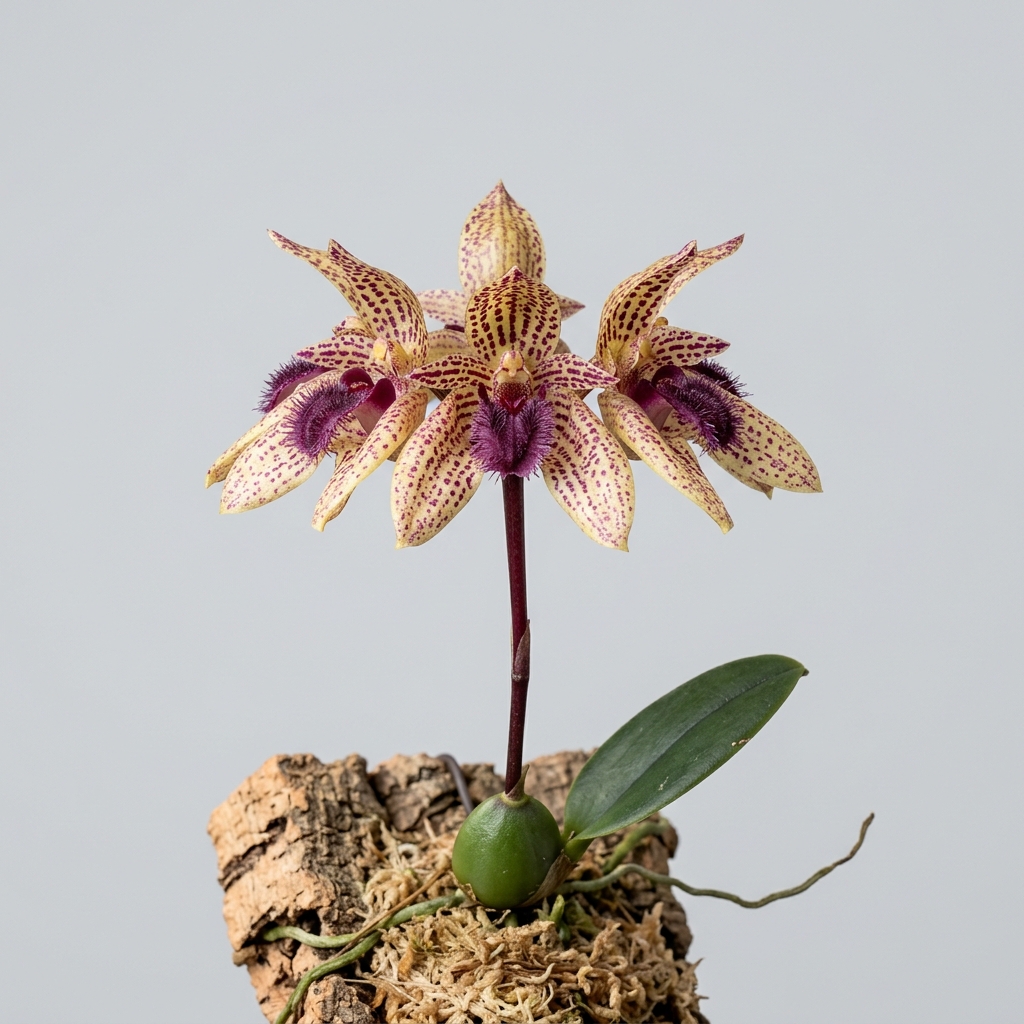
Bulbophyllum lasiochilum, commonly known as the shaggy-lipped Bulbophyllum, is a captivating miniature epiphytic orchid highly prized by collectors for its intriguing floral morphology and compact growth habit. Belonging to the vast and diverse genus Bulbophyllum, this species is native to the warm, humid canopy forests of Southeast Asia, including Thailand, Myanmar, and Malaysia, where it typically grows on moss-covered tree trunks and branches.
Growers value this orchid for its relatively large, uniquely shaped blossoms that stand out beautifully against its neat, creeping pseudobulbs. The striking contrast between the plant’s diminutive size and its detailed, often fragrant flowers makes it an exceptional choice for terrariums, vivariums, or specialized indoor orchid collections. Its manageable growth habit and rewarding blooming nature have cemented its status as a favorite among miniature orchid enthusiasts worldwide.
💡 Did You Know?
Unlike many of its relatives in the Bulbophyllum that emit foul odors to attract carrion flies, Bulbophyllum lasiochilum is celebrated for its surprisingly sweet, fruity that many growers compare to fresh strawberries or ripe grapes. This pleasant scent makes it a highly desirable species for indoor growers who want unique flowers without unpleasant smells.
🌿 Botanical Overview
Bulbophyllum lasiochilum is characterized by its creeping growth habit, utilizing a thin, wiry rhizome to spread across its growing surface. Along this rhizome, small, smooth, ovoid pseudobulbs develop at regular intervals. Each pseudobulb is topped by a single, leathery, dark green leaf that is oblong to elliptic in shape. This compact vegetative structure allows the plant to hug its substrate tightly, making it highly adaptable to vertical surfaces.
In its native habitat, this species experiences a monsoonal climate with distinct wet and dry periods. However, because it grows under the dense forest canopy, it is protected from direct sunlight and extreme drying winds. Understanding this natural environment is key to successfully cultivating the plant, as it thrives when provided with constant moisture, high humidity, and gentle, continuous air movement.
🌸 Flower Characteristics
The flowers of Bulbophyllum lasiochilum are remarkably intricate and disproportionately large compared to the individual pseudobulbs. Each inflorescence typically carries a single flower, arising from the base of a mature pseudobulb on a slender, upright stem. The dorsal sepal is often elongated and arches forward over the column, while the lateral sepals are broader, spreading outward and downward to create a distinct triangular silhouette.
The most defining feature of this species is its labellum, or lip, which is heavily textured with fine, hair-like structures that give the orchid its common name, the shaggy-lipped Bulbophyllum. The base color of the blossoms is usually a pale yellowish-cream, heavily decorated with dark reddish-purple spots, speckles, or stripes. This striking coloration, combined with the mobile, hinged lip that wiggles in response to air currents, makes the flower a fascinating subject for close-up observation.
Fragrance & Bloom Profile
Unlike many members of the Bulbophyllum genus, which are notorious for producing unpleasant odors to attract carrion flies, Bulbophyllum lasiochilum is celebrated for its highly agreeable fragrance. The flowers emit a sweet, fruity scent that is commonly compared to ripe strawberries, red grapes, or sweet melons. This pleasant aroma is typically most noticeable during the warmer hours of the morning and early afternoon.
The blooming cycle usually occurs once a year, with individual flowers lasting anywhere from ten days to three weeks depending on environmental conditions. While the flowers are not long-lived compared to some other orchid genera, a well-established specimen with multiple active growth leads can produce a succession of blooms over several weeks, extending the overall display period.
Parentage & Hybrid Lineage
Bulbophyllum lasiochilum is a naturally occurring species rather than a man-made hybrid. Because of this, its genetic lineage is pure, representing a distinct evolutionary branch within the Bulbophyllum genus. In the wider orchid community, species plants are highly valued for preserving the exact traits developed in the wild over thousands of years.
While it is primarily grown as a species, hybridizers have occasionally used Bulbophyllum lasiochilum in breeding programs to introduce its compact growth habit, unique flower shape, and delightful strawberry fragrance to new grexes. However, registered hybrids utilizing this species remain relatively uncommon, and its primary presence in cultivation continues to be as a beloved species orchid.
🌱 Growing Conditions
To cultivate Bulbophyllum lasiochilum successfully, growers should aim to replicate its shaded, humid forest home. It thrives in low to medium indirect light, similar to the light levels preferred by Phalaenopsis orchids. Direct sunlight should be avoided, as it can quickly scorch the thin leaves and dry out the sensitive root system. High-quality LED grow lights or a shaded east-facing window are ideal indoor locations.
💡 Care Tip
Maintain high levels above seventy percent and ensure constant, gentle air circulation to prevent fungal spotting on the delicate leaves of this miniature orchid. Proper airflow is especially critical when growing this species in enclosed terrariums or tightly packed growing areas.
Temperature: wise, this orchid is quite adaptable but prefers warm to intermediate conditions. Daytime temperatures between 70°F and 85°F are ideal, with a slight drop of five to ten degrees at night to encourage healthy growth and trigger blooming. Humidity is a critical factor; maintaining a relative humidity level of seventy percent or higher is essential for preventing the pseudobulbs from shriveling and supporting healthy root development.
Watering, Feeding & Potting Media
Consistent moisture is vital for Bulbophyllum lasiochilum, as the plant does not tolerate prolonged dry spells. The potting medium should remain damp but never waterlogged or stagnant. If grown in pots or shallow baskets, a mix of high-quality New Zealand sphagnum moss and fine fir bark works exceptionally well to retain moisture while allowing adequate oxygen to reach the roots.
For mounted specimens, which is the preferred method for many growers due to the plant’s creeping habit, daily watering may be necessary during warm weather. Mount the orchid on a slab of cork bark or tree fern with a generous pad of sphagnum moss around the roots to help retain moisture. Feed the plant weekly with a highly diluted, balanced orchid fertilizer, applying it at one-quarter strength to avoid burning the delicate, salt-sensitive roots.
Blooming Season & Care Notes
The primary blooming season for Bulbophyllum lasiochilum is autumn, though occasional flowers may appear in late summer or early winter. To encourage a robust bloom cycle, ensure the plant experiences a slight drop in night temperatures during the late summer months. This natural temperature cue mimics the seasonal transition in its native habitat and helps stimulate the development of flower spikes from the base of the pseudobulbs.
Once the flower spikes begin to emerge, avoid moving the plant or changing its environmental conditions abruptly, as sudden shifts can cause the developing buds to blast. After the blooming period is complete, the orchid will enter a brief period of slowed growth. Reduce watering slightly during this time, but never allow the medium to dry out completely. Repotting or remounting is best done in early spring when new root growth is just beginning to emerge.
⚠️ Common Issues
⚠️ Common Mistake
Allowing the potting medium to dry out completely is a frequent error. This species lacks large water-storage organs and requires consistent moisture to prevent pseudobulb shriveling. Mounted specimens are particularly vulnerable to drying out too quickly.
- Shriveled pseudobulbs: Often caused by underwatering, low humidity, or a compromised root system that cannot absorb moisture.
- Leaf spotting: Dark spots on the foliage can indicate fungal or bacterial infections, usually triggered by high humidity combined with stagnant, stagnant air.
- Bud blast: Developing flower buds may dry up and drop off before opening due to sudden changes in temperature, drafty conditions, or low humidity.
- Root rot: Caused by overwatering, poor drainage, or decaying potting media that suffocates the roots.
- Pests: Mealybugs and spider mites can occasionally target the tender new growth, especially if the surrounding air is too dry.
❓ Frequently Asked Questions
How do I get my Bulbophyllum lasiochilum to bloom?
To encourage blooming, ensure the plant receives adequate indirect light and experiences a distinct drop in night temperatures by about five to ten degrees during the late summer. Consistent moisture and high humidity throughout the growing season are also essential for building the energy required to produce flowers.
Can I grow Bulbophyllum lasiochilum in a terrarium?
Yes, this miniature orchid is an excellent candidate for terrariums and vivariums. Its compact size, creeping growth habit, and high humidity requirements make it perfectly suited for enclosed environments, provided there is adequate internal air circulation to prevent mold and rot.
Why are the pseudobulbs on my orchid shriveling?
Shriveled pseudobulbs typically indicate dehydration. This can be due to underwatering, low ambient humidity, or root loss caused by overwatering. Check the root system; if the roots are healthy, increase watering frequency and humidity. If the roots are mushy and dead, repot the plant in fresh media and keep it warm and humid to encourage new root growth.
Does Bulbophyllum lasiochilum need to be mounted?
While it does not strictly need to be mounted, mounting on cork bark or tree fern slabs is highly recommended. The creeping rhizome naturally spreads horizontally, and a mount allows the plant to grow freely without spilling over the edges of a traditional pot. If potting, use a wide, shallow bulb pan or basket.
⭐ Final Growing Notes
Bulbophyllum lasiochilum is a delightful and rewarding miniature orchid that brings a touch of exotic beauty and a surprising strawberry-like fragrance to any collection. By focusing on its core requirements of high humidity, consistent moisture, and gentle air movement, growers of all experience levels can successfully cultivate this charming species. Whether mounted on a cork slab or nestled inside a humid terrarium, its unique shaggy-lipped flowers and neat growth habit make it a standout addition to the indoor garden.
🌱 Propagation Tip
Propagate during active spring growth by carefully dividing the creeping rhizome. Ensure each new division has at least three to four healthy pseudobulbs and active root growth to guarantee successful establishment on its new mount or pot.
⭐ Expert Advice
For the most natural growth habit and easiest moisture management, mount this orchid on a cork plaque with a generous pad of high-quality sphagnum moss wrapped around the roots. This setup mimics its natural epiphytic environment perfectly.




Leave A Comment