
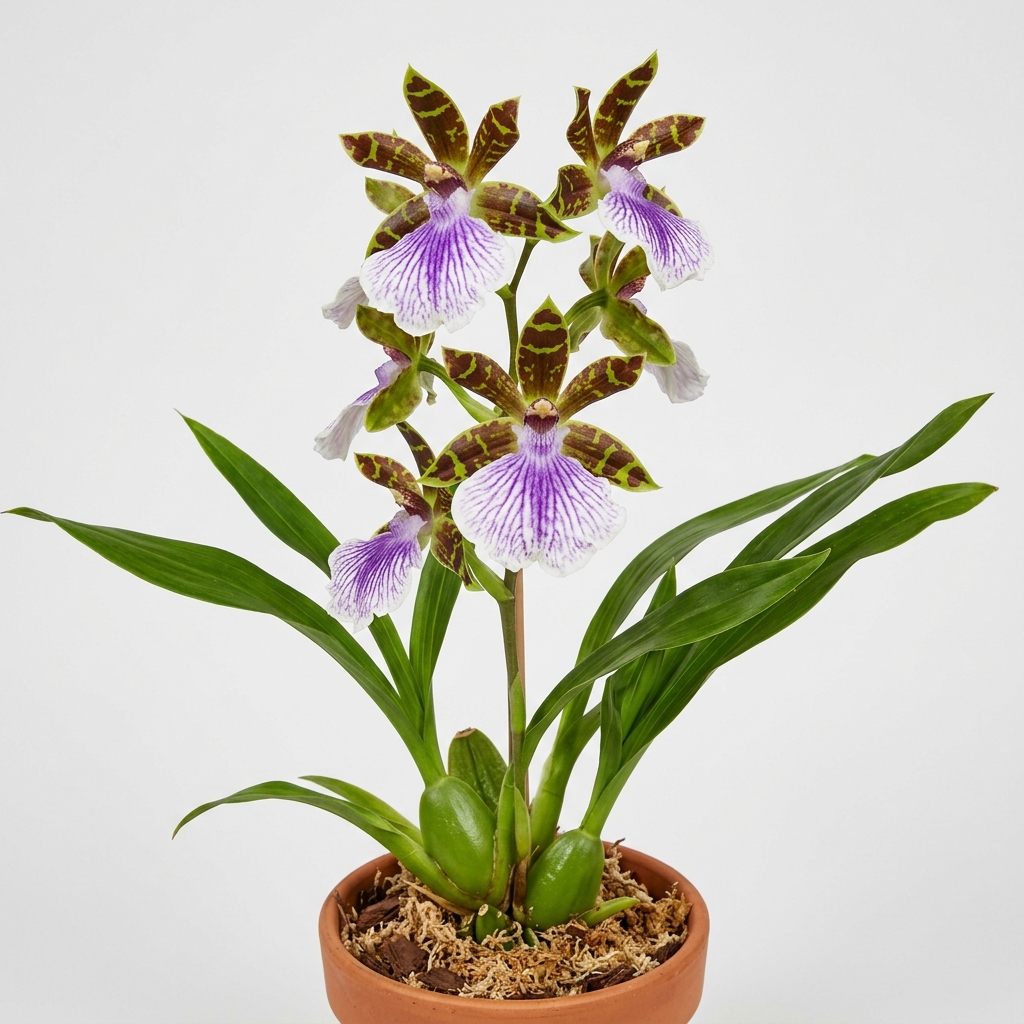
Zygopetalum maculatum is a highly prized terrestrial or lithophytic orchid species native to the humid forest regions of South America, particularly Brazil. Renowned for its glossy, pear-shaped pseudobulbs and long, strap-like foliage, this orchid is a favorite among collectors for its dramatic, multi-colored blooms and robust growth habit. Growers particularly value its ability to produce multiple flower spikes that fill growing spaces with an exceptionally rich, sweet fragrance.
Unlike many delicate tropical orchids, this species shows a somewhat resilient nature when provided with consistent moisture and intermediate temperatures. The striking contrast between its green-and-brown patterned petals and its brilliant, violet-veined white lip makes it a standout addition to any indoor collection or greenhouse. Understanding its specific environmental preferences is the key to unlocking regular, spectacular blooming cycles.
💡 Did You Know?
The intense of Zygopetalum maculatum is so powerful because, in its native Brazilian habitats, it relies on specific euglossine bees for pollination. These bees are attracted to the strong, sweet scent, which they collect and use to attract mates, creating a highly specialized ecological partnership.
🌿 Botanical Overview
Zygopetalum maculatum is characterized by its sympodial growth habit, producing clustered, ovoid pseudobulbs that support several thin, lanceolate leaves. In their natural habitat, these orchids grow in damp, shaded environments, often on the forest floor or nestled in mossy rock crevices. This terrestrial-leaning lifestyle dictates much of their root structure, which prefers a more consistently moist and organic medium than strictly epiphytic orchids.
The foliage of this species is notably sensitive to environmental stressors, often developing harmless but unsightly dark spots if exposed to water droplets under direct light or if air circulation is poor. Healthy pseudobulbs should remain plump and light green, serving as the primary water and nutrient storage organs for the plant during its active growth phases.
🌸 Flower Characteristics
The inflorescence of Zygopetalum maculatum emerges from the base of the newly developing pseudobulb, growing into an upright or slightly arching spike that can carry up to a dozen flowers. Each bloom is a masterclass in contrast, typically measuring two to three inches in diameter. The sepals and petals are narrow, pointed, and base-colored in yellowish-green, heavily blotched or striped with rich chocolate-brown markings.
The defining feature of the flower is its large, fan-shaped labellum, or lip. This prominent structure is pristine white, adorned with striking, radiating veins of violet, magenta, or deep purple. The velvety texture of the lip enhances the visual depth of the bloom, making it a highly photogenic subject for orchid enthusiasts.
Fragrance & Bloom Profile
One of the primary reasons growers seek out Zygopetalum maculatum is its intense, intoxicating fragrance. The blooms release a powerful scent that is frequently compared to hyacinths, sweet peas, or spicy pepper. This fragrance is most pronounced during the morning and early afternoon hours, filling an entire room with its perfume.
The flowers are long-lasting, often remaining fresh on the spike for four to six weeks under optimal conditions. To maximize the lifespan of the blooms, it is best to keep the plant in a slightly cooler location once the flowers have fully opened, as excessive heat can cause the blossoms to fade prematurely.
Parentage & Hybrid Lineage
As a naturally occurring species, Zygopetalum maculatum does not have a hybrid parentage, though its taxonomy has historically been confused with Zygopetalum mackayi in older literature. In the orchid trade, it has served as a foundational parent for numerous modern Zygopetalum hybrids, contributing its intense fragrance, robust growth, and vivid purple lip markings to its progeny.
Because registration records and historical naming conventions can be inconsistent in older literature, some specimens sold under this name may exhibit slight variations in flower size or color intensity. Collectors should source plants from reputable nurseries to ensure true-to-type species representation.
🌱 Growing Conditions
To cultivate Zygopetalum maculatum successfully, growers must replicate its native intermediate-to-cool forest environment. It thrives in medium to bright filtered light, similar to the light levels preferred by Miltoniopsis or Cattleya orchids. Direct midday sun must be avoided, as it will quickly scorch the thin leaves; a soft, yellow-green leaf color indicates optimal light exposure.
💡 Care Tip
Keep your Zygopetalum maculatum in a location with active air movement, such as near a gentle oscillating fan. Good airflow is the single most effective way to prevent the unsightly black leaf spots that commonly plague this thin-leafed species.
Temperature management is crucial. This orchid prefers daytime temperatures between 70°F and 80°F, with a distinct drop of 10 to 15 degrees at night. A cool night temperature down to 50°F or 55°F in the autumn is often the primary trigger for spike initiation. High humidity of at least 50% to 70% coupled with constant, gentle air movement will keep the foliage healthy and prevent fungal pathogens.
Watering, Feeding & Potting Media
Unlike many epiphytes, Zygopetalum maculatum does not tolerate drying out completely. The fine, white roots require constant moisture but will quickly rot in stagnant, waterlogged conditions. Water the plant thoroughly just as the potting medium approaches dryness, which typically means watering once or twice a week depending on your home’s humidity.
A potting mix consisting of fine-grade fir bark blended with sphagnum moss and perlite works exceptionally well, retaining moisture while allowing excellent drainage. During the active growing season in spring and summer, feed the orchid weekly with a balanced, diluted orchid fertilizer at quarter or half strength. Flush the pot with pure water once a month to prevent harmful salt buildup.
Blooming Season & Care Notes
The primary blooming season for Zygopetalum maculatum occurs from late autumn through winter, though strong plants can occasionally bloom twice a year. The flower spikes develop rapidly alongside new vegetative growth. Once the flowers fade, cut the spike down to the base of the pseudobulb using sterilized shears.
Repotting should be performed every one to two years, ideally in the spring just as new root growth begins to emerge from the base of the newest pseudobulb. Avoid repotting while the plant is in spike or bloom unless the potting medium has severely decomposed. When repotting, keep the base of the pseudobulbs resting slightly above the surface of the fresh media.
⚠️ Common Issues
⚠️ Common Mistake
The most common mistake is letting the potting medium dry out completely between waterings. Unlike Phalaenopsis, Zygopetalum maculatum lacks thick, water-storing leaves and will quickly drop its lower foliage and abort developing flower buds if subjected to severe drought.
- Leaf Spotting: Dark, unsightly spots can develop on the leaves from water droplets left on the foliage or from fungal infections due to poor air circulation. Keep leaves dry when watering.
- Root Rot:
Caused by overwatering or a decomposed potting medium that suffocates the roots. Repot immediately if roots appear mushy and brown. - Bud Blast:
Sudden drops in humidity, extreme temperature fluctuations, or drafts can cause developing buds to yellow and drop before opening. - Spider Mites and Mealybugs: These pests can hide in the crevices of the thin leaves and pseudobulbs. Treat promptly with insecticidal soap or neem oil.
❓ Frequently Asked Questions
Why does my Zygopetalum maculatum have black spots on its leaves?
Black spots on Zygopetalum leaves are very common and are usually caused by water sitting on the foliage in cool, stagnant air. While often cosmetic and non-lethal, you can prevent new spots by watering early in the day, avoiding overhead watering, and increasing gentle air circulation around the plant.
How do I trigger my orchid to bloom?
The primary trigger for blooming is a consistent night-time temperature drop of 10 to 15 degrees Fahrenheit in the late summer or early autumn. Providing bright, filtered light and keeping the plant slightly drier during this cooling period will encourage the development of flower spikes from the new growth.
What is the best potting mix for this species?
A mix of fine-grade fir bark, sphagnum moss, and perlite is ideal. This combination retains the consistent moisture that Zygopetalum roots crave while providing the necessary aeration to prevent root rot. Avoid heavy, soil-like mixes that compact over time.
Can I grow Zygopetalum maculatum under LED grow lights?
Yes, this orchid adapts well to LED grow lights. Position the plant so it receives moderate light intensity, aiming for a target of 1,500 to 2,500 foot-candles. Monitor the leaf color; if the leaves turn dark green, increase the light intensity, and if they turn yellow or show red tinting, move the light further away.
⭐ Final Growing Notes
Zygopetalum maculatum remains one of the most rewarding cool-to-intermediate orchids for dedicated hobbyists. By balancing its need for consistent moisture with excellent drainage and cool night temperatures, you will be rewarded with a spectacular display of exotic, highly fragrant blooms year after year.
🌱 Propagation Tip
Propagate this orchid by division during spring repotting. Ensure each division has at least three to four healthy, mature pseudobulbs with active root systems. Avoid dividing the plant too frequently, as larger specimens produce far more impressive flower displays.
⭐ Expert Advice
To prolong the life of the highly fragrant blooms, move the orchid to a slightly cooler, shaded location once the first few flowers on the spike open. Lower temperatures slow down the flower's metabolic rate, extending the display for up to six weeks.




Leave A Comment