
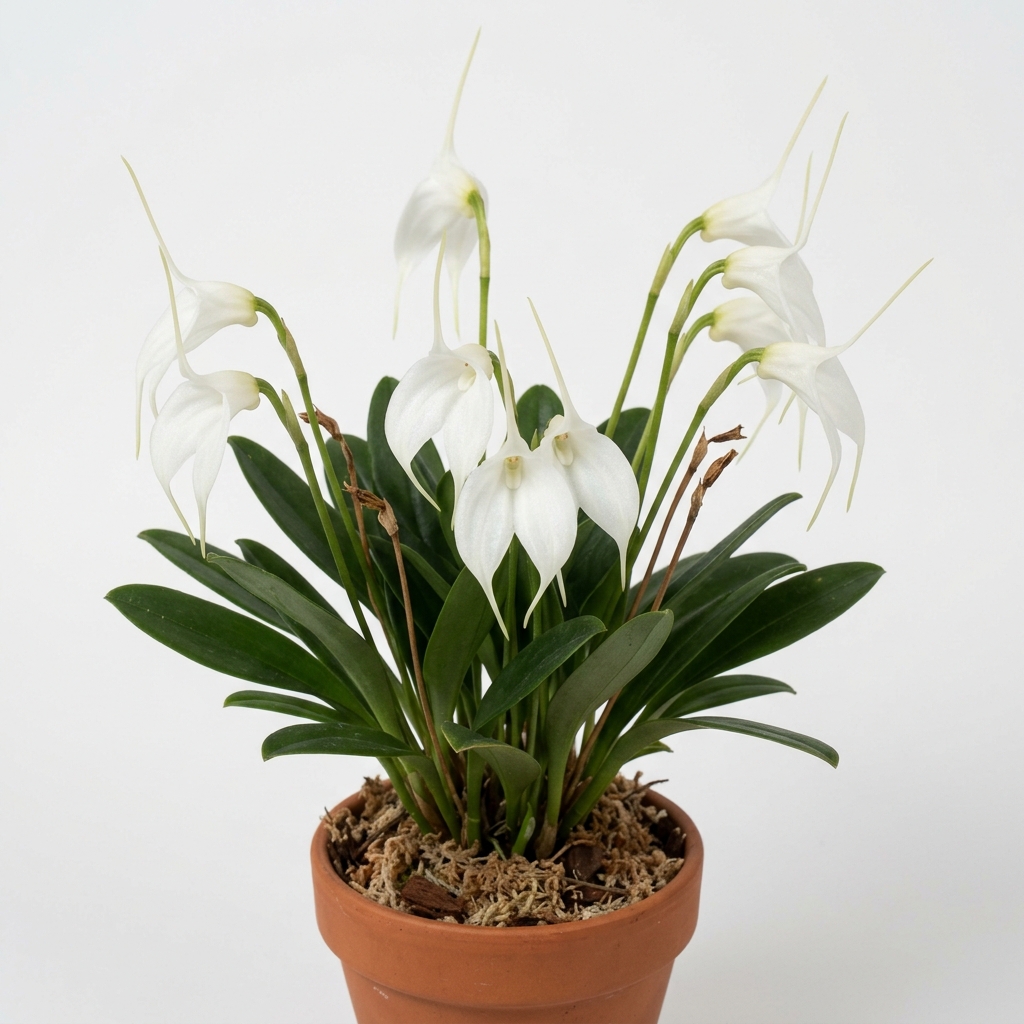
Masdevallia tovarensis is a highly prized cool-growing orchid species celebrated for its pristine, crystalline white flowers and elegant growth habit. Originating from the cloud forests of Venezuela, this tufted epiphyte produces striking, long-tailed blooms that contrast beautifully against its deep green, leathery foliage. Orchid enthusiasts value this species not only for its ethereal floral display but also for its relatively compact size, making it an excellent candidate for specialized indoor grow spaces, terrariums, or cool greenhouses.
Unlike many other members of the genus that produce solitary flowers, this species is known for bearing multiple blossoms on a single, erect inflorescence. The flowers feature the characteristic fused sepals of the Masdevallia genus, ending in slender, tail-like extensions that catch the slightest breeze. Cultivating this orchid successfully requires a commitment to maintaining cool temperatures and high humidity, rewarding dedicated growers with a spectacular winter display of pure white blooms.
💡 Did You Know?
Unlike many other Masdevallia species that produce only a single flower per stem, Masdevallia tovarensis is highly unique because its flower spikes can produce multiple blooms simultaneously and can rebloom from the same green stalks year after year. This makes preserving the green spikes essential for maximizing future floral displays.
🌿 Botanical Overview
Masdevallia tovarensis is a compact, tufted epiphytic orchid native to the moist cloud forests of Venezuela, particularly around the coastal mountain ranges near Tovar. In its natural habitat, it grows on moss-covered tree branches and damp rocks at elevations ranging from 1,600 to 2,400 meters. This high-altitude environment provides the plant with constant moisture, cool breezes, and filtered canopy light throughout the year.
The plant lacks pseudobulbs, which is typical for the subtribe Pleurothallidinae. Instead, it relies on short, erect ramicauls that each bear a single, thick, oblanceolate leaf. These leathery leaves are dark green and serve as the primary water-storage organs for the plant. Because it lacks substantial storage structures, the orchid is highly sensitive to dry spells and requires a stable, humid microclimate to thrive in cultivation.
🌸 Flower Characteristics
The flowers of Masdevallia tovarensis are the primary draw for collectors, presenting a striking crystalline white color that appears almost translucent under soft light. The floral structure is dominated by the sepals, which are fused at the base to form a short tube before flaring outward. The lateral sepals are joined for much of their length, creating a broad, flat platform, while the dorsal sepal stands erect. Each sepal terminates in a slender, yellowish-green tail-like appendage, adding dramatic vertical lines to the bloom.
The actual petals and lip are extremely small and hidden deep within the sepaline tube, a classic evolutionary trait of the genus designed to attract specific insect pollinators. The inflorescences are erect, often reaching slightly above the foliage, and can bear between two to five flowers simultaneously. The pristine white blooms are held elegantly, creating a clean, architectural silhouette.
Fragrance & Bloom Profile
While some growers report a very faint, sweet scent during the warmest hours of the day, a distinct fragrance is not consistently documented in common horticultural references for Masdevallia tovarensis. The species is grown almost exclusively for its visual appeal. The crystalline texture of the sepals reflects light beautifully, giving the flowers a sparkling appearance that lasts for several weeks. Individual blooms are remarkably long-lasting if kept in cool, stable conditions, often remaining pristine for up to two months.
Parentage & Hybrid Lineage
Masdevallia tovarensis is a naturally occurring species rather than a man-made hybrid. In the orchid world, it is highly valued as a parent species in breeding programs aimed at introducing pure white coloration, multi-flowered inflorescences, and floriferous habits to hybrid offspring. When crossed with other Masdevallia species, it frequently passes on its clean white tones and robust stem strength. Because its wild origin is well-documented, growers can appreciate the species in its pure, unhybridized form, which remains a benchmark of quality in cool-growing orchid collections.
🌱 Growing Conditions
Replicating the montane cloud forest environment is the key to success with Masdevallia tovarensis. It thrives in cool to cold conditions, with ideal daytime temperatures ranging from 60°F to 68°F (15°C to 20°C) and a necessary nighttime drop to 50°F to 55°F (10°C to 13°C). Temperatures consistently exceeding 75°F (24°C) can cause rapid decline, leaf drop, and vulnerability to pests.
💡 Care Tip
Always prioritize high coupled with active air movement. Stagnant air in a damp environment is an open invitation for fungal leaf spot diseases, so running a small, low-powered fan near your growing area is highly beneficial.
Light should be kept low to moderate, mimicking the dappled shade of a forest canopy. Bright, indirect light is suitable, but direct sunlight will quickly scorch the thin leaves. High humidity of 70% to 80% is essential. To prevent fungal pathogens in such damp conditions, continuous, gentle air movement must be provided using small fans.
Watering, Feeding & Potting Media
Because Masdevallia tovarensis lacks pseudobulbs, it must never be allowed to dry out completely. The potting medium should remain evenly moist but not waterlogged. Water the plant thoroughly with pure water, such as rainwater, distilled water, or reverse osmosis water, as this species is highly sensitive to dissolved salts and chlorine.
High-quality New Zealand sphagnum moss or a fine-grade bark mix containing perlite and tree fern fiber works best. Sphagnum moss helps retain the necessary moisture, while fine bark ensures adequate drainage and aeration around the fine, thread-like roots. Fertilize sparingly with a highly diluted, balanced orchid fertilizer at one-quarter strength every two to three weeks during active growth, flushing the pot with pure water between feedings to prevent salt buildup.
Blooming Season & Care Notes
The primary blooming season for Masdevallia tovarensis occurs from late autumn through winter, triggered by the natural drop in seasonal temperatures and shorter day lengths. A unique feature of this species is its ability to produce new flowers from the old flower spikes. Growers should avoid cutting back green, healthy flower spikes after the initial blooms fade, as they can rebloom in later seasons.
Repotting is best done in late winter or early spring, just as new root growth begins and before the heat of summer arrives. Minimize root disturbance during the process, as the fine root system can be delicate. Choose a small pot that just accommodates the root mass, as overpotting can lead to stagnant, sour media.
⚠️ Common Issues
⚠️ Common Mistake
The most common mistake is allowing the plant to dry out completely or using hard tap water. Lacking pseudobulbs to store moisture, this orchid will quickly suffer root damage and leaf drop if the media dries or accumulates mineral salts.
- Root Rot: Caused by compacted, poorly draining media or overwatering, leading to limp, yellowing leaves.
- Leaf Spotting: Fungal or bacterial spots can develop rapidly if humidity is high but air circulation is stagnant.
- Heat Stress: Indicated by sudden leaf drop, yellowing foliage, and bud blast during warm summer months.
- Pests: Spider mites and aphids can occasionally target the tender new growth and flower buds under dry conditions.
- Salt Burn: Brown leaf tips often indicate a buildup of minerals from tap water or over-fertilization.
❓ Frequently Asked Questions
Why are the leaves on my Masdevallia tovarensis dropping suddenly?
Sudden leaf drop is most commonly caused by heat stress or root rot. If temperatures exceed 75°F (24°C) for extended periods, the plant will shed leaves. Alternatively, if the roots have rotted due to compacted media, the plant cannot absorb water, leading to leaf loss.
Should I cut the flower spikes after the blooms fade?
No, do not cut the green flower spikes of Masdevallia tovarensis. This species is known to produce new flowers from the same spikes in successive years. Only cut the spikes if they turn completely brown and dry.
Can I grow Masdevallia tovarensis under artificial LED lights?
Yes, this orchid adapts well to LED grow lights. Position the plant under low to moderate intensity settings, ensuring the lights do not generate excess heat, which would raise the ambient temperature around the cool-loving foliage.
What is the best water source for this orchid?
Rainwater, distilled water, or reverse osmosis water is highly recommended. Masdevallia tovarensis has very sensitive roots that can easily burn from the minerals, chlorine, and salts found in typical tap water.
⭐ Final Growing Notes
Masdevallia tovarensis is a rewarding challenge for the dedicated orchid hobbyist who can provide the cool, humid, and shaded conditions it demands. Its crystalline white, long-tailed blossoms offer an elegant winter display that stands out in any collection. By focusing on pure water, consistent moisture, and excellent air movement, you can enjoy the pristine beauty of this Venezuelan treasure for many years to come.
🌱 Propagation Tip
This species is best propagated by division during the spring repotting period. Ensure each division has at least five to eight healthy leaves and a robust root system, as smaller divisions can struggle to recover in cool conditions.
⭐ Expert Advice
To trigger a heavy winter bloom, ensure the plant experiences a distinct drop of 10 to 15 degrees Fahrenheit between day and night during the autumn months, while keeping the potting medium consistently damp.




Leave A Comment