
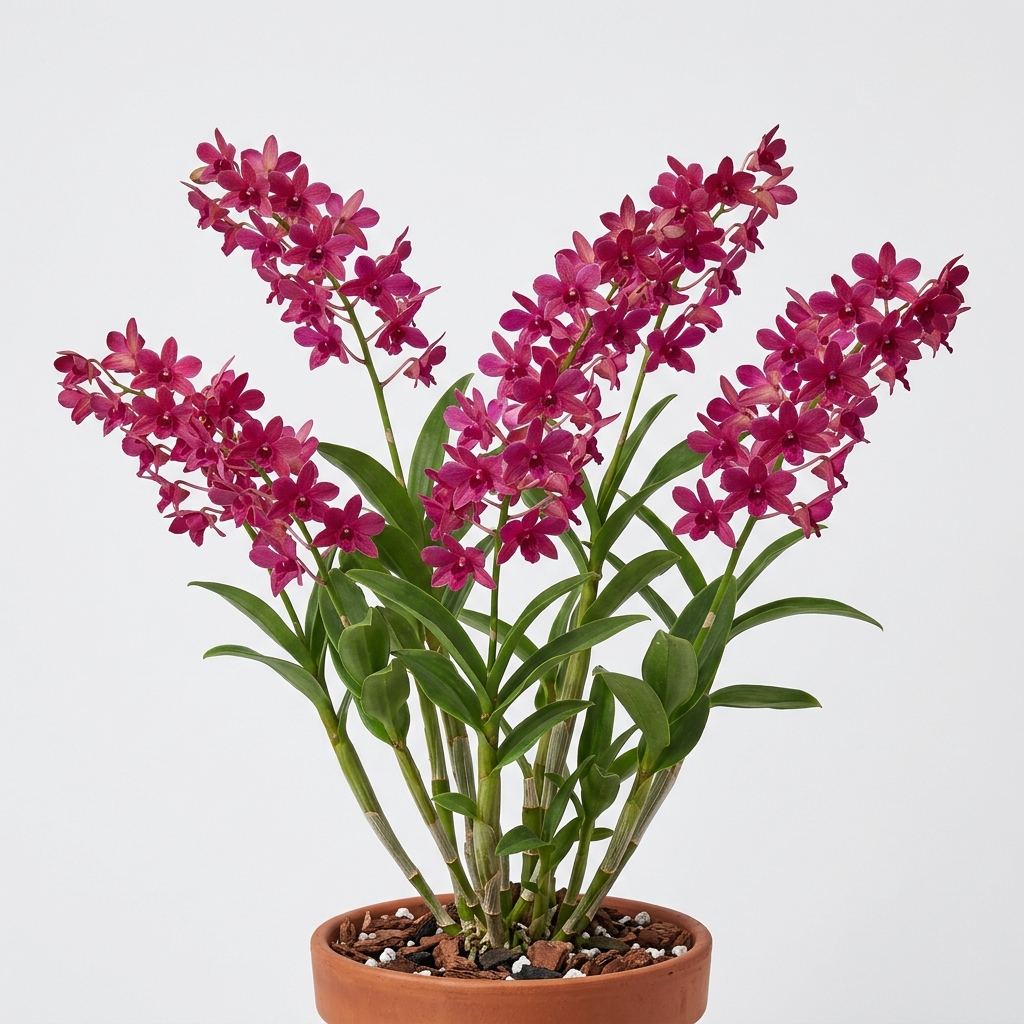
Dendrobium Berry Oda is a highly popular, floriferous cool-growing orchid hybrid celebrated for its compact growth habit and profuse displays of vibrant reddish-purple blooms. Derived primarily from Australian native Dendrobium species, this cultivar has earned a stellar reputation among both novice and experienced orchid enthusiasts for its exceptional vigor and forgiving nature. Its ability to produce multiple flower spikes from a single pseudobulb makes it a standout selection for indoor windowsills and temperate greenhouses alike.
Beyond its striking visual appeal, this orchid is highly sought after for its sweet, honey-like fragrance that fills growing spaces during its peak blooming period. Unlike many delicate tropical orchids, Dendrobium Berry Oda shows a robust tolerance for temperature fluctuations and lower humidity levels, making it an excellent entry point for those looking to expand their collection beyond the ubiquitous moth orchid. With proper seasonal care, this resilient cultivar rewards growers with a spectacular annual show of long-lasting flowers.
💡 Did You Know?
Dendrobium Berry Oda is highly prolific at producing keikis—genetically identical baby plants that grow directly from the nodes of mature canes. If these aerial offsets develop roots that are a few inches long, they can be gently detached and potted up to easily expand your collection or share with fellow growers.
🌿 Botanical Overview
Dendrobium Berry Oda is a sympodial epiphytic orchid characterized by its upright, cane-like pseudobulbs. These slender, tough canes taper slightly toward the base and are topped with several lanceolate, leathery dark green leaves that persist for multiple seasons. The plant tends to form dense, multi-leaded clumps over time, creating a full and bushy specimen even when not in flower.
The growth cycle of this cultivar is highly seasonal, closely mirroring the climate patterns of its ancestral species. During the spring and summer months, the orchid focuses its energy on producing vigorous new canes from the base of older pseudobulbs. In the autumn, growth slows down as the plant prepares for its winter rest, a crucial physiological phase that triggers the development of flower buds along the upper nodes of the mature canes.
🌸 Flower Characteristics
The flowers of Dendrobium Berry Oda are relatively small, typically measuring between one to two centimeters in diameter, but they make up for their size with sheer quantity. Each mature cane can produce multiple arching flower spikes, with each inflorescence carrying up to a dozen or more blossoms. The petals and sepals display a rich, saturated magenta or deep pink hue, which contrasts beautifully against the lighter, sometimes white-flushed throat of the labellum.
The lip, or labellum, is three-lobed and features subtle darker veining that guides pollinators toward the center of the flower. The overall presentation is incredibly dense, often creating a cloud-like effect of pink blossoms that can almost completely obscure the foliage beneath. The individual flowers are remarkably long-lasting, frequently remaining fresh on the plant for six to eight weeks under optimal conditions.
Fragrance & Bloom Profile
One of the most defining characteristics of Dendrobium Berry Oda is its intense and delightful fragrance. On warm, sunny mornings, the blossoms emit a sweet, honey-like scent with subtle spicy undertones. This fragrance is highly pronounced and can easily perfume an entire room, making it a favorite choice for indoor growers who appreciate aromatic houseplants.
The fragrance production is closely tied to light and temperature, peaking during the middle of the day when light levels are highest and fading as evening approaches. The bloom profile is highly reliable, with mature, healthy plants consistently producing a heavy flush of flowers year after year, provided they receive the necessary environmental cues during their dormant period.
Parentage & Hybrid Lineage
While the exact hybridizer and registration details are sometimes subject to minor variations in commercial trade, Dendrobium Berry Oda is widely recognized as a hybrid involving Dendrobium Kingianum and Dendrobium Mini Pearl. This lineage infuses the cultivar with the cold-hardiness and compact stature of Dendrobium kingianum, alongside the floriferousness of its other ancestral influences.
Because of this robust genetic background, the cultivar shows hybrid vigor, meaning it is significantly easier to grow and bloom than many of its parent species. It is highly adaptable to typical home environments, inheriting a natural resistance to minor care discrepancies that would otherwise stress more delicate, species-specific orchids.
🌱 Growing Conditions
To thrive, Dendrobium Berry Oda requires bright, indirect light. A spot near an east- or semi-shaded south-facing window is ideal, where it can receive gentle morning sun while being protected from harsh, scorching afternoon rays. If the leaves turn a very dark green, the plant may not be receiving enough light to trigger future blooms; conversely, a slight purple tint on the foliage indicates the upper limit of acceptable light exposure.
💡 Care Tip
Always place your Dendrobium Berry Oda in a location with excellent air movement. Gentle, continuous airflow mimics its natural cliff-side and tree-canopy habitats, helping to dry excess moisture on the leaves and preventing fungal infections.
Temperature management is key to successful cultivation. During the active growing season in spring and summer, the orchid enjoys warm temperatures between 20°C and 28°C (68°F to 82°F). However, to initiate flower buds, the plant absolutely requires a cool winter rest period with night temperatures dropping to around 10°C to 14°C (50°F to 57°F) for several weeks. Adequate air circulation is also vital to prevent stagnant air pockets around the dense foliage.
Watering, Feeding & Potting Media
Watering practices must change dramatically between the growing and resting seasons. Throughout the spring and summer, when new canes and roots are actively developing, the orchid should be watered thoroughly as soon as the potting medium approaches dryness. During this active phase, a balanced orchid fertilizer diluted to quarter-strength should be applied every second or third watering to support the rapid vegetative growth.
As autumn transitions into winter, watering must be severely curtailed. The plant should only receive enough water to prevent the pseudobulbs from shriveling excessively. Potting media should be highly porous and fast-draining; a mixture of medium-grade fir bark, horticultural charcoal, and perlite works exceptionally well. Clay pots are often preferred for this cultivar as they allow the roots to breathe and provide weight to prevent the top-heavy canes from tipping over.
Blooming Season & Care Notes
The primary blooming season for Dendrobium Berry Oda spans from late winter through early spring, though well-established plants can occasionally produce sporadic blooms at other times of the year. Once the flower spikes begin to emerge from the upper nodes of the canes, growers should maintain stable environmental conditions and avoid moving the plant to a location with drastically different light or temperature levels.
After the flowers have completely faded, the old flower spikes can be cut back to the cane. It is important to note that the old canes should never be removed unless they are completely dry, yellow, and dead, as they store vital water and nutrients that sustain new growth. Repotting is best done immediately after the spring flowering cycle ends, just as new roots begin to emerge from the base of the new leads.
⚠️ Common Issues
⚠️ Common Mistake
The most common mistake is this orchid normally throughout the winter. Without a dry, cool winter rest, the plant will produce leafy offsets called keikis instead of the highly anticipated fragrant flower spikes.
- Shriveled Canes: Often caused by underwatering during the active summer growth phase, or conversely, root rot from overwatering in winter which prevents the plant from absorbing moisture.
- Lack of Blooms: Usually the result of insufficient light during the summer or a failure to provide a distinct cool, dry winter rest period.
- Bud Blast:
The sudden yellowing and dropping of flower buds before they open, typically triggered by sudden temperature drops, drafts, or low humidity. - Scale and Mealybugs: Common pests that hide in the tight crevices between the leaves and the canes; treat promptly with insecticidal soap or horticultural oil.
- Leaf Spotting: Fungal or bacterial spots can develop if water is allowed to sit on the foliage overnight without adequate air movement.
❓ Frequently Asked Questions
How do I trigger my Dendrobium Berry Oda to bloom?
To trigger blooming, you must provide a distinct cool, dry rest period in late autumn and winter. Reduce watering significantly and expose the plant to night temperatures between 10°C and 14°C (50°F to 57°F) for six to eight weeks, while maintaining bright light conditions.
Why is my orchid producing small plants on the canes instead of flowers?
These small plants are called keikis. Dendrobium Berry Oda commonly produces keikis if it is watered too heavily during its winter rest period or if it receives excessive nitrogen fertilizer during the late summer and autumn when it should be transitioning to dormancy.
How often should I repot Dendrobium Berry Oda?
This cultivar prefers to be slightly root-bound and does not like frequent root disturbance. Repot only every two to three years, or when the potting medium begins to break down and lose its drainage properties. Always repot in spring after the flowering cycle is complete.
Can I grow this orchid under artificial LED lights?
Yes, Dendrobium Berry Oda adapts very well to indoor growing under high-output LED grow lights. Ensure the lights are positioned close enough to provide bright, indirect intensity, and maintain a consistent day-night cycle that mimics natural seasonal changes.
⭐ Final Growing Notes
Dendrobium Berry Oda remains one of the most rewarding and resilient orchids available to modern growers. Its stunning, cloud-like display of fragrant magenta flowers, combined with its compact growth habit and ease of care, makes it an indispensable addition to any indoor plant collection. By simply respecting its need for a cool, dry winter rest, you can enjoy its spectacular sweet-scented blooms year after year.
🌱 Propagation Tip
To propagate, wait until a keiki has developed at least three or four healthy roots that are at least two inches long. Gently twist the baby plant off the parent cane and pot it in a small container with fine-grade orchid bark.
⭐ Expert Advice
When repotting, choose a pot that seems slightly too small. Dendrobium Berry Oda thrives when its roots are snug and tightly packed, which also helps the potting medium dry out quickly and prevents root rot.




Leave A Comment