
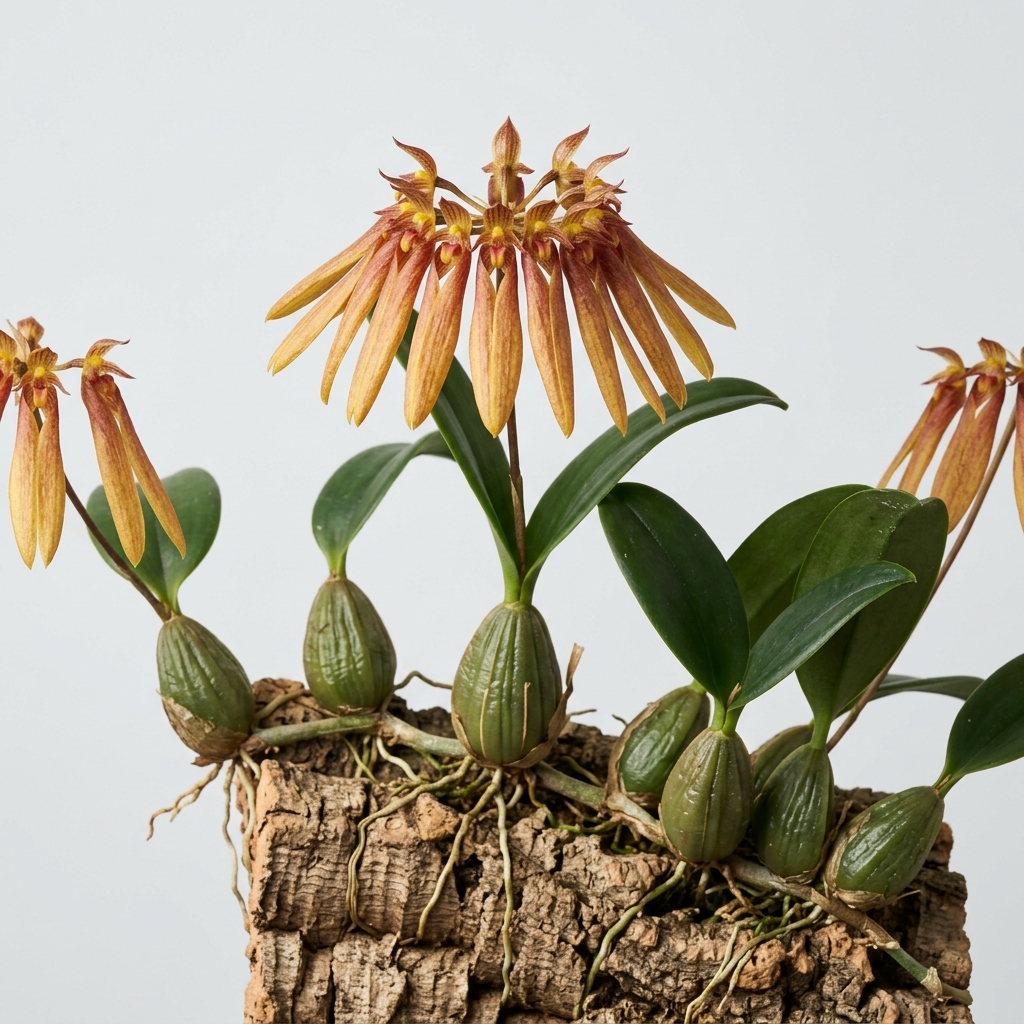
Bulbophyllum Mastersianum is a captivating epiphytic orchid highly prized by collectors for its spectacular, fan-like floral arrangements. Native to the tropical forest canopies of the Moluccas, this species showcases the unique evolutionary adaptations of the Bulbophyllum genus, particularly its intricate pollination mechanisms. Growers value this orchid for its architectural growth habit and the dramatic presentation of its blossoms, which command attention in any specialized collection.
Cultivating this orchid successfully requires an understanding of its native forest canopy habitat, where it thrives in high humidity and dappled light. While it presents a rewarding challenge for intermediate orchid enthusiasts, its specific moisture and temperature requirements demand consistent attention. When provided with the proper care, Bulbophyllum Mastersianum rewards growers with reliable seasonal displays of its distinctive, umbrella-like flower clusters.
💡 Did You Know?
Bulbophyllum Mastersianum is part of the Bulbophyllum orchid group, a favorite among growers because its flowers, growth habit, and care needs make it useful for comparing cultivated orchids within the same . Observing its leaves, roots, and bloom spikes can help growers understand how this cultivar responds to indoor conditions.
🌿 Botanical Overview
Bulbophyllum Mastersianum is characterized by its creeping rhizome growth habit, which produces distinct, egg-shaped pseudobulbs spaced along the rhizome. Each pseudobulb supports a single, leathery, dark green leaf that is oblong and persistent. This vegetative structure allows the plant to store moisture and nutrients, helping it survive brief fluctuations in environmental conditions in its native canopy.
The root system of this orchid is relatively fine and shallow, adapted for clinging to mossy tree branches rather than anchoring deep into soil. This growth habit makes the plant exceptionally well-suited for mount cultivation or shallow basket culture, where the roots can receive excellent aeration while remaining surrounded by a humid microclimate.
🌸 Flower Characteristics
The defining feature of Bulbophyllum Mastersianum is its inflorescence, which typically arises from the base of the pseudobulb. The flowers are arranged in a distinctive umbel, forming a semi-circular fan or umbrella shape at the apex of a slender, arching peduncle. Each fan can contain up to ten or more individual flowers, creating a highly symmetrical and striking visual display.
Individual flowers feature elongated lateral sepals that fuse together, forming a prominent, downward-pointing shield or apron that dominates the blossom’s appearance. The dorsal sepal and petals are much smaller, often forming a hood over the column. The lip, or labellum, is small, fleshy, and highly mobile, designed to pivot with the slightest breeze or insect movement to facilitate pollination.
Fragrance & Bloom Profile
The fragrance of Bulbophyllum Mastersianum is not as intensely unpleasant as some of its relatives in the genus, but it is also not traditionally sweet. Growers frequently describe the scent as faint, with slightly musty, earthy, or subtly fruity undertones that are typically only noticeable in close proximity to the freshly opened flowers.
The blooms generally last for two to three weeks, depending on environmental conditions such as temperature and humidity. Cooler temperatures and stable moisture levels can help prolong the life of the inflorescence, while excessive heat or dry air may cause the flowers to fade prematurely.
Parentage & Hybrid Lineage
Bulbophyllum Mastersianum is a naturally occurring species rather than a man-made hybrid. In orchid literature, it is classified within the section Cirrhopetalum, a group famous for its fan-shaped flower arrangements. While it has been used occasionally in hybridizing programs to introduce its unique color palette and compact fan structure to new grexes, primary hybrids involving this species remain relatively uncommon and are highly sought after by specialists.
🌱 Growing Conditions
To cultivate Bulbophyllum Mastersianum successfully, growers should aim to replicate its warm, humid forest habitat. It thrives in intermediate to warm temperatures, ideally ranging from 65 degrees Fahrenheit to 85 degrees Fahrenheit (18 degrees Celsius to 29 degrees Celsius) during the day, with a slight drop at night to stimulate healthy growth and eventual blooming.
💡 Care Tip
For best results, grow Bulbophyllum Mastersianum in bright filtered with steady and gentle airflow. Avoid placing the plant in harsh midday sun, but do not keep it in a dark corner; weak is one of the most common reasons cultivated orchids refuse to rebloom.
Light levels should be kept in the medium, filtered range, similar to the conditions preferred by Phalaenopsis orchids. Direct, unfiltered sunlight will quickly scorch the leaves, while excessive shade may result in weak, elongated growth and a failure to produce flowers. High humidity of 70% to 80% is critical, accompanied by constant, gentle air movement to prevent fungal pathogens from settling on the foliage.
Watering, Feeding & Potting Media
This orchid does not possess large pseudobulbs for long-term water storage, meaning it requires consistent moisture throughout the year. The potting medium should never be allowed to dry out completely. Watering frequency must be adjusted based on the growing medium and environment, ensuring the roots remain damp but never waterlogged.
A high-quality New Zealand sphagnum moss or a fine-grade orchid bark mix works well in shallow pots or baskets. Alternatively, mounting the plant on a cork slab with a pad of moss around the roots is highly effective, provided the grower can maintain the necessary daily watering schedule. Feed the plant weekly with a highly diluted, balanced orchid fertilizer during the active growing season, flushing the medium regularly with pure water to prevent salt buildup.
Blooming Season & Care Notes
Bulbophyllum Mastersianum typically produces its main flush of flowers during the spring and summer months, though occasional blooms can occur at other times of the year if growing conditions remain stable. As the new pseudobulbs mature, keep a close watch on their bases for the emergence of slender flower spikes.
Once the flowering cycle is complete, the old spikes can be cut back near the base of the pseudobulb. Repotting or dividing should ideally be performed in the spring, just as new root growth begins to emerge from the base of the newest pseudobulbs. Minimize root disturbance during this process, as Bulbophyllum species can be sensitive to repotting stress.
⚠️ Common Issues
⚠️ Common Mistake
The most common mistake is by calendar instead of root and potting-media condition. Bulbophyllum roots need moisture and air at the same time, so constantly wet bark or sphagnum can lead to root loss even when the leaves still look healthy.
- Root rot: Caused by compacted, poorly draining media or overwatering, leading to pseudobulb decline.
- Leaf spotting: Often a result of water droplets remaining on the foliage overnight in stagnant air.
- Bud blast: Premature dropping of flower buds due to sudden drops in humidity or rapid temperature fluctuations.
- Dehydration: Indicated by shriveled pseudobulbs and wrinkled leaves, usually caused by underwatering or a damaged root system.
- Pests: Mealybugs and spider mites can occasionally hide in the crevices of the pseudobulbs and under leaves.
❓ Frequently Asked Questions
Why are the pseudobulbs on my Bulbophyllum Mastersianum shriveling?
Shriveled pseudobulbs typically indicate dehydration, which can be caused by underwatering or, conversely, root rot from overwatering. If the roots have rotted, the plant can no longer absorb moisture. Check the root system; if roots are healthy, increase watering frequency and humidity.
Can I grow Bulbophyllum Mastersianum under LED grow lights?
Yes, this orchid adapts well to indoor cultivation under LED grow lights. Position the plant where it receives moderate light intensity, ensuring the lights are kept at a safe distance to prevent leaf scorch, and maintain high ambient humidity around the growing area.
How often should I repot this orchid?
Repotting should generally be done every two years, or when the potting medium begins to break down and lose its structure. It is best to repot in the spring when new root growth is active, taking care to disturb the delicate root system as little as possible.
Why is my Bulbophyllum Mastersianum not blooming?
The most common reasons for a lack of flowers are insufficient light and inadequate humidity. Ensure the plant receives bright, filtered light and that humidity levels remain consistently high. A slight drop in night temperatures during the winter can also help trigger bud initiation.
⭐ Final Growing Notes
While Bulbophyllum Mastersianum requires a dedicated commitment to maintaining high humidity and consistent moisture, its spectacular fan-shaped blooms make it an incredibly rewarding addition to any orchid collection. By focusing on excellent air circulation, moderate light, and a stable environment, growers can enjoy the unique architectural beauty of this remarkable tropical species for many years.
⚕️ Health, Safety & Edibility
Understanding how a plant interacts with people, pets, and the surrounding environment is part of responsible cultivation. This section uses conservative, general guidance and does not replace professional medical or veterinary advice.
Human Safety: Bulbophyllum Mastersianum is generally considered low risk during normal handling,.
Pet Safety: keep plant material away from curious cats, dogs, and other pets to avoid accidental.
Edibility: treat this orchid as ornamental and not intended for consumption unless edibility is.
Skin Contact: significant irritation is not commonly reported, but sensitive.
🌱 Propagation Tip
Propagation should be approached patiently. Most home growers should wait for natural keikis or divide only mature, healthy plants when the orchid type allows it. Never remove a young growth until it has strong roots and enough leaves to support itself away from the parent plant.
⭐ Expert Advice
Repot after flowering when fresh root tips begin to appear. This timing helps the plant anchor quickly into new bark or sphagnum and reduces stress, especially for orchids grown indoors where airflow, , and drying speed can change from season to season.




Leave A Comment