
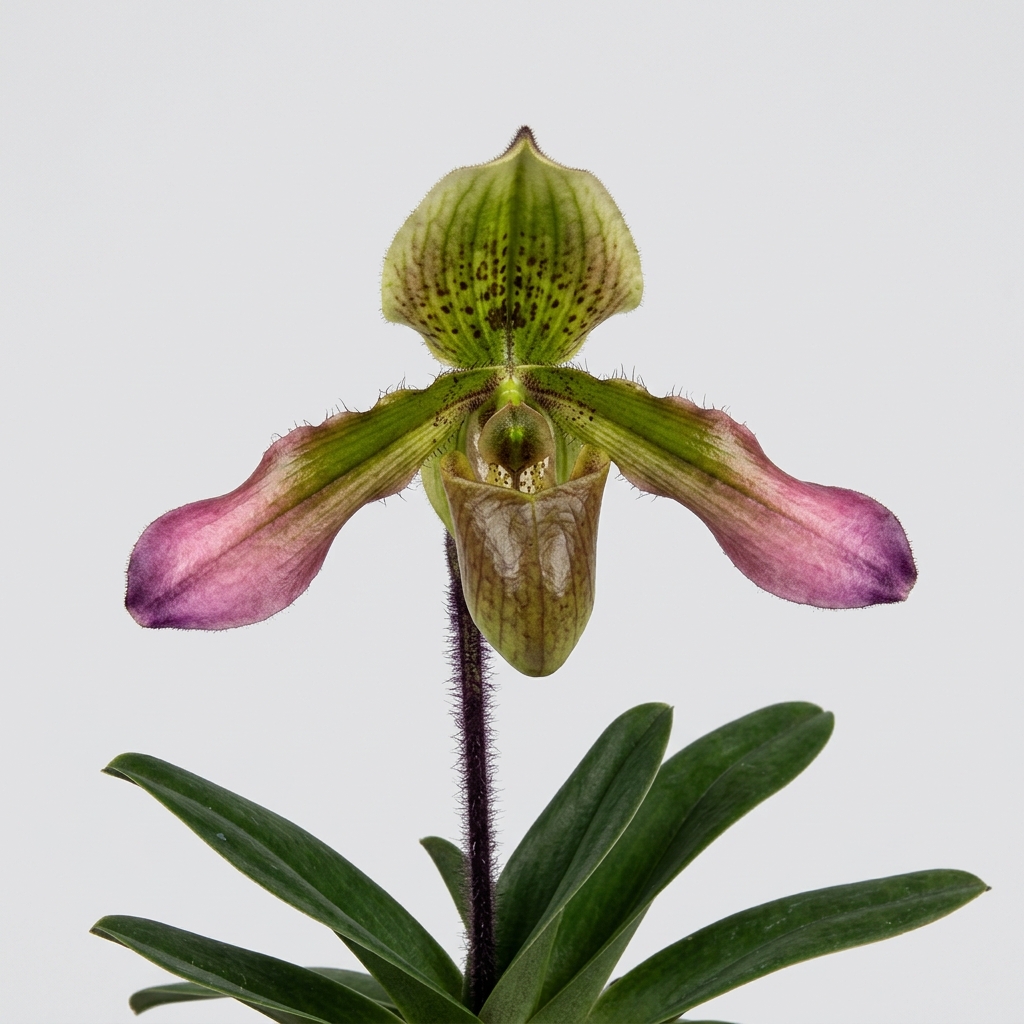
Paphiopedilum Hirsutissimum, commonly referred to as the hairy lady’s slipper orchid, is a highly distinctive species celebrated for its dramatic, long-lasting blooms and unusual textures. Unlike many smooth-stemmed orchids, this plant features flower stalks, ovaries, and outer sepals covered in a dense coat of dark, velvety hairs. Orchid enthusiasts highly value this species for its exotic architectural form and the striking color gradient of its petals, which transition beautifully from a rich green base to vibrant shades of rose-pink and violet.
Native to the mountainous regions of India, China, Myanmar, and Vietnam, this orchid grows primarily as a terrestrial or lithophytic plant on mossy limestone cliffs. In cultivation, it presents a rewarding challenge for indoor growers and greenhouse hobbyists alike. By replicating its natural preference for intermediate temperatures, high humidity, and shaded light, growers can enjoy its spectacular spring blooms year after year.
💡 Did You Know?
The species name hirsutissimum literally translates to most hairy in Latin. This refers to the dense coat of dark purple-black hairs that covers the flower stalks, ovaries, and the backs of the sepals, a unique botanical adaptation that helps retain micro-moisture and deter crawling pests in its native limestone cliff habitats.
🌿 Botanical Overview
Paphiopedilum Hirsutissimum is a moderate-sized, humicolous or lithophytic orchid characterized by its fan-shaped growth habit. It lacks pseudobulbs, relying instead on its thick, leathery, strap-like leaves to store moisture and nutrients. The leaves are solid green, lacking the mottled patterns found in some other slipper orchid species, and can grow up to twelve inches in length. This uniform green foliage serves as an elegant backdrop for the dramatic flowers that emerge from the center of mature growth fans.
In its native habitat, this orchid is typically found growing in pockets of organic debris, leaf litter, and moss on steep limestone cliffs or rocky slopes. These environments provide excellent drainage while maintaining constant moisture around the root system. The species is well-adapted to seasonal shifts, experiencing wet, humid summers followed by cooler, drier winters, which play a critical role in its annual growth and flowering cycle.
🌸 Flower Characteristics
The blossoms of Paphiopedilum Hirsutissimum are among the most visually striking in the genus. Each mature growth fan produces a single, large flower on an upright, heavily pubescent stem that can reach up to ten inches tall. The flower itself can measure four to six inches across, presenting a bold, horizontal display. The dorsal sepal is broadly ovate, featuring a dark green or brownish-black center with a pale green border, often covered in fine, dark hairs on the reverse side.
The petals are the most dramatic feature of the bloom. They are long, spreading horizontally, and exhibit a distinct twist with heavily ruffled or undulating margins. The basal half of each petal is green with dark spots, while the outer half expands into a spatulate shape colored in rich rose-pink, magenta, or violet. The pouch, or labellum, is helmet-shaped, dull green to brownish-pink, and covered in tiny, dark spots, completing a highly complex and captivating floral presentation.
Fragrance & Bloom Profile
This species is generally considered unscented. While some growers occasionally report a faint, earthy aroma under warm, humid conditions, fragrance is not a primary characteristic of Paphiopedilum Hirsutissimum. Instead, the plant invests its energy into producing exceptionally long-lasting flowers. A single bloom can remain pristine on the plant for six to eight weeks, provided the growing environment remains stable and free of extreme temperature fluctuations.
Parentage & Hybrid Lineage
Paphiopedilum Hirsutissimum is a naturally occurring species rather than an artificial hybrid. Because of its unique ruffled petals, intense pink-violet coloration, and distinctive hairy texture, it has been used extensively by orchid breeders to create complex slipper orchid hybrids. When crossed with other species, it frequently passes down its robust petal width, wavy margins, and cold tolerance. In classic orchid literature, several varieties of this species are recognized, such as variety esquirolei, which typically originates from slightly warmer, lower-elevation habitats and shows minor variations in petal coloration and hair density.
🌱 Growing Conditions
To cultivate this orchid successfully, growers should aim to replicate the dappled light of its native forest canopies. It thrives in bright, indirect light, such as that provided by an east-facing window or a shaded south-facing window. Direct afternoon sunlight must be avoided, as it can easily scorch the solid green leaves. If growing under artificial lights, intermediate light levels are ideal.
💡 Care Tip
Always water this orchid early in the morning and avoid getting water trapped in the center of the leaf fan or on the hairy flower buds, as standing water in these areas quickly leads to bacterial rot.
Temperature management is crucial for this species. It prefers intermediate daytime temperatures between 70°F and 80°F, with a distinct drop at night to around 55°F to 60°F. Good air circulation is essential at all times to prevent stagnant air from settling around the dense, hairy surfaces of the plant, which can otherwise invite fungal pathogens.
Watering, Feeding & Potting Media
Unlike orchids with water-storing pseudobulbs, Paphiopedilum Hirsutissimum should never be allowed to dry out completely. The potting medium should remain evenly moist but never waterlogged. Water the plant thoroughly when the top half-inch of the medium begins to feel dry to the touch. Use rainwater, distilled water, or reverse osmosis water whenever possible, as slipper orchids are sensitive to dissolved salts and chlorine in tap water.
A well-draining, moisture-retentive potting mix is essential. A combination of fine-grade fir bark, perlite, charcoal, and a small amount of chopped sphagnum moss works exceptionally well. Because this species naturally grows on limestone, many growers find that adding a small amount of oyster shells or dolomite lime to the mix helps maintain the slightly alkaline to neutral pH that the roots prefer. Feed the plant weekly with a highly diluted, balanced orchid fertilizer, applying it at one-quarter strength, and flush the pot with pure water once a month to prevent salt buildup.
Blooming Season & Care Notes
The primary blooming season for Paphiopedilum Hirsutissimum is spring. The flower bud begins to emerge from the center of the newest leaf fan during the late winter months. To ensure successful bud development, maintain high humidity and avoid moving the plant to a new location with different light or temperature levels, as sudden environmental changes can cause the bud to blast.
Once the flower has completely faded and the stem begins to turn brown, cut the flower spike down to the base of the leaves using sterile pruning shears. Repotting should be performed every one to two years, ideally in the late spring or early summer immediately after the flowering cycle has finished. This timing allows the plant to establish new roots in fresh media before the winter rest period begins.
⚠️ Common Issues
⚠️ Common Mistake
A common mistake is allowing the potting medium to dry out completely between waterings. Unlike orchids with pseudobulbs, slipper orchids lack water-storage organs and will quickly suffer root damage if left dry.
- Root Rot:
Caused by overwatering or compacted potting media that prevents oxygen from reaching the roots. Affected plants will show limp, pleating leaves. - Bud Blast:
The premature drying and dropping of flower buds, often triggered by sudden drafts, low humidity, or water droplets sitting on the developing bud. - Leaf Spotting: Fungal or bacterial spots can develop on the leaves if water is allowed to sit in the crown of the plant overnight. Always water in the morning.
- Mealybugs and Scale: These pests enjoy hiding in the tight crevices at the base of the leaf fans. Treat infestations early with insecticidal soap or a cotton swab dipped in rubbing alcohol.
- Fungal Stem Rot: Due to the hairy nature of the flower spike, excess moisture trapped on the stem can lead to localized rot. Ensure excellent air movement to keep the stem dry.
❓ Frequently Asked Questions
Why are the flower stems of my Paphiopedilum Hirsutissimum covered in dark fuzz?
The dark, dense hairs on the flower stems, ovaries, and sepals are a natural botanical feature of this species. The Latin name “hirsutissimum” translates to “most hairy,” referencing this unique physical characteristic. It is not a sign of disease or pest activity.
How do I trigger my orchid to bloom in the spring?
To initiate bud development, provide a distinct cooling period in the late autumn and early winter. Lowering the night temperatures to around 50°F to 55°F for several weeks, combined with a slight reduction in watering, mimics its natural seasonal cycle and stimulates flower spikes.
What is the best potting mix for this slipper orchid?
A mix of fine fir bark, perlite, and charcoal provides the ideal balance of moisture retention and drainage. Adding a small handful of calcium chips or crushed oyster shells helps replicate the alkaline limestone environments of its native habitat.
Can I grow Paphiopedilum Hirsutissimum under LED grow lights?
Yes, this species adapts well to LED grow lights. Position the plant at a distance where it receives moderate, diffused light, and monitor the leaves; if they begin to turn pale yellow, decrease the light intensity or move the plant further from the source.
⭐ Final Growing Notes
Paphiopedilum Hirsutissimum stands out as an exceptional addition to any orchid collection, offering a dramatic combination of ruffled, color-blocked petals and fascinating hairy textures. While it requires consistent moisture and a dedicated seasonal temperature drop to perform its best, its long-lasting spring blooms make the effort highly rewarding. By providing bright indirect light, excellent air movement, and a well-draining calcareous mix, growers can enjoy the prehistoric beauty of this remarkable slipper orchid for decades.
⚕️ Health, Safety & Edibility
Understanding how a plant interacts with people, pets, and the surrounding environment is part of responsible cultivation. This section uses conservative, general guidance and does not replace professional medical or veterinary advice.
Human Safety: No published evidence currently identifies species-specific toxicity concerns for Paphiopedilum Hirsutissimum during normal handling. As with most ornamental plants, it should not be intentionally consumed.
Pet Safety: Published information does not indicate that this orchid commonly poses a toxicity concern for cats or dogs. However, chewing leaves, flowers, roots, or potting media may still cause mild digestive upset.
Edibility: This orchid is cultivated for ornamental display rather than food. Ornamental plants may carry fertilizers, pesticides, or other horticultural treatments that make them unsuitable for consumption.
Skin Contact: Routine handling is not generally associated with skin irritation. Gardeners with sensitive skin may prefer wearing gloves when repotting, pruning, or handling potting media.
🌱 Propagation Tip
This orchid is propagated by division. Only divide mature specimens during repotting when the plant has at least six to eight healthy fans, ensuring each new division retains at least three active fans and a strong root system.
⭐ Expert Advice
To ensure reliable spring blooms, provide a distinct drop in night temperatures down to 50 to 55 degrees Fahrenheit for four to six weeks in late autumn, while slightly reducing water and withholding fertilizer.




Leave A Comment