
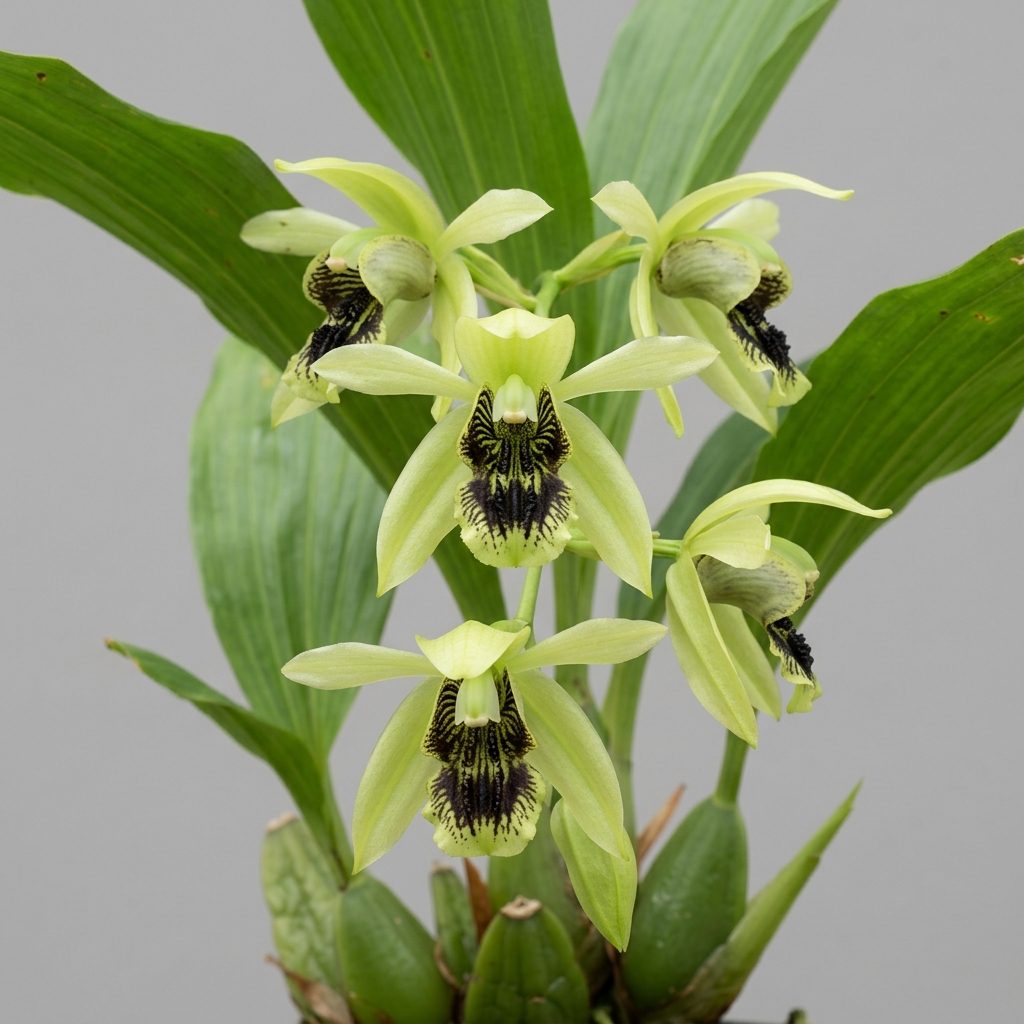
Coelogyne Pandurata, commonly known as the black orchid, is a striking epiphytic species highly prized by collectors for its dramatic and unusual color contrast. Native to the primary rainforests of Southeast Asia, particularly Borneo, this orchid is celebrated for its large, fragrant blooms that feature pale green to yellowish-green petals offset by a highly detailed, jet-black marked lip. Its robust growth habit and exotic presentation make it a centerpiece in any intermediate to warm greenhouse collection.
As a sympodial orchid, Coelogyne Pandurata produces large, compressed pseudobulbs spaced along a creeping rhizome, which requires ample space to spread. While its size can be challenging for growers with limited space, its spectacular pendulous inflorescences reward proper care with a breathtaking display. Understanding its specific environmental needs is key to successfully cultivating this magnificent species and encouraging regular blooming cycles.
💡 Did You Know?
The striking black markings on the lip of Coelogyne Pandurata are not actually black pigment, but rather an incredibly dense concentration of deep purplish-brown anthocyanins. This intense coloration acts as a highly effective visual guide for native pollinators, directing them straight to the center of the flower in the dim of the tropical rainforest canopy.
🌿 Botanical Overview
Coelogyne Pandurata is a vigorous, large-statured orchid species that naturally grows as an epiphyte on trees or occasionally as a lithophyte on mossy rocks in hot, lowland swamp forests. It is characterized by its prominent, shiny, oblong-ovate pseudobulbs that are significantly flattened or compressed. These pseudobulbs are spaced relatively far apart along a stout, creeping rhizome, giving the plant a sprawling growth habit that quickly outgrows standard pots.
Each pseudobulb bears two large, pleated, leathery leaves that can reach up to twenty inches in length. The foliage is rich green and durable, providing a lush backdrop even when the plant is not in flower. Because of its wide-spreading rhizome, mature specimens develop into impressive, wide-reaching clumps that require specialized containment, such as long baskets or shallow teak rafts, to accommodate their natural growth pattern.
🌸 Flower Characteristics
The flowers of Coelogyne Pandurata are among the most distinctive in the orchid world, measuring up to four inches across. The sepals and petals are a clean, pale apple-green or chartreuse color, spreading wide to frame the central structure. The defining feature is the violin-shaped lip, from which the species derives its name pandurata, meaning violin-shaped.
This lip is adorned with striking, raised black veins, warts, and ridges that contrast vividly against the green background. The dramatic black pigmentation is rare among orchids, making each bloom a masterpiece of natural graphic design. The flowers are produced on arching or pendulous spikes that emerge from the center of new growths, carrying up to fifteen blooms that open nearly simultaneously for a highly coordinated display.
Fragrance & Bloom Profile
The blooms of Coelogyne Pandurata are highly fragrant, emitting a rich, sweet scent that many growers compare to warm honey or spicy perfume. This fragrance is most intense during the morning hours when temperatures begin to rise, filling an entire growing space with its sweet aroma.
Individual flowers typically last between one and two weeks, depending on environmental conditions. While the bloom duration is relatively short compared to some other orchid genera, the sheer volume of flowers on a single mature specimen can create an unforgettable sensory experience. Keeping the plant in a cool, draft-free location once the buds open can help prolong the lifespan of the delicate green petals.
Parentage & Hybrid Lineage
Unlike many modern orchid cultivars, Coelogyne Pandurata is a naturally occurring species rather than a man-made hybrid. It was first described in the mid-nineteenth century and has since been used as a parent in several notable primary hybrids. The most famous of these is Coelogyne Burfordiense, a cross between Coelogyne Pandurata and Coelogyne asperata, which inherits the green-and-black color scheme but often shows a more compact growth habit.
Because wild populations are protected under international conservation laws, reputable growers obtain plants propagated through tissue culture or seed flasking. When purchasing this orchid, ensuring it comes from a documented, nursery-grown source helps protect the fragile ecosystems of its native habitats in Borneo, Sumatra, and the Malay Peninsula.
🌱 Growing Conditions
To cultivate Coelogyne Pandurata successfully, growers must replicate its native warm, humid lowland environment. It thrives in warm to intermediate temperatures, ideally ranging from 75°F to 85°F during the day, with a mild drop to 65°F to 70°F at night. It does not tolerate cold drafts or temperatures dropping below 55°F, which can cause severe leaf spotting or systemic decline.
💡 Care Tip
To accommodate the sprawling rhizome of this species without constant repotting, try using a long, narrow teak basket. As the plant grows, you can easily attach additional basket sections or mount extensions to the front of the active lead, allowing the roots to colonize new surfaces without disturbing the established core.
Light levels should be bright but strictly indirect. In its native canopy, it receives dappled sunlight; therefore, a shaded greenhouse or an east- or shaded south-facing window is ideal. High humidity is crucial, ideally maintained between 60% and 80%. Excellent air movement must accompany this high humidity to prevent fungal pathogens from establishing on the large, pleated leaves.
Watering, Feeding & Potting Media
During the active growing season in spring and summer, Coelogyne Pandurata requires abundant water. The potting medium should remain consistently moist but never waterlogged. As new pseudobulbs mature in autumn, watering can be gradually reduced, allowing the medium to dry out slightly between waterings, though the plant should never be allowed to shrivel completely.
A balanced, water-soluble orchid fertilizer applied at quarter-strength every two weeks during active growth supports the rapid development of its large pseudobulbs. Because of its rambling rhizome, standard plastic pots are rarely suitable. Instead, use wide, shallow wooden baskets, cork mounts, or long plastic bulb pans filled with a highly draining, moisture-retentive medium such as coarse fir bark mixed with tree fern fiber and sphagnum moss.
Blooming Season & Care Notes
The primary blooming season for Coelogyne Pandurata occurs in late spring and summer, coinciding with the peak of its vegetative growth cycle. The flower spike emerges from the center of developing new leads before the pseudobulb has fully formed. It is critical not to let water pool in the emerging growth during this stage, as the tender flower buds are highly susceptible to rot.
Once blooming is complete, avoid cutting the flower spike until it has turned completely brown and dry. Repotting or dividing should only be performed immediately after flowering, just as new roots begin to emerge from the base of the newest pseudobulb. This timing ensures the plant establishes quickly in its new medium with minimal transplant shock.
⚠️ Common Issues
⚠️ Common Mistake
A frequent error is treating this warm-growing species to a cold winter rest. Unlike some other Coelogyne species that require cool temperatures to initiate blooms, Coelogyne Pandurata is strictly a warm-to-intermediate grower. Dropping temperatures below 55°F can severely damage the foliage and stunt future growth.
- Root Rot:
Caused by compacted, poorly draining media or overwatering during the cooler winter rest period. - Leaf Spotting: Fungal or bacterial spots can develop rapidly on the large leaves if humidity is high but air circulation is stagnant.
- Bud Blast:
Sudden drops in humidity or temperature fluctuations can cause developing flower buds to yellow and drop prematurely. - Dehydration:
Shriveled pseudobulbs and accordion-like pleating on new leaves indicate insufficient watering or a compromised root system. - Pests:
Mealybugs and spider mites occasionally hide in the deep crevices of the pleated leaves and under the dry sheaths of the pseudobulbs.
❓ Frequently Asked Questions
How do I mount Coelogyne Pandurata?
Mounting is highly successful due to the plant’s rambling rhizome. Secure the plant firmly to a large cork bark slab or tree fern plaque using monofilament line, placing a pad of high-quality sphagnum moss around the roots to retain moisture. Mounted plants require daily watering and high humidity to thrive.
Why are the leaves on my orchid pleating like an accordion?
Accordion-like pleating on new leaves is a classic sign of moisture stress, usually caused by underwatering or low ambient humidity during the active growth phase. Once the leaves pleat, they will not flatten out, so maintaining consistent moisture and high humidity is essential as new growths emerge.
Can I grow Coelogyne Pandurata under LED lights?
Yes, it can be grown under high-output LED grow lights. Position the plant so it receives moderate to bright light levels, ensuring the leaves do not overheat. Monitor the moisture levels closely, as grow lights can dry out the potting medium faster than natural light setups.
How often should I divide this orchid?
Because Coelogyne Pandurata resents root disturbance, it should only be divided when it has completely outgrown its container or basket. Ensure each division has at least three to four healthy, mature pseudobulbs with active lead growth to guarantee successful re-establishment.
⭐ Final Growing Notes
Coelogyne Pandurata is an extraordinary orchid that rewards dedicated growers with one of the most dramatic floral displays in the botanical world. While its sprawling growth habit and high humidity requirements demand a bit more space and attention than common houseplants, its striking green-and-black flowers and rich honey fragrance make it an indispensable treasure for any serious orchid collection.
⚕️ Health, Safety & Edibility
Understanding how a plant interacts with people, pets, and the surrounding environment is part of responsible cultivation. This section uses conservative, general guidance and does not replace professional medical or veterinary advice.
Human Safety: No published evidence currently identifies species-specific toxicity concerns for Coelogyne Pandurata during normal handling. As with most ornamental plants, it should not be intentionally consumed.
Pet Safety: Published information does not indicate that this orchid commonly poses a toxicity concern for cats or dogs. However, chewing leaves, flowers, roots, or potting media may still cause mild digestive upset.
Edibility: This orchid is cultivated for ornamental display rather than food. Ornamental plants may carry fertilizers, pesticides, or other horticultural treatments that make them unsuitable for consumption.
Skin Contact: Routine handling is not generally associated with skin irritation. Gardeners with sensitive skin may prefer wearing gloves when repotting, pruning, or handling potting media.
🌱 Propagation Tip
When dividing a mature specimen, always use a sterile, sharp blade to cut the tough rhizome. Ensure each division retains at least three mature pseudobulbs and a healthy root system. Apply a dusting of cinnamon powder to the cut surfaces to act as a natural fungicide before potting them into a fresh, open bark mix.
⭐ Expert Advice
Pay close attention to the emerging new growths in spring. The flower spike develops simultaneously inside the tender new leaf sheath. Avoid overhead during this critical period, as water trapped inside the sheath can quickly rot the developing flower buds before they have a chance to emerge.




Leave A Comment