
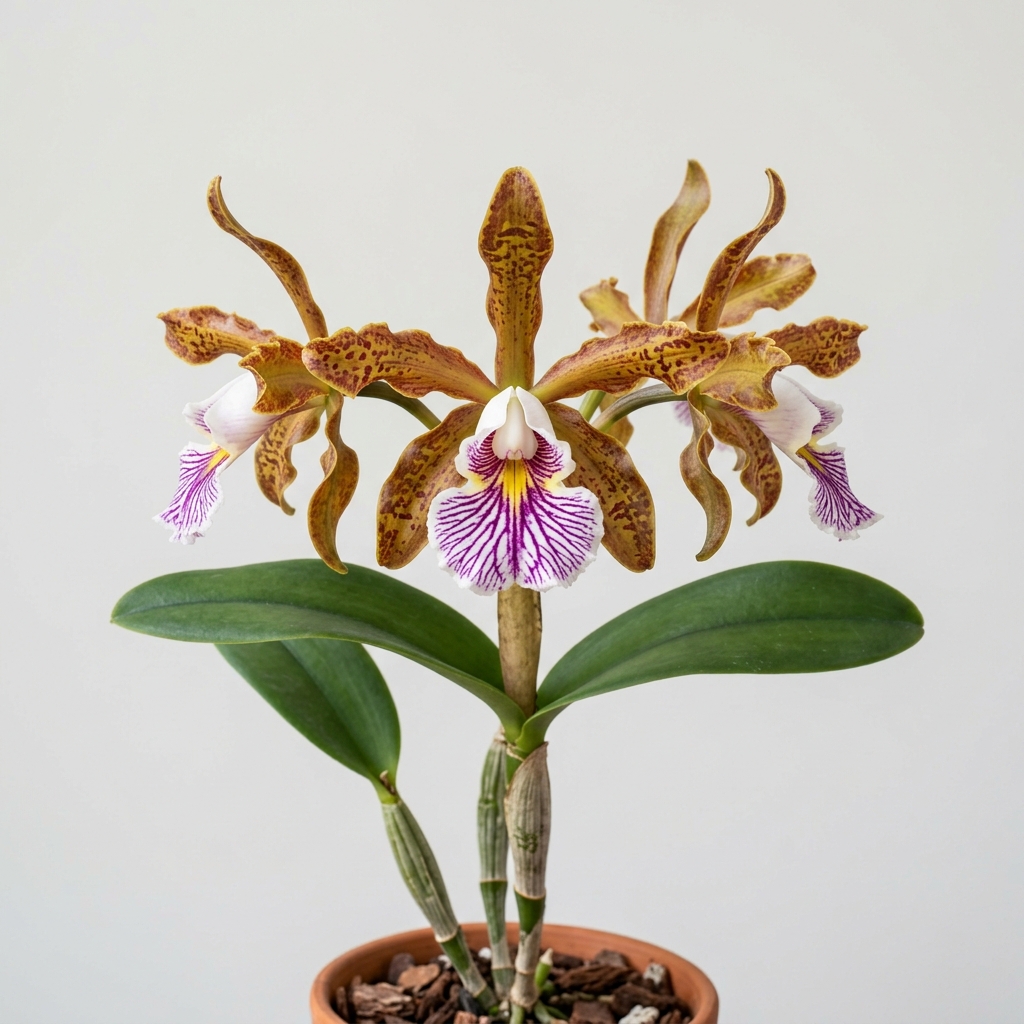
Cattleya Velutina is a highly prized bifoliate orchid species native to Brazil, celebrated among collectors for its striking color palette and distinctive growth habit. Characterized by tall, slender pseudobulbs and a relatively compact footprint, this orchid produces dramatic, long-lasting blossoms that stand out in any collection. Its unique combination of bronze-toned petals and a highly detailed, veined lip makes it a sought-after specimen for intermediate and advanced orchid enthusiasts.
While historically classified as a distinct species within the genus Cattleya, this plant is frequently grown and hybridized under the same cultural parameters as other bifoliate Cattleyas. Growers value Cattleya Velutina not only for its exotic, tiger-striped appearance but also for its delightful fragrance and reliable growth when its specific environmental needs are met. Understanding its native habitat is key to successfully cultivating this remarkable orchid in a home or greenhouse setting.
💡 Did You Know?
Cattleya Velutina is highly valued by orchid breeders for its unique genetic ability to pass down intricate spotting patterns and a deeply veined, contrasting lip to its hybrid offspring. This makes it a foundational species in creating some of the most dramatic and exotic-looking bifoliate Cattleya hybrids in modern horticulture.
🌿 Botanical Overview
Cattleya Velutina is native to the coastal rainforests of southeastern Brazil, where it typically grows as an epiphyte on moss-covered tree trunks and branches. In its natural habitat, it experiences warm, humid conditions with distinct seasonal variations in rainfall. The plant features slender, cane-like pseudobulbs that can grow quite tall, usually topped by two or occasionally three thick, leathery leaves that help the orchid store moisture.
The root system of this species is highly sensitive to stagnant moisture, requiring excellent aeration to thrive. Because it originates in environments with constant air movement, replicating gentle air circulation is critical when growing this orchid indoors or in a greenhouse. Its growth cycle is highly seasonal, with active vegetative growth occurring during the warmer months of the year.
🌸 Flower Characteristics
The blossoms of Cattleya Velutina are renowned for their dramatic and exotic presentation. Each flower typically features wavy, narrow petals and sepals ranging in color from golden-yellow to deep bronze, often adorned with dark reddish-brown spots or freckles. The most striking feature is the prominent trilobed lip, which is usually white or pale cream, heavily veined with rich purple, violet, or magenta lines, and often displays a yellow throat.
Flowers are borne on an erect inflorescence that emerges from a sheath at the apex of the mature pseudobulb. A single spike can produce several flowers, which are relatively large compared to the slender profile of the plant. The heavy substance of the petals ensures that the blooms remain structurally sound and visually appealing for several weeks.
Fragrance & Bloom Profile
One of the most appealing aspects of Cattleya Velutina is its sweet, complex fragrance, which is often described as reminiscent of fresh fruit or mild spices. The scent is typically most pronounced during the morning and early afternoon hours, filling the growing space with a pleasant, non-overpowering aroma.
The blooms generally last between three to five weeks, depending on environmental conditions such as temperature and humidity. Cooler temperatures and lower light levels during the blooming period can help prolong the life of the flowers, while excessive heat or dry air may cause them to fade prematurely.
Parentage & Hybrid Lineage
As a naturally occurring species rather than a man-made hybrid, Cattleya Velutina possesses a pure genetic lineage that has been used extensively in orchid breeding. Hybridizers value this species for its ability to impart unique spotting patterns, rich bronze tones, and a highly detailed, veined lip to its offspring.
While its exact historical discovery and early registration details are sometimes subject to debate in older botanical literature, it remains a recognized species within the Cattleya genus. When purchasing this orchid, growers should look for reputable nurseries that propagate plants from seed or tissue culture to ensure the preservation of wild populations.
🌱 Growing Conditions
To cultivate Cattleya Velutina successfully, growers must provide bright, filtered light. While it enjoys strong light levels similar to other Cattleya species, direct midday sunlight should be avoided to prevent leaf scorch. A location with eastern or shaded southern exposure is generally ideal.
💡 Care Tip
Ensure your Cattleya Velutina receives continuous, gentle air movement. Good ventilation is absolutely crucial for preventing fungal infections on its tall, slender pseudobulbs and helps the sensitive root system dry quickly after each session.
Temperature ranges should mimic its native Brazilian habitat, which translates to warm day temperatures between 75 and 85 degrees Fahrenheit, and cooler night temperatures between 60 and 65 degrees Fahrenheit. Maintaining a distinct drop in temperature at night is beneficial for encouraging healthy growth and eventual flowering. High humidity levels of 60% to 80% are preferred, accompanied by continuous, gentle air movement to prevent fungal pathogen development.
Watering, Feeding & Potting Media
Watering should be frequent and thorough during the active growing season, allowing the potting medium to dry out almost completely between waterings. During the winter rest period, watering should be significantly reduced, providing just enough moisture to prevent the pseudobulbs from shriveling.
A balanced, water-soluble orchid fertilizer applied at quarter or half strength is recommended every second or third watering during active growth. The potting medium must offer exceptional drainage and aeration; coarse fir bark, charcoal, and perlite mixtures work well in clay pots. Alternatively, this species performs exceptionally well when mounted on cork bark or tree fern slabs, provided the grower can maintain adequate humidity.
Blooming Season & Care Notes
Cattleya Velutina typically blooms in the late summer or early autumn, following the completion of its annual vegetative growth. Once the new pseudobulb matures, a green sheath will form at the leaf junction, from which the flower buds will eventually emerge.
During the budding stage, it is important to keep environmental conditions stable. Avoid moving the plant or changing its orientation to the light source, as this can cause the buds to orient poorly or even blast. After the flowers fade, the old spike should be cut back carefully with sterile tools, and the plant should be prepared for its cooler, drier winter rest period.
⚠️ Common Issues
⚠️ Common Mistake
A frequent error is overwatering during the winter rest phase. Cattleya Velutina requires a distinct, drier period in winter; keeping the potting medium constantly wet during this cooler time will quickly lead to root rot and plant decline.
- Root Rot: Caused by overwatering or compacted potting media that retains too much moisture around the sensitive root system.
- Leaf Scorch: Appears as bleached or blackened patches on the leaves, resulting from exposure to direct, unfiltered midday sun.
- Bud Blast: The premature dropping or drying of flower buds, often triggered by sudden temperature fluctuations, low humidity, or drafts.
- Pests: Scale insects, mealybugs, and spider mites can occasionally infest the crevices of the pseudobulbs and leaves; treat promptly with insecticidal soap or horticultural oil.
❓ Frequently Asked Questions
How often should I water my Cattleya Velutina?
Watering frequency depends heavily on your growing medium and environment. During the active summer growth phase, water thoroughly when the potting medium is nearly dry, which may be every few days. In the winter rest period, reduce watering significantly, allowing the medium to dry completely between light waterings.
Can Cattleya Velutina be grown under LED lights?
Yes, this orchid can be successfully cultivated under high-output LED grow lights. Ensure the lights are positioned at a safe distance to provide bright, indirect light without overheating the foliage, and aim for a photoperiod of 12 to 14 hours during the active growing season.
Why are the pseudobulbs on my orchid shriveling?
Shriveled pseudobulbs usually indicate dehydration, which can be caused by underwatering or, paradoxically, by root rot. If the roots have rotted due to overwatering, the plant can no longer absorb moisture, leading to shriveling. Inspect the root system to determine the correct cause.
When is the best time to repot Cattleya Velutina?
The ideal time to repot this orchid is in the spring, just as new root growth begins to emerge from the base of the newest pseudobulb. Repotting at this stage allows the plant to establish itself quickly in the fresh medium with minimal transplant shock.
⭐ Final Growing Notes
Cattleya Velutina is a rewarding and visually spectacular orchid that brings a touch of exotic Brazilian beauty to any collection. While it requires a bit more attention to watering and humidity than some of the more common hybrid Cattleyas, its stunning bronze flowers, intricate purple-veined lip, and sweet fragrance make it well worth the effort. By providing bright, indirect light, excellent air circulation, and a distinct winter rest, growers can enjoy the dramatic blooms of this exceptional species for many years to come.
⚕️ Health, Safety & Edibility
Understanding how a plant interacts with people, pets, and the surrounding environment is part of responsible cultivation. This section uses conservative, general guidance and does not replace professional medical or veterinary advice.
Human Safety: No published evidence currently identifies species-specific toxicity concerns for Cattleya Velutina during normal handling. As with most ornamental plants, it should not be intentionally consumed.
Pet Safety: Published information does not indicate that this orchid commonly poses a toxicity concern for cats or dogs. However, chewing leaves, flowers, roots, or potting media may still cause mild digestive upset.
Edibility: This orchid is cultivated for ornamental display rather than food. Ornamental plants may carry fertilizers, pesticides, or other horticultural treatments that make them unsuitable for consumption.
Skin Contact: Routine handling is not generally associated with skin irritation. Gardeners with sensitive skin may prefer wearing gloves when repotting, pruning, or handling potting media.
🌱 Propagation Tip
This orchid is best propagated by division during the active spring repotting season. Ensure each new division has at least three to four healthy, mature pseudobulbs with active lead growth to guarantee successful establishment in fresh media.
⭐ Expert Advice
If you struggle with root rot in pots, try mounting Cattleya Velutina on a cork slab. This method closely mimics its natural epiphytic habitat and allows the roots to dry rapidly, though it requires more frequent misting.




Leave A Comment