
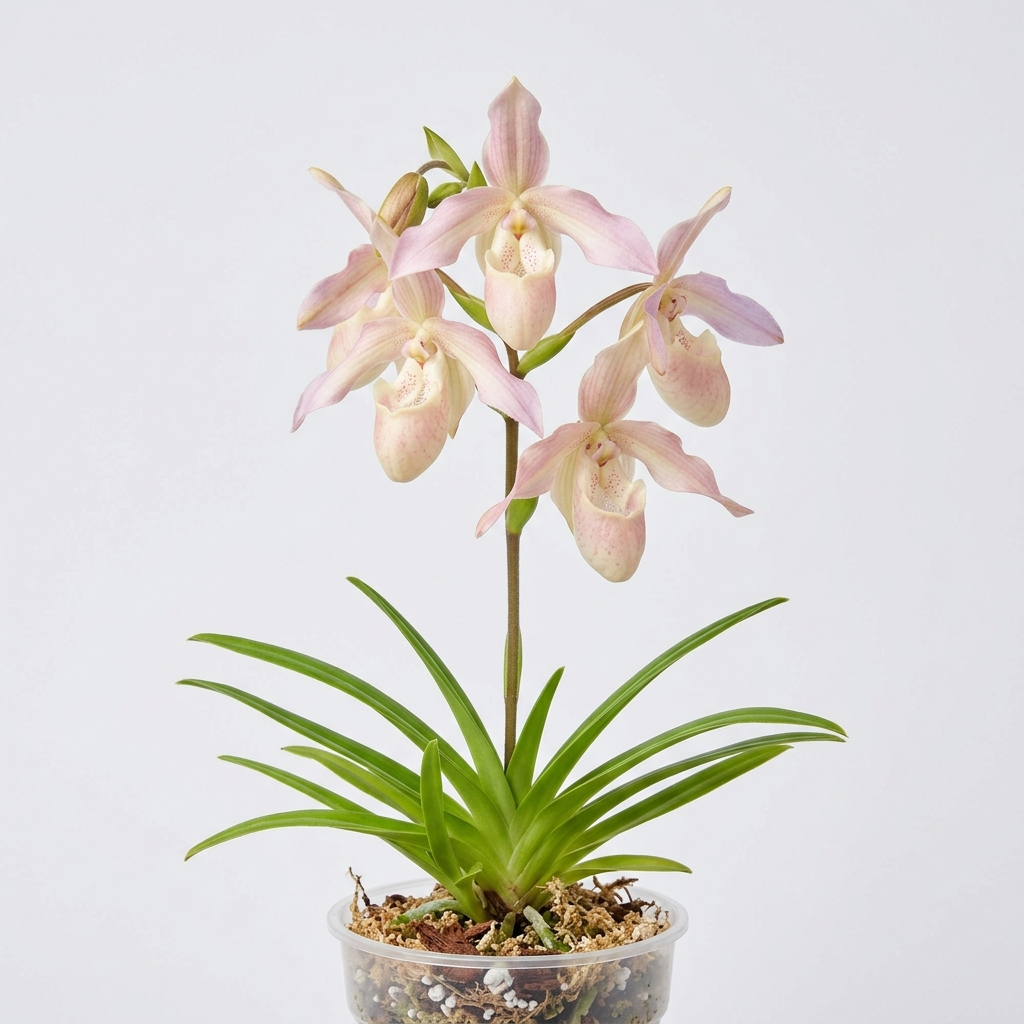
Phragmipedium Andreettae is a highly sought-after slipper orchid prized for its delicate, pastel-toned blossoms and compact growth habit. Originating from wet, montane forests, this species has captivated orchid enthusiasts with its unique pouch-shaped lip and elegant presentation.
Unlike some of its larger, more robust relatives in the genus, this orchid offers a refined, miniature charm. Growers value it for its ability to thrive in controlled indoor environments, making it an exquisite addition to specialized orchid collections where its moisture-loving nature can be carefully accommodated.
💡 Did You Know?
Phragmipedium Andreettae was only formally described by botanists in the early 2000s, making it a relatively recent and exciting addition to the orchid world. Its discovery in the wet forests of Ecuador sparked significant interest among slipper orchid enthusiasts, who quickly fell in love with its unusually soft, pastel-pink coloration and compact growth habit.
🌿 Botanical Overview
Phragmipedium Andreettae is a compact, clump-forming terrestrial or lithophytic orchid native to the wet, humid montane regions of South America. It grows in pockets of organic debris along damp rock faces and forest floors, where its roots are constantly bathed in clean, oxygen-rich moisture. Unlike epiphytic orchids, it does not possess pseudobulbs to store water, relying instead on its fleshy roots and fan-like foliage to sustain itself.
The foliage consists of narrow, strap-like leaves of a bright green hue that grow in a tight, fan-shaped arrangement. The compact stature of the plant makes it highly desirable for growers with limited space, as it rarely outgrows its potting container. Its growth habit is steady, producing new offsets or fans from the base of the plant over time to form a dense, attractive specimen.
🌸 Flower Characteristics
The blossoms of Phragmipedium Andreettae are celebrated for their soft, pastel color palette. The flowers typically feature a delicate blend of pale pink, cream, and soft lavender tones, which set them apart from the more intensely colored or green-dominant species within the genus. The dorsal sepal is rounded and slightly hooded, while the lateral petals curve gently forward, framing the central pouch.
The defining feature of this orchid is its deeply inflated, pouch-like labellum. The interior of the pouch often displays subtle speckling or shading, adding depth to its appearance. Flowers are produced sequentially on upright, slightly pubescent spikes, allowing growers to enjoy a succession of blooms over several weeks or even months from a single inflorescence.
Fragrance & Bloom Profile
A distinct fragrance is not consistently documented for Phragmipedium Andreettae, and it is generally considered to be unscented by most growers. The primary appeal of this orchid lies entirely in its visual elegance and the soft, soothing colors of its blossoms rather than any olfactory presence.
The blooming profile is characterized by sequential flowering, meaning that as one bloom begins to fade, another bud further along the spike matures and opens. This habit extends the overall display period significantly, making a single flowering cycle a long-lasting event in the greenhouse or indoor growing space.
Parentage & Hybrid Lineage
Phragmipedium Andreettae is recognized as a distinct species rather than a man-made hybrid. Discovered relatively recently in the wild, it has quickly become a valuable parent in modern hybridization programs. Hybridizers use this species to introduce its compact growth habit, round flower shape, and desirable pink coloration into new slipper orchid grexes.
Because it is a species, maintaining its genetic purity through selfing or sibling crosses is a priority for conservation-minded growers. When purchasing this orchid, it is helpful to source plants from reputable nurseries that propagate them from seed or tissue culture rather than wild-collected specimens.
🌱 Growing Conditions
To cultivate Phragmipedium Andreettae successfully, growers must replicate its humid, montane habitat. It thrives in low to medium filtered light, similar to the conditions preferred by many Phalaenopsis orchids. Direct, intense sunlight must be avoided, as it can easily scorch the thin, delicate foliage.
💡 Care Tip
Always use rainwater, distilled water, or reverse osmosis water for this orchid. Its delicate root system is highly sensitive to dissolved minerals and chlorine, which can quickly lead to root decline and unsightly brown leaf tips.
Temperature ranges should be kept intermediate to warm, ideally between 65 degrees Fahrenheit and 80 degrees Fahrenheit during the day, with a gentle drop of five to ten degrees at night. High relative humidity of 60% to 80% is essential to prevent leaf desiccation and support healthy root development. Constant, gentle air movement is required to prevent stagnant air pockets, which can invite fungal pathogens.
Watering, Feeding & Potting Media
Watering is the most critical aspect of caring for Phragmipedium Andreettae. The potting medium must remain consistently moist and should never be allowed to dry out completely. However, the media must also be highly oxygenated; stagnant, waterlogged conditions will quickly lead to root rot. Using pure water, such as rainwater, distilled water, or reverse osmosis water, is highly recommended due to the species’ sensitivity to dissolved minerals.
Feeding should be light but regular. Use a highly diluted, balanced orchid fertilizer once every two weeks during the active growing season, and flush the pot thoroughly with pure water between feedings to prevent salt buildup. The ideal potting medium is a fine-grade mix composed of clean fir bark, chopped sphagnum moss, perlite, and a small amount of charcoal to maintain freshness.
Blooming Season & Care Notes
While blooming can occur at various times of the year, Phragmipedium Andreettae most commonly initiates flower spikes from spring through autumn. During the blooming cycle, keep environmental conditions as stable as possible. Sudden shifts in temperature, humidity, or watering frequency can cause the developing buds to yellow and drop prematurely.
Once a flower spike has finished blooming, do not cut it back while it remains green, as it may still produce additional sequential flowers. Only remove the spike once it has completely dried and turned brown. Repotting is best performed annually or biennially in the spring, just as new root growth begins, to ensure the potting media does not degrade and suffocate the roots.
⚠️ Common Issues
⚠️ Common Mistake
Letting the potting medium dry out completely is a frequent error. Unlike many epiphytic orchids that prefer a wet-to-dry cycle, this slipper orchid requires consistently damp media to prevent root death and leaf dehydration.
- Root Rot:
Caused by compacted, decaying potting media or poor drainage, leading to mushy, black roots and limp foliage. - Leaf Tip Burn: Often a result of mineral accumulation from hard tap water or over-fertilization, presenting as dry, brown leaf tips.
- Bud Blast:
The premature dropping of flower buds, usually triggered by low humidity, drafty conditions, or sudden temperature fluctuations. - Fungal Leaf Spotting: Small black or brown spots on the leaves, typically occurring when high humidity is combined with inadequate air circulation.
- Pests:
Mealybugs and scale insects can occasionally hide in the tight crevices of the leaf fans and must be treated promptly with horticultural soap.
❓ Frequently Asked Questions
How often should I water my Phragmipedium Andreettae?
Watering frequency depends on your home environment, but the potting medium should always remain damp. Typically, this means watering two to three times a week, ensuring that excess water drains away freely and never pools at the bottom of the pot.
Can I grow this orchid under artificial LED lights?
Yes, Phragmipedium Andreettae adapts exceptionally well to artificial LED setups. Position the plant under moderate-intensity lights, ensuring the foliage does not become overly warm, and maintain a consistent day-night light cycle of twelve to fourteen hours.
What should I do if the leaves start turning yellow?
Yellowing leaves can indicate several issues, including over-exposure to direct light, natural aging of older outer leaves, or root distress due to compacted media. Assess the light levels and inspect the root system to determine the exact cause.
Is Phragmipedium Andreettae suitable for beginner orchid growers?
This species is generally considered moderate to advanced in difficulty. While its compact size is convenient, its strict requirement for high-quality pure water and consistently moist media makes it better suited for growers with some prior orchid experience.
⭐ Final Growing Notes
Phragmipedium Andreettae is a true gem of the slipper orchid world, offering a unique combination of compact growth and exquisitely colored blossoms. While it demands attentive care regarding water quality and moisture levels, the reward of its delicate, sequential pink flowers makes it an incredibly satisfying species to cultivate. By maintaining high humidity, gentle air movement, and a pure watering regimen, you can enjoy the elegant presence of this exceptional orchid for many years to come.
⚕️ Health, Safety & Edibility
Understanding how a plant interacts with people, pets, and the surrounding environment is part of responsible cultivation. This section uses conservative, general guidance and does not replace professional medical or veterinary advice.
Human Safety: Species-specific human toxicity data for Phragmipedium Andreettae is limited. Use conservative handling practices and avoid intentional consumption.
Pet Safety: Pet-specific safety information for Phragmipedium Andreettae is limited, so keep it away from animals that commonly chew plants.
Edibility: Phragmipedium Andreettae should not be treated as edible. Ornamental specimens may contain natural irritants or horticultural residues that make them unsuitable for consumption.
Skin Contact: Skin irritation is not well documented for this plant, but gloves are sensible when repotting, pruning, or handling potting media.
🌱 Propagation Tip
This orchid is best propagated by careful division during repotting. Ensure that each division has at least three healthy, mature fans with active roots to guarantee successful establishment and minimize transplant shock.
⭐ Expert Advice
To encourage robust blooming, maintain a slight drop of five to ten degrees Fahrenheit between day and night, while keeping the high and the air constantly moving around the foliage.




Leave A Comment