
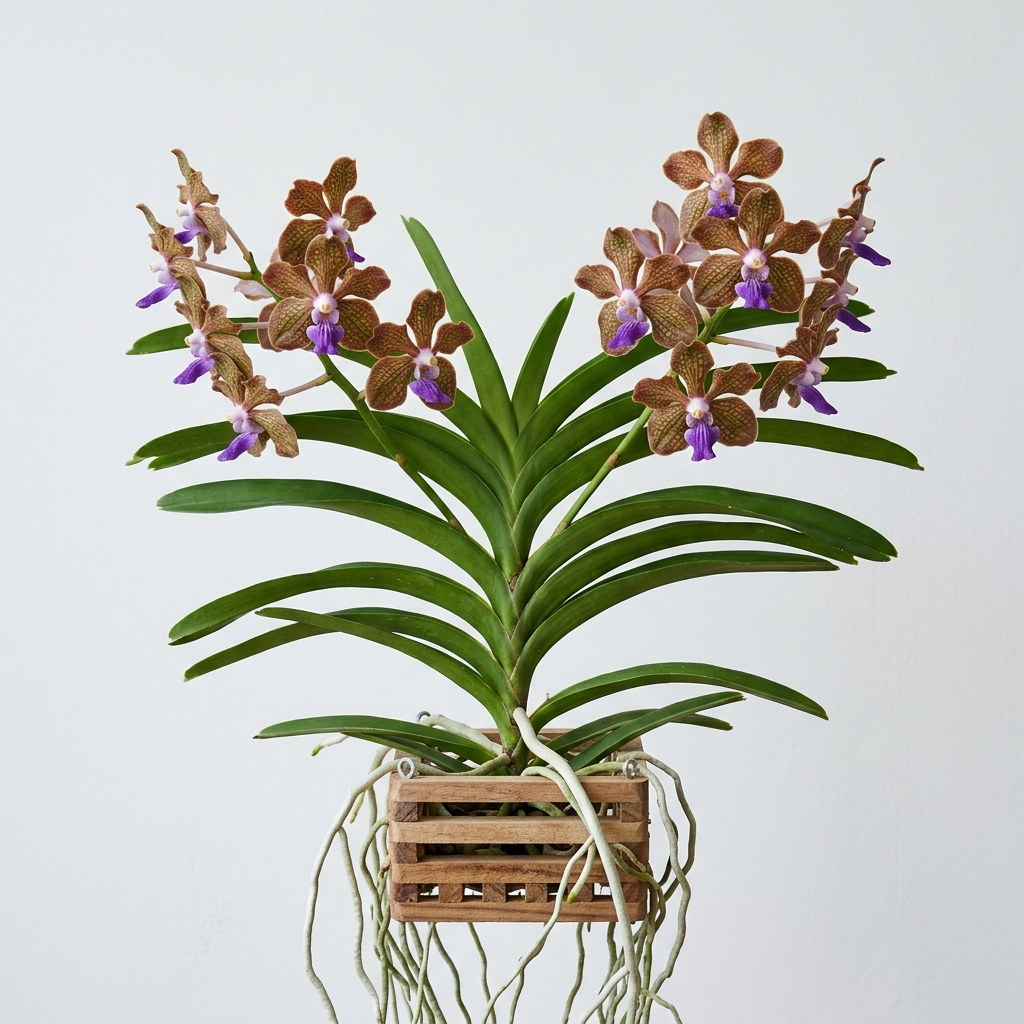
Vanda Vipanii is a captivating epiphytic orchid cultivar highly prized by collectors for its striking floral presentation and robust growth habit. Belonging to the renowned Vanda genus, this orchid typifies the classic monopodial growth form, producing thick, strap-like leaves that fan out from a central stem. Growers particularly value this cultivar for its ability to produce long-lasting, beautifully patterned blooms that add a dramatic tropical flair to any greenhouse or indoor growing space.
While it demands specific environmental conditions to thrive, Vanda Vipanii rewards dedicated enthusiasts with spectacular floral displays. Its robust aerial root system and upright growth habit make it an excellent candidate for basket culture or mounting, allowing its roots to cascade freely in the air. Understanding its unique cultural requirements is key to unlocking its full blooming potential and maintaining its long-term vigor.
💡 Did You Know?
The silvery-white coating on the aerial roots of Vanda Vipanii is called velamen. This specialized structure acts like a sponge, rapidly absorbing water and nutrients from morning dew or rain, while also protecting the delicate root cells underneath from intense tropical sunlight.
🌿 Botanical Overview
Vanda Vipanii shows a classic monopodial growth habit, meaning it grows upward from a single vegetative apex. The plant features thick, leathery, strap-shaped leaves arranged in a distichous fashion along the central stem. These leaves are designed to store water and withstand high-light environments, though they lack the pseudobulbs common to many other orchid genera.
A defining feature of this cultivar is its extensive, fleshy aerial root system. These roots are covered in velamen, a silvery-white spongy layer that rapidly absorbs moisture and nutrients from the air and rain. In their natural habitats, ancestral species of this hybrid cling to tree branches, relying on excellent air circulation to dry their roots quickly after heavy downpours.
🌸 Flower Characteristics
The flowers of Vanda Vipanii are typically medium-sized and borne on upright or slightly arching axillary inflorescences. The petals and sepals often display a fascinating tessellated or checkered pattern, showcasing a blend of earthy bronze, olive green, and rich brown tones. This intricate patterning is beautifully contrasted by a prominent, often brightly colored lip that may feature shades of violet, pink, or purple.
Each flower spike can carry multiple blooms, which open sequentially and remain in pristine condition for several weeks. The heavy substance of the petals gives the flowers a waxy texture, contributing to their longevity and resilience against environmental fluctuations.
Fragrance & Bloom Profile
The fragrance profile of Vanda Vipanii is highly appreciated by enthusiasts, though its intensity can vary depending on environmental factors such as temperature, humidity, and light levels. Many growers report a pleasant, sweet, or slightly spicy scent that is most pronounced during the warm morning hours when light levels increase.
However, because fragrance can be highly subjective and cultivar-dependent, some individual plants may exhibit a more subtle scent or none at all. The blooms typically last between four to six weeks under optimal conditions, providing a long-lasting sensory display in the growing area.
Parentage & Hybrid Lineage
In horticultural literature, Vanda Vipanii is generally recognized as a hybrid of Vanda tessellata and Vanda insignis. Both parent species are native to tropical regions of Asia, contributing to the hybrid’s heat tolerance, robust growth, and distinctive floral patterns. Vanda tessellata is famous for its fragrant, tessellated flowers, while Vanda insignis is known for its bold lip and sturdy growth habit.
While this lineage is widely accepted among orchid registries, growers should note that historical documentation for older hybrids can sometimes be incomplete. Variations in flower color and form may occur among different clones or sibling crosses of this grex, reflecting the natural genetic diversity inherited from its parentage.
🌱 Growing Conditions
To cultivate Vanda Vipanii successfully, replicating its native tropical environment is essential. This orchid requires bright, filtered light to thrive. While it can tolerate some direct morning sun, harsh midday sunlight can scorch the leaves, so appropriate shading or sheer curtains are recommended for indoor or greenhouse cultivation.
💡 Care Tip
Always water your Vanda Vipanii early in the morning. This ensures that any water trapped in the leaf axils or crown evaporates during the day, significantly reducing the risk of bacterial rot and fungal infections.
Temperature: wise, this cultivar prefers warm to intermediate conditions. Ideal daytime temperatures range from 75°F to 85°F (24°C to 29°C), with a slight drop at night to around 65°F (18°C). High humidity levels, ideally between 60% and 80%, combined with strong, continuous air movement, are critical to prevent fungal pathogens and keep the aerial roots healthy.
Watering, Feeding & Potting Media
Watering Vanda Vipanii depends heavily on how it is housed. Because it is most commonly grown bare-root in wooden slat baskets, it requires daily watering—sometimes twice a day during hot, dry summer months. The roots should be thoroughly soaked until they turn a vibrant green color, indicating complete hydration.
Feeding should be frequent but dilute, often referred to as “weekly, weakly.” A balanced, water-soluble orchid fertilizer applied at a quarter or half strength during the active growing season supports robust leaf and root development. If grown in a container, a highly porous medium such as large-grade charcoal, coarse fir bark, or volcanic rock must be used to ensure rapid drainage and maximum root aeration.
Blooming Season & Care Notes
Vanda Vipanii typically blooms during the warmer months of spring and summer, though it can occasionally produce flowers at other times of the year if optimal growing conditions are maintained year-round. Once a flower spike emerges from the leaf axil, growers should avoid changing the plant’s orientation to the light source, as this can cause the developing buds to twist or fail to open properly.
After the blooming cycle is complete, the spent flower spike should be cut back close to the main stem using sterilized cutting tools. Repotting or basket maintenance is best performed during the active growth phase in late spring, allowing the roots to quickly establish in their new support structure.
⚠️ Common Issues
⚠️ Common Mistake
A common mistake is growing Vanda Vipanii in standard, dense potting soil or fine bark mixes. This suffocates the aerial roots, leading to rapid root rot. Instead, keep the roots bare in a wooden basket or use extremely coarse charcoal.
- Root Rot:
Occurs when roots remain wet for extended periods due to poor air circulation or compacted potting media. - Bud Blast:
The sudden drying and dropping of flower buds, often triggered by rapid temperature fluctuations, low humidity, or drafts. - Leaf Spotting: Fungal or bacterial spots can develop if water sits on the leaves overnight; always water early in the day.
- Dehydration:
Indicated by shriveled, leathery leaves and dry, brittle roots, usually caused by insufficient watering or low humidity. - Pests:
Scale insects, mealybugs, and spider mites can occasionally infest the leaf axils and require prompt treatment with insecticidal soap or horticultural oil.
❓ Frequently Asked Questions
How often should I water Vanda Vipanii when grown bare-root?
When grown bare-root in a basket, Vanda Vipanii should be watered daily. During hot summer days, it may require watering twice—once in the morning and once in the afternoon. Ensure the roots are thoroughly soaked until they turn green, and allow them to dry completely before nightfall.
Why are the flower buds on my Vanda Vipanii falling off before opening?
This issue, known as bud blast, is typically caused by environmental stress. Common triggers include sudden drops in temperature, low humidity levels, dry drafts from heating or cooling vents, or moving the plant to a different location while the spike is developing.
Can I grow Vanda Vipanii indoors under LED grow lights?
Yes, Vanda Vipanii can be grown indoors under high-intensity LED grow lights designed for plants. Position the lights close enough to provide bright, full-spectrum illumination, but monitor the leaves closely for signs of heat stress or bleaching, and maintain high humidity around the plant.
What is the best way to support the aerial roots of this orchid?
The best way to support the aerial roots is to grow the orchid in a wooden slat basket without any potting medium. This allows the roots to hang freely, absorbing moisture from the air and drying rapidly. Alternatively, you can use a very coarse, free-draining medium like large charcoal pieces in a highly aerated pot.
⭐ Final Growing Notes
Cultivating Vanda Vipanii is a rewarding endeavor for any orchid enthusiast willing to meet its demands for high light, warmth, and humidity. By providing consistent daily moisture to its extensive aerial root system and ensuring excellent air circulation, you can enjoy the spectacular, intricately patterned blooms of this classic hybrid for many years to come.
⚕️ Health, Safety & Edibility
Understanding how a plant interacts with people, pets, and the surrounding environment is part of responsible cultivation. This section uses conservative, general guidance and does not replace professional medical or veterinary advice.
Human Safety: No published evidence currently identifies species-specific toxicity concerns for Vanda Vipanii during normal handling. As with most ornamental plants, it should not be intentionally consumed.
Pet Safety: Published information does not indicate that this orchid commonly poses a toxicity concern for cats or dogs. However, chewing leaves, flowers, roots, or potting media may still cause mild digestive upset.
Edibility: This orchid is cultivated for ornamental display rather than food. Ornamental plants may carry fertilizers, pesticides, or other horticultural treatments that make them unsuitable for consumption.
Skin Contact: Routine handling is not generally associated with skin irritation. Gardeners with sensitive skin may prefer wearing gloves when repotting, pruning, or handling potting media.
🌱 Propagation Tip
Vanda orchids are monopodial and do not divide like sympodial orchids. Propagation is typically achieved by waiting for a keiki to develop along the main stem. Once the keiki has developed several robust roots of its own, it can be carefully detached and potted independently.
⭐ Expert Advice
To trigger abundant blooming, ensure your Vanda Vipanii experiences a slight drop of about 10 to 15 degrees Fahrenheit between day and night, combined with high-intensity during its active spring growing phase.




Leave A Comment