
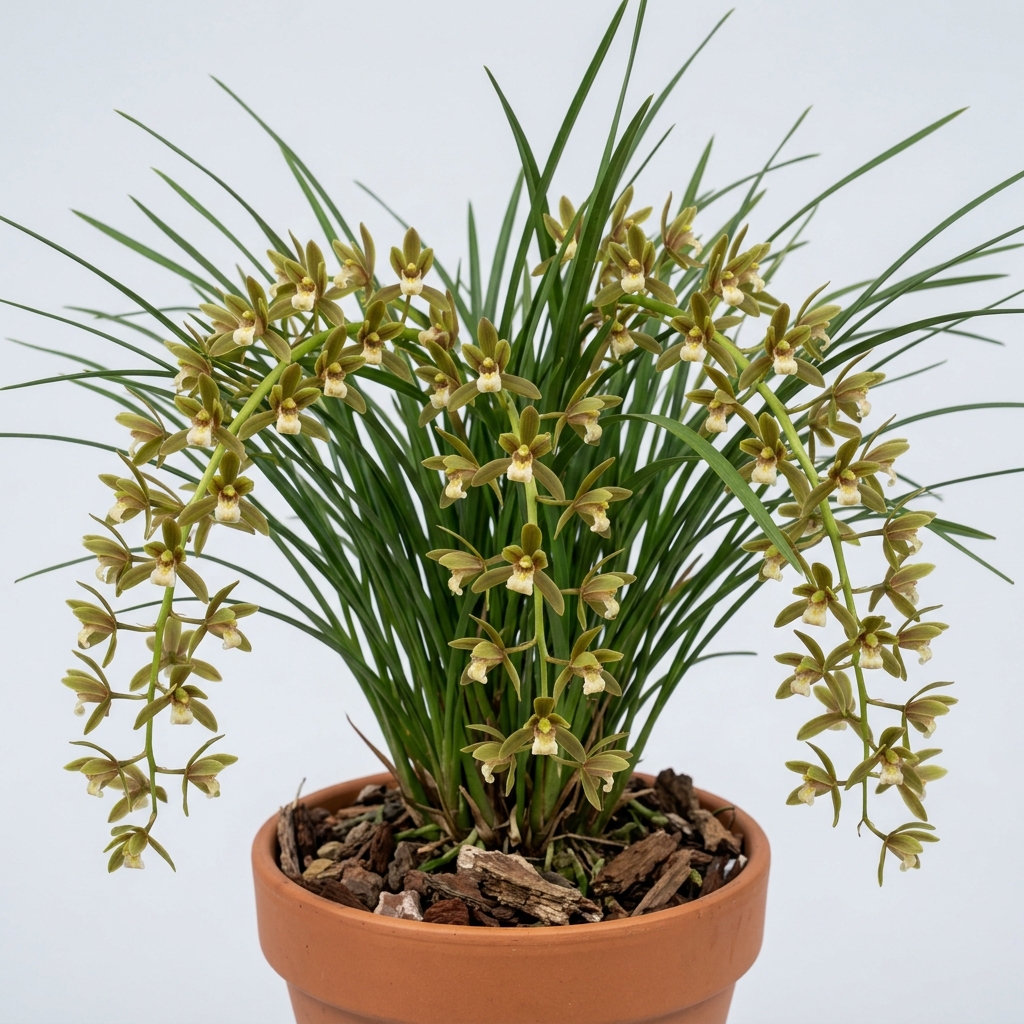
Cymbidium Suave, commonly known as the snake orchid or grassy boat-lip orchid, is a highly distinctive orchid species native to eastern Australia that is cherished by collectors for its unique growth habit and pendulous blooms. Unlike many of its larger, showier hybrid relatives, this orchid features slender, grass-like foliage and produces dense, arching racemes of small, delightfully fragrant flowers. Its elegant, weeping presentation makes it a standout choice for enthusiasts seeking a more natural, botanical aesthetic.
While it presents a rewarding challenge for intermediate to advanced growers, cultivating Cymbidium Suave requires a departure from standard Cymbidium care. In its native habitat, it often grows in the decaying heartwood of eucalyptus trees, meaning its root system thrives in specific organic environments. Understanding its unique moisture, temperature, and potting requirements is key to successfully maintaining this remarkable orchid and enjoying its seasonal displays of sweet-scented blossoms.
💡 Did You Know?
Cymbidium Suave is part of the Cymbidium orchid group, a favorite among growers because its flowers, growth habit, and care needs make it useful for comparing cultivated orchids within the same . Observing its leaves, roots, and bloom spikes can help growers understand how this cultivar responds to indoor conditions.
🌿 Botanical Overview
Cymbidium Suave is characterized by its lack of prominent pseudobulbs, a feature that distinguishes it from many other members of the Cymbidium genus. Instead, it develops thin, elongated stems covered by overlapping leaf bases, giving the plant a grassy, tufted appearance. The leaves are narrow, flexible, and can grow up to several decimeters in length, arching gracefully outward from the center of the plant.
In the wild, this species is primarily epiphytic, frequently colonizing hollows and crevices in eucalyptus trees where organic debris accumulates. Over time, the plant establishes a deep, extensive root system that penetrates the decaying wood, drawing moisture and nutrients from the decomposing material. This specialized adaptation dictates much of its cultivation needs in domestic environments.
🌸 Flower Characteristics
The flowers of Cymbidium Suave are relatively small, typically measuring between one to two centimeters in diameter, but they make up for their size with their sheer abundance. They are produced on pendulous or arching racemes that can carry anywhere from fifteen to fifty closely packed blooms. The petals and sepals are generally a pale apple-green to olive-green color, sometimes flushed with brownish or reddish-brown tones depending on the specific clone and light exposure.
The labellum, or lip, is a defining feature, often displaying a yellow or cream-colored center with subtle markings. The flowers are long-lasting and open progressively along the spike, creating a sustained display that highlights the plant’s natural, wild beauty.
Fragrance & Bloom Profile
One of the primary reasons growers seek out Cymbidium Suave is its exceptional fragrance. The blooms emit a powerful, sweet, and spicy scent that is often compared to citrus, vanilla, or warm spices. This fragrance is typically most intense during the warmer hours of the day, filling the surrounding growing space with a pleasant aroma.
The blooming cycle generally begins in late spring and extends into the summer months. Individual flower spikes can remain attractive for several weeks, provided the plant is kept in cool, stable conditions away from direct drafts and extreme heat.
Parentage & Hybrid Lineage
Cymbidium Suave is a naturally occurring species rather than a man-made hybrid, though select clones are cultivated and propagated for their superior flower count or color intensity. In orchid hybridization, it belongs to the section Cymbidium, and it has been used occasionally by breeders to introduce fragrance, compact flower size, and pendulous blooming habits into modern warmth-tolerant Cymbidium hybrids.
Because it lacks pseudobulbs and has a highly specialized root system, hybridizing with Cymbidium Suave can sometimes yield offspring with unique growth requirements. Growers should treat named selections of this orchid with the same care as the wild species, respecting its distinct botanical heritage.
🌱 Growing Conditions
To cultivate Cymbidium Suave successfully, growers should aim to replicate its native Australian forest canopy environment. It thrives in bright, filtered light, similar to the dappled sunlight found under tall trees. Direct midday sun should be avoided as it can scorch the thin, grassy foliage, while too much shade may inhibit flowering.
💡 Care Tip
For best results, grow Cymbidium Suave in bright filtered with steady and gentle airflow. Avoid placing the plant in harsh midday sun, but do not keep it in a dark corner; weak is one of the most common reasons cultivated orchids refuse to rebloom.
Temperature: wise, this orchid prefers cool to intermediate conditions. It can tolerate warm summer days if high humidity and excellent air circulation are maintained, but it benefits significantly from a drop in night temperatures during the autumn and winter months to help initiate flower spikes.
Watering, Feeding & Potting Media
Watering is a critical aspect of Cymbidium Suave care. Unlike pseudobulbous orchids that store significant water reserves, this species has less tolerance for prolonged drought. The potting medium should be kept consistently damp but never waterlogged. During the active growing season in spring and summer, water thoroughly as soon as the top layer of the medium begins to dry.
The potting mix must be highly free-draining yet moisture-retentive. A mix of medium-grade orchid bark, charcoal, perlite, and a small amount of chopped sphagnum moss or peat works well. Feeding should be light and regular; apply a balanced, diluted orchid fertilizer every two to three weeks during the growing season, flushing the pot with pure water periodically to prevent salt buildup.
Blooming Season & Care Notes
The primary blooming season occurs from spring to early summer. As the flower spikes begin to emerge from the leaf axils, it is important to keep the plant stable and avoid moving it to areas with drastically different light or temperature levels, which can cause bud drop. Support stakes are rarely needed due to the natural pendulous habit of the spikes, which look best when allowed to drape naturally over the edge of the container.
After flowering is complete, remove the spent spikes at the base. Repotting should be done only when absolutely necessary, as Cymbidium Suave dislikes root disturbance. When repotting is required, choose a deep pot to accommodate its long, downward-growing roots, and perform the task in early autumn when the plant enters a period of active root growth.
⚠️ Common Issues
⚠️ Common Mistake
The most common mistake is by calendar instead of root and potting-media condition. Cymbidium roots need moisture and air at the same time, so constantly wet bark or sphagnum can lead to root loss even when the leaves still look healthy.
- Root Rot:
Caused by overwatering or compacted, poorly draining potting media that suffocates the roots. - Leaf Tip Burn: Often a sign of low humidity, underwatering, or excessive fertilizer salt accumulation in the medium.
- Spider Mites:
These pests can target the thin, grassy foliage, especially in warm, dry conditions with poor air movement. - Bud Blast:
Sudden changes in temperature, humidity, or drafts can cause developing buds to yellow and drop before opening. - Mealybugs:
Can occasionally hide in the tight leaf bases and sheath areas, requiring prompt spot treatment.
❓ Frequently Asked Questions
How often should I water Cymbidium Suave?
Watering frequency depends on your environmental conditions, but the medium should remain consistently moist. Typically, watering once or twice a week during the warm growing season is sufficient, reducing the frequency slightly during the cooler winter rest period while ensuring the roots never dry out completely.
Can Cymbidium Suave be grown indoors?
Yes, it can be grown indoors if provided with bright, indirect light near a window and adequate humidity. However, it often performs better in a greenhouse or sheltered outdoor area where it can experience natural temperature fluctuations, particularly the cooler night temperatures required for blooming.
Why is my Cymbidium Suave not blooming?
The most common reasons for a lack of flowers are insufficient light and a lack of temperature drop between day and night. Ensure the plant receives bright, filtered light and experiences cooler night temperatures, especially during the autumn and winter months, to stimulate spike production.
What is the best potting mix for this orchid?
A well-draining yet moisture-retentive mix is ideal. A combination of medium-grade fir bark, perlite, charcoal, and a small amount of peat moss or coco coir mimics the decaying wood environment of its natural habitat while ensuring excellent drainage to prevent root rot.
⭐ Final Growing Notes
Cymbidium Suave is a captivating orchid that rewards patient growers with its elegant, grassy form and highly fragrant, cascading blooms. By respecting its unique botanical characteristics—particularly its lack of pseudobulbs and preference for consistent moisture—you can enjoy a healthy, long-lived specimen that brings a touch of wild Australian beauty to your orchid collection.
⚕️ Health, Safety & Edibility
Understanding how a plant interacts with people, pets, and the surrounding environment is part of responsible cultivation. This section uses conservative, general guidance and does not replace professional medical or veterinary advice.
Human Safety: No published evidence currently identifies species-specific toxicity concerns for Cymbidium Suave during normal handling. As with most ornamental plants, it should not be intentionally consumed.
Pet Safety: Published information does not indicate that this orchid commonly poses a toxicity concern for cats or dogs. However, chewing leaves, flowers, roots, or potting media may still cause mild digestive upset.
Edibility: This orchid is cultivated for ornamental display rather than food. Ornamental plants may carry fertilizers, pesticides, or other horticultural treatments that make them unsuitable for consumption.
Skin Contact: Routine handling is not generally associated with skin irritation. Gardeners with sensitive skin may prefer wearing gloves when repotting, pruning, or handling potting media.
🌱 Propagation Tip
Propagation should be approached patiently. Most home growers should wait for natural keikis or divide only mature, healthy plants when the orchid type allows it. Never remove a young growth until it has strong roots and enough leaves to support itself away from the parent plant.
⭐ Expert Advice
Repot after flowering when fresh root tips begin to appear. This timing helps the plant anchor quickly into new bark or sphagnum and reduces stress, especially for orchids grown indoors where airflow, , and drying speed can change from season to season.




Leave A Comment