
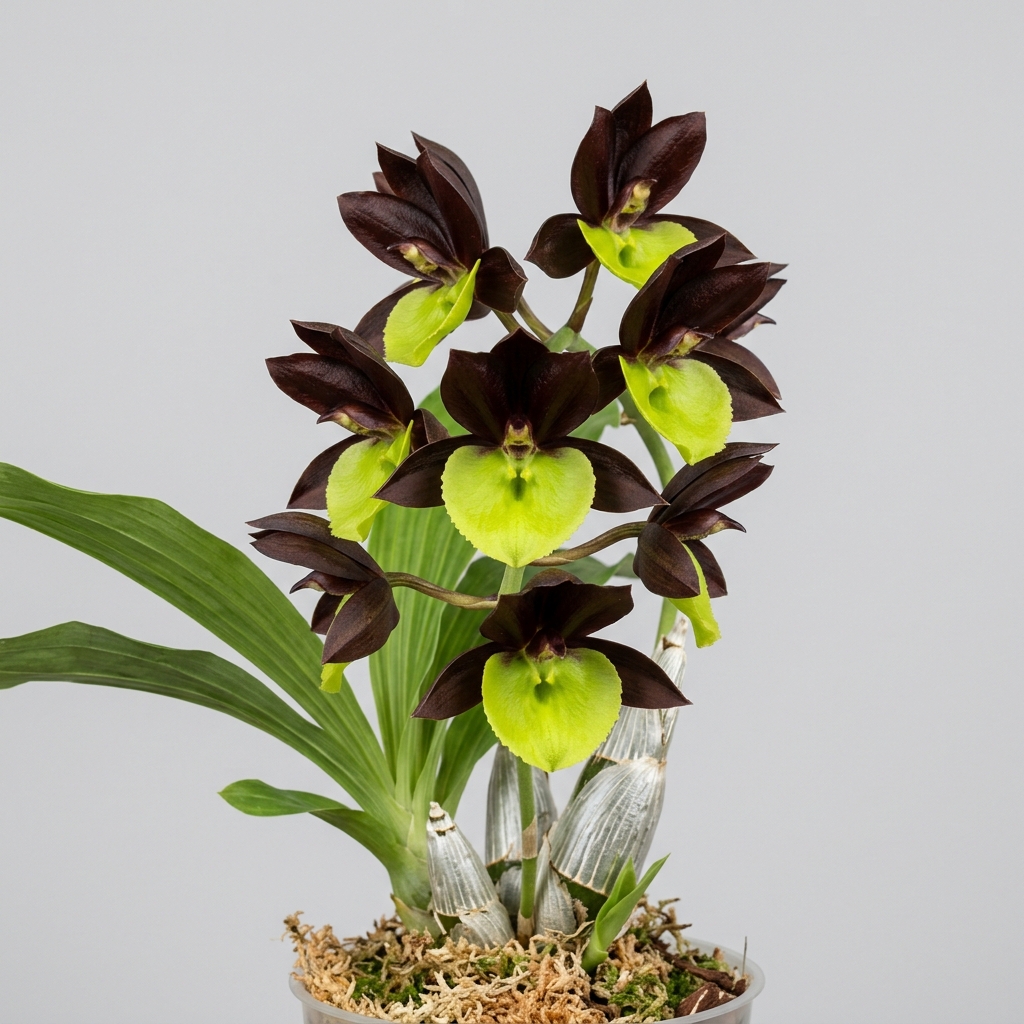
Catasetum Tenebrosum is a highly coveted orchid species celebrated by collectors for its dramatic, dark-hued blossoms and fascinating growth cycle. Belonging to the renowned Catasetinae subtribe, this orchid stands out with its striking contrast of deep chocolate-brown to near-black petals and a vivid, plate-like green or yellow-green lip. It is a showstopper in any collection, offering an exotic aesthetic that few other plant families can match.
Beyond its visual allure, this orchid is famous for its unique deciduous nature and explosive pollination mechanism. Cultivating it successfully requires an understanding of its distinct active growth and dry dormancy phases, making it a rewarding challenge for intermediate and advanced orchid enthusiasts seeking an extraordinary addition to their growing space.
💡 Did You Know?
Catasetum Tenebrosum possesses a fascinating pollination mechanism. When an insect touches the sensitive antennae inside the male flower, the plant forcibly ejects its pollen packets (pollinia) at high speed, sticking them precisely to the back of the visiting bee.
🌿 Botanical Overview
Catasetum Tenebrosum is an epiphytic orchid native to the warm, tropical forests of South America, particularly in Peru and Ecuador. In its natural habitat, it grows on tree trunks and branches where it experiences distinct wet and dry seasons. This environmental rhythm has shaped the orchid’s unique growth habit, characterized by robust, fleshy pseudobulbs that act as water reservoirs during dry spells.
The pseudobulbs are large, onion-shaped, and clustered together. During the active spring and summer growing seasons, they produce thin, pleated, lanceolate leaves that grow rapidly. These leaves are designed to maximize light absorption in the forest canopy but are shed entirely as the plant enters its winter rest period, leaving behind bare, silvery pseudobulbs.
Like other members of its genus, this orchid is dimorphic, meaning it can produce separate male and female flowers on different spikes, or occasionally on the same spike. The environmental conditions, particularly light intensity and moisture levels, play a significant role in determining which sex of flowers the plant will produce during a blooming cycle.
🌸 Flower Characteristics
The flowers of Catasetum Tenebrosum are celebrated for their dramatic, contrasting color palette. The sepals and petals are waxy, firm, and colored a deep, rich mahogany or chocolate-brown that can appear almost black under certain lighting. This dark backdrop beautifully highlights the prominent, fleshy lip, which is typically a contrasting bright lime-green or yellow-green with a slightly scalloped edge.
The male flowers, which are most commonly seen in cultivation, feature a highly specialized column with two sensitive, antenna-like appendages. When an insect touches these antennae, it triggers a mechanical release that shoots the pollen disc forward, adhering it to the pollinator’s back. The flowers are arranged on arching or pendulous inflorescences that emerge from the base of the newest pseudobulb, carrying up to fifteen blooms per spike.
Fragrance & Bloom Profile
This orchid is highly fragrant, emitting a strong, complex scent that is often described as a blend of warm spices, citrus, and sweet resin. The fragrance is most intense during the morning hours, a strategy evolved to attract specific species of male euglossine bees in the wild. The scent can easily fill a growing room or greenhouse with its exotic aroma.
While the individual flowers are relatively short-lived compared to some other orchid genera, typically lasting between one and two weeks, their sheer visual impact and powerful scent make the blooming event a highlight of the growing year. A healthy, mature plant can produce multiple spikes in succession, extending the overall display period.
Parentage & Hybrid Lineage
Catasetum Tenebrosum is a naturally occurring species rather than a man-made hybrid. In the orchid world, it is highly valued by hybridizers who use it to introduce dark coloration, robust growth habits, and unique lip structures to new generations of Catasetinae hybrids. It has been a key parent in creating popular intergeneric hybrids, including Catasandra and Fredclarkeara.
While various line-bred cultivars exist within the hobby to enhance the intensity of the dark petals or the size of the green lip, the fundamental characteristics remain true to the wild species. When purchasing this orchid, growers should look for reputable nurseries that propagate from high-quality clonal divisions or select sibling crosses to ensure vigorous growth.
🌱 Growing Conditions
To cultivate Catasetum Tenebrosum successfully, growers must mimic its native tropical climate. It thrives in warm to intermediate temperatures, ideally ranging from 75°F to 85°F during the day and dropping to 60°F to 65°F at night. During its active growth phase, it requires bright, filtered light, similar to the levels provided for Cattleyas. High light levels are essential for building the large pseudobulbs necessary for a strong bloom cycle.
💡 Care Tip
During the active summer growth phase, keep this orchid in a high- environment with constant air movement. This mimics its native tropical canopy and prevents fungal spotting on its thin, sensitive leaves.
Air circulation is another critical factor. Because the leaves are thin and pleated, they are susceptible to fungal infections if moisture sits on them in stagnant air. Providing a gentle, continuous breeze from a fan will keep the foliage dry and healthy. During the winter dormancy, the plant can tolerate cooler temperatures, but it should still be kept in a bright, dry location.
Watering, Feeding & Potting Media
Watering and feeding this orchid requires a strict adherence to its seasonal cycle. During the active growth phase in spring and summer, Catasetum Tenebrosum is an incredibly heavy feeder and drinker. Once the new roots are well-established and at least three inches long, water the plant copiously, keeping the medium consistently moist. Apply a balanced, diluted orchid fertilizer weekly to support the rapid development of the pseudobulbs.
The choice of potting media is crucial for managing this moisture. High-quality New Zealand sphagnum moss in plastic pots is a favorite among growers, as it retains the necessary moisture during the hot summer months. Alternatively, a fine bark mix can be used if you prefer a more free-draining medium. When the leaves begin to yellow and drop in autumn, water must be gradually reduced and eventually stopped completely to initiate the dry winter rest.
Blooming Season & Care Notes
The primary blooming season for Catasetum Tenebrosum is from late spring through autumn, often coinciding with the maturity of the current season’s pseudobulb. Once the flowers fade, the plant will begin its transition into dormancy. This is signaled by the gradual yellowing and shedding of the leaves. Do not be alarmed by this leaf loss, as it is a natural and necessary part of the orchid’s life cycle.
During the winter dormancy, the orchid should receive absolutely no water. The roots will die back, and the plant will rely entirely on the moisture stored in its plump pseudobulbs. Repotting is best done annually at the very end of the dormancy period or just as the new growth begins to emerge in early spring. Remove the old, dead roots and pot the plant into fresh media, but withhold water until the new roots are sufficiently long.
⚠️ Common Issues
⚠️ Common Mistake
The most common mistake is too early in the spring. before the new growth's roots are at least three to four inches long will quickly lead to root rot and can destroy the entire plant.
- Root Rot:
This is almost always caused by watering too early in the spring before the new root system is fully developed, or by watering during the winter dormancy. - Spider Mites:
The thin, pleated leaves of this orchid are highly attractive to spider mites, especially in dry, warm conditions. Inspect the undersides of the leaves regularly. - Fungal Leaf Spotting: Caused by water droplets remaining on the foliage in stagnant air. Ensure excellent air movement and avoid overhead watering.
- Shriveled Pseudobulbs: While a slight wrinkling is normal during winter dormancy, severe shriveling indicates the plant did not store enough water and nutrients during the previous growing season.
❓ Frequently Asked Questions
Why are the leaves on my Catasetum Tenebrosum turning yellow and falling off?
This is a natural part of the orchid’s deciduous cycle. In late autumn, the plant prepares for its winter dormancy by shedding its leaves. Gradually reduce watering at this stage and stop completely once all leaves have fallen.
How do I know when to start watering my orchid in the spring?
Only begin watering when the new growth has produced roots that are at least three to four inches long. Watering too early can rot the new growth and lead to the demise of the plant.
Can I grow Catasetum Tenebrosum under LED grow lights?
Yes, this orchid adapts well to high-output LED grow lights. Ensure the lights are positioned to provide bright, indirect light, and monitor the leaves to ensure they do not overheat or burn.
Why did my orchid produce flowers of a different shape or color?
Catasetum orchids can produce separate male and female flowers. Male flowers are dark and highly detailed, while female flowers are typically green, hooded, and uniform. High light levels and warmth often trigger the production of female flowers, while moderate light favors male blooms.
⭐ Final Growing Notes
Catasetum Tenebrosum is a masterclass in the dramatic adaptability of the orchid family. Its striking, near-black flowers and contrasting green lip offer an unmatched visual reward, while its unique seasonal rhythm teaches growers the value of patience and observation. By respecting its strict wet and dry cycles, you will be rewarded with a spectacular annual display of exotic, fragrant blooms that are sure to be the highlight of your collection.
⚕️ Health, Safety & Edibility
Understanding how a plant interacts with people, pets, and the surrounding environment is part of responsible cultivation. This section uses conservative, general guidance and does not replace professional medical or veterinary advice.
Human Safety: Species-specific human toxicity data for Catasetum Tenebrosum is limited. Use conservative handling practices and avoid intentional consumption.
Pet Safety: Pet-specific safety information for Catasetum Tenebrosum is limited, so keep it away from animals that commonly chew plants.
Edibility: Catasetum Tenebrosum should not be treated as edible. Ornamental specimens may contain natural irritants or horticultural residues that make them unsuitable for consumption.
Skin Contact: Skin irritation is not well documented for this plant, but gloves are sensible when repotting, pruning, or handling potting media.
🌱 Propagation Tip
Propagate this orchid by dividing mature pseudobulbs during the spring repotting window. Ensure each division has at least two or three healthy, plump pseudobulbs to support the new growth.
⭐ Expert Advice
To encourage the striking, dark male flowers rather than the hooded female flowers, grow your orchid in bright but filtered . Extremely high, direct sunlight often triggers the plant to produce female blooms instead.




Leave A Comment