
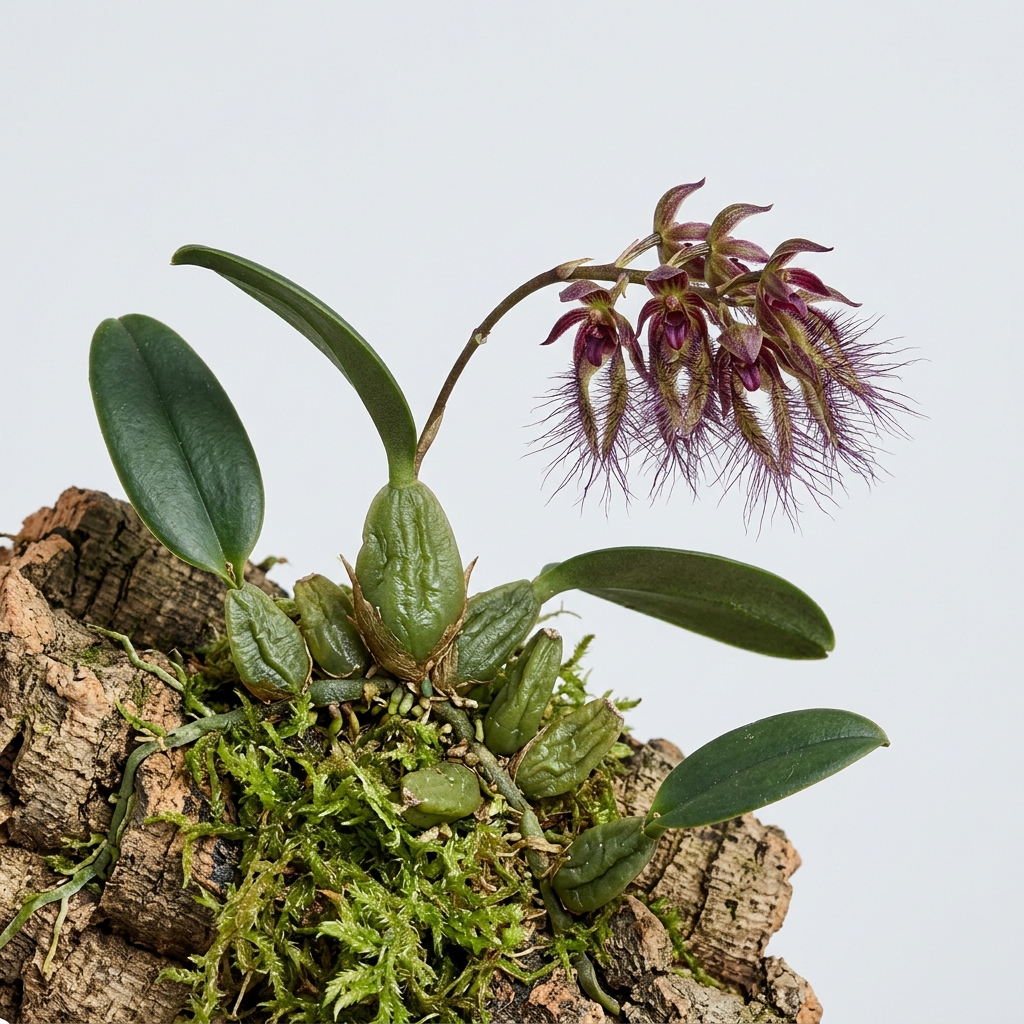
Bulbophyllum Barbigerum, commonly known as the bearded Bulbophyllum, is a fascinating miniature epiphytic orchid native to the tropical forests of West and Central Africa. Highly prized by collectors and orchid enthusiasts, this species is renowned for its extraordinary, highly specialized floral morphology designed to exploit specific insect pollinators. Its creeping growth habit, characterized by small, flattened pseudobulbs and single leathery leaves, makes it an ideal candidate for terrariums, vivariums, or mounted culture.
What truly sets Bulbophyllum Barbigerum apart is its remarkable “bearded” lip, which features long, fine hairs that move dynamically with the slightest air current. This mesmerizing motion, combined with its deep maroon and greenish-brown color palette, creates a dramatic visual display despite the plant’s diminutive size. While it requires attentive humidity and moisture management, successful cultivation rewards growers with one of the most unique and interactive blooming displays in the orchid world.
💡 Did You Know?
The feather-like hairs on the lip of Bulbophyllum Barbigerum are so that they respond to the slightest thermal currents or air movements. This kinetic motion is a highly evolved form of mimicry designed to trick male flies into attempting to mate with the flower, successfully transferring pollen in the process.
🌿 Botanical Overview
Bulbophyllum Barbigerum belongs to the vast and diverse genus Bulbophyllum, which is celebrated for its highly evolved pollination mechanisms. In nature, this epiphyte grows on the mossy branches of trees in warm, humid lowland forests. The plant features a creeping rhizome that produces small, clustered, egg-shaped pseudobulbs. Each pseudobulb supports a single, oblong, dark green leaf that remains relatively compact, rarely exceeding a few inches in length.
The evolutionary adaptation of this species is centered around its survival in moist, shaded environments. Its root system is fine and shallow, designed to cling to damp bark and absorb moisture rapidly from frequent tropical rains. Understanding this natural habitat is key to replicating its growth requirements in a home or greenhouse setting.
🌸 Flower Characteristics
The inflorescence of Bulbophyllum Barbigerum arises from the base of the pseudobulb, producing a short, arching raceme that carries several closely spaced flowers. The individual blossoms are relatively small but structurally complex. The sepals and petals are typically a dark, dusky purple, maroon, or brownish-green, blending seamlessly into their forest canopy surroundings.
The defining feature of the flower is the elongated, fleshy labellum, or lip. This structure is densely fringed with long, dark, hair-like appendages that are incredibly lightweight. The lip is delicately hinged to the column, allowing it to swing freely. Even the gentlest breeze causes the bearded lip to oscillate, mimicking the movement of a small insect to attract its primary pollinators, which are typically small flies.
Fragrance & Bloom Profile
The fragrance of Bulbophyllum Barbigerum is highly specialized and adapted for fly pollination. While some growers report a faint, musty, or slightly putrid scent when up close, the odor is generally not overpowering in a well-ventilated space. The primary attractant remains the visual mimicry of the moving, bearded lip rather than a strong olfactory signal.
Individual flowers typically remain open for one to two weeks, but a healthy, mature specimen can produce multiple spikes sequentially, extending the overall blooming period. The visual impact of the moving hairs makes this orchid a popular choice for close-up exhibition and macro photography.
Parentage & Hybrid Lineage
Bulbophyllum Barbigerum is a distinct, naturally occurring species rather than a man-made hybrid. While it has been used occasionally in specialized hybridizing programs within the Bulbophyllum genus to introduce its unique bearded lip characteristics to offspring, most plants found in cultivation are species selections.
Because exact registration details and hybrid lineages can vary, growers should treat this plant as a true species. When purchasing, it is best to source plants from reputable nurseries that propagate through division or seed flasking rather than wild collection, ensuring the preservation of natural populations.
🌱 Growing Conditions
To thrive, Bulbophyllum Barbigerum requires conditions that mimic its native African rainforest habitat. It prefers low to medium light levels, similar to those suitable for Phalaenopsis orchids. Direct, harsh sunlight will quickly scorch the thin leaves and dehydrate the small pseudobulbs. Filtered shade or high-quality LED grow lights are ideal.
💡 Care Tip
Because this orchid thrives in high , placing it in a glass terrarium or Wardian case is an excellent way to maintain stable moisture levels. Ensure a small computer fan is installed to keep the air moving and prevent stagnant conditions.
Temperature: wise, this orchid is a warm-to-hot grower. It prefers daytime temperatures between 75°F and 85°F (24°C to 29°C), with a slight drop at night. High relative humidity is absolutely critical, ideally maintained between 60% and 80%. Excellent air movement must be provided to prevent stagnant air from causing bacterial or fungal rot in these humid conditions.
Watering, Feeding & Potting Media
Due to its creeping growth habit and shallow root system, Bulbophyllum Barbigerum is most successfully grown when mounted on cork bark, tree fern plaques, or grapevine wood. A small pad of high-quality sphagnum moss should be placed around the roots to help retain moisture. If container culture is preferred, shallow baskets or wide, shallow pots filled with a fine-grade orchid bark mix or pure sphagnum moss are recommended.
Watering must be frequent and consistent. The roots should never be allowed to dry out completely for extended periods. Mounted plants may require daily misting or soaking, especially during warm summer months. Feed the orchid weekly with a highly diluted, balanced orchid fertilizer (such as a quarter-strength 20-20-20 formula) during the active growing season, flushing the media with pure water periodically to prevent salt buildup.
Blooming Season & Care Notes
Bulbophyllum Barbigerum typically blooms in the summer and autumn, though flowering can occasionally occur at other times of the year if stable conditions are maintained. As the new pseudobulbs mature, keep a close eye on their bases for the emergence of flower spikes. Avoid moving the plant or changing its environmental conditions abruptly during spike development, as this can lead to bud blast.
After the blooming cycle is complete, the orchid may enter a brief period of slowed growth. During this time, slightly reduce watering frequency but do not allow the plant to shrivel. Repotting or remounting is best done in the spring when new root growth is actively initiating from the base of the newest pseudobulbs.
⚠️ Common Issues
⚠️ Common Mistake
A common mistake is letting the mounting media dry out completely between waterings. Unlike some orchids that prefer a dry cycle, this species requires consistent dampness around its roots to prevent the miniature pseudobulbs from shriveling.
- Dehydration:
Shriveled pseudobulbs and wrinkled leaves indicate insufficient watering or low humidity. Increase misting frequency immediately. - Root Rot:
Caused by soggy, compacted potting media with poor drainage. Ensure mounted plants drain freely and container-grown plants are in airy mixes. - Leaf Spotting: Fungal or bacterial spots can develop if water sits on the foliage overnight. Always water in the morning and maintain active air circulation.
- Bud Blast:
Sudden drops in humidity or temperature fluctuations can cause developing buds to yellow and drop before opening. - Pests:
Mealybugs and spider mites can occasionally hide under the leaves or around the rhizome. Treat promptly with insecticidal soap or neem oil.
❓ Frequently Asked Questions
Can Bulbophyllum Barbigerum be grown indoors without a greenhouse?
Yes, it can be grown successfully indoors if you provide adequate humidity. Utilizing a humidifying tray, growing the orchid in a glass terrarium, or placing it near a dedicated room humidifier will help maintain the required 60% to 80% humidity levels.
Why are the pseudobulbs on my orchid shriveling?
Shriveled pseudobulbs are a classic sign of water stress, usually caused by underwatering, extremely low humidity, or a compromised root system that cannot absorb water. Check the roots to ensure they are healthy, and increase watering frequency if they are dry.
How do I trigger blooming in Bulbophyllum Barbigerum?
Consistent warm temperatures, high humidity, and regular feeding during the active growing season are key. Providing a very slight drop in night temperatures during late spring can also help stimulate the initiation of flower spikes.
Is it better to mount this orchid or grow it in a pot?
Mounting on cork bark or tree fern plaques is highly recommended because of the plant’s creeping rhizome habit. Mounting allows the plant to scramble naturally and ensures the roots receive excellent aeration, reducing the risk of rot.
⭐ Final Growing Notes
Bulbophyllum Barbigerum is a captivating marvel of the orchid world, offering a unique combination of miniature growth and highly interactive, kinetic flowers. While its strict demands for high humidity and consistent moisture make it slightly more challenging than common household orchids, its rewarding blooms and compact size make it an absolute must-have for dedicated collectors. By focusing on excellent air movement, stable warm temperatures, and a reliable watering routine, you can enjoy the mesmerizing dance of this bearded beauty for years to come.
⚕️ Health, Safety & Edibility
Understanding how a plant interacts with people, pets, and the surrounding environment is part of responsible cultivation. This section uses conservative, general guidance and does not replace professional medical or veterinary advice.
Human Safety: No published evidence currently identifies species-specific toxicity concerns for Bulbophyllum Barbigerum during normal handling. As with most ornamental plants, it should not be intentionally consumed.
Pet Safety: Published information does not indicate that this orchid commonly poses a toxicity concern for cats or dogs. However, chewing leaves, flowers, roots, or potting media may still cause mild digestive upset.
Edibility: This orchid is cultivated for ornamental display rather than food. Ornamental plants may carry fertilizers, pesticides, or other horticultural treatments that make them unsuitable for consumption.
Skin Contact: Routine handling is not generally associated with skin irritation. Gardeners with sensitive skin may prefer wearing gloves when repotting, pruning, or handling potting media.
🌱 Propagation Tip
Propagate Bulbophyllum Barbigerum by dividing mature clumps during the spring repotting season. Ensure each division has at least three to four healthy pseudobulbs and active root growth to guarantee successful establishment on its new mount.
⭐ Expert Advice
When mounting this species on cork bark, use a generous pad of high-quality, long-fibered sphagnum moss under and over the roots. This acts as a moisture reservoir, helping the plant transition smoothly and preventing rapid dehydration in home environments.

Leave A Comment