
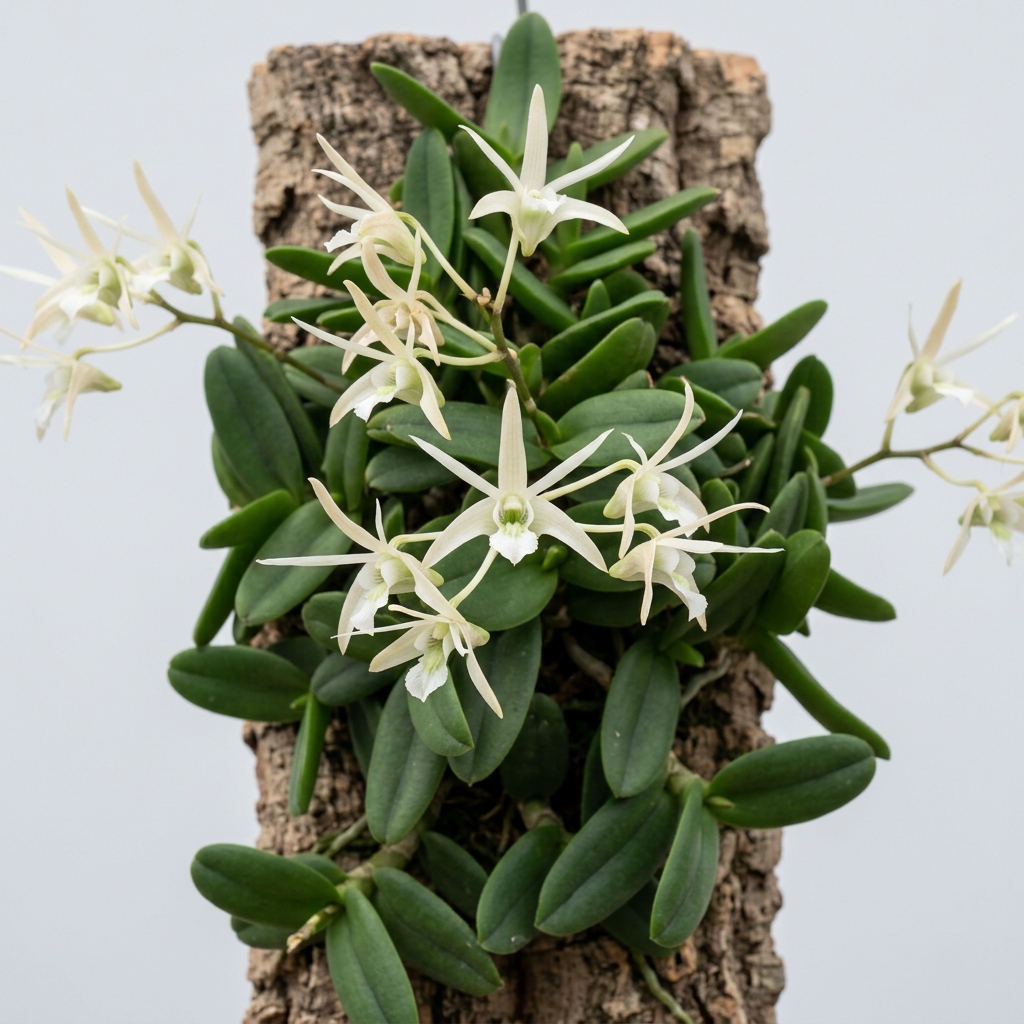
Dendrobium Linguiforme, commonly known as the tongue orchid or button orchid, is a fascinating epiphytic or lithophytic species native to eastern Australia. Highly prized by orchid enthusiasts for its unique succulent-like foliage, this miniature orchid features thick, fleshy, tongue-shaped leaves that creep along surfaces using a prostrate growth habit. It represents a striking departure from the typical cane-like growth of many other members of the Dendrobium genus, making it a highly sought-after addition to specialized collections.
When in bloom, this resilient orchid transforms into a delicate spectacle, producing numerous feathery white to cream-colored flowers that contrast beautifully with its rugged, dark green foliage. Its ability to thrive in bright, dry conditions makes it an excellent candidate for mounting on cork bark or hardwood plaques. For growers seeking a low-maintenance yet visually distinctive species, this orchid offers a rewarding cultivation experience with minimal fuss.
💡 Did You Know?
Dendrobium Linguiforme belongs to the Dendrobium orchid group, where flower presentation is often just as important as . White-flowered cultivars are especially valued indoors because their pale blooms reflect well and pair easily with many home, greenhouse, and display settings.
🌿 Botanical Overview
Dendrobium Linguiforme is native to the coastal and mountain regions of Queensland and New South Wales, Australia. In its natural habitat, it is found growing on exposed rocks (lithophytic) or clinging to the bark of trees (epiphytic) in open forests. This environment has shaped its highly specialized morphology, allowing it to survive periods of dry weather by storing water in its succulent leaves.
The vegetative structure of this orchid is characterized by a creeping rhizome that hugs the growing surface. The leaves are thick, leathery, and oblong, resembling small tongues or buttons, typically measuring about two to four centimeters in length. The upper surface of each leaf is marked with fine longitudinal furrows, which help reduce water loss and maximize light absorption in bright environments.
🌸 Flower Characteristics
The inflorescences of Dendrobium Linguiforme emerge from the nodes along the creeping rhizome, usually near the base of the leaves. Each flower spike can carry between six and twenty delicate, spider-like flowers. The petals and sepals are narrow, linear, and slightly curved, giving the entire bloom a feathery or wispy appearance.
The flowers are predominantly white to cream, though some specimens may exhibit a pale yellow tint. The lip, or labellum, is relatively small and features subtle, wavy margins with faint purple or yellow markings near the throat. Because the flowers are produced in dense clusters, a mature specimen in full bloom can appear completely covered in a frothy, white cloud of blossoms.
Fragrance & Bloom Profile
The fragrance of Dendrobium Linguiforme is often described as light, sweet, and faintly citrusy, though its intensity can vary depending on environmental conditions and individual plant clones. The scent is typically most noticeable during the warmer hours of the day when the flowers are exposed to bright light.
The blooms are relatively long-lasting for a miniature orchid, often remaining fresh for two to three weeks. Because the plant blooms in late winter or early spring, the sudden burst of delicate white flowers provides a striking contrast to the rugged, evergreen foliage, signaling the transition into the active growing season.
Parentage & Hybrid Lineage
As a naturally occurring species, Dendrobium Linguiforme does not have a hybrid parentage. However, within the orchid community, there is ongoing taxonomic discussion regarding its classification. Many modern botanists place this species in the genus Dockrillia (as Dockrillia linguiformis) due to its distinctive succulent, non-pseudobulbous growth habit, though it remains widely traded and recognized under its traditional Dendrobium name.
While it is primarily grown as a species, it has occasionally been used in breeding programs to introduce drought tolerance and a creeping growth habit to hybrid offspring. Documentation on registered hybrids is limited, and most growers prefer to cultivate the pure species to appreciate its unique, natural form.
🌱 Growing Conditions
To cultivate Dendrobium Linguiforme successfully, growers should attempt to replicate its bright, airy native habitat. This orchid thrives in bright, filtered light, and can even tolerate some direct morning sun. Inadequate light will often result in sparse blooming and elongated, less succulent leaves.
💡 Care Tip
For best results, grow Dendrobium Linguiforme in bright filtered with steady and gentle airflow. Avoid placing the plant in harsh midday sun, but do not keep it in a dark corner; weak is one of the most common reasons cultivated orchids refuse to rebloom.
Temperature: wise, the species is highly adaptable. It grows well in intermediate to warm conditions during the spring and summer, but benefits from a cooler, drier rest period in the winter. Air circulation is critical for this orchid; because it is typically grown mounted, stagnant air can lead to moisture retention and later rot.
Watering, Feeding & Potting Media
Because of its succulent nature, Dendrobium Linguiforme is highly sensitive to overwatering. The plant should be allowed to dry out completely between waterings. During the active growing season in spring and summer, it can be watered thoroughly several times a week, especially if mounted. In the winter, watering should be significantly reduced, providing just enough moisture to prevent the leaves from shriveling excessively.
Mounting is the preferred method of cultivation for this species. It performs exceptionally well on cork bark, tree fern plaques, or rough hardwood mounts, which allow its creeping rhizomes to attach firmly. If pot culture is attempted, an extremely coarse, fast-draining medium such as large bark chunks or lava rock must be used. Feeding should be light, using a diluted, balanced orchid fertilizer once every two to three weeks during the active growth phase.
Blooming Season & Care Notes
The primary blooming season for Dendrobium Linguiforme occurs from late winter to early spring. To trigger a robust bloom cycle, the plant requires a distinct winter rest period characterized by cooler temperatures and reduced watering. This seasonal cue mimics the dry winters of its native Australian habitat.
Once the flower spikes begin to emerge, maintain consistent humidity and avoid moving the plant to a location with drastically different light or temperature levels. After the flowers fade, the old spikes can be gently trimmed at the base, taking care not to damage the creeping rhizome or the nearby leaves.
⚠️ Common Issues
⚠️ Common Mistake
The most common mistake is by calendar instead of root and potting-media condition. Dendrobium roots need moisture and air at the same time, so constantly wet bark or sphagnum can lead to root loss even when the leaves still look healthy.
- Root Rot:
Caused by excessive watering or water retention in poorly draining media. - Shriveled Leaves: A sign of severe dehydration, often occurring during an excessively dry winter rest.
- Scale and Mealybugs: These pests can hide in the crevices between the tightly packed leaves and rhizomes.
- Lack of Blooms: Usually due to insufficient light during the growing season or the absence of a cool, dry winter rest.
❓ Frequently Asked Questions
Can Dendrobium Linguiforme be grown in a traditional pot?
While it is possible to grow this orchid in a pot, it is highly discouraged. Its creeping, prostrate growth habit makes it much better suited for mounting on cork bark or plaques. If potted, it requires an extremely coarse, non-retentive medium to prevent root rot.
How do I know if my orchid is getting enough light?
Healthy leaves should be a firm, olive-green color with distinct longitudinal ridges. If the leaves become dark green and lose their plumpness, the plant may need more light. Conversely, yellowish or reddish-tinged leaves indicate the light levels may be too high.
What should I do during the winter rest period?
During winter, reduce watering significantly, allowing the plant to dry out thoroughly between light mistings. Keep the orchid in a cooler location with bright light. This dry, cool period is essential for stimulating flower bud development for the upcoming spring.
Why are the leaves on my orchid shriveling?
Slight shriveling during the winter rest is normal and indicates the plant is utilizing its stored water. However, severe shriveling during the active growing season suggests either underwatering or root loss due to overwatering, preventing the plant from absorbing moisture.
⭐ Final Growing Notes
Dendrobium Linguiforme is a rewarding and highly distinctive orchid that brings a touch of the Australian wilderness into any collection. By providing it with bright light, excellent air movement, and a strict wet-and-dry watering cycle, growers can enjoy its unique succulent foliage and spectacular spring blooms for many years.
⚕️ Health, Safety & Edibility
Understanding how a plant interacts with people, pets, and the surrounding environment is part of responsible cultivation. This section uses conservative, general guidance and does not replace professional medical or veterinary advice.
Human Safety: No published evidence currently identifies species-specific toxicity concerns for Dendrobium Linguiforme during normal handling. As with most ornamental plants, it should not be intentionally consumed.
Pet Safety: Published information does not indicate that this orchid commonly poses a toxicity concern for cats or dogs. However, chewing leaves, flowers, roots, or potting media may still cause mild digestive upset.
Edibility: This orchid is cultivated for ornamental display rather than food. Ornamental plants may carry fertilizers, pesticides, or other horticultural treatments that make them unsuitable for consumption.
Skin Contact: Routine handling is not generally associated with skin irritation. Gardeners with sensitive skin may prefer wearing gloves when repotting, pruning, or handling potting media.
🌱 Propagation Tip
Propagation should be approached patiently. Most home growers should wait for natural keikis or divide only mature, healthy plants when the orchid type allows it. Never remove a young growth until it has strong roots and enough leaves to support itself away from the parent plant.
⭐ Expert Advice
Repot after flowering when fresh root tips begin to appear. This timing helps the plant anchor quickly into new bark or sphagnum and reduces stress, especially for orchids grown indoors where airflow, , and drying speed can change from season to season.

Leave A Comment