

Dendrobium Gracilicaule, commonly referred to as the slender cane orchid, is a highly regarded epiphytic species native to the eastern coast of Australia and select Pacific islands. Prized by orchid enthusiasts for its graceful growth habit and resilient nature, this orchid produces numerous slender, cane-like pseudobulbs that support clusters of bright, speckled blossoms. It is a popular choice for both intermediate growers and dedicated collectors who appreciate wild orchid species with robust, adaptable growth habits.
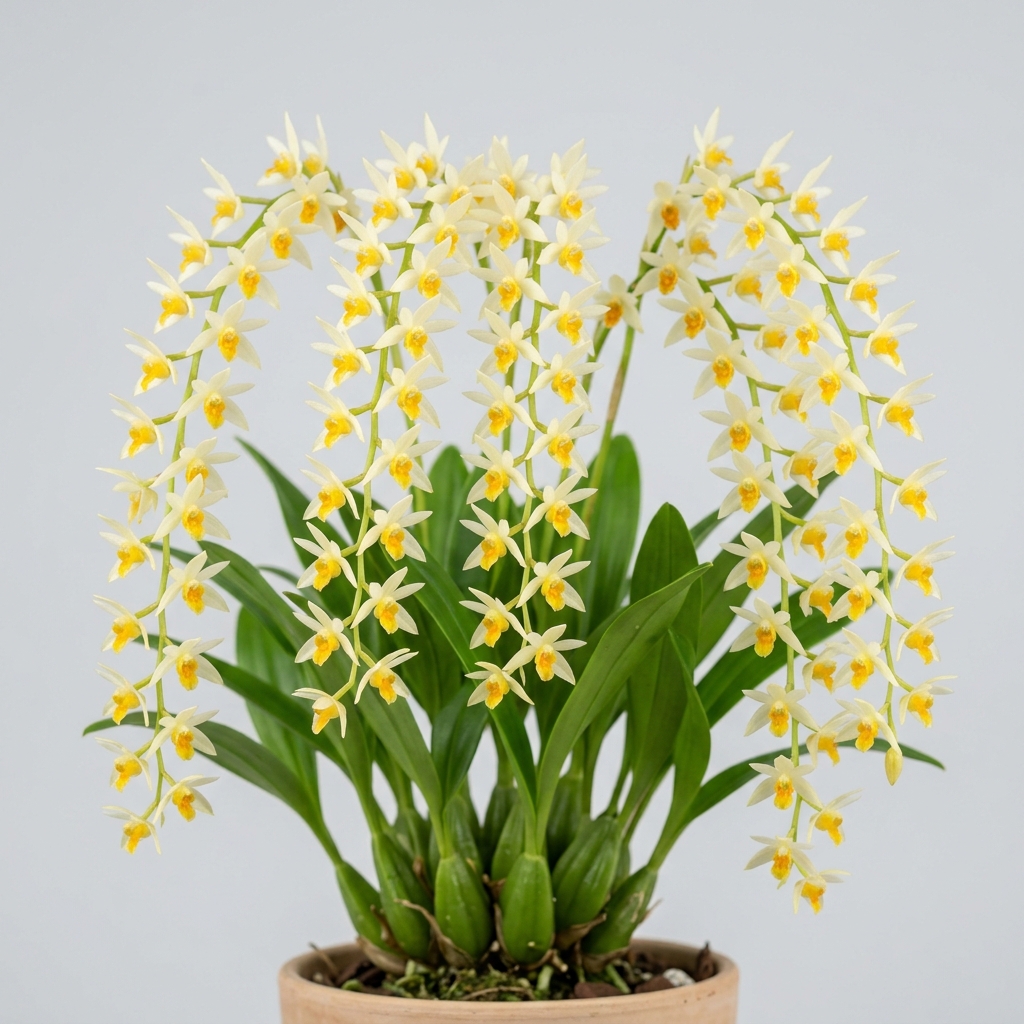
The charm of this orchid lies in its prolific blooming display, where multiple arching flower spikes emerge from the upper nodes of mature canes. The small, star-shaped flowers typically present a striking contrast of yellow to golden hues adorned with reddish-brown markings on the reverse side of the petals. Cultivating this species successfully relies on mimicking its natural seasonal rhythms, balancing bright light and regular moisture during the active growing season with a cooler, drier rest period in the winter.
💡 Did You Know?
In its native Australian habitat, Dendrobium Gracilicaule is often found growing high in the rainforest canopy on the trunks of trees, but it is also highly adaptable as a lithophyte, anchoring itself directly onto damp rock faces. This remarkable versatility allows the orchid to thrive in diverse microclimates, making it exceptionally resilient and forgiving when transitioned into home cultivation.
🌿 Botanical Overview
Dendrobium Gracilicaule is characterized by its distinctive vegetative structure, featuring erect, slender pseudobulbs that can reach up to sixty centimeters in height. These yellowish-green canes are thin at the base and gradually thicken toward the apex, where they carry three to six leathery, lanceolate leaves. In its native habitat, this species grows as an epiphyte on rainforest trees or occasionally as a lithophyte on damp rocks, where its extensive root system anchors firmly to absorb moisture and nutrients from organic debris.
The evolutionary adaptations of this orchid allow it to withstand fluctuations in moisture and temperature. The tough, fibrous canes serve as water storage organs, enabling the plant to survive dry spells in the wild. This structural resilience makes it remarkably forgiving in cultivation, provided its roots receive adequate aeration and are never subjected to prolonged, stagnant wetness.
🌸 Flower Characteristics
The inflorescences of Dendrobium Gracilicaule are relatively short, arching racemes that emerge from the upper nodes of both leafy and leafless mature canes. Each spike typically carries between five and thirty closely spaced flowers, creating a dense and colorful presentation. The individual blossoms are small, usually measuring between one and two centimeters in diameter, with a classic star-like shape.
Coloration is one of the most intriguing features of this species. The interior of the sepals and petals is generally a bright, clean yellow or greenish-yellow, while the exterior surfaces often exhibit distinct reddish-brown blotches or speckles. The lip, or labellum, is three-lobed, featuring a white or pale yellow base with faint purple or brown markings, adding intricate detail to the overall floral display.
Fragrance & Bloom Profile
The blossoms of Dendrobium Gracilicaule are widely celebrated for their sweet, penetrating fragrance, which is often described as having notes of wild honey or warm spices. This scent is typically most pronounced during the warm midday hours when bright light stimulates the release of volatile oils from the petals. A single well-grown specimen with multiple flowering canes can easily fill an entire growing space with its pleasant aroma.
The blooming cycle generally lasts for three to four weeks, depending on environmental conditions. Cooler temperatures and moderate humidity will help prolong the life of the flowers, while excessive heat or drafty conditions may cause the blossoms to fade prematurely. Unlike some hybrid orchids that bloom continuously, this species concentrates its energy into a singular, dramatic annual flowering event.
Parentage & Hybrid Lineage
As a naturally occurring species rather than a man-made hybrid, Dendrobium Gracilicaule possesses a stable genetic profile shaped by its native environment. Within the orchid community, it is classified under the section Dendrocoryne, a group of Australian dendrobiums known for their cane-like growth and cold tolerance. While it is grown primarily as a species, it has been used extensively in hybridization programs to introduce cold hardiness, floriferousness, and unique spotting patterns to new Dendrobium grexes.
Because it is a wild species, some natural variation exists across its geographic range. Growers may encounter different forms or varieties, such as those with more intense spotting or slightly larger flowers, though these are generally considered variations within the species rather than distinct cultivars. When purchasing this orchid, sourcing from reputable nurseries ensures the plant is a true-to-type division or seed-raised specimen.
🌱 Growing Conditions
To cultivate Dendrobium Gracilicaule successfully, growers should provide bright, filtered light. In an indoor setting, an east- or semi-shaded south-facing window is ideal, while outdoor growers should use fifty to seventy percent shade cloth to prevent foliage scorch. The leaves should maintain a light green color; dark green leaves indicate insufficient light, while yellowing or bleached spots suggest overexposure.
💡 Care Tip
Provide this orchid with strong air circulation at all times. Good air movement mimics its native canopy environment, helping to dry the foliage quickly after and significantly reducing the risk of fungal leaf spot and root rot in humid conditions.
Temperature management is crucial for triggering the annual bloom cycle. This orchid thrives in intermediate to warm summer temperatures ranging from twenty to thirty degrees Celsius. In the winter, however, it benefits from cooler night temperatures dropping to ten to fifteen degrees Celsius. High humidity between fifty and seventy percent, combined with strong, continuous air movement, is essential to prevent fungal pathogens from establishing on the foliage or roots.
Watering, Feeding & Potting Media
During the active spring and summer growing season, Dendrobium Gracilicaule requires frequent watering to support the development of new canes. The potting medium should be allowed to approach dryness but not dry out completely between waterings. Apply a balanced, highly diluted orchid fertilizer weekly or bi-weekly during this period of active growth, ensuring the medium is thoroughly flushed with pure water periodically to prevent salt buildup.
The choice of potting medium must prioritize excellent drainage and aeration. A coarse bark mix blended with perlite, charcoal, and a small amount of sphagnum moss works exceptionally well in plastic or clay pots. Alternatively, because of its epiphytic nature, this species is an excellent candidate for mounting on cork bark or tree fern slabs, provided the grower can maintain the high humidity and frequent watering required for mounted specimens.
Blooming Season & Care Notes
The primary blooming season for Dendrobium Gracilicaule occurs in late winter to spring, triggered by the cooler temperatures and drier conditions of the preceding months. As autumn approaches, growers should gradually reduce watering and suspend fertilizer applications. This dry winter rest mimics the seasonal drought of its native habitat and is critical for initiating flower bud development rather than vegetative growth.
During the winter rest, water should only be provided sparingly—just enough to prevent the pseudobulbs from shriveling excessively. Once flower spikes begin to emerge from the upper nodes in late winter, regular watering and light feeding can be gradually resumed. After flowering is complete, any repotting or dividing should be performed just as new root growth begins to emerge from the base of the newest canes.
⚠️ Common Issues
⚠️ Common Mistake
The most common mistake is failing to provide a distinct winter rest. Continuing to water and fertilize heavily during the winter months often results in the orchid producing vegetative keikis instead of flower spikes, or worse, suffering from root rot during the cooler season.
- Root Rot:
Caused by overwatering or a degraded, compacted potting medium that suffocates the roots. - Bud Blast:
Premature dropping of flower buds, often triggered by sudden temperature fluctuations, low humidity, or drafts. - Pseudobulb Shriveling: A sign of dehydration, which can occur during an excessively dry winter rest or due to dead roots unable to absorb water.
- Pests:
Mealybugs, scale, and spider mites can occasionally colonize the leaf axils and new growth; treat promptly with horticultural soap or neem oil. - Foliage Spotting: Fungal or bacterial spots can develop if water sits on the leaves overnight without adequate air circulation.
❓ Frequently Asked Questions
How do I trigger blooms on my Dendrobium Gracilicaule?
To trigger blooming, you must provide a distinct cool, dry rest period during the late autumn and winter. Reduce watering significantly, stop fertilizing, and ensure night temperatures drop to around ten to fifteen degrees Celsius. This environmental stress signals the plant to produce flower buds instead of vegetative growth.</p
Can I grow Dendrobium Gracilicaule mounted on wood?
Yes, this species is an excellent candidate for mounting on cork bark or tree fern slabs due to its epiphytic nature. When mounted, it requires high humidity and daily watering during the hot summer months, as the roots will dry out much faster than they would in a traditional pot.</p
Why are the leaves on my orchid turning yellow?
Yellowing leaves can indicate several issues. If older leaves on mature, back-canes turn yellow and drop, this is often a natural aging process. However, if new leaves turn yellow, it may be a sign of overwatering, root rot, or excessive direct sunlight scorching the foliage.</p
How often should I repot this orchid?
Repotting should typically be done every two to three years, or when the potting medium begins to break down and retain too much moisture. The best time to repot is in the spring, immediately after the blooming cycle has finished and just as new root growth begins to emerge from the base of the canes.
⭐ Final Growing Notes
Dendrobium Gracilicaule remains a rewarding and low-maintenance addition to any orchid collection, offering a delightful combination of sweet fragrance, striking speckled blossoms, and robust growth. By respecting its natural seasonal cycle of summer wetness and winter dryness, growers can enjoy a spectacular annual floral display that brings a touch of the Australian wilderness into the home or greenhouse.
⚕️ Health, Safety & Edibility
Understanding how a plant interacts with people, pets, and the surrounding environment is part of responsible cultivation. This section uses conservative, general guidance and does not replace professional medical or veterinary advice.
Human Safety: No published evidence currently identifies species-specific toxicity concerns for Dendrobium Gracilicaule during normal handling. As with most ornamental plants, it should not be intentionally consumed.
Pet Safety: Published information does not indicate that this orchid commonly poses a toxicity concern for cats or dogs. However, chewing leaves, flowers, roots, or potting media may still cause mild digestive upset.
Edibility: This orchid is cultivated for ornamental display rather than food. Ornamental plants may carry fertilizers, pesticides, or other horticultural treatments that make them unsuitable for consumption.
Skin Contact: Routine handling is not generally associated with skin irritation. Gardeners with sensitive skin may prefer wearing gloves when repotting, pruning, or handling potting media.
🌱 Propagation Tip
Propagate mature specimens by division during the spring repotting cycle, ensuring each new division has at least three to four healthy, mature pseudobulbs. Alternatively, look for small plantlets, known as keikis, which occasionally form on older canes, and pot them separately once they develop robust roots.
⭐ Expert Advice
To maximize bloom production, place the orchid in a location where it experiences a noticeable drop between day and night temperatures during autumn. This differential, combined with reduced , acts as the primary physiological trigger for a heavy flush of spring blossoms.

Leave A Comment