
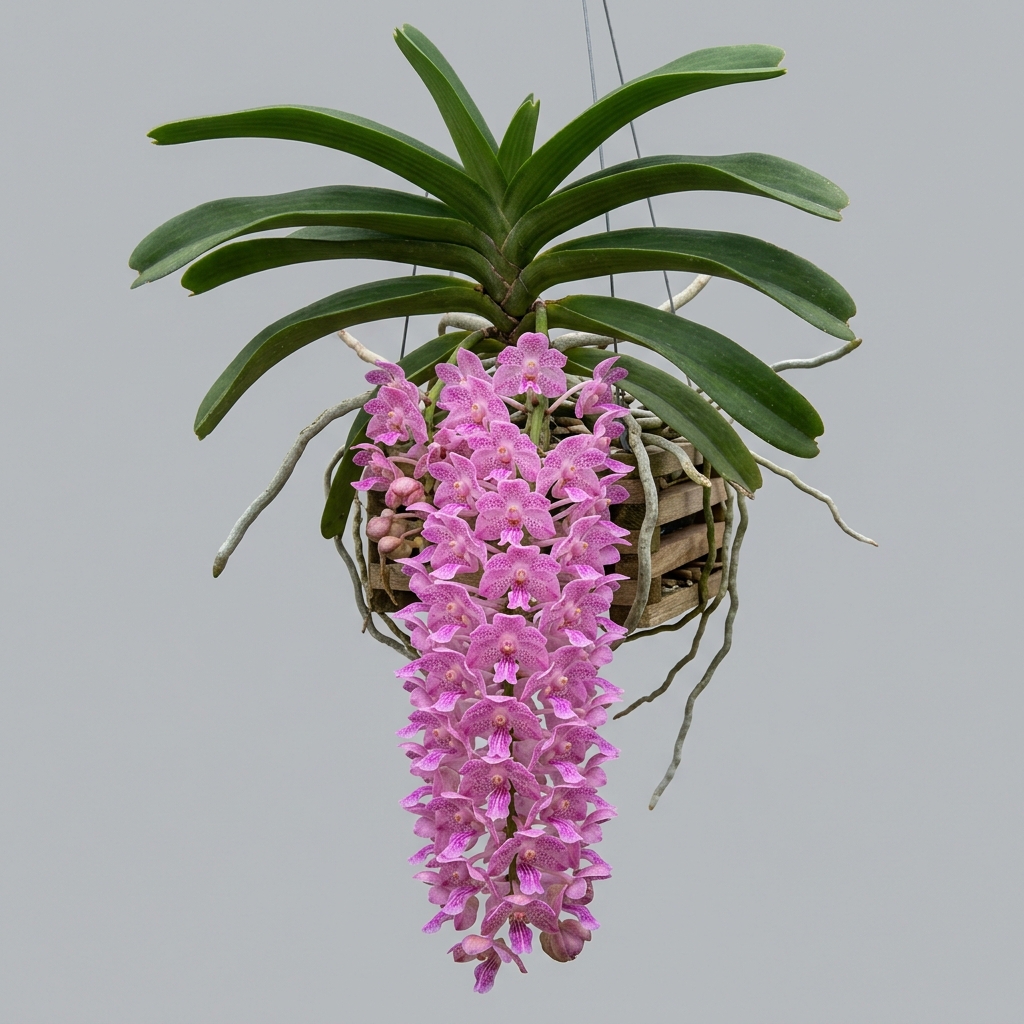
Aerides Rosea, commonly known as the rose-colored Aerides, is a highly prized monopodial orchid species native to the subtropical forests of Southeast Asia and the foothills of the Himalayas. Renowned for its spectacular, pendulous inflorescences that resemble lush, flowering fox tails, this epiphyte is a favorite among intermediate and advanced orchid enthusiasts. Its robust growth habit and striking floral displays make it a standout addition to any tropical orchid collection.
In its natural habitat, this orchid clings to the trunks and branches of trees, basking in bright, dappled sunlight and high atmospheric humidity. Cultivating Aerides Rosea successfully in a home or greenhouse environment requires replicating these airy, humid conditions. When provided with the proper balance of light, moisture, and air movement, this species rewards growers with a breathtaking annual display of fragrant, rose-pink blossoms.
💡 Did You Know?
Aerides Rosea is often referred to as a foxtail orchid due to the unique shape of its pendulous flower spikes, which can hold up to fifty individual blossoms packed tightly together. In their native Asian habitats, these orchids grow high in the forest canopy where they rely entirely on passing breezes and rain to deliver moisture and nutrients to their exposed aerial roots.
🌿 Botanical Overview
Aerides Rosea is a medium to large monopodial epiphyte characterized by its thick, leathery, strap-like leaves that grow in an alternating, two-ranked arrangement along a central stem. The leaves are typically deeply channeled, arching, and can reach lengths of up to twelve inches. Unlike sympodial orchids, it does not possess pseudobulbs; instead, it relies on its thick, fleshy aerial roots and succulent leaves to store moisture and nutrients.
The root system of Aerides Rosea is exceptionally robust, producing long, silvery-grey aerial roots that wander freely into the air to capture moisture and atmospheric nutrients. In the wild, these roots anchor the plant securely to rough tree bark, allowing it to withstand seasonal monsoons and dry periods alike. This growth habit dictates that the plant requires maximum root aeration when grown in cultivation.
🌸 Flower Characteristics
The defining feature of Aerides Rosea is its magnificent, pendulous inflorescence, which can measure anywhere from twelve to twenty-four inches in length. Each flower spike is densely packed with dozens of closely set, waxy blossoms, creating a dramatic cascading effect. The individual flowers are typically one to one and a half inches across, featuring soft rose-pink to lavender-purple sepals and petals that are often adorned with delicate darker spotting.
The lip, or labellum, of the flower is particularly intricate, often presenting a deeper magenta hue with a forward-pointing, spur-like structure characteristic of the genus Aerides. The flowers open progressively from the base of the spike to the tip, ensuring a prolonged and visually stunning display that can last for several weeks.
Fragrance & Bloom Profile
The blossoms of Aerides Rosea are celebrated for their intense, sweet fragrance, which is often described as a blend of citrus and rich floral notes. This scent is most pronounced during the warm morning hours when sunlight stimulates the release of volatile oils from the petals. The fragrance is highly carrying, capable of filling an entire greenhouse or growing room with its pleasant, sweet aroma.
The blooming cycle typically occurs once a year, with the flowers remaining in pristine condition for three to four weeks, depending on ambient temperatures and humidity levels. Cooler temperatures during the blooming period can help extend the life of the individual flowers, while excessive heat or dry air may cause them to fade prematurely.
Parentage & Hybrid Lineage
As a naturally occurring species rather than a man-made hybrid, Aerides Rosea possesses a pure genetic lineage that has been documented by botanists since the nineteenth century. While it is not a cultivar in the strict hybrid sense, select line-bred clones have been developed by orchid breeders to enhance flower size, color intensity, and spike density.
In orchid hybridization, Aerides Rosea has been utilized as a parent species to introduce its pendulous blooming habit, vibrant pink coloration, and sweet fragrance to intergeneric hybrids. It is commonly crossed with members of the Vanda and Rhynchostylis genera, resulting in popular hybrid genera such as Aeridovanda and Aeridostylis, which inherit the robust growth and showy spikes of the parent plants.
🌱 Growing Conditions
To thrive, Aerides Rosea requires bright, indirect light, similar to the conditions preferred by many Vanda species. While it can tolerate some direct morning sun, hot afternoon sunlight will scorch the foliage. High-output LED grow lights or a shaded south- or east-facing window are ideal indoor locations.
💡 Care Tip
Always mount Aerides Rosea or grow it in an open wooden basket rather than a traditional plastic pot. This orchid's extensive aerial root system requires constant exposure to fresh, moving air to prevent rot and mimic its natural epiphytic habitat.
Temperature: wise, this orchid prefers warm to intermediate conditions. Daytime temperatures should ideally range between 75 and 85 degrees Fahrenheit, with a night-time drop to 65 or 70 degrees Fahrenheit. Maintaining high relative humidity, ideally between 60% and 80%, is crucial for healthy leaf and root development. Strong, continuous air movement is essential to prevent stagnant air, which can lead to fungal and bacterial infections.
Watering, Feeding & Potting Media
During the active growing season in spring and summer, Aerides Rosea requires frequent and copious watering. Because it is typically grown with little to no potting media, the roots must be thoroughly soaked daily, or even twice daily during hot weather, allowing them to turn completely green. In the cooler winter months, watering should be reduced, allowing the roots to dry thoroughly between light mistings.
Fertilization should be applied weekly using a balanced, water-soluble orchid fertilizer diluted to quarter or half strength. This weekly feeding regimen supports the rapid vegetative growth of the leaves and roots.
Due to its extensive aerial root system, Aerides Rosea is best grown in open wooden baskets without any media, or mounted on cork bark slabs. If container cultivation is necessary, use an extremely coarse, fast-draining medium such as large-grade charcoal, lava rock, or extra-large fir bark chunks to ensure maximum airflow around the roots.
Blooming Season & Care Notes
Aerides Rosea typically initiates its bloom cycle in the late spring or early summer, triggered by the increase in day length and rising temperatures. As the flower spikes begin to emerge from the leaf axils, it is important to keep the plant stable and avoid changing its orientation to the light source, which can cause the developing spike to twist or grow erratically.
Once the spike is fully formed, avoid spraying water directly onto the developing buds, as trapped moisture can lead to bud blast or fungal spotting. After the blooming cycle is complete, the old flower spike should be cut back to the stem using sterilized cutting tools. Repotting or remounting is best done immediately after flowering, just as new root tips begin to emerge.
⚠️ Common Issues
⚠️ Common Mistake
A frequent mistake is potting Aerides Rosea in standard, fine-grade orchid bark or peat-based mixes. This suffocates the thick aerial roots, leading to rapid root rot. Instead, keep the roots bare or use only extremely coarse, chunky media that allows immediate drainage.
- Root Rot:
Occurs when the orchid is grown in dense, compacted media that retains too much moisture and suffocates the roots. - Dehydration:
Indicated by shriveled, wrinkled leaves and dry, brittle roots, usually caused by insufficient watering or low humidity. - Bud Blast:
The premature yellowing and dropping of flower buds before they open, often triggered by sudden temperature fluctuations, drafts, or low humidity. - Pests:
Mealybugs and scale insects can hide in the tight crevices of the leaf axils; treat promptly with insecticidal soap or horticultural oil. - Leaf Spotting: Fungal or bacterial spots can develop on the foliage if water is allowed to sit on the leaves overnight without adequate air circulation.
❓ Frequently Asked Questions
How often should I water my Aerides Rosea?
If grown bare-root in a wooden basket, Aerides Rosea should be watered daily during the spring and summer growing season. In hot or dry conditions, twice-daily watering may be necessary. During the winter rest period, reduce watering to every few days, providing just enough moisture to prevent the leaves from shriveling.
Why are the leaves on my orchid turning yellow and dropping?
Yellowing leaves can indicate several issues, including overwatering, poor root aeration, or natural aging of the oldest lower leaves. If the yellowing is accompanied by soft, mushy stems or black spots, it is likely a sign of rot, requiring immediate treatment with a fungicide and improved air circulation.
Can I grow Aerides Rosea indoors under artificial lights?
Yes, Aerides Rosea can be successfully grown indoors under high-intensity LED grow lights designed for orchids. Ensure the lights are kept at an appropriate distance to prevent foliage scorch, and use a small fan to maintain continuous air movement around the plant to mimic its natural breezy habitat.
How do I encourage my Aerides Rosea to bloom?
To trigger blooming, ensure the orchid receives bright, indirect light throughout the year and a slight drop in night-time temperatures during the winter. A consistent watering and fertilization routine during the active summer growth phase is also essential for building the energy required to produce flower spikes.
⭐ Final Growing Notes
Cultivating Aerides Rosea is a deeply rewarding endeavor for any orchid grower willing to accommodate its specific environmental needs. Its spectacular, cascading pink blooms and intoxicating fragrance make it a true showpiece of the orchid world. By prioritizing excellent air circulation, high humidity, and a free-draining root environment, you can enjoy the annual splendor of this magnificent tropical species for many years to come.
⚕️ Health, Safety & Edibility
Understanding how a plant interacts with people, pets, and the surrounding environment is part of responsible cultivation. This section uses conservative, general guidance and does not replace professional medical or veterinary advice.
Human Safety: No published evidence currently identifies species-specific toxicity concerns for Aerides Rosea during normal handling. As with most ornamental plants, it should not be intentionally consumed.
Pet Safety: Published information does not indicate that this orchid commonly poses a toxicity concern for cats or dogs. However, chewing leaves, flowers, roots, or potting media may still cause mild digestive upset.
Edibility: This orchid is cultivated for ornamental display rather than food. Ornamental plants may carry fertilizers, pesticides, or other horticultural treatments that make them unsuitable for consumption.
Skin Contact: Routine handling is not generally associated with skin irritation. Gardeners with sensitive skin may prefer wearing gloves when repotting, pruning, or handling potting media.
🌱 Propagation Tip
While Aerides Rosea cannot be easily divided like sympodial orchids, it occasionally produces offshoots, known as keikis, along the main stem. Allow these offsets to develop several robust roots of their own, at least three inches long, before carefully detaching them with a sterile blade to pot individually.
⭐ Expert Advice
To maximize the lifespan of the fragrant blooms, move the orchid to a slightly cooler, shaded location with gentle air movement once the first few flowers on the spike begin to open. Avoid misting the open flowers directly, as water droplets can cause unsightly fungal spotting.

Leave A Comment