
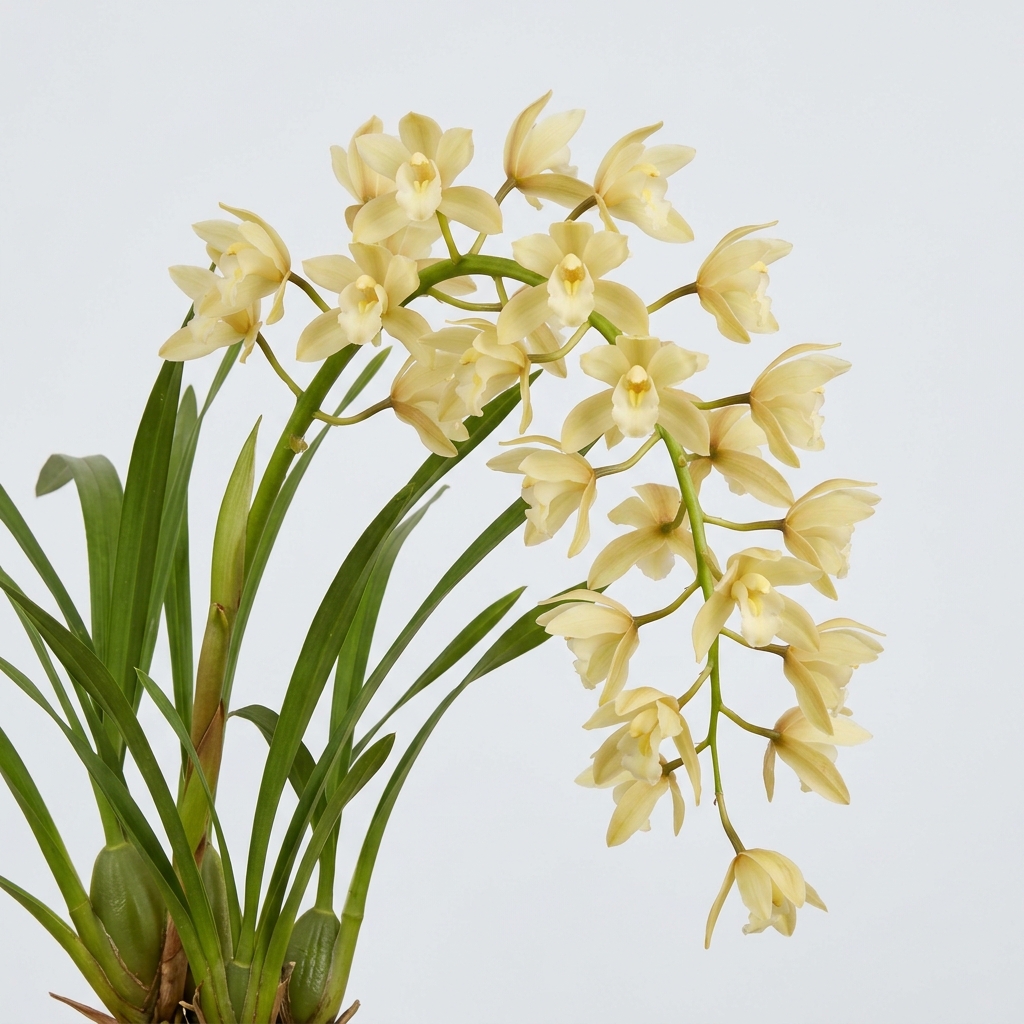
Cymbidium Elegans, commonly known as the elegant Cymbidium, is a highly prized orchid species native to the cool, montane forests of the Himalayas and surrounding regions of Southeast Asia. Unlike many of its upright, large-flowered relatives, this species is celebrated for its gracefully arching or pendulous inflorescences that carry dense, compact clusters of trumpet-shaped, cream-to-pale-yellow flowers. It brings a unique, delicate aesthetic to any orchid collection, appealing to growers who appreciate wild species forms and elegant growth habits.
Cultivating this orchid successfully requires replicating its native high-altitude environment, which translates to cool temperatures, bright indirect light, and distinct seasonal moisture variations. While it can be slightly more demanding than mass-market hybrid Cymbidiums, its reliable autumn blooming cycle and striking pendulous presentation make it a rewarding choice for intermediate and advanced orchid enthusiasts.
💡 Did You Know?
Cymbidium Elegans is part of the Cymbidium orchid group, a favorite among growers because its flowers, growth habit, and care needs make it useful for comparing cultivated orchids within the same . Observing its leaves, roots, and bloom spikes can help growers understand how this cultivar responds to indoor conditions.
🌿 Botanical Overview
Cymbidium Elegans is an epiphytic, lithophytic, or occasionally terrestrial orchid species found at elevations ranging from 1,500 to 2,800 meters. In these montane habitats, it grows on moss-covered trees or rocky outcrops where it experiences cool, damp conditions for most of the year, followed by a drier, cooler winter rest period.
The plant features tightly clustered, ovoid pseudobulbs wrapped in the bases of long, arching, strap-like leaves. These leaves are typically dark green, leathery, and can reach up to 60 centimeters in length, creating a lush, grassy foliage clump even when the orchid is not in bloom. This robust vegetative growth supports the heavy energy demands of its seasonal flowering cycle.
🌸 Flower Characteristics
The defining feature of Cymbidium Elegans is its pendulous or nodding inflorescence, which emerges from the base of the mature pseudobulb. Each spike can carry anywhere from 20 to 40 closely packed, tubular flowers that do not open fully, giving them a distinct bell-like or trumpet-like appearance that sets them apart from typical open-faced orchids.
The petals and sepals are typically a soft cream, pale yellow, or light straw color, sometimes flushed with faint green or pink undertones. The lip, or labellum, is narrow and marked with subtle yellow or orange ridges inside the tube, drawing pollinators into the semi-closed flower structure. The downward-facing presentation of the spikes creates a beautiful cascading effect.
Fragrance & Bloom Profile
Many growers report that Cymbidium Elegans produces a delicate, sweet, or slightly spicy fragrance, particularly during the warmest hours of the day. However, fragrance intensity can vary depending on the specific clone, ambient temperature, and humidity levels in the growing area.
The blooms are remarkably long-lasting, often remaining fresh on the plant for six to eight weeks if kept in cool, stable conditions. Because the flowers are densely packed along the downward-arching spike, they create a cascading fountain effect that is highly distinct from upright hybrid orchids, making them an eye-catching focal point during the autumn blooming season.
Parentage & Hybrid Lineage
As a naturally occurring species rather than a man-made hybrid, Cymbidium Elegans carries its own distinct genetic blueprint. It belongs to the section Cyperorchis within the genus Cymbidium, a group characterized by their fused column bases and semi-closed, tubular flowers.
While it is primarily grown as a species, hybridizers have occasionally used Cymbidium Elegans in breeding programs to introduce its pendulous spike habit, compact flower arrangement, and cool-growing resilience to novel hybrid lines. However, registered primary hybrids remain relatively uncommon compared to standard large-flowered Cymbidium crosses, preserving the species’ unique identity in cultivation.
🌱 Growing Conditions
To thrive, this orchid requires cool to intermediate temperatures. Ideal daytime temperatures range from 18°C to 24°C (65°F to 75°F), with a significant drop at night to around 10°C to 13°C (50°F to 55°F). This diurnal temperature drop is crucial for triggering flower spikes in the late summer and autumn.
💡 Care Tip
For best results, grow Cymbidium Elegans in bright filtered with steady and gentle airflow. Avoid placing the plant in harsh midday sun, but do not keep it in a dark corner; weak is one of the most common reasons cultivated orchids refuse to rebloom.
Provide bright, filtered light, similar to what is recommended for cattleyas. Direct midday sun should be avoided to prevent leaf scorch, but high light levels are necessary for robust growth and flowering. Good air movement is essential at all times to prevent stagnant air pockets and reduce the risk of fungal pathogens on the foliage.
Watering, Feeding & Potting Media
During the active spring and summer growing season, Cymbidium Elegans should be watered copiously to keep the potting medium evenly moist but never waterlogged. As temperatures drop in the winter, reduce watering significantly, allowing the medium to dry out slightly between waterings while ensuring the pseudobulbs do not shrivel.
Feed the plant weekly with a diluted, balanced orchid fertilizer during the active growth phase, switching to a low-nitrogen, high-phosphorus formula in late summer to encourage bud development. A well-draining potting mix is vital; a blend of medium-grade fir bark, perlite, and a small amount of chopped sphagnum moss or charcoal works exceptionally well in maintaining moisture without suffocating the roots.
Blooming Season & Care Notes
Cymbidium Elegans typically blooms in the autumn, with spikes developing as the days shorten and night temperatures cool. Once the flower spikes begin to emerge, avoid moving the plant or changing its orientation relative to the light source, as sudden environmental shifts can cause bud drop.
Because of the pendulous nature of the inflorescence, this species is best grown in a hanging basket or a tall pot placed on a pedestal. This allows the flower spikes to cascade naturally over the rim without touching the ground or becoming trapped in the foliage. Repotting should be done every two to three years in the spring, immediately after flowering has finished and new growth begins.
⚠️ Common Issues
⚠️ Common Mistake
The most common mistake is by calendar instead of root and potting-media condition. Cymbidium roots need moisture and air at the same time, so constantly wet bark or sphagnum can lead to root loss even when the leaves still look healthy.
- Root rot:
Caused by overwatering or a compacted, poorly draining potting medium that suffocates the roots. - Bud blast:
Sudden dropping or drying of flower buds, often triggered by rapid temperature fluctuations, low humidity, or drafts. - Spider mites:
These pests thrive in warm, dry conditions and can quickly damage the undersides of the thin, strap-like leaves. - Leaf tip burn: Often a sign of excessive fertilizer salts accumulating in the potting medium; flush the pot thoroughly with pure water.
- Fungal leaf spot: Dark spots on the foliage caused by high humidity combined with inadequate air circulation.
❓ Frequently Asked Questions
How do I trigger blooming in Cymbidium Elegans?
To trigger blooming, ensure the plant experiences a distinct drop in night temperatures during the late summer and early autumn, ideally down to 10°C to 13°C (50°F to 55°F), combined with bright, indirect light and a slight reduction in watering.
Can Cymbidium Elegans be grown indoors?
Yes, it can be grown indoors if you can provide a cool room, bright light from an east or south-facing window, and adequate humidity. However, providing the necessary cool night temperatures in a climate-controlled home can sometimes be challenging.
What is the best potting medium for this orchid?
A well-draining, moisture-retentive mix is ideal. A combination of medium-grade orchid bark, perlite, and a small amount of sphagnum moss provides the perfect balance of aeration and moisture retention for its thick roots.
Why are the leaves on my Cymbidium Elegans turning yellow?
Yellowing leaves can indicate several issues, including natural aging of older foliage, overwatering leading to root rot, or excessive direct sunlight causing sunburn. Examine the roots and adjust light levels accordingly.
⭐ Final Growing Notes
Cymbidium Elegans remains a captivating species that rewards patient growers with its stunning, cascading clusters of trumpet-shaped blooms. By respecting its montane origins—providing cool nights, bright light, and a distinct seasonal watering regime—you can enjoy the elegant, natural beauty of this Himalayan treasure for many years to come.
⚕️ Health, Safety & Edibility
Understanding how a plant interacts with people, pets, and the surrounding environment is part of responsible cultivation. This section uses conservative, general guidance and does not replace professional medical or veterinary advice.
Human Safety: No published evidence currently identifies species-specific toxicity concerns for Cymbidium Elegans during normal handling. As with most ornamental plants, it should not be intentionally consumed.
Pet Safety: Published information does not indicate that this orchid commonly poses a toxicity concern for cats or dogs. However, chewing leaves, flowers, roots, or potting media may still cause mild digestive upset.
Edibility: This orchid is cultivated for ornamental display rather than food. Ornamental plants may carry fertilizers, pesticides, or other horticultural treatments that make them unsuitable for consumption.
Skin Contact: Routine handling is not generally associated with skin irritation. Gardeners with sensitive skin may prefer wearing gloves when repotting, pruning, or handling potting media.
🌱 Propagation Tip
Propagation should be approached patiently. Most home growers should wait for natural keikis or divide only mature, healthy plants when the orchid type allows it. Never remove a young growth until it has strong roots and enough leaves to support itself away from the parent plant.
⭐ Expert Advice
Repot after flowering when fresh root tips begin to appear. This timing helps the plant anchor quickly into new bark or sphagnum and reduces stress, especially for orchids grown indoors where airflow, , and drying speed can change from season to season.

Leave A Comment