
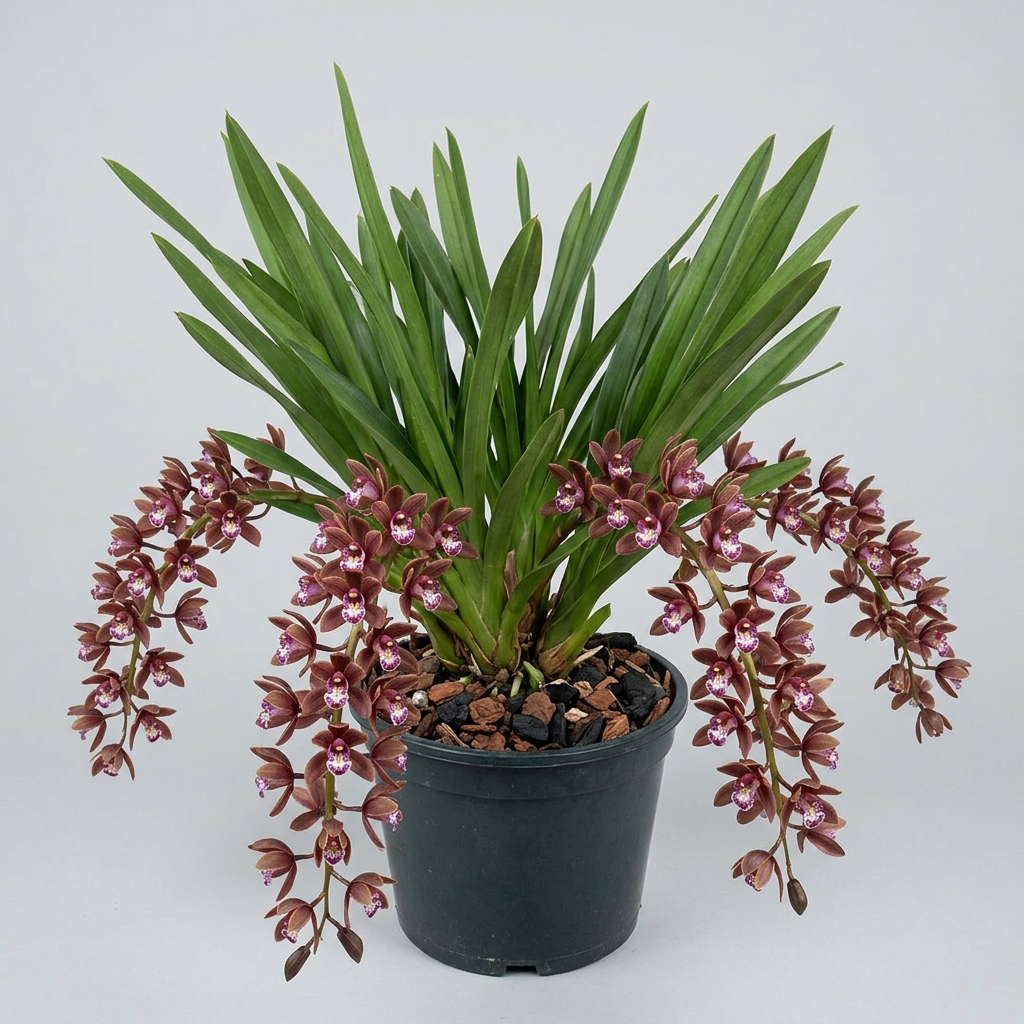
Cymbidium canaliculatum is a remarkable epiphytic orchid species native to the arid and semi-arid regions of Australia. Known commonly as the channelled boat orchid, this resilient plant is highly prized by collectors for its unique adaptation to harsh environments, characterized by deeply grooved, rigid foliage and spectacular pendulous flower spikes.
Unlike typical tropical Cymbidiums, this species thrives in high-light conditions and shows an extraordinarily robust growth habit. Growers value it for its striking, dark-colored blooms that emerge in dense clusters, offering a dramatic botanical display that contrasts beautifully with its tough, succulent-like leaves.
💡 Did You Know?
In its native Australian habitat, Cymbidium canaliculatum often grows inside the hollow trunks of living eucalyptus trees. Its extensive root system can travel meters down the decaying heartwood to access moisture, allowing the plant to survive intense bushfires and prolonged droughts that would easily destroy other orchid species.
🌿 Botanical Overview
Cymbidium canaliculatum is native to northern and eastern Australia, where it typically grows in the hollows of eucalyptus trees. This unique habitat has forced the species to develop highly specialized survival mechanisms, including thick, V-shaped leaves designed to channel rainwater directly to its extensive root system.
The pseudobulbs are exceptionally tough and fibrous, storing water and nutrients to sustain the plant through prolonged periods of drought. Its roots are adapted to penetrate deep into decaying wood, drawing moisture from the heartwood of host trees while remaining well-ventilated.
🌸 Flower Characteristics
The flowers of Cymbidium canaliculatum are relatively small but produced in great abundance on arching or pendulous racemes that can carry dozens of blooms. The petals and sepals are typically thick and waxy, featuring rich shades of deep burgundy, bronze, chocolate brown, or olive green, often edged or spotted with contrasting lighter tones.
The lip, or labellum, is usually white or cream-colored, adorned with striking purple or red markings that serve as a guide for native pollinators. This compact yet dense floral presentation creates a highly dramatic visual effect when the plant is in full bloom.
Fragrance & Bloom Profile
The fragrance of Cymbidium canaliculatum is often described as sweet, spicy, or slightly musky, though the intensity can vary significantly depending on the specific clone and environmental conditions. The scent is typically most pronounced during the warmest hours of the day, attracting natural pollinators in its native habitat.
Individual blooms are long-lasting, often remaining fresh for several weeks if kept in a cool, shaded position once open. The overall blooming period typically spans from mid-spring into early summer, providing a reliable and highly rewarding seasonal display.
Parentage & Hybrid Lineage
As a distinct, naturally occurring species rather than a man-made hybrid, Cymbidium canaliculatum possesses a pure genetic lineage shaped by its native Australian environment. While its exact evolutionary history is not fully documented in standard horticultural registries, it has been used extensively in breeding programs to introduce warmth tolerance and dark coloration to modern Cymbidium hybrids.
Growers should treat this plant as a primary species, recognizing that its care requirements differ substantially from those of standard cool-growing Asian or Himalayan Cymbidium hybrids.
🌱 Growing Conditions
To cultivate this species successfully, growers must replicate its bright, airy native environment. It requires exceptionally high light levels, often tolerating direct morning sun, which is essential for triggering the development of flower spikes.
💡 Care Tip
Provide this orchid with the brightest possible, short of burning the leaves. A slight yellow-green tint to the foliage indicates optimal levels for future flower spike development.
Temperature: wise, it is highly adaptable, thriving in warm to hot summer conditions while tolerating cooler winter temperatures, provided the plant is kept dry. Excellent air movement is critical at all times to prevent stagnant moisture from accumulating around the foliage and pseudobulbs.
Watering, Feeding & Potting Media
Watering must be managed carefully, matching the plant’s seasonal growth cycle. During the active spring and summer growing phases, water thoroughly but allow the medium to dry out completely between applications; in winter, reduce watering significantly to simulate its natural dry season.
The potting medium must be extremely free-draining, such as a coarse mix of large bark chunks, charcoal, and perlite, or alternatively, grown in slatted wooden baskets or mounted on cork or hollow logs. Apply a balanced, diluted orchid fertilizer during the active growing season, halting all feeding during the winter rest.
Blooming Season & Care Notes
The primary blooming season occurs in spring and early summer, initiated by the combination of high light and a distinct winter rest period. Once the flower spikes begin to emerge from the base of the pseudobulbs, maintain consistent moisture without overwatering, and avoid moving the plant to prevent bud drop.
Repotting should be done only when absolutely necessary, as this species resents root disturbance and can take several seasons to recover. When repotting is unavoidable, perform the task immediately after flowering has finished and new root growth is visible.
⚠️ Common Issues
⚠️ Common Mistake
The most common mistake is using standard, moisture-retentive orchid potting soil. This species requires an extremely coarse, fast-draining medium to prevent devastating root rot.
- Root rot caused by overwatering or compacted, water-retaining potting media.
- Leaf spotting or fungal infections resulting from poor air circulation and high humidity.
- Bud blast or premature flower drop due to sudden changes in temperature or drafty conditions.
- Dehydration, indicated by shriveled pseudobulbs and wrinkled leaves, often due to insufficient watering during the peak growing season.
- Pests such as scale insects and spider mites, which can colonize the deep channels of the leaves.
❓ Frequently Asked Questions
How do I trigger blooming in Cymbidium canaliculatum?
To trigger blooming, ensure the plant receives very high light levels throughout the year and a distinct dry rest period during the winter months. This seasonal shift mimics its native Australian climate and is essential for flower spike initiation.
What is the best potting mix for this orchid species?
The best potting mix is an extremely coarse, fast-draining medium. A combination of large fir bark chunks, charcoal, and perlite works well, though many growers prefer mounting the plant on cork or growing it in slatted wooden baskets to ensure maximum root aeration.
How often should I water Cymbidium canaliculatum during winter?
During the winter rest, watering should be reduced to a bare minimum. Only water lightly once every few weeks to prevent the pseudobulbs from shriveling excessively, and avoid any heavy watering until active new growth appears in spring.
Can this orchid be grown indoors under LED lights?
Yes, but it requires exceptionally strong, high-output LED grow lights to meet its high-light demands. Position the plant close to the light source and ensure adequate fan-driven airflow to prevent heat buildup and stagnant air.
⭐ Final Growing Notes
Cymbidium canaliculatum is a rewarding challenge for the dedicated orchid enthusiast, offering a unique combination of rugged botanical charm and spectacular floral beauty. By respecting its need for high light, excellent drainage, and a distinct winter rest, growers can enjoy this remarkable Australian native for many years.
🌱 Propagation Tip
Propagate by dividing large, healthy clumps during repotting, ensuring each division has at least three active pseudobulbs and a healthy lead growth to support recovery.
⭐ Expert Advice
To encourage robust blooming, implement a strict dry rest period during the winter months, reducing to a bare minimum and withholding all fertilizer until spring growth appears.




Leave A Comment