
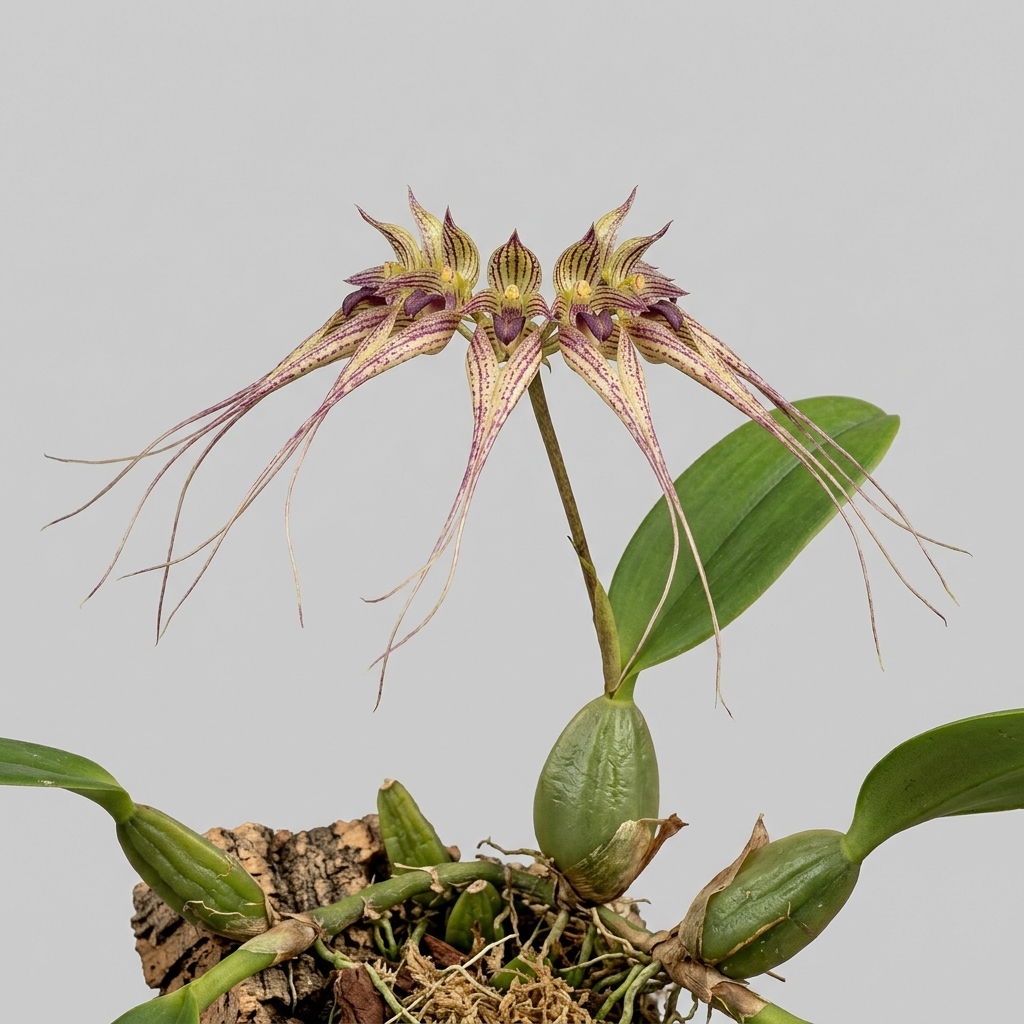
Bulbophyllum Ornatissimum is a captivating epiphytic orchid species highly prized by collectors for its bizarre, intricate floral architecture and unique growth habit. Native to the warm, humid forest regions of the Himalayas and Southeast Asia, this orchid belongs to one of the largest and most diverse genera in the orchid family. Growers are drawn to its creeping rhizomes, prominent pseudobulbs, and the dramatic, fan-like presentation of its blossoms.
Cultivating this species successfully requires replicating its native monsoon-influenced environment, characterized by high humidity, consistent moisture, and excellent air movement. While its unusual appearance might seem intimidating to beginners, understanding its seasonal growth patterns and moisture requirements makes it a rewarding addition to any intermediate orchid collection. Its flowers, featuring elongated sepals and a highly mobile labellum, offer a spectacular visual display that exemplifies the evolutionary ingenuity of the Bulbophyllum genus.
💡 Did You Know?
Bulbophyllum Ornatissimum features a highly specialized, hinged lip that wiggles with the slightest breeze. This motion mimicry, combined with its unique scent, is an evolutionary adaptation designed to attract fly pollinators by simulating the movement of insects, ensuring successful pollination in its native forest canopy.
🌿 Botanical Overview
Bulbophyllum Ornatissimum is characterized by its creeping rhizome that produces egg-shaped, slightly angled pseudobulbs spaced along its length. Each pseudobulb bears a single, leathery, oblong leaf that remains green year-round under proper care. The plant spreads horizontally, making it an excellent candidate for shallow baskets or mounts where the rhizome has room to wander freely.
In nature, this species grows as an epiphyte on mossy tree trunks and branches, where it is exposed to high humidity and frequent rainfall followed by breezy drying periods. Its root system is relatively fine and shallow, adapted to quickly absorbing moisture and nutrients from the organic debris collecting on its host tree. Replicating this airy, damp environment is key to keeping the root system healthy in cultivation.
🌸 Flower Characteristics
The inflorescence of Bulbophyllum Ornatissimum is a real showstopper, arising from the base of the pseudobulb. It produces an erect to arching stalk that terminates in a fan-like umbel of several flowers, arranged in a distinctive semi-circle. The individual flowers are dominated by their elongated, thread-like lateral sepals, which drape downward and can reach several inches in length, creating a delicate fringe effect.
The dorsal sepal and petals are typically much smaller, often adorned with delicate hairs or appendages that move with the slightest breeze. The coloration is a complex tapestry of pale yellow, green, or cream, heavily striped or spotted with deep purple, red, or brown. At the center sits a small, fleshy, hinged lip (labellum) that wiggles easily, a mechanism designed to assist in insect pollination.
Fragrance & Bloom Profile
Like many members of its genus, Bulbophyllum Ornatissimum relies on flies for pollination, and its fragrance profile reflects this evolutionary strategy. The scent is often described as slightly musty, putrid, or reminiscent of decaying organic matter, though it is generally not overpowering unless one is in very close proximity to the blooms. This unique scent profile is a fascinating talking point for orchid enthusiasts.
The blooming cycle typically occurs once a year, with flowers lasting anywhere from one to two weeks depending on environmental conditions. Maintaining high humidity and cool, stable temperatures during the bloom period can help prolong the life of the delicate flowers. Once the blooms fade, the flower spike can be cut back to the base of the pseudobulb.
Parentage & Hybrid Lineage
Bulbophyllum Ornatissimum is a naturally occurring species rather than a man-made hybrid. While it is sometimes confused with closely related species within the Cirrhopetalum section of the genus, such as Bulbophyllum mastersianum or Bulbophyllum putidum, it maintains its own distinct botanical identity in professional taxonomic databases.
In cultivation, it has occasionally been used in hybridization programs to introduce its dramatic, elongated sepal structure and fan-like flowering habit to new grexes. However, most plants available in the hobbyist market are species selections propagated through division or seed, valued for their wild, untamed botanical charm rather than hybrid uniformity.
🌱 Growing Conditions
To thrive, Bulbophyllum Ornatissimum requires intermediate to warm temperatures, ideally ranging from 75°F to 85°F during the day, with a night drop to around 60°F to 65°F. It prefers moderate, filtered light, similar to the dappled shade found under a forest canopy; direct, harsh sunlight will quickly scorch its leaves and damage the sensitive pseudobulbs.
💡 Care Tip
Maintain constant air movement around your Bulbophyllum Ornatissimum using a small fan. Because this orchid thrives in high and damp media, stagnant air is its greatest enemy, often leading to rapid fungal infections or leaf spotting.
High humidity is absolutely critical for this orchid, with target levels between 70% and 85%. To prevent stagnant air from causing fungal or bacterial rot in these humid conditions, growers must provide constant, gentle air movement using small fans. This balance of high moisture and active airflow is the secret to successful Bulbophyllum culture.
Watering, Feeding & Potting Media
This orchid does not possess large water-storing pseudobulbs, meaning it has a low tolerance for prolonged drought. The potting medium should be kept consistently damp but never waterlogged. During the active growing season, water frequently, adjusting the schedule as temperatures rise to ensure the roots never dry out completely.
A moisture-retentive medium such as high-quality New Zealand sphagnum moss or a fine bark and perlite mix works best in shallow pots or net baskets. Alternatively, mounting the plant on a cork slab with a pad of moss allows its creeping rhizomes to grow naturally, though mounted plants will require daily watering. Feed weekly with a highly diluted, balanced orchid fertilizer during the active growth phase, flushing the media with pure water periodically to prevent salt buildup.
Blooming Season & Care Notes
The primary blooming season for Bulbophyllum Ornatissimum is autumn, triggered by the natural shortening of days and a slight drop in night temperatures. As the flower spikes begin to emerge from the base of the pseudobulbs, take care not to let water pool on the developing buds, as this can cause them to blast before opening.
After flowering concludes, the plant enters a brief period of semi-dormancy during the cooler winter months. During this time, reduce watering slightly, allowing the medium to dry out just a bit more between waterings, but never let the pseudobulbs shrivel excessively. Resume normal watering and feeding schedules when new root and leaf growth appears in spring.
⚠️ Common Issues
⚠️ Common Mistake
A frequent mistake is letting the potting medium dry out completely. Unlike some orchids with large pseudobulbs that store water for long periods, this species has fine roots and a low tolerance for drought, which can quickly lead to root loss and stunted growth.
- Root rot: Caused by compacted, poorly draining media or overwatering, leading to mushy, black roots and yellowing leaves.
- Pseudobulb shriveling: An indication of severe dehydration, either due to underwatering or a loss of roots from rot.
- Bud blast: Occurs when developing flower buds dry out, experience sudden temperature swings, or suffer from water sitting on the buds.
- Pests: Mealybugs and spider mites can hide in the crevices of the rhizomes and under leaves, requiring prompt treatment with insecticidal soap or neem oil.
- Leaf spotting: Fungal or bacterial spots can develop if humidity is high but air circulation is inadequate.
❓ Frequently Asked Questions
How do I encourage my Bulbophyllum Ornatissimum to bloom?
To stimulate blooming, ensure the orchid receives a slight drop in night temperatures during the late summer and early autumn, along with a natural reduction in day length. Consistent humidity and proper light levels throughout the growing season are also essential for the plant to build enough energy to produce flower spikes.
Can I grow Bulbophyllum Ornatissimum mounted on wood?
Yes, mounting this orchid on a cork bark or tree fern slab is highly recommended because of its creeping rhizome growth habit. However, mounted plants dry out much faster than potted ones, so you must be prepared to mist or water them daily, sometimes multiple times a day in dry climates.
Why are the pseudobulbs on my orchid shriveling?
Shriveled pseudobulbs indicate that the plant is not absorbing enough water. This can be caused by simple underwatering or, conversely, by overwatering which has rotted the root system, leaving the orchid unable to take up moisture. Inspect the roots to determine the correct cause.
What kind of light does Bulbophyllum Ornatissimum prefer?
This species prefers medium, filtered light, often referred to as bright shade. Avoid placing it in direct afternoon sunlight, which can easily burn the leaves. If the leaves turn a dark, dull green, the plant may need slightly more light; if they turn yellow or develop bleached spots, the light is too intense.
⭐ Final Growing Notes
Bulbophyllum Ornatissimum is a rewarding and visually spectacular orchid that brings a touch of exotic wonder to any growing space. By prioritizing high humidity, consistent moisture, and excellent air circulation, growers can enjoy the dramatic annual display of its unique, fan-like blossoms. It stands as a testament to the fascinating diversity of the orchid family, offering a delightful challenge for intermediate hobbyists looking to expand their horticultural horizons.
⚕️ Health, Safety & Edibility
Understanding how a plant interacts with people, pets, and the surrounding environment is part of responsible cultivation. This section uses conservative, general guidance and does not replace professional medical or veterinary advice.
Human Safety: No published evidence currently identifies species-specific toxicity concerns for Bulbophyllum Ornatissimum during normal handling. As with most ornamental plants, it should not be intentionally consumed.
Pet Safety: Published information does not indicate that this orchid commonly poses a toxicity concern for cats or dogs. However, chewing leaves, flowers, roots, or potting media may still cause mild digestive upset.
Edibility: This orchid is cultivated for ornamental display rather than food. Ornamental plants may carry fertilizers, pesticides, or other horticultural treatments that make them unsuitable for consumption.
Skin Contact: Routine handling is not generally associated with skin irritation. Gardeners with sensitive skin may prefer wearing gloves when repotting, pruning, or handling potting media.
🌱 Propagation Tip
Propagate this orchid by division during the spring when new growth begins. Ensure each division contains at least three to four healthy pseudobulbs with active roots, and carefully cut the rhizome with a sterile tool before potting them into fresh, damp sphagnum moss.
⭐ Expert Advice
If growing this orchid indoors, use a shallow net pot or a plastic basket rather than a deep traditional pot. This accommodates the creeping rhizome while ensuring the roots receive plenty of oxygen and do not sit in stagnant, soggy media at the bottom of the pot.

Leave A Comment