

Bulbophyllum Pulchrum is a fascinating epiphytic orchid species highly prized by collectors for its unique, fan-like floral arrangements and miniature growth habit. Belonging to one of the largest and most diverse genera in the orchid family, this species showcases the intricate evolutionary adaptations typical of Southeast Asian forest dwellers. Its distinctive umbrella-shaped clusters of flowers make it a standout addition to any specialized orchid collection or humid terrarium.
Cultivating this orchid successfully requires an understanding of its natural canopy habitat, where it thrives in warm, humid, and shaded conditions. While it may present a slight challenge to absolute beginners due to its strict moisture requirements, intermediate growers will find its rapid creeping growth and reliable seasonal blooming highly rewarding. With proper care, this species forms dense, attractive mats of pseudobulbs that produce spectacular, delicate blooms year after year.
💡 Did You Know?
Bulbophyllum Pulchrum belongs to the section Cirrhopetalum, a group of orchids famous for their umbrella or fan flowers. The mobile, hinged lip of each flower is designed to tip forward under the weight of a visiting insect, safely depositing pollen onto the pollinator's back to ensure successful reproduction in the wild.
🌿 Botanical Overview
Bulbophyllum Pulchrum is characterized by its creeping rhizome structure, which produces small, egg-shaped to conical pseudobulbs spaced closely together. Each pseudobulb supports a single, thick, leathery leaf that is oblong to lanceolate in shape. This growth habit allows the plant to spread horizontally, making it exceptionally well-suited for mounting on cork bark or tree fern slabs.
In nature, this species is primarily epiphytic, growing on the mossy branches of trees in warm, lowland forests. This environment provides constant air movement coupled with high ambient humidity. The plant’s root system is relatively fine and shallow, designed to quickly absorb moisture and nutrients from passing rain and morning mists before drying out slightly.
🌸 Flower Characteristics
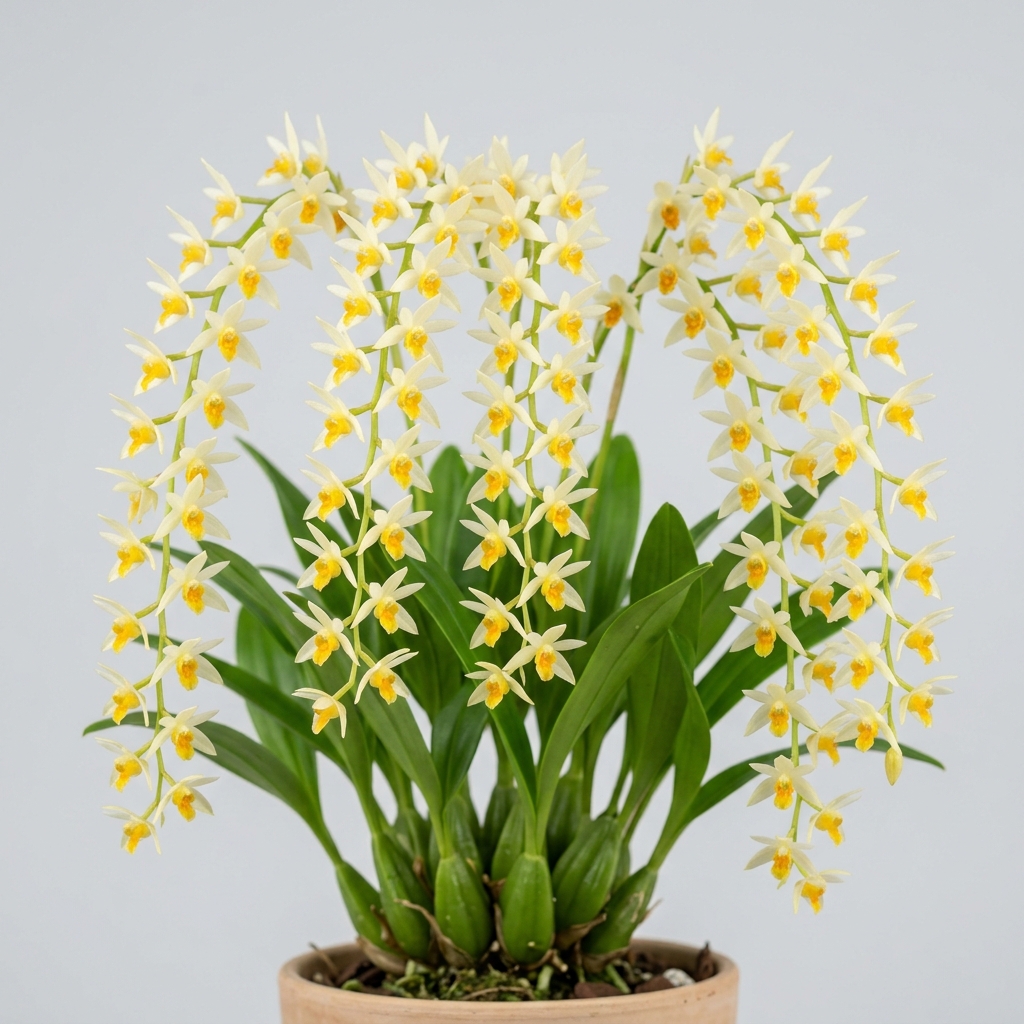
The inflorescence of Bulbophyllum Pulchrum is a defining feature, typically arising from the base of the pseudobulb. It produces a slender, erect to arching peduncle that terminates in a striking, circular or semi-circular umbel. This arrangement resembles a tiny, elegant fan or umbrella, with multiple flowers radiating outward from a central point.
Each individual flower is highly modified, featuring elongated lateral sepals that drape downward, often fusing slightly to form a cohesive visual unit. The color palette is typically a cream or pale yellow base heavily speckled or flushed with reddish-purple, magenta, or pink spots. The dorsal sepal and petals are much smaller, often adorned with delicate hairs or appendages that move with the slightest breeze, while the tiny, hinged lip is highly mobile to facilitate pollination.
Fragrance & Bloom Profile
The fragrance of Bulbophyllum Pulchrum is a subject of interest among growers, though it is not as intensely pungent as some of its relatives in the genus. Many growers report a faint, slightly musty or earthy scent that is only noticeable up close. This fragrance is an evolutionary adaptation designed to attract specific insect pollinators, primarily small flies, rather than human admirers.
The blooms typically last between one to two weeks, depending on environmental conditions such as temperature and humidity. While individual flowers may have a relatively short lifespan compared to some other orchid genera, a mature, well-established specimen can produce multiple flower spikes sequentially, extending the overall display period.
Parentage & Hybrid Lineage
Bulbophyllum Pulchrum is a naturally occurring species rather than a man-made hybrid. In taxonomic literature, it is classified under the section Cirrhopetalum, a group of Bulbophyllum species renowned for their fan-shaped inflorescences. Because of taxonomic revisions over the years, some older references may list this plant under synonyms or closely related species names, such as Cirrhopetalum pulchrum.
While it is primarily grown as a species, hybridizers have occasionally used Bulbophyllum Pulchrum in breeding programs to introduce its compact growth habit and unique fan-like floral structure to new grexes. However, documented registered hybrids remain relatively uncommon in mainstream commercial trade, and most plants available to hobbyists are species selections.
🌱 Growing Conditions
To replicate its native habitat, Bulbophyllum Pulchrum should be grown in medium to low light conditions. Bright, filtered light or dappled shade is ideal, similar to the light levels preferred by many Phalaenopsis orchids. Direct, unfiltered sunlight must be avoided, as it can quickly scorch the thin leaves and dehydrate the small pseudobulbs.
💡 Care Tip
Ensure your Bulbophyllum Pulchrum receives constant, gentle air movement. High is essential, but stagnant air can quickly lead to bacterial rot on the tender new pseudobulbs and leaves. A small, low-powered fan placed near your growing area is highly beneficial.
Temperature ranges should remain warm to hot, with daytime temperatures ideally between 75°F and 85°F (24°C to 29°C) and a slight drop at night to stimulate healthy growth. High humidity is critical for this species; maintaining levels between 60% and 80% is highly recommended. Excellent air circulation is equally vital to prevent stagnant air, which can lead to fungal pathogens in high-humidity environments.
Watering, Feeding & Potting Media
Watering should be frequent and consistent, as Bulbophyllum Pulchrum does not possess large water-storage organs and prefers to remain evenly moist. The potting medium or mount should never be allowed to dry out completely for extended periods. During the active growing season, water the plant thoroughly as soon as the surface of the medium begins to feel slightly damp.
A balanced, highly diluted orchid fertilizer should be applied weekly or bi-weekly during the spring and summer months. A weak solution prevents salt buildup, which can damage the sensitive, fine roots. Suitable potting media include high-quality sphagnum moss, fine fir bark mixes, or a combination of both. When mounted on cork bark or tree fern slabs, the plant will require daily watering or misting to maintain adequate moisture levels.
Blooming Season & Care Notes
Bulbophyllum Pulchrum typically initiates its blooming cycle in the late summer or autumn, though occasional blooms can occur at other times of the year if growing conditions remain stable. The development of the flower spikes is highly dependent on consistent moisture and a slight drop in night temperatures during the late summer months.
Once the blooming cycle is complete, the old flower spikes can be carefully snipped off at the base. Repotting or remounting is best performed in the spring, just as new root growth begins to emerge from the base of the newest pseudobulbs. Minimize disturbance to the root system during this process, as Bulbophyllums can be sensitive to root damage and may take some time to recover.
⚠️ Common Issues
⚠️ Common Mistake
A frequent error is allowing the potting medium or mount to dry out completely between waterings. Unlike some orchids with large pseudobulbs, Bulbophyllum Pulchrum has limited water storage and fine roots that can quickly desiccate, leading to stalled growth and dropped buds.
- Root Rot: Caused by waterlogged, compacted media with poor drainage or inadequate air movement.
- Leaf Spotting: Fungal or bacterial spots can develop if water sits on the foliage overnight in stagnant air.
- Dehydration: Shriveled pseudobulbs and wrinkled leaves indicate insufficient watering or low humidity.
- Pests: Spider mites, mealybugs, and scale can occasionally target the tender new growth and underside of leaves.
- Bud Blast: Premature dropping or drying of flower buds due to sudden drops in humidity or temperature fluctuations.
❓ Frequently Asked Questions
How do I encourage my Bulbophyllum Pulchrum to bloom?
To stimulate blooming, ensure the orchid receives consistent warm temperatures during the day with a slight drop of a few degrees at night. Maintaining high humidity and providing a very weak fertilizer solution during the active growing season will also support the development of healthy flower spikes in late summer.
Can Bulbophyllum Pulchrum be grown under artificial LED lights?
Yes, this species adapts well to artificial LED setups. Position the plant under moderate-intensity grow lights, ensuring it is placed far enough away to prevent leaf scorch. Aim for a light cycle of 12 to 14 hours daily, mimicking its natural tropical environment.
Is it better to mount this orchid or grow it in a pot?
Due to its creeping rhizome growth habit, Bulbophyllum Pulchrum thrives exceptionally well when mounted on cork bark or tree fern slabs. However, it can also be grown in shallow pots or baskets filled with high-quality, moisture-retaining sphagnum moss or a fine bark mix.
Why are the pseudobulbs on my orchid shriveling?
Shriveled pseudobulbs are usually a sign of dehydration, which can be caused by underwatering, low ambient humidity, or a compromised root system that can no longer absorb water. Check the roots for rot, increase watering frequency, and ensure humidity levels remain above 60%.
⭐ Final Growing Notes
Bulbophyllum Pulchrum is a rewarding and visually captivating orchid that brings a touch of exotic elegance to any collection. By focusing on high humidity, consistent moisture, and gentle air movement, growers can successfully cultivate this miniature marvel and enjoy its spectacular fan-like blossoms for years to come.
⚕️ Health, Safety & Edibility
Understanding how a plant interacts with people, pets, and the surrounding environment is part of responsible cultivation. This section uses conservative, general guidance and does not replace professional medical or veterinary advice.
Human Safety: No published evidence currently identifies species-specific toxicity concerns for Bulbophyllum Pulchrum during normal handling. As with most ornamental plants, it should not be intentionally consumed.
Pet Safety: Published information does not indicate that this orchid commonly poses a toxicity concern for cats or dogs. However, chewing leaves, flowers, roots, or potting media may still cause mild digestive upset.
Edibility: This orchid is cultivated for ornamental display rather than food. Ornamental plants may carry fertilizers, pesticides, or other horticultural treatments that make them unsuitable for consumption.
Skin Contact: Routine handling is not generally associated with skin irritation. Gardeners with sensitive skin may prefer wearing gloves when repotting, pruning, or handling potting media.
🌱 Propagation Tip
Propagate this species by division during the spring repotting cycle. Ensure each division contains at least three to four healthy, mature pseudobulbs with an active lead. Carefully cut the rhizome with a sterile tool and secure the new division firmly onto its new mount or pot.
⭐ Expert Advice
For the best aesthetic display and healthiest growth, mount this orchid on a cork bark slab wrapped with a thin layer of high-quality sphagnum moss. This mimics its natural epiphytic habit, allowing the creeping rhizome to spread freely and display its fan-like blooms naturally.

Leave A Comment